UAE Saudi rapprochement 2026

What happened in Riyadh
Sheikh Mansour, who is also the UAE’s deputy prime minister and chairman of the Presidential Court, met Saudi Defence Minister Prince Khalid bin Salman after traveling at the minister’s invitation. A Saudi defence ministry post on X said the two discussed matters of mutual interest and ways to strengthen cooperation and coordination. WAM, the Emirati state news agency, described the same meeting as an effort to advance relations.
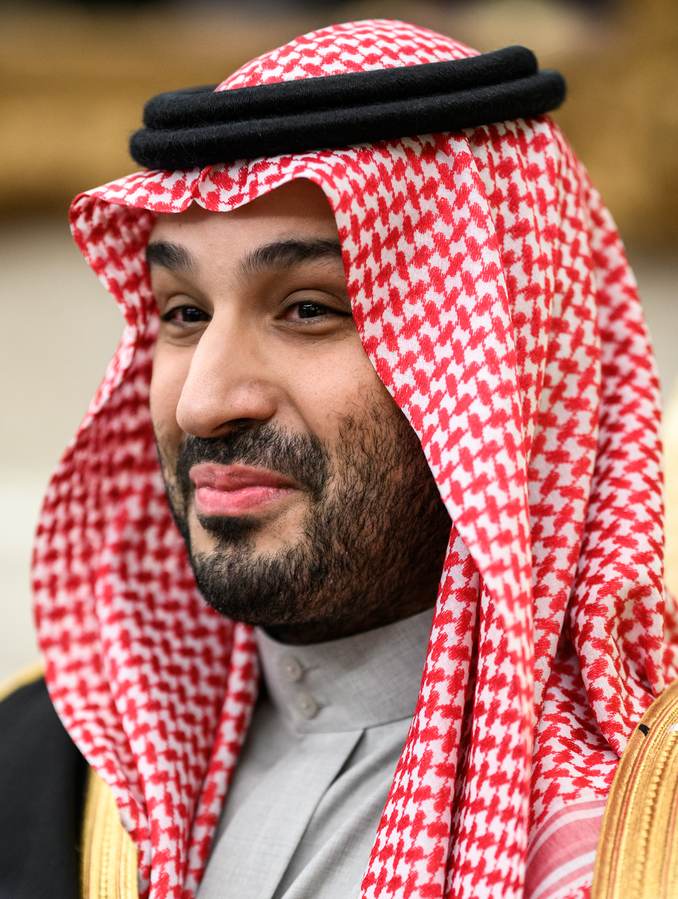
Mansour then met Crown Prince Mohammed bin Salman. SPA, the Saudi state news agency, said they reviewed the countries’ “fraternal relations” and regional developments. The official language was deliberately broad, and neither government announced a treaty, joint military operation or detailed Yemen bargain. What made the meeting consequential was not a disclosed package of agreements but the decision to hold it at all.
Reuters reported that this was the first visit by a senior UAE official to Saudi Arabia since the bilateral rupture emerged last year. Riyadh has faced weeks of Houthi missile and drone salvos and has sought wider support against the Iran-backed movement. Reuters said it was not immediately clear whether Saudi Arabia’s request for international backing extended to the UAE, once its central regional partner in the anti-Houthi war.
Why this matters
The visit is best read as strategic repair, not sentimental reconciliation. Saudi Arabia and the UAE share an interest in keeping Gulf shipping lanes open, protecting energy infrastructure and preventing Yemen from becoming a platform for repeated attacks on their cities. Yet their interests are not identical. Riyadh prizes a stable southern frontier and an internationally recognized Yemeni state; Abu Dhabi has cultivated southern partners and maritime influence around ports and islands. Those agendas can overlap until the question becomes who controls territory and political leverage.
The Sheikh Mansour Riyadh visit therefore matters because both capitals appear to be choosing coordination before complete agreement. That is a practical form of rapprochement. It can create military deconfliction, intelligence sharing and a channel for bargaining over Yemeni factions without pretending the rivalry has vanished. In a region where public ceremony often carries strategic meaning, sending a vice president and presidential-court chairman was a signal that Abu Dhabi wanted the message heard beyond the room.
For Washington and other outside partners, closer Saudi-Emirati coordination could simplify crisis management. A divided Gulf gives the Houthis more room to exploit competing patronage networks and forces foreign governments to negotiate through parallel channels. A working Saudi-UAE line cannot by itself end the conflict, but it can reduce one source of fragmentation.
How the rift broke open
The UAE Saudi Arabia rift over Yemen became public in December after an advance by a UAE-backed southern separatist force brought it close to the Saudi border. Saudi Arabia condemned Emirati involvement and carried out an airstrike on a UAE-linked weapons shipment at the port of Mukalla, according to Reuters. Abu Dhabi subsequently announced that it had withdrawn all its forces from Yemen, but the political and security networks built over years did not disappear with that statement.
That episode exposed a structural disagreement. Saudi strategy has long centered on border security and the survival of the recognized Yemeni government. The UAE’s approach has placed greater weight on southern allies, counterterrorism partners and access around strategic waterways. Both opposed the Houthis, but they did not always agree on what postwar Yemen should look like or which local actors should control it.
The Yemen dispute sat on top of older competition. Riyadh and Abu Dhabi have pursued overlapping ambitions as trade, finance, tourism and logistics hubs. Their positions have also diverged at moments over geopolitical alignments and OPEC+ UAE Saudi oil policy, where production capacity, quotas and market share translate directly into state revenue and influence. The December confrontation mattered because it converted managed competition into visible coercion.
The timing is the story
This was not a reconciliation meeting scheduled in calm conditions. It came while Saudi Arabia was absorbing sustained Houthi pressure on tankers, oil facilities, airports and the capital. The operational lesson for Riyadh is that air defenses can intercept many threats without eliminating the strategic vulnerability created by repeated attacks. Every alert imposes costs on aviation, insurance, energy operations and public confidence. A wider coalition is therefore valuable even before it produces a battlefield result.
The diplomatic sequencing matters too. JFeed reported that Mansour’s trip came two days after Israeli Prime Minister Benjamin Netanyahu made a secret visit to the UAE and met President Mohammed bin Zayed. Israel’s Prime Minister’s Office said that meeting covered bilateral relations and regional challenges; WAM confirmed a leaders’ meeting and talks on strengthening ties. The proximity of the two visits places Abu Dhabi at the center of a fast-moving regional conversation spanning Israel, Saudi Arabia, Iran and the Houthis.
That does not prove a coordinated Saudi-UAE-Israeli initiative. No public evidence establishes one, and the three governments have distinct red lines. It does show that Abu Dhabi is using high-level access in quick succession while the region’s security map is under pressure. The analytical distinction is essential: diplomatic timing is evidence of urgency, not proof of a secret alliance.
Who gains, who loses
Saudi Arabia gains strategic depth. Even limited Emirati support could strengthen maritime surveillance, intelligence and political leverage with southern Yemeni actors. More importantly, a direct channel lowers the risk that Saudi-backed and UAE-backed forces work at cross-purposes while the Houthis keep the initiative.
The UAE gains relevance and room to bargain. Abu Dhabi can present itself as indispensable to any durable arrangement in southern Yemen and the Red Sea. Re-engagement also protects its commercial interests by reducing the chance that a feud with Riyadh spills into logistics, investment or oil coordination.
Yemeni civilians could benefit if coordination limits proxy friction, but they could lose if rapprochement merely produces a more coherent military campaign without an equally serious political track. The country has endured a 12-year civil war since the Houthis seized Sanaa and a Saudi-led intervention followed. A diplomatic thaw among outside powers is not the same as a settlement among Yemenis.
The Houthis face a less divided opposition. Their advantage has never depended only on missiles and drones; it also rests on fragmentation among rivals. If Riyadh and Abu Dhabi align their pressure, the group may confront tighter coordination. But attacks can also be used to claim resistance credentials and mobilize support, so a renewed external front could harden rather than weaken Houthi political control.
Southern separatists risk losing leverage. Groups that benefited from Emirati backing may discover that state-to-state normalization takes priority over maximal territorial goals. Yet they also remain useful to Abu Dhabi, which means a bargain is more likely to manage their role than erase it.

By the numbers
One senior visit ended a period in which no top Emirati official had traveled to the kingdom since the rift emerged. Two Saudi meetings — with Defence Minister Khalid bin Salman and Crown Prince Mohammed bin Salman — gave the trip both a security channel and a leadership channel. And two days separated the Riyadh visit from Netanyahu’s reported meeting with Mohammed bin Zayed in the UAE.
The largest number is 12 years: the duration Reuters gives for Yemen’s civil war since the Houthi seizure of Sanaa prompted a Saudi-led intervention. That time horizon explains why one meeting should not be mistaken for a solution. The conflict has outlasted multiple diplomatic initiatives, coalition changes and ceasefire efforts. Any new Saudi-UAE understanding will be tested against institutions and armed networks built over more than a decade.
There is another numerical reality even without a disclosed communiqué: repeated Houthi salvos turn each day of disunity into a cumulative cost. Missile-defense expenditure, shipping insurance, flight disruption and the risk premium on energy infrastructure are not one-off burdens. They compound. That is the economic logic behind a Gulf rapprochement driven by Houthi attacks.
What happens next
The first test will be whether official language becomes operational coordination. Watch for follow-up visits, joint security statements, intelligence arrangements, changes in Saudi messaging about UAE-backed southern forces and any visible Emirati role in maritime or air defense. A single ceremonial trip can cool a crisis; a sequence of working-level meetings would show that the relationship is being rebuilt.
The second test is Yemen. If the two governments can define where Saudi border priorities and Emirati southern interests coexist, they may reduce the openings the Houthis exploit. If they cannot, the old conflict will reappear as soon as local partners compete for territory, ports or recognition. The Mukalla airstrike and UAE-Saudi rift remain the clearest warning of how quickly disagreement can move from diplomacy to force.
The third test is broader regional diplomacy. Abu Dhabi’s contacts with Israel and Saudi Arabia may position it as a bridge, but bridges are useful only when each side trusts what crosses them. Riyadh will judge the thaw by help against real security threats. Abu Dhabi will judge it by whether Saudi cooperation respects Emirati autonomy and interests. Israel, Iran and the Houthis will all read the same meetings for signs of alignment.
The most defensible conclusion is therefore narrower than the word “ends” in diplomatic shorthand might suggest. The public freeze has ended; the strategic competition has not. Mansour’s presence in Riyadh establishes that both sides now see dialogue as less costly than distance. Whether that becomes a durable Saudi-UAE relations 2026 reset will depend on what they do when the next missile lands, the next Yemeni faction advances or the next oil dispute reaches the table.
Sources
- Reuters: UAE vice president visits Saudi Arabia in first visit since rift — reporting on the meetings, the Houthi pressure and the Yemen dispute.
- JFeed: UAE-Saudi meeting follows Netanyahu’s secret UAE visit — reporting on the diplomatic timing and the UAE-Israel meeting.
- Saudi defence ministry post on X — cited for the Mansour-Khalid bin Salman meeting and its stated agenda.
- Saudi Press Agency (SPA) — cited for the Mansour-Mohammed bin Salman meeting.
- Emirates News Agency (WAM) — cited for the Riyadh visit and the earlier UAE-Israel meeting.
Confirmed facts are attributed to Reuters, the Saudi defence ministry, SPA, WAM and the Israeli Prime Minister’s Office as reported by JFeed. Analysis of incentives, winners, risks and future scenarios is Signal Post News’s assessment.