Trump denies Iran sanctions relief
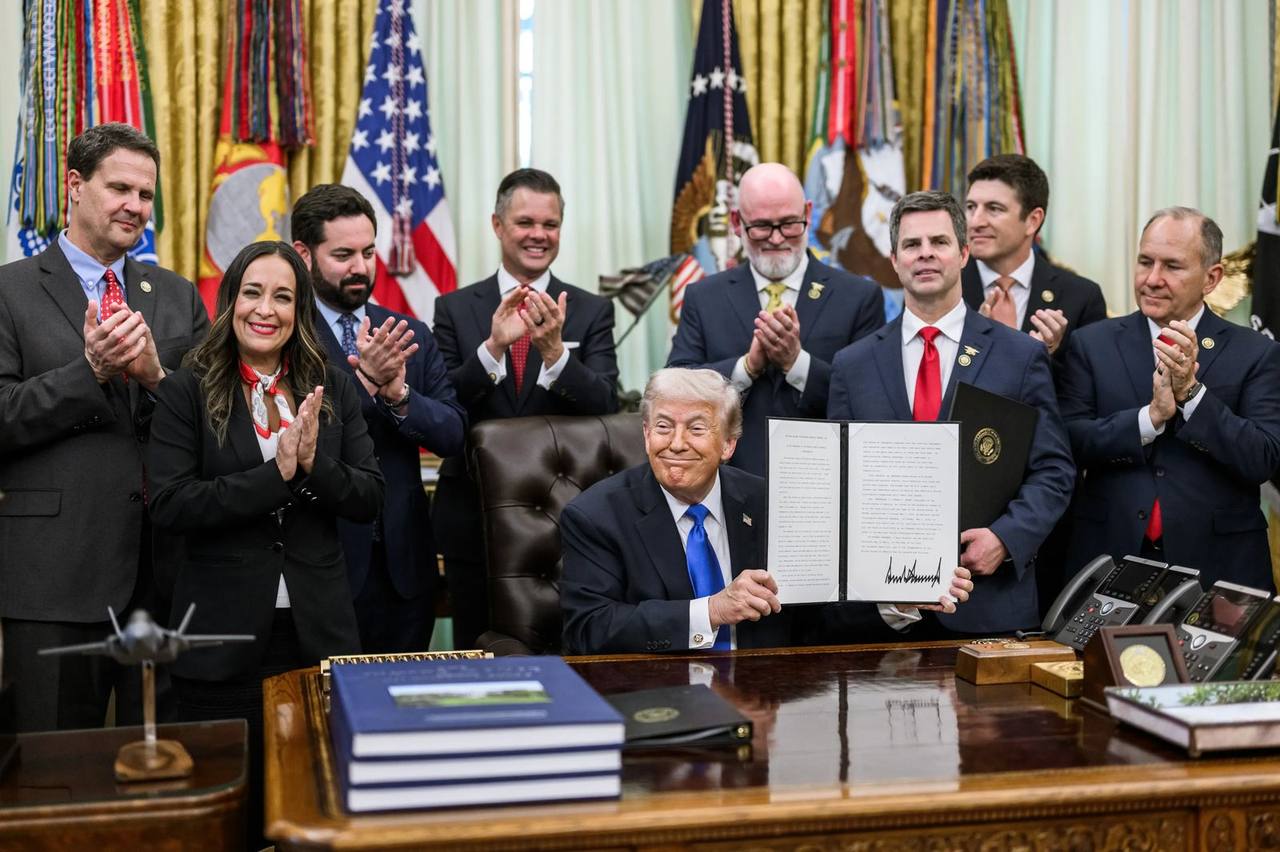
Trump denies Iran sanctions relief after Axios and CNN separately cited unidentified U.S. officials who described a possible bargain: sanctions relief and access to frozen Iranian funds in return for concrete movement on Tehran's nuclear program. “This is untrue. I offered them NOTHING,” President Donald Trump wrote on Truth Social on Monday. That denial is established. The officials' descriptions are reported claims, not a confirmed presidential offer, and no signed text or jointly announced framework has emerged.
The distinction is the story. Axios reported that Trump was willing to provide relief and release frozen funds in return for “concrete” Iranian steps. CNN reported, citing an unidentified U.S. official, that relief could form part of a final deal if Iran delivered “concrete progress” on the nuclear issue. The accounts overlap in structure but leave crucial terms undefined. Trump rejects the premise that he made an offer. A responsible reading therefore holds both facts at once: multiple news organizations were told that conditional relief was under consideration, while the president publicly denied offering it.
This is not semantic housekeeping. In a negotiation conducted through mediators during a war, the difference between exploring an option, authorizing a position and formally making an offer can decide whether diplomacy survives. Officials may test terms without a president accepting them. A president may preserve bargaining leverage by rejecting the word “offer.” Sources may also be describing a genuine shift that the White House later chose to disown. The public record does not yet settle which explanation is correct.
Why this matters
The dispute matters because it exposes the central contradiction in coercive diplomacy. Washington wants Iran to believe that economic relief is available if Tehran changes course, but it also wants Iran to believe relief will not arrive before performance. Tehran needs evidence that concessions will produce a durable benefit, yet it does not want to appear to surrender under bombardment. Each side must communicate possibility while denying weakness.
Seven months into war, that balancing act is no longer an academic exercise. The conflict began on February 28, when the United States and Israel attacked Iran. Tehran responded with strikes on Israel and Gulf states that host U.S. bases. U.S.-Israeli strikes on Iran and Israeli attacks on Lebanon have killed thousands and displaced millions, according to Reuters' summary of the conflict. Every ambiguous diplomatic signal now lands in a region where misreading can carry a human cost measured in lives, homes and interrupted trade.
The reported terms also identify the bridge that any settlement would probably need. Nuclear restrictions are the security commodity Washington most wants; sanctions relief and access to blocked money are among the economic commodities Tehran most values. One side can promise restraint, monitoring or reduced capability. The other can promise licenses, waivers, transfers or the suspension of penalties. The hard part is sequencing those steps so neither party is asked to move irreversibly first.
That is why the denial does not necessarily prove diplomacy is dead, just as the anonymous reports do not prove a deal is close. Public rejection can narrow the definition of what has happened while private mediators continue to discuss what could happen. But it also raises the political cost of any later agreement that resembles the reported outline. If Trump ultimately accepts sanctions relief for nuclear steps, critics will replay “I offered them NOTHING” as evidence of contradiction. Iranian negotiators will meanwhile ask whether terms conveyed through intermediaries can survive the next presidential post.
Trump Truth Social Iran post turns ambiguity into leverage
The Trump Truth Social Iran post was unusually categorical. Trump did not merely dispute a detail or say talks were preliminary. He said the report was untrue and that he offered nothing. Such language speaks simultaneously to several audiences: Iran, U.S. allies, domestic supporters, congressional hawks and markets watching for a change in war risk.
For Tehran, the message says that economic relief cannot be banked before concrete action. For hawks, it rejects the appearance of paying Iran to stop behavior Washington opposes. For allies, it warns against assuming that a mediator's exploratory paper has presidential approval. For markets, however, the denial removes some of the optimism that can accompany evidence of a diplomatic off-ramp.
Presidential communication can be tactical without being false, but the categories need care. “I offered them nothing” could mean no formal offer crossed the table. It could mean staff discussed options without authority. It could mean the administration is willing to exchange relief later but has not done so yet. It could also mean the anonymous accounts are wrong. Without documents, named officials or confirmation from both governments, none of those interpretations should be promoted from possibility to fact.
What the Axios and CNN reports actually establish
Axios Iran sanctions relief report describes a conditional exchange
The Axios Iran sanctions relief report, as summarized by Reuters, cited unidentified U.S. officials saying Trump was willing to give Iran sanctions relief and release frozen Iranian funds in return for concrete Iranian steps regarding the nuclear program. The report did not identify the officials. Anonymous sourcing does not make information worthless; administrations routinely conduct sensitive diplomacy away from cameras. It does require readers to separate the outlet's verified sourcing process from public proof of the underlying claim.
CNN's account provides corroboration at the level of the bargaining structure. Its unidentified U.S. official said Trump was willing to provide sanctions relief and release frozen funds as part of a final deal, conditioned on “concrete progress” on the nuclear question. CNN also reported that mediators were trying to bring the two countries back to negotiations. The overlap reduces the likelihood that the entire concept appeared from nowhere, but it does not resolve whether both outlets heard from independent sources, whether those sources described an approved position, or whether “willing” was shorthand for a scenario under review.
The strongest statement supported by the reporting is therefore limited: U.S. officials described a potential sanctions-for-nuclear-progress framework to at least two news organizations, and Trump denied making an offer. It would go beyond the evidence to say a final proposal was delivered, accepted, rejected or even authorized. It would also go beyond the evidence to say no official anywhere in the administration discussed those terms.
Trump Iran deal concrete progress remains undefined
The phrase Trump Iran deal concrete progress sounds specific but is not. Concrete progress could refer to enrichment levels, the size or location of uranium stockpiles, access for international inspectors, the operation of centrifuges, the status of damaged facilities or a timetable for negotiations. Each option carries different verification requirements and different reversibility.
A narrow step might be a monitored pause, which could happen quickly but leave the underlying capability intact. A wider bargain might involve shipping material out of Iran, dismantling equipment or accepting intrusive monitoring. Those measures would be harder to reverse and therefore command more relief. No public account on Monday supplied a schedule, baseline, inspection mechanism or remedy for noncompliance. Until those details exist, “concrete” is a political signal rather than an executable agreement.
Iran says it does not seek nuclear weapons and insists on a right to peaceful nuclear technology under the Non-Proliferation Treaty. Iran does not have nuclear weapons, while the United States does. Washington's objective, as Trump has described it, includes weakening Iran's nuclear capabilities. A viable formula must distinguish prohibited weaponization from permitted civilian activity, and it must do so in a way inspectors can measure rather than politicians merely assert.
How seven months of war produced this diplomatic moment
Wars often create bargaining leverage and destroy the trust needed to use it. The February 28 attacks began a cycle in which military action was expected to reduce Iran's capacity and increase the price of resistance. Iran's retaliation widened the theater to Israel and Gulf states hosting American bases. The longer the exchange continued, the more every diplomatic concession risked being portrayed as rewarding violence.
At the same time, attrition creates its own pressure for talks. Governments must replenish interceptors, repair infrastructure, reassure investors and manage populations under stress. Regional capitals must protect bases and shipping while avoiding entry into a conflict they cannot easily control. Millions displaced across the wider theater are not an abstraction; they are evidence that the cost of waiting is distributed far beyond negotiating rooms.
On Monday, U.S. and Iranian officials spoke separately with mediators in a renewed effort to end seven months of war, according to officials from both countries cited by Reuters. Separate conversations matter. They allow each government to clarify conditions without granting the other the prestige of direct talks. They also create room for misunderstanding because every message passes through another party and may be translated, summarized or strategically softened.
Other diplomatic activity underlined the regional scale. Saudi Arabia's foreign minister arrived in Washington to meet Secretary of State Marco Rubio. Treasury Secretary Scott Bessent met Lebanon's prime minister and finance minister about disrupting Iranian and Hezbollah financial networks. Those contacts show that any settlement cannot be reduced to a bilateral nuclear file. Gulf security, Lebanese stability, militia financing, maritime passage and sanctions enforcement all surround the core bargain.
US Iran war mediator talks September 2026 face a sequencing trap
The US Iran war mediator talks September 2026 face a classic sequencing trap. Washington wants verified nuclear steps before meaningful relief. Tehran wants confidence that relief will be available, usable and durable before it gives up leverage. If both wait for the other, negotiations stall. If either moves first without safeguards, domestic opponents call it capitulation.
Mediators can break the deadlock through synchronized stages: Iran performs a verifiable action; the United States issues a narrowly defined license or permits a limited transfer; inspectors certify the next action; further relief follows. Escrow accounts, humanitarian channels, snapback provisions and time-limited waivers can reduce risk. But every mechanism introduces lawyers, banks and enforcement agencies whose caution can make promised relief slower or smaller than it appears on paper.
That history matters to Iranian decision-makers. A sanctions waiver has value only if banks, insurers and counterparties believe transactions will remain lawful. American officials, conversely, will remember that money is fungible: even funds restricted to approved purchases can free other domestic resources. The agreement therefore needs not only political consent but credible plumbing.
Historical parallels: sanctions relief for verifiable concessions
The broad architecture is familiar. Previous nuclear diplomacy with Iran exchanged limits and verification for relief from nuclear-related sanctions. The lesson is not that an old agreement can simply be restored. The strategic environment, leadership incentives, military damage and mutual expectations have changed. The lesson is that slogans such as “relief” and “concessions” conceal dozens of operational decisions.
Past negotiations showed that implementation has at least three clocks. The technical clock measures how fast nuclear steps can be completed and checked. The legal clock measures how fast sanctions can be waived, suspended or removed. The commercial clock measures when banks and companies feel safe enough to transact. A deal can succeed on the first two clocks and disappoint on the third, creating an argument that promised benefits never arrived.
They also showed why reversibility attracts negotiators. A temporary enrichment limit can be reversed. A waiver can expire. Frozen money can be released in tranches rather than all at once. Reversible steps make an initial bargain easier because the cost of testing compliance is bounded. Yet they can make the deal politically fragile, since either side may walk away before habits of compliance become entrenched.
There is another parallel: leaders often deny or minimize exploratory contacts before announcing them. Secrecy can protect talks from spoilers. It can also corrode trust when the eventual deal appears to contradict categorical public statements. The current episode is therefore not proof of covert agreement, but it is a warning that message discipline will matter if the mediator channel produces a text.
Data-driven reasoning: what frozen funds and oil risk imply
Iran frozen funds release is not one simple number
An Iran frozen funds release is often discussed as though a vault could be opened with one presidential instruction. In reality, blocked Iranian assets can sit in different countries, currencies, institutions and legal categories. Some may be restricted rather than formally seized. Some may be tied to oil proceeds, court claims or humanitarian-use arrangements. The reports at issue did not identify a dollar amount, the jurisdictions involved or whether Iran would receive unrestricted cash.
That missing figure is analytically important. A headline total can overstate immediate economic value if funds must remain in supervised accounts or can be used only for food, medicine and other approved trade. It can understate political value if even a small initial transfer demonstrates that the channel works. The right questions are not only “how much?” but “where, when, in what currency, for what purchases, and subject to whose verification?”
Consider the sequencing arithmetic. If relief came in several tranches, each linked to a certified nuclear step, then the first tranche would function as a proof of process. Tehran would gain evidence that financial restrictions can actually ease; Washington would retain most of its leverage. If all funds were released before verification, U.S. critics would argue that leverage had been surrendered. If all relief waited until the last nuclear step, Iran would fear doing the difficult work and receiving little usable benefit.
This is why exact figures should not be invented or borrowed from older disputes. Pools described in past diplomacy may not match the assets contemplated now. The current reporting establishes the category—frozen Iranian funds—not the amount. Any negotiator claiming precision should be able to name the account structure, eligible transactions and compliance trigger.
Hormuz oil prices Iran war links diplomacy to every consumer
The Hormuz oil prices Iran war connection gives the talks a global economic constituency. The Strait of Hormuz is a critical route for energy exports. Even without a complete closure, threats, attacks, insurance costs and naval risk can add a war premium to crude and refined products. That premium reaches airlines, freight companies, manufacturers and households through fuel and transport costs.
Trump said Monday that the United States would win the war “very soon” and that oil prices would “come tumbling down.” The prediction is politically potent because it connects military success to household economics. It is not a guarantee. Oil prices respond to expected supply, spare capacity, inventories, demand, shipping risk and the credibility of any ceasefire. A diplomatic headline can move expectations quickly; damaged infrastructure and cautious insurers can take longer to normalize.
A useful way to think about the price effect is through probability rather than prophecy. Markets continuously price the chance of severe disruption multiplied by the likely size and duration of that disruption. Mediator talks may reduce the perceived probability. A collapse in talks, a new strike or a threat to shipping may increase it. Sanctions relief could also affect expected supply if it eventually allows more Iranian oil into legal markets, but timing and enforcement would determine the scale.
The winners from de-escalation would extend well beyond Washington and Tehran: oil-importing countries, shipping firms, consumers and governments subsidizing fuel would benefit from a smaller risk premium. Producers outside Iran could lose some price support. Iran could gain volume and access even if the benchmark price fell. That tension helps explain why energy diplomacy is both an incentive and a source of resistance.
Who benefits, who loses and what critics say
The diplomacy camp sees a tradable bargain
Supporters of diplomacy will argue that sanctions are leverage, not a trophy. If relief can purchase verifiable limits on Iran's nuclear program and help end a war, refusing to trade would mistake pressure for policy. They will also point to the human and economic costs of continued fighting, the danger of regional escalation and the difficulty of bombing away technical knowledge.
This camp benefits if the reports prove to be an early outline of a credible agreement. Mediators gain relevance. Gulf states gain a route toward reduced attack risk. Iran's civilian economy could gain access to trade and funds. The administration could claim it converted battlefield pressure into measurable nuclear constraints without accepting Iran's first terms.
Its vulnerability is enforcement. A weak agreement could give Tehran resources while leaving core capabilities recoverable. Vague conditions invite disputes over whether progress is concrete enough. If financial benefits arrive faster than inspections, the diplomatic camp owns the asymmetry.
Iran hawks see payment before proof
Iran hawks will hear “sanctions relief” and “frozen funds” as concessions that could finance the state and its regional partners. They will ask why a government under military and economic pressure should be rewarded for moving away from a danger it helped create. They will also question whether anonymous briefings are preparing the public for a compromise broader than the president acknowledges.
Their strongest argument is about leverage and verification: relief should follow completed, durable and inspectable steps, not promises. Their weakest argument would be that any relief is inherently illegitimate. Sanctions are most useful when their removal can secure an objective. If they can never be exchanged, the target has less reason to comply.
Hawks benefit politically from Trump's denial because it raises the bar for compromise. They lose if the conflict continues without delivering a stable nuclear outcome, particularly if oil and regional security costs rise. A policy of permanent pressure needs an answer to the question diplomacy asks most sharply: pressure toward what end state?
Tehran's factions face their own distribution of gains and losses
Iranian officials who favor an agreement can present access to blocked funds and sanctions relief as proof that resistance produced bargaining power. Hardliners can argue that the reports show Washington needs a deal and that further concessions are unnecessary. Military institutions and networks that profit from sanctions-era commerce may have different interests from households, exporters and importers who bear isolation's cost.
The Iranian public would not experience relief uniformly. A transfer dedicated to humanitarian purchases may improve access to essential goods without transforming growth. Broader oil or banking relief could have a larger macroeconomic effect but would take time and depend on foreign firms' confidence. Political promises should therefore be tested against channels, not just totals.
Israel and Gulf governments also have mixed incentives. They want constraints on Iran's nuclear program and reduced attack risk. They may distrust a deal that strengthens Tehran financially or leaves regional armed groups outside the bargain. Saudi diplomacy in Washington suggests regional actors will press to shape the settlement rather than simply accept a U.S.-Iranian understanding.
US Iran nuclear negotiations 2026: the credibility problem
The central problem for US Iran nuclear negotiations 2026 is not drafting a list of reciprocal actions. It is convincing each side that the other will still honor the list after the first costly move. War has deepened the credibility deficit. Trump's shifting goals and timelines have made it harder to distinguish a tactical statement from a durable policy. Iran's insistence on peaceful intent does not by itself answer technical concerns or satisfy demands for verification.
Credibility can be engineered. Mediators can hold documents and coordinate announcements. International inspectors can certify measurable steps. Relief can be automatic once a specified report is issued, reducing political discretion. Dispute panels can slow escalation after an alleged breach. Snapback mechanisms can restore restrictions if noncompliance is established.
Yet institutional design cannot erase politics. Congress may contest executive relief. Banks may remain cautious. Iran may demand protection against a future U.S. reversal that no president can fully guarantee. Israel may act if it judges the nuclear limits insufficient. The best attainable deal may therefore be an interim arrangement that reduces immediate danger while leaving a larger settlement for later.
Iran nuclear program concessions must be measurable
Iran nuclear program concessions become meaningful when an outside observer can answer five questions: what changed, from what baseline, by what deadline, who verified it, and what happens after a breach? Political adjectives—meaningful, substantial, concrete—cannot substitute for quantities, access rules and reporting schedules.
A credible first phase would likely choose actions visible enough to verify and limited enough to complete quickly. It would pair them with relief that is economically real but bounded. The public should be skeptical of any arrangement that announces large benefits without disclosing verification, or demands sweeping irreversible steps while leaving relief discretionary.
Transparency will have limits in active diplomacy, but an eventual agreement needs enough detail to survive adversarial scrutiny. If the administration cannot explain what Iran did to earn each step, critics will fill the gap. If Tehran cannot show that relief reached lawful commerce, opponents there will argue that concessions bought only paper promises.
What happens next
Scenario one: denial clears space for a tougher formal offer
In the most constructive scenario, the reports captured exploratory concepts rather than a delivered offer. Trump's denial then resets expectations while mediators assemble a formal sequence with harder nuclear triggers and narrower initial relief. Both governments could later say they accepted a new package, not the one described in the press.
Watch for convergence in language. If U.S. officials begin using the same verbs, deadlines and verification terms, an internal position may be solidifying. If Iranian officials acknowledge specific nuclear steps rather than general rights and grievances, the talks may be moving from signaling to bargaining.
Scenario two: public contradiction freezes the channel
The denial could make officials and mediators reluctant to test ideas. Iran may conclude that Washington cannot stand behind privately conveyed terms. U.S. negotiators may fear that any flexibility will be disowned. Talks would continue formally while each side waits for proof the other cannot provide.
The warning signs would be personal attacks on mediators, maximalist preconditions, renewed deadlines without operational detail and military moves designed to restore leverage. Oil and shipping markets would likely respond not to a single statement but to the accumulation of those signals.
Scenario three: a limited ceasefire precedes the nuclear bargain
A narrower de-escalation may be more achievable than a final nuclear deal. The parties could agree to reduce attacks, protect shipping or define a short pause while technical teams work. This would not solve the nuclear dispute, but it could lower the immediate cost of negotiation and create space for verification planning.
The risk is that a temporary pause becomes another battlefield interval rather than a bridge. Clear dates, prohibited actions, monitoring and consequences would matter. Regional actors would need assurance that the pause does not merely redistribute risk to Lebanon, Gulf bases or maritime routes.
Scenario four: Iran sanctions relief frozen assets become phased leverage
The most practical version of Iran sanctions relief frozen assets would probably be phased. A small, controlled benefit follows an initial verified step; larger benefits follow harder measures. This preserves leverage and tests whether the financial channel actually works. It also makes failure containable.
The design question is whether each phase is automatic or political. Automaticity reassures Iran but worries U.S. officials who want discretion. Political approval reassures hawks but reduces the value of the promise. Mediators may seek a hybrid: objective certification followed by a narrowly bounded action that has already been legally prepared.
US Iran ceasefire diplomacy 2026 will be judged by conduct
US Iran ceasefire diplomacy 2026 should not be judged by whether one anonymous report or one social-media denial wins the news cycle. It should be judged by observable conduct: whether attacks decline, whether mediators keep meeting, whether technical terms become more precise, whether inspectors gain a role, and whether financial relief is tied to performance.
The president's categorical denial is now part of that evidence. It tells Iran and the administration's own negotiators that the word “offer” carries political danger. The Axios and CNN accounts are also part of the evidence. They suggest that officials see an exchange involving nuclear progress, sanctions and frozen funds as at least conceivable. Neither fact cancels the other.
There is a temptation in fast-moving diplomacy to choose the cleanest narrative: secret breakthrough or media hoax, capitulation or masterful leverage, peace at hand or talks already dead. The available record supports none of those conclusions. It supports a messier and more consequential one. After seven months of war, the ingredients of a bargain are visible, but authority, sequencing, verification and trust remain unresolved.
That uncertainty is not a reason to look away. It is a reason to watch the mediator channel closely. The next meaningful development will not be another adjective. It will be a named mechanism, a measurable nuclear action, a defined category of relief or a documented reduction in fighting. Until then, the correct headline remains disciplined: officials reported a possible framework; Trump denied making the offer; the war and the negotiation continue.
Sources
- Reuters: Trump denies offering Iran sanctions relief for nuclear concessions
- CNN: Trump open to sanctions relief for concrete nuclear progress, U.S. official says
- Donald Trump on Truth Social: denial of the Axios report
Reporting basis: Reuters' account of the Axios report, CNN's separately sourced report, Trump's public denial and Reuters' conflict background. Signal Post News has not independently verified that a formal offer was made. Analysis is our own.