Al-Alimi Yemen general mobilisation
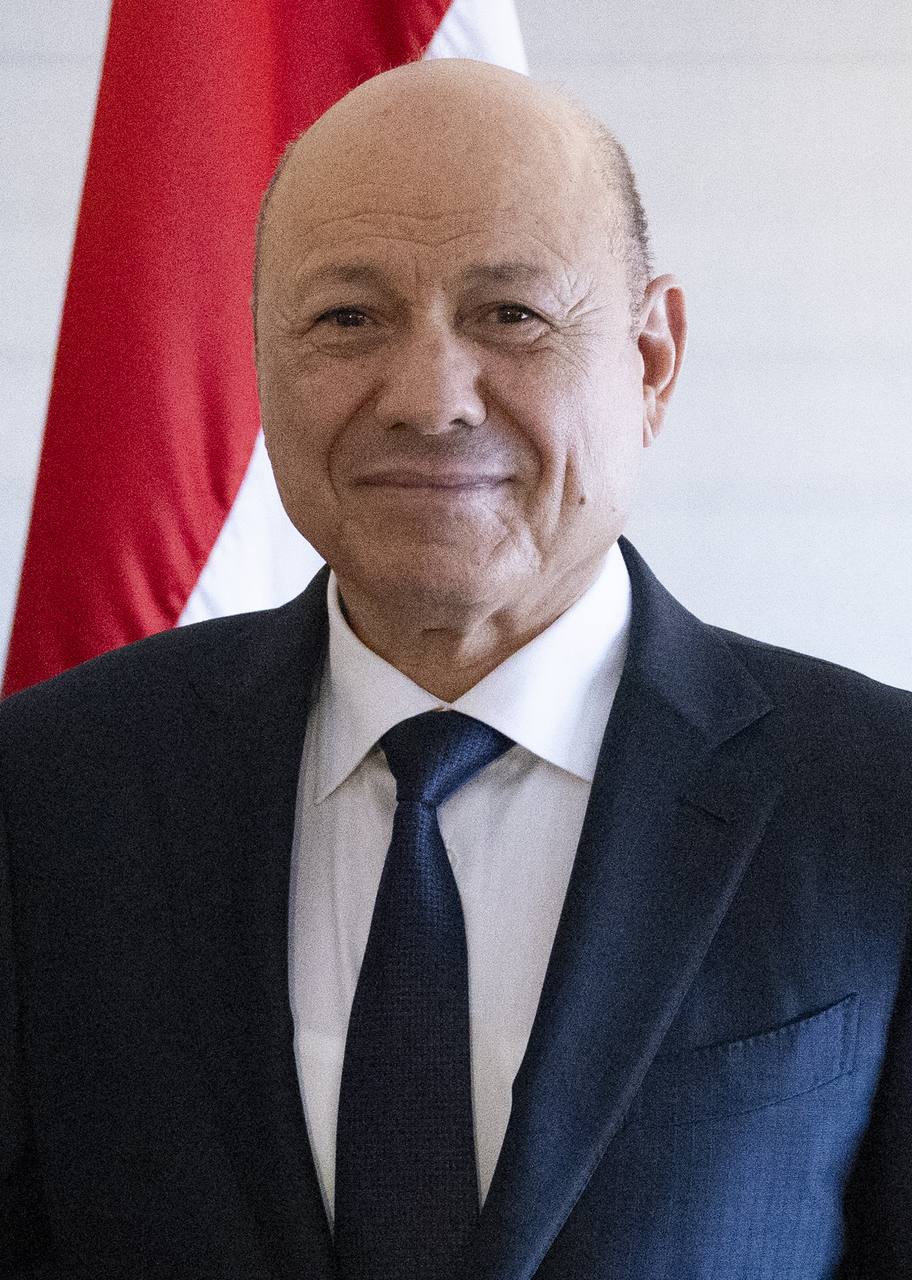
Al-Alimi Yemen general mobilisation: Rashad al-Alimi, chairman of Yemen's internationally recognised Presidential Leadership Council, has called for a general mobilisation against the Houthis and offered an immediate amnesty to any Houthi fighter who defects to government forces. The recorded address, delivered on Friday to mark the 64th anniversary of the revolution that toppled North Yemen's monarchy, was al-Alimi's first major speech since the Houthis routed government troops from the western Red Sea coast this month — seizing the port of Mocha and reaching the Bab el-Mandeb strait, one of the world's most important shipping chokepoints.
The speech was framed as a patriotic summons, but its military setting gives it a harder meaning. Al-Alimi is asking for more personnel after government formations lost ground at extraordinary speed. He is also asking men already fighting for the other side to change allegiance. Together, the mobilisation and the amnesty are an attempt to rebuild numbers, confidence and initiative before the latest battlefield reverses become a new political fact.
What al-Alimi actually said
Al-Alimi's appeal was direct. “I call on the sons of our great people to engage in general mobilisation and national mobilisation, to rally around their armed and security forces, join their ranks through official channels, and contribute each from their respective position in whatever way they can,” he said, according to the Al Jazeera and Associated Press accounts of the address.
He defined the objective as restoring state institutions and exercising their sovereignty across the country, “including Sana'a.” The capital has been under Houthi control since 2014, and naming it makes the appeal maximal rather than defensive. Al-Alimi was not merely asking Yemenis to hold Aden or protect the Taiz corridor; he was restating the internationally recognised government's claim to national rule at a moment when its immediate task is preventing further territorial loss.
The second element was an amnesty, effective immediately, for Houthi fighters who leave the movement. Al-Alimi said pardons would be issued under constitutional and legal procedures. That legal language is intended to make the offer sound like state policy rather than a battlefield promise, although its credibility will depend on whether defectors can reach government lines safely and whether local commanders honour the guarantee.
The anniversary gave the appeal its political vocabulary. On September 26, 1962, republican officers overthrew the Mutawakkilite Kingdom, setting off North Yemen's civil war. Al-Alimi wrapped his wartime appeal in that founding mythology: the republic as an unfinished project, mobilisation as civic duty, and Sana'a as the symbol of institutions to be recovered. The history is powerful, but it cannot substitute for command, supplies or public trust.
Why this matters
Governments call general mobilisations when their standing forces cannot meet the danger in front of them. That makes the speech less a display of strength than a public admission that the army, as currently constituted, cannot hold the line. The trigger was the Houthi advance along the Red Sea coast, which erased government positions in days and brought the movement to the approaches of Bab el-Mandeb. A front that had been largely static after the 2022 truce is moving again.
The amnesty is the more revealing half of the strategy. Defection offers are psychological weapons: they try to make every fighter wonder whether the opposing line is an exit rather than a death sentence. Announced from a position of weakness, however, an amnesty can look like desperation. Past amnesties in Yemen's overlapping wars have produced trickles rather than floods. The practical incentive must be stronger than whatever pay, protection, ideology or local obligation keeps a fighter where he is.
Al-Alimi was speaking to three audiences at once. To Yemenis, he offered recruitment and a language of national defence. To Riyadh, he signalled that Yemen's government intends to supply the ground force for a campaign backed from abroad. To the Houthis, he sent a narrower warning: the government is not dissolving, and its door is open to anyone prepared to leave their ranks.
The timing also matters. Saudi, Turkish and Pakistani military chiefs held their first meeting in Riyadh under the new Mecca Joint Defence Agreement only hours before the address. Al-Alimi spoke as his patrons and potential partners were visibly closing ranks. The juxtaposition does not prove a coordinated operation is imminent, but it makes the speech part of a regional deterrence effort rather than an isolated domestic appeal.
The battlefield behind the speech
From a frozen front to the Bab el-Mandeb Houthi offensive
The Houthis, formally Ansar Allah, seized Sana'a in September 2014. A Saudi-led coalition intervened in March 2015 in support of the internationally recognised government. A United Nations-brokered truce in April 2022 sharply reduced cross-border attacks and largely froze the main front lines even after the formal agreement expired. That uneasy equilibrium survived for more than four years; the September 2026 offensive has broken it.
About two weeks ago, Houthi forces swept south along the western coast, taking Mocha and the remaining coastline toward Bab el-Mandeb. They then pressed the Taiz–Aden road through the Hejat al-Abd mountain pass, the government's lifeline to Taiz, Yemen's third-largest city. Government forces said they repelled overnight Houthi attacks this week. Reuters reported the defence on September 24, while the Critical Threats Project–Institute for the Study of War documented continuing fighting on September 25 around Hijat al-Abd and al Ashbut in Lahij governorate. Analysts assess that a Houthi grip on the road could effectively encircle government forces in Taiz. Signal Post News has followed the fight for the Taiz–Aden route.
Yemen child malnutrition: UNICEF's September warning
The civilian numbers show how quickly movement at the front becomes a humanitarian emergency. About 130,000 people have fled the southwestern fighting in recent weeks, including roughly 71,000 children, most from Taiz governorate, according to UNICEF figures carried by UN News on September 25. Mobile teams screened nearly 2,900 children they could reach; more than one in four were acutely malnourished, including about 200 with severe acute malnutrition, the deadliest form.
Those screenings are not a national prevalence survey, and the hardest-hit areas may be the least accessible. Even with that caveat, the result is alarming because the children were displaced by active fighting into a health system already running short of beds, fuel, oxygen and medicines. See our fuller reports on Yemen's child-malnutrition surge and hospitals overwhelmed from Taiz to Aden.
Houthi missiles and drones keep Riyadh under pressure
The Saudi front is moving in parallel. Since declaring a naval blockade against Riyadh in July, the Houthis have launched missiles and drones toward Saudi cities, energy infrastructure and Red Sea shipping. Early Saturday, the Saudi-led coalition said its air defences intercepted Houthi ballistic missiles and drones. Reuters reported two missiles aimed at Khamis Mushait and two drones aimed at Riyadh; an AP-syndicated account put the missile count at one. The discrepancy should remain visible until officials publish a fuller interception record.
What is not disputed in the cited reporting is the tempo: this was the second attempted strike on the Saudi capital in three days. Reuters noted that the attacks add pressure to global oil supplies already strained by the US–Israeli war on Iran. The operational exchange is examined in our report on the latest Saudi interceptions.
The Mecca defence pact links Saudi Arabia, Turkey and Pakistan
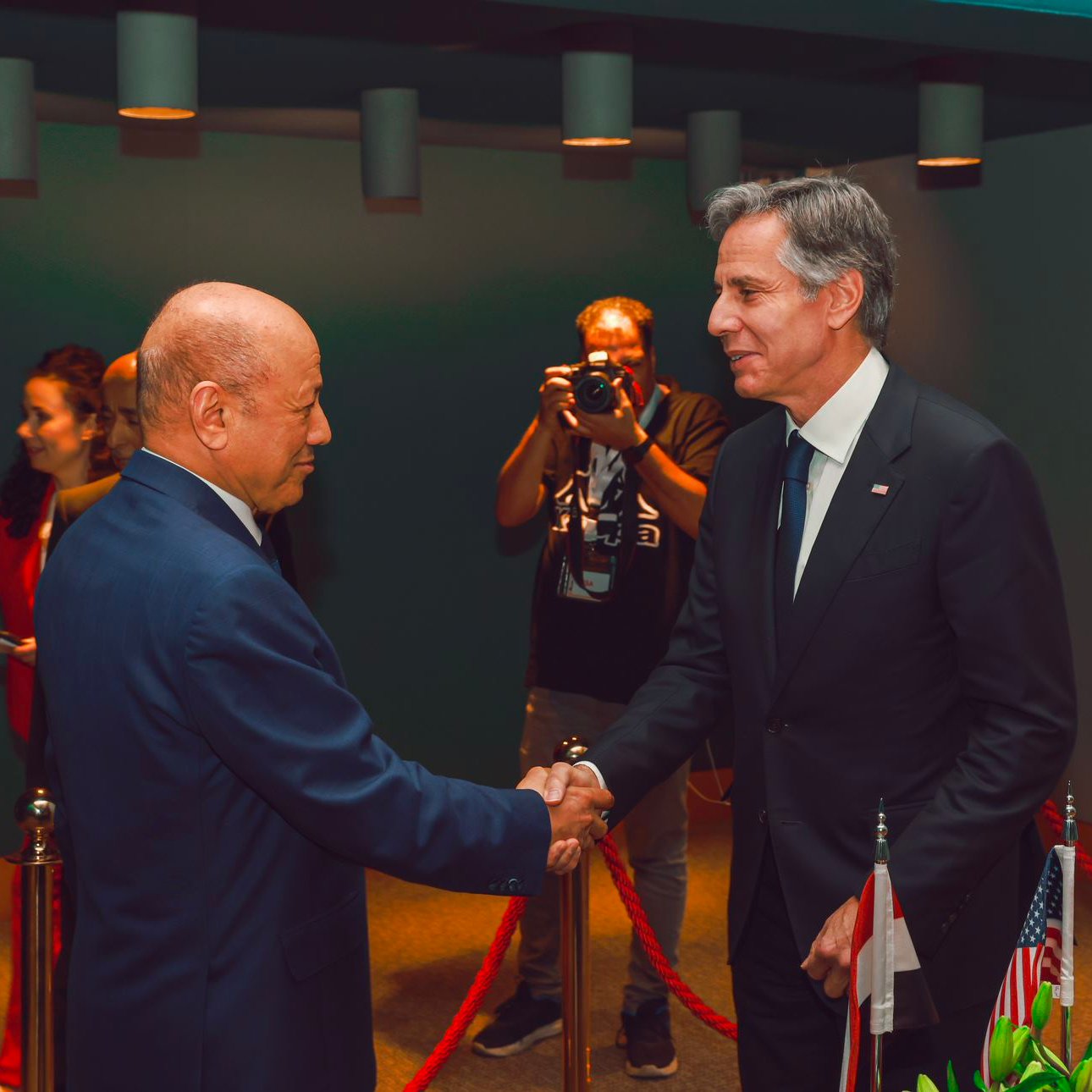
Saudi Arabia, Turkey and Pakistan signed the Mecca Joint Defence Agreement last month, pledging to treat an armed attack on any one of them as an attack on all. On Friday, the three countries' military chiefs met in Riyadh for the first time under the pact. Saudi Defence Minister Prince Khalid bin Salman said he had affirmed with Pakistan's army chief, Asim Munir, continued joint efforts against attacks on the kingdom.
The pact's wording is deliberately strong; its operational content remains untested. It could produce air-defence deployments, intelligence sharing, advisers, naval coordination or simply a thicker political warning. Our analysis of the Saudi–Turkey–Pakistan Mecca defence pact explains why that uncertainty matters. Al-Alimi's speech gives the agreement a ground-war counterpart: Yemenis are being asked to mobilise while Saudi Arabia assembles regional backing.
Who gains, who loses
Al-Alimi's government gains a narrative of resistance and a tool for probing Houthi cohesion. Recruitment through official channels could refill units and turn public anger into organised defence. A stalled call-up would do the opposite, advertising weakness more loudly than silence and widening the gap between republican symbolism and battlefield capacity.
The Houthis gain from the facts on the ground but inherit new risks. They can present the mobilisation speech as evidence that their opponent is broken and needs emergency manpower. Yet they must also police against defections and calculate whether further advances could turn the Mecca Pact from deterrent language into direct intervention.
Saudi Arabia wants Yemenis to carry the ground war. A locally led mobilisation reduces the political and military cost of sending Saudi forces back into a conflict Riyadh has spent years trying to contain. The pact provides leverage, but no public evidence yet shows how much Turkish or Pakistani force would deploy, under whose command or for what duration.
Civilians occupy the worst position. A mobilisation drive pulls young men into a country where 19.5 million people already face crisis-level food insecurity and hospitals are overwhelmed. Every new fighter is also a worker, student, parent or caregiver removed from an economy and social system already weakened by more than a decade of war.
Iran watches an ally expand toward a global chokepoint. A durable Houthi position around Bab el-Mandeb would give a Tehran-aligned force leverage near a second critical maritime passage while the Strait of Hormuz remains heavily disrupted. That does not mean Iran directs every Houthi tactical decision; it does mean the regional balance changes when an aligned movement controls more coastline.
What the numbers imply
Pace matters as much as scale
Seventy-one thousand children displaced in weeks is evidence of a conflict turning kinetic faster than protection systems can adjust. The 2022 truce largely held the principal front lines for over four years. The September flare-up altered the western-coast status quo in under two weeks. That speed explains why hospitals, roads and aid teams can be overwhelmed before donors or diplomats have agreed on a response.
Malnutrition makes displacement more lethal
UNICEF's finding that more than one in four of nearly 2,900 screened children were acutely malnourished converts a chronic crisis into an immediate one. These are not abstract national projections. They are children encountered by mobile teams after displacement, with around 200 already in the severe category. Fighting is now accelerating starvation in the southwest by interrupting food, care and income at the same time.
Two Riyadh attempts in three days reveal cost asymmetry
The interception tempo suggests the Houthis can sustain pressure on the kingdom even without a confirmed strike on the capital. Drones and missiles force Saudi air defences to remain active, consume interceptors and protect a large geographic area night after night. The tactical exchange is asymmetric: relatively cheap incoming weapons can require costly defensive responses, while a single leak through the shield can carry outsized economic and political consequences.
What happens next — four scenarios
- The call-up fizzles. Recruitment lags, the Taiz–Aden road is cut and the Houthis tighten their grip around Taiz, collapsing the government's northern position toward Aden. In this scenario, the amnesty draws few defectors and becomes evidence of lost authority.
- The Mecca Pact hardens. Turkey or Pakistan deploys air-defence assets, advisers or naval support. That could strengthen deterrence and protect Saudi territory, but it also raises the chance of direct regional escalation if personnel from pact members are attacked.
- Diplomacy reopens. Oman and the United Nations use the shock of the flare-up to push both sides back toward a truce. This becomes plausible only if the Houthis decide their coastal gains are safer banked than extended and the government accepts negotiations before recovering lost ground.
- The war freezes again, but hungrier. The most likely near-term outcome is that front lines stabilise near their new positions while displacement, hospital strain and malnutrition worsen through the winter. A frozen map would reduce the rate of territorial change, not restore what civilians lost.
Conclusion
Al-Alimi has played the two cards available to a government losing ground — more men, and an invitation to the other side's men to switch. Whether either card wins depends less on the speech than on what Riyadh, Ankara and Islamabad do next — and on whether Yemenis, exhausted by a decade of war, still answer a call to arms.
Linked sources
- Al Jazeera — “Yemeni leader urges public to enlist, offers amnesty to Houthi defectors” (September 26, 2026)
- Associated Press, syndicated by Barbados Gazette — “Yemeni leader urges public to enlist, offers amnesty to Houthi defectors” (September 26, 2026)
- Reuters — Saudi Arabia says it intercepted two drones launched by the Houthis toward Riyadh (September 26, 2026)
- Reuters via WNCY — Saudi coalition says it intercepted Houthi missiles and drones (September 25–26, 2026)
- UN News — September 25 audio briefing, including Yemen child-hunger reporting
- Critical Threats Project–Institute for the Study of War — Iran Update, September 25, 2026
- Reuters — Yemen says government forces repelled a Houthi push on the Taiz–Aden route (September 24, 2026)
Reporting cutoff: September 26, 2026. Claims by belligerents remain attributed. The missile-count discrepancy between Reuters and the AP-syndicated account is preserved; analysis and scenario judgments are Signal Post News's own synthesis.