Trump says he told Zelenskyy to "take it easy on the refineries" as diesel prices climb — reopening the Trump Zelenskyy refinery strikes dispute just as Kyiv's drone campaign bites deeper into Russia's fuel output than at any point in the war.
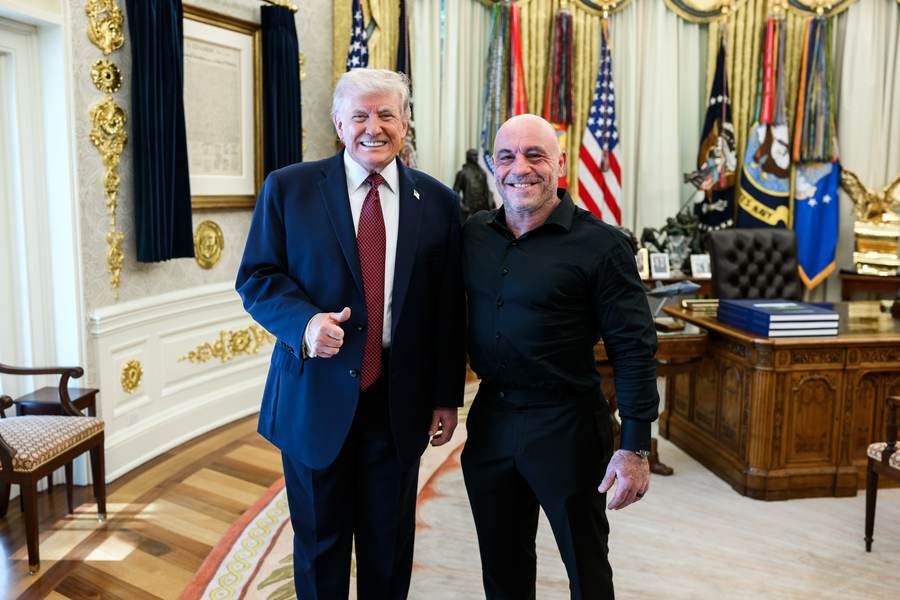
WASHINGTON — President Donald Trump said Sunday he had "once again urged" Ukrainian President Volodymyr Zelenskyy to scale back Ukraine's attacks on Russian oil refineries, telling reporters that rising global diesel prices were the reason. "You gotta take it easy on the refineries," Trump said on September 27, adding that Zelenskyy had replied: "Well, we'll probably do that."
Within a day, Kyiv pushed back on both halves of that account. Zelenskyy publicly denied that he was being pressured to stop the refinery campaign, and a Ukrainian official told the Kyiv Independent that Ukraine would halt strikes on Russian refineries only if Moscow agreed to a reciprocal energy truce — something Kyiv, the official stressed, has agreed to nothing on so far.
The exchange turns an energy weapon both sides are actively using into the newest diplomatic pressure point of the war — and it exposes a fault line inside Washington's own approach: the White House wants the strikes throttled for the sake of fuel prices, while Kyiv treats them as one of its few working levers against Moscow.
What happened
Trump's Sunday remarks were the most explicit public version of a demand he has now made more than once. Axios reported that in a September 21 phone call, Trump repeatedly pressed Zelenskyy to halt the refinery strikes, with "the word diesel" coming up many times, according to a source familiar with the conversation. The two leaders then met on the sidelines of the U.N. General Assembly in New York on September 22–23, where they discussed a possible Russia-Ukraine energy ceasefire alongside Patriot missile production and security guarantees.
Secretary of State Marco Rubio said Washington would try to negotiate such an energy ceasefire but cautioned that a verifiable agreement would be difficult — a warning that points to the core enforcement problem: refinery output and grid damage are easy to claim and hard to independently confirm in wartime.
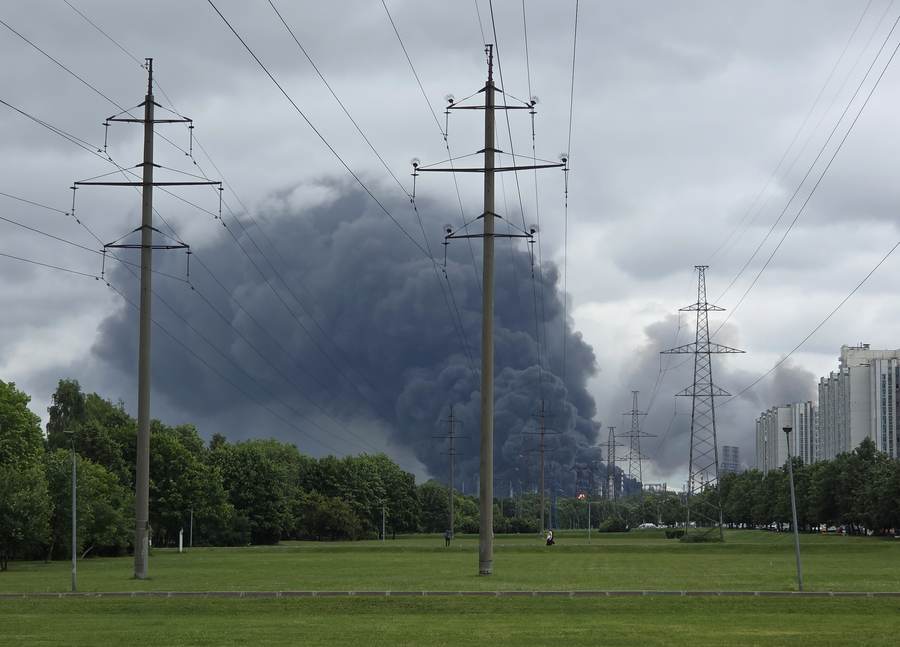
Meanwhile, Ukraine has not paused. In the days around Trump's remarks, Ukrainian drones carried out a large attack on fuel depots in Russia's Krasnodar region, setting fires at three civilian companies, with the Edelveis-95 depot reported as possibly hit, according to informat.ro. The strikes continued even as the diplomacy played out in public.
Why this matters
Diesel is the transmission belt between this war and the global economy. Trucks, trains, farm equipment and backup generators run on it — which is why a refinery campaign thousands of miles away registers at fuel pumps and in freight costs. Trump's framing is explicitly economic: the strikes are no longer just a Ukrainian military tactic but a variable in American and global inflation.
That framing marks a shift from the Biden-era version of this same argument. In 2024, Washington discouraged Ukrainian strikes on Russian energy infrastructure primarily over escalation management and crude-oil price fears. Trump's version is blunter and more domestic: diesel prices, with a possible U.S. diesel export ban reportedly under consideration. The policy ask rhymes; the politics are different — less about managing Moscow's reaction, more about managing the price at home.
There is also a leverage question the White House has not answered. Ukraine's refinery campaign is one of the few instruments that has imposed direct, mounting costs on Russia's war economy this year. Asking Kyiv to surrender it for nothing more than a conversation — while Russia keeps pounding Ukraine's own energy grid, including the massive overnight strike on Kyiv-region energy infrastructure on September 30 — is why Kyiv's answer was "reciprocity or nothing."
How we got here
Ukraine's refinery campaign did not begin this month. It has been building since 2025, when long-range drones matured into a reliable tool for reaching deep inside Russia. The logic, as Ukrainian officials have described it, is straightforward: if Russia insists on financing and fueling a long war, raise the cost — break the rhythm of refinery runs, force rationing, and make the economic pain visible far from the front line.
By the IEA's accounting, the campaign reached industrial scale in 2026: Ukraine hit roughly one Russian oil refinery every three days across the first eight months of the year. Russian gasoline output fell 20 percent compared with 2025, and diesel production dropped by nearly 30 percent. Those are not marginal disruptions; they are the kind of sustained degradation that shows up in export terminals, domestic fuel queues and, eventually, military logistics.
The irony is that the diesel-price pain Trump cites is only partly Kyiv's doing. Analysis by the KSE Institute and the Centre for Research on Energy and Clean Air found that Russian diesel and gasoil exports fell by roughly a third — about 4 percent of world seaborne diesel and gasoil trade — but that the U.S.-Israeli war with Iran hammered diesel supplies harder: Persian Gulf diesel exports fell by 152 million barrels from March to August, against a 68-million-barrel drop from Russia. In other words, the fuel-price crisis has two authors, and the larger one is the Gulf war, not the refinery campaign.
By the numbers
- 1 every 3 days: the approximate rate at which Ukraine struck a Russian oil refinery across January–August 2026, per IEA data.
- −20% / −30%: the fall in Russian gasoline output versus 2025 and in diesel production, respectively, per the IEA.
- −33%: the drop in Russian diesel/gasoil exports — roughly 4% of global seaborne diesel/gasoil trade — per KSE Institute/CREaA.
- 152M vs 68M barrels: the diesel-supply loss from the Persian Gulf (March–August) versus from Russia — the Iran war, not Kyiv's campaign, is the bigger driver of tight diesel markets.
- 3 companies: the number of civilian firms whose fuel facilities caught fire in Krasnodar region in the latest Ukrainian drone wave, per informat.ro.
Winners, losers, critics
Kyiv gains leverage from every refinery fire — and loses it the moment it agrees to stop unconditionally, which is why its position is reciprocity or nothing. Moscow would welcome a one-sided halt: it would relieve pressure on fuel supplies while Russia's own strikes on Ukrainian energy infrastructure continue unabated.
American and European diesel consumers are the constituency Trump is speaking to; sustained high diesel prices feed directly into freight costs and inflation. But analysts note the awkward arithmetic: throttling Ukraine's campaign addresses the smaller of the two supply shocks. A U.S. diesel export ban, reportedly under consideration, would be the more direct lever on domestic prices — at the cost of straining allies who depend on U.S. diesel cargoes.
Critics of Trump's demand — including voices in Kyiv and among European allies — argue it pressures the wrong side: Ukraine is striking refineries that fund Russia's invasion, while Russia strikes the power grid that keeps Ukrainian civilians alive through winter. Supporters of the demand counter that energy infrastructure on both sides is now a target set, and that only mutual restraint — the energy ceasefire Rubio describes — breaks the cycle. Both claims can be true at once, which is exactly why the diplomacy is stuck.
What happens next
Three paths are visible. The most likely: no energy ceasefire materializes quickly — Rubio's verifiability warning is well founded, since neither side can credibly monitor the other's refinery output or grid repairs in real time — and the parallel campaigns grind on into winter, with Russia targeting Ukrainian heating and power while Ukraine targets Russian fuel.
The diplomatic path: Washington converts Trump's public pressure into a concrete reciprocal formula — a monitored halt to energy-infrastructure strikes on both sides, possibly linked to the Black Sea or prisoner-exchange tracks already in motion. Kyiv has already named its price: Russia stops hitting Ukrainian energy first, or at least simultaneously.
The escalation path: Ukraine answers Russian grid strikes with deeper refinery strikes, Russia answers those with heavier grid strikes, and the energy war becomes the winter's main front — with diesel prices, not territory, as the metric the world watches. Trump's "take it easy" remark will then read as the moment Washington chose fuel prices over Kyiv's leverage — or the moment it tried, and failed, to choose at all.
Conclusion: the refinery campaign worked — the IEA numbers prove it — and that is precisely why it is now a bargaining chip everyone wants to control. Trump wants it throttled for diesel prices; Zelenskyy will only trade it for a Russian halt; Moscow wants it stopped for free. Until one side's price is met, the drones will keep flying, the refineries will keep burning, and the diesel market will keep score.
Related coverage
Sources
- Kyiv Independent (via europesays.com) — "Trump wants Zelensky to ease strikes on Russian refineries, Ukraine official says deal must go both ways" (September 2026)
- informat.ro — "Trump asks Zelensky to reduce attacks on Russian refineries" (September 2026)
- Particle News — "Trump says he asked Zelenskyy to ease strikes on Russian refineries" (September 2026)
- Europesays analysis — "US attempts to control Ukraine's attacks on Russia reflect a fundamental strategic disconnect" (September 2026)
- Zambian Observer — "Trump again tells Ukraine to ease strikes on Russian refineries" (September 2026)
Reporting basis: President Trump's September 27, 2026 remarks to reporters as reported by the Kyiv Independent, informat.ro, Particle News and the Zambian Observer; the Ukrainian official's reciprocity condition via the Kyiv Independent; Secretary Rubio's energy-ceasefire comments; IEA refinery-campaign data; and KSE Institute/CREaA analysis of diesel and gasoil export flows. Direct quotes are as reported by those outlets. Where Trump's account of Zelenskyy's response and Zelenskyy's public denial differ, both are presented. The analysis of strategic, economic and political implications is Signal Post News's own. This is a fixed September 30, 2026 reporting snapshot.