War · Iran · U.S. Politics
The Trump Vance Iran war rift moved into the open on Wednesday: in Shenzhen, President Donald Trump told Fox News that the June memorandum of understanding with Iran — negotiated by Vice President JD Vance and signed by Trump himself — was a “waste of time,” while the New York Times reported that the president has grown increasingly frustrated with Vance and has privately praised Secretary of State Marco Rubio as a strong 2028 candidate. Trump denied that he had pulled Vance off the Iran talks because of the deal, and Vance insisted this week that there is “no daylight” between them. Both things are now on the record at once — and the distance between them is the story.
Track it live: Iran war
SHENZHEN, November 18, 2026 — The Trump Vance Iran war rift is no longer a matter of Washington whispers. Speaking to Fox News in Shenzhen, where he is attending the APEC meetings ahead of Thursday’s first-ever trilateral meeting with China’s Xi Jinping and Russia’s Vladimir Putin, President Donald Trump dismissed the June memorandum of understanding with Iran — the 14-point agreement negotiated by Vice President JD Vance and signed by Trump — as a “waste of time,” according to the New York Post’s report of the interview. Hours earlier, the New York Times had reported that Trump has become increasingly frustrated with Vance over the past two weeks, has complained that his vice president failed to say plainly that Trump made the right decision in going to war, and has privately praised Secretary of State Marco Rubio, suggesting Rubio would be a strong candidate in 2028. The Times’ account rests on anonymous sourcing; the White House did not respond to the newspaper and Vance’s office declined to comment, and this article treats it accordingly — as reporting, not established fact. What is established fact is what the president said on camera, and what he said cuts in two directions at once.
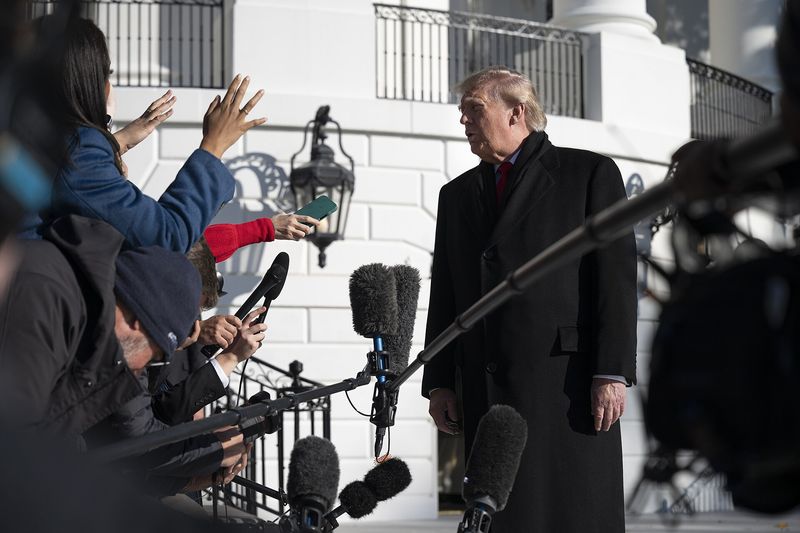
What Trump said in Shenzhen: ‘I didn’t like doing it, but I listened to people’
Trump’s criticism was aimed at the instrument Vance produced — and, by unavoidable implication, at the judgment of the man who produced it. “I didn’t like doing it, but I listened to people,” Trump said of signing the memorandum, according to the Post. “I have some very good people, and it could have worked out. But we had a little memorandum of understanding. I never believe too much in memorandums. You go right to a contract, forget the memorandum.” The June pact was a 14-point memorandum of understanding with Tehran. On the Post’s account, it fell apart in July, when Iran attacked several commercial ships in a dispute over postwar control of the Strait of Hormuz — the waterway whose status has remained the war’s most dangerous unresolved question ever since.
Trump framed the episode as tuition rather than error. “It delayed things a little bit,” he said. “It wasn’t a mistake. Actually, we got to know them very well during that period, and we got to know that they can’t be trusted.” That construction — the deal was worthless, but signing it was not a mistake — is doing careful work. It distances the president from the agreement without conceding that he erred in approving it, and it relocates the failure to Tehran’s character rather than to Washington’s negotiating strategy. But it also publicly re-prices the work of the vice president who spent months as the administration’s point man on the Iran file: the centerpiece of Vance’s diplomacy is now, in his own president’s words, a waste of time.
The denial matters: Trump says Vance was not pulled off the talks over the deal
Just as significant is what Trump denied. The president rejected the suggestion that he had pulled Vance off the Iran talks because of the memorandum — a denial this article states prominently because it is the administration’s own position, offered in the same interview, and it complicates any simple sidelining narrative. Trump said Vance is “doing a very good job.” His complaint, as he presented it, was narrower and stranger: Vance had “basically just left one thing out” — the answer to the question of whether, knowing what he knows now, he would wage the war again. “If we had it to do again, would you do [the war] again? And the answer is absolutely yes,” Trump said. “What we’re doing is the right thing. I think long term will be judged very well. Short term, I know the elections were coming up. I said, ‘This is a problem, but I’m not going to be guided by that.’”
Read closely, the president’s grievance is not that Vance negotiated badly. It is that Vance, in accounting for the midterm catastrophe, described the war as the reason Republicans lost — a description Trump himself initially called “largely true” — without adding the sentence Trump considers obligatory: that the decision to go to war was right. In Trump’s telling, the omission is the offense. That is a dispute about loyalty and narrative discipline, not about negotiating tactics, and it explains why the argument has escalated even though the underlying policy disagreement — deal or no deal — was supposedly settled when Trump posted on November 12 that “we don’t need a deal with Iran.”
What the Times reporting does — and does not — establish
The New York Times reported on Wednesday that Trump has grown increasingly frustrated with Vance over the past two weeks. According to the Times, Trump has complained that Vance should have said the president made the right decision in going to war with Iran; that he has privately praised Rubio; and that he has suggested Rubio would be a strong candidate for president in 2028. The Times also noted that Rubio has repeatedly defended the war as necessary — the public posture Trump found missing in his vice president. If accurate, the reporting describes a president shopping, at least rhetorically, for a successor narrative that bypasses his own vice president less than two years into the term.
But the limits of that reporting deserve the same prominence as its contents. The Times’ account is anonymously sourced: the officials describing the president’s private frustration and private praise are not named, their proximity to the conversations is characterised rather than demonstrated, and none of the principals confirmed it. The White House did not respond to the Times’ request for comment, and Vance’s office declined to comment. Signal Post News has not independently verified the private conversations the Times describes, and nothing in this article presents them as confirmed. What can be verified is the public record around them: Trump’s own words in Shenzhen, his November 12 reassignment of Vance’s public duties, and Vance’s televised insistence on Monday that there is “no daylight” between the two men. Readers should weigh the anonymous reporting against that record — and against the fact that both camps, on the record, deny any rift.
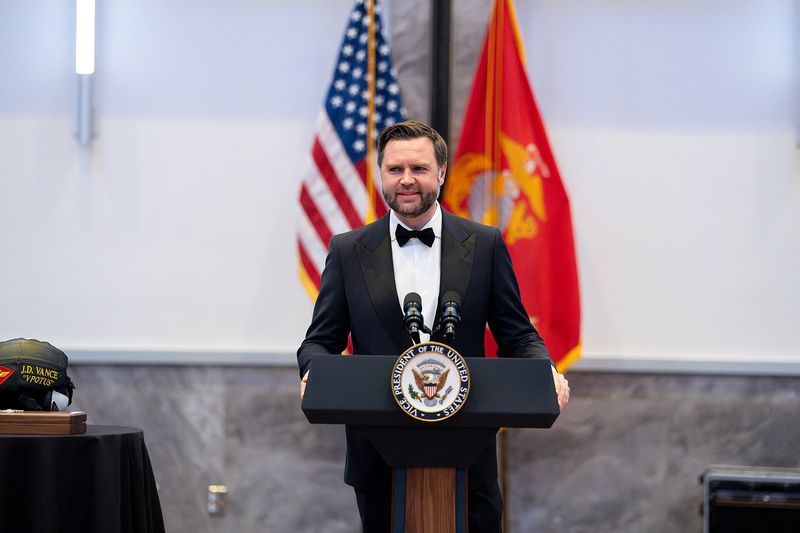
Kilmeade, Fox and the argument inside the coalition
The pressure on Vance is not coming only from the president, or only from anonymous officials. On Tuesday, November 17, Fox News host Brian Kilmeade used his radio show to deliver the bluntest verdict yet from inside the president’s own media coalition, as reported by The Hill. Reacting to Vance’s Monday television interview, Kilmeade said Vance “never should have been vice president” and dismissed his framing of the war’s critics as “another straw man argument.” The critics, Kilmeade argued, want to “win, neutralize our 40-year enemy and you end it when you want to end it” — a definition of victory that treats any negotiated pause, including the June memorandum, as a failure of nerve rather than a diplomatic instrument.
Kilmeade’s intervention matters for two reasons. First, it shows the dispute is not a two-man quarrel but a three-way argument inside the governing coalition: the president insisting the war was right and will be vindicated; the vice president insisting it will not become an open-ended commitment; and a vocal part of the base’s media infrastructure insisting that the only acceptable ending is a decisive one on Washington’s timetable. Second, it landed on the eve of the Shenzhen trilateral, when the administration can least afford to project division. Vance’s Monday performance — the interview Kilmeade was attacking — had been an exercise in damage control: as Signal Post News reported, Vance said Iran will not become a “forever war”, not a 10- or 15-year commitment “or frankly even a two-year” one, and insisted there is “no daylight” between him and the president. Within 48 hours, the president had called his signature diplomatic product a waste of time, and a leading Fox voice had said he should never have held the office at all.
How we got here: from February’s first strikes to November’s recriminations
The war began on February 28, 2026, with a joint U.S.-Israeli assault on Iran. In June, after months of fighting, Vance negotiated the 14-point memorandum of understanding that paused the conflict’s most intense phase; in July, on the Post’s account, it collapsed amid Iranian attacks on commercial shipping and the fight over postwar control of the Strait of Hormuz. Through the autumn, the question hanging over the administration was whether Trump would strike Iran again — a question Signal Post News tracked as Trump ruled out a strike before the midterms while leaving a deal on the table.
The midterms changed the politics of everything. On November 3, Democrats took both chambers of Congress. On November 4, Vance gave the defeat a single cause: “The reason we lost is the war.” Trump initially called that assessment “largely true.” The truce between their two accounts lasted about a week. On November 12, Trump directed Vance to devote his “complete and total attention” to alleged fraud and crime in Democratic-run states and cities — a conspicuous reassignment away from the Iran file — and posted, “We don’t need a deal with Iran,” as CNN and USA Today reported at the time. On Monday, November 16, Vance went on Fox News with Laura Ingraham to insist there was “no daylight” between him and Trump. On Tuesday, Kilmeade attacked him for it. On Wednesday, the Times reported the president’s private frustration, and the president himself, in Shenzhen, supplied the public version — while formally denying he had sidelined his vice president over the deal. On Thursday, November 19, Trump sits down with Xi Jinping and Vladimir Putin in the first Trump-Xi-Putin trilateral, confirmed by Beijing ahead of the APEC meetings — with the Iran war, and his own vice president’s standing, unavoidably part of the backdrop.
Why this matters
Who owns the Iran file now?
The most consequential question raised by Wednesday’s interview is operational, not personal: who speaks for the United States on Iran? Vance negotiated the memorandum; Trump has now disowned the instrument while denying he removed the negotiator. Rubio, the secretary of state, is — on the Times’ reporting — the official whose defense of the war the president praises. Tehran, and the mediators who carry messages to it, must now price every American signal against the possibility that the person sending it does not hold the file. A negotiating channel whose products the president publicly calls a waste of time is a channel counterparties stop investing in, whether or not its owner has formally been moved aside. That is the practical cost of the rift even if every private detail of the Times’ reporting were wrong: the on-camera record alone has devalued the Vance channel.
The signal to Tehran — and to the mediators
Trump’s Shenzhen formulation — the memorandum “wasn’t a mistake,” but its real yield was learning that Iran “can’t be trusted” — will be read in Tehran as a statement that Washington now regards interim agreements as worthless by design: “You go right to a contract, forget the memorandum.” For a conflict whose most dangerous live issue, control of the Strait of Hormuz, has so far been managed through exactly the kind of interim understandings Trump derided, that is a narrowing of the diplomatic toolkit at the moment it is most needed. It also raises the question every capital is now asking — will Trump strike Iran again? The president did not threaten a strike in Shenzhen. But a president who says the pause was a waste of time, and who insists he would wage the war again “absolutely,” has left himself very little rhetorical room for a second pause.
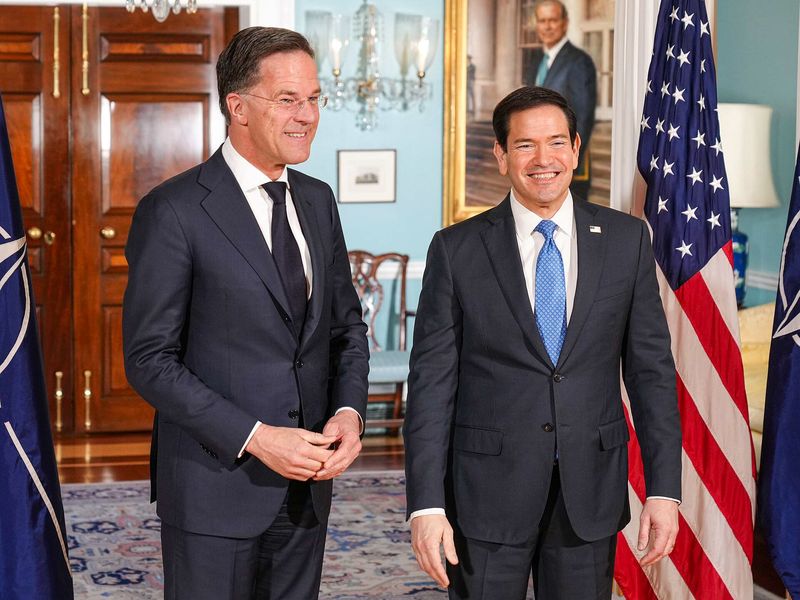
Rubio and the 2028 shadow
Every vice president serves two masters: the president who chose him and the succession he hopes to inherit. The Times’ reporting — again, anonymous and unconfirmed — suggests Trump has begun, at least in private conversation, to audition an alternative: Rubio, whose repeated public defense of the war as necessary is precisely the loyalty performance Trump says Vance omitted. Whether or not the president intends a genuine succession signal, the report alone reshapes incentives across the administration. Officials deciding how to talk about Iran now know which formulation the president rewards. Critics of Vance, including Kilmeade, hear licence; defenders of Vance hear a warning that the vice president’s room for independent judgment on the war — the judgment that produced both the memorandum and the “reason we lost” diagnosis — has narrowed to the width of a single approved sentence: the war was right.
A public split on the eve of the Shenzhen trilateral
Timing compounds everything. Trump delivered his verdict on the memorandum in Shenzhen, hours before the first-ever meeting of the American, Chinese and Russian presidents together — a summit at which Iran, a partner of both Beijing and Moscow, cannot be far from the agenda. Xi and Putin will sit across from a president who has just publicly devalued his own vice president’s diplomacy and whose administration’s Iran position is visibly contested at home. Adversaries and partners alike draw conclusions from such displays: about how long American commitments last, about whose signature binds Washington, and about whether pressure — in the Strait, at the negotiating table, or in the information space — can widen cracks that are already showing. Who benefits from the split is therefore not only a domestic question. Tehran benefits if American threats lose credibility; Beijing and Moscow benefit if Washington arrives divided; Rubio benefits, on the Times’ account, in the succession stakes; and Vance — who retains the office, the president’s formal denial that he was sidelined, and the burden of a disowned deal — loses the thing a vice president can least afford to lose: the presumption that he speaks with the president’s voice.
What happens next
Three scenarios now compete. In the first, the rift is contained: the president’s denial becomes the operative fact, Vance keeps a public role — beginning with the domestic fraud-and-crime brief he was handed on November 12 — and the Shenzhen remarks are absorbed as one more instance of Trump thinking aloud about a subordinate. That outcome requires Vance to supply, publicly and repeatedly, the sentence Trump wants: that the war was the right decision. In the second scenario, the Iran file migrates in practice to Rubio and the State Department without any formal announcement, leaving Vance as vice president in title on domestic portfolios while the war’s diplomacy — and any decision on striking Iran again — is run elsewhere; the tell will be who fronts the next Hormuz or memorandum discussion. In the third, the argument reignites: another Vance interview that prices the war’s costs, another presidential correction, and a succession contest conducted in public two years early. The immediate test arrives within days: whether Vance appears, and in what role, as the Shenzhen trilateral concludes and the administration presents its account of the summit — and whether anyone in the administration attempts a second memorandum with Tehran now that the president has told the world what he thinks the first one was worth.
Both camps deny a rift — and the record is what it is
It is worth ending where both principals insist the story should end. The president, on camera, denied pulling Vance off the Iran talks over the memorandum and called his work “a very good job.” The vice president, on camera two days earlier, said there is “no daylight” between them. The White House offered no response to the Times’ account of private frustration, and Vance’s office declined to comment on it — neither a confirmation nor a denial of conversations neither newsroom witnessed. Between those denials sits a documented sequence that no denial dissolves: a deal negotiated by the vice president and signed by the president, disowned by the president as a waste of time; a defeat blamed by the vice president on the war, and a president who first agreed and then demanded the missing sentence; a reassignment, a radio broadside, and a succession rumour, all inside fifteen days. Whether that amounts to a rift is, in the end, a judgment readers can make from the record itself. The record, at least, is no longer in dispute.
Sources
- New York Post, November 18, 2026 — Trump blasts Vance-negotiated Iran deal as a ‘waste of time’: report of Trump’s Fox News interview in Shenzhen, including the “waste of time,” “I didn’t like doing it, but I listened to people,” “forget the memorandum” and “they can’t be trusted” remarks; his denial that he pulled Vance off the Iran talks over the deal; the “doing a very good job” and “absolutely yes” remarks; and the account of the 14-point June memorandum collapsing in July after Iranian attacks on commercial ships in the dispute over postwar control of the Strait of Hormuz.
- The New York Times, November 18, 2026, via C14 News — reporting on Trump’s frustration with Vance: Trump increasingly frustrated with Vance over two weeks; the complaint that Vance should have said the war decision was right; private praise of Rubio and the suggestion of Rubio as a strong 2028 candidate; Rubio’s repeated defense of the war as necessary. Anonymously sourced; the White House did not respond and Vance’s office declined to comment. Not independently verified by Signal Post News.
- The Hill, via AmeriLedger, November 2026 — Fox’s Kilmeade: Vance ‘never should have been vice president’: Brian Kilmeade’s Tuesday, November 17 radio remarks reacting to Vance’s Monday interview, including “another straw man argument” and “win, neutralize our 40-year enemy and you end it when you want to end it.”
- CNN, November 12, 2026 — Trump, Vance and the Iran deal: the November 12 reassignment of Vance to alleged fraud and crime in Democratic-run states and cities and the president’s Iran-deal posture.
- USA Today, November 12, 2026 — Trump, the Iran war peace deal and the Vance negotiations: contemporaneous reporting on the November 12 shift and the “We don’t need a deal with Iran” post.
- Signal Post News, related coverage: Vance Says Iran Will Not Become a ‘Forever War’; Trump Rules Out an Iran Strike Before the Midterms as a Deal Stays Possible; China Confirms the Xi-Trump-Putin Meeting at APEC in Shenzhen.
- Photos: file photos — President Donald Trump takes reporters’ questions outside the White House departing for Asia, November 13, 2026, The White House (public domain) via Wikimedia Commons; Vice President JD Vance delivers remarks at the Marine Corps Ball, November 12, 2026, The White House (public domain) via Wikimedia Commons; Secretary of State Marco Rubio meets NATO Secretary General Mark Rutte at the Department of State, April 8, 2026, U.S. Department of State (public domain) via Wikimedia Commons. None depicts the November 18, 2026 Shenzhen interview.