World · Iran War · Diplomacy
On the eve of the midterm elections, the president took the war’s most-watched deadline off the table in a single word — while his vice president talked up a negotiated settlement, Qatari mediators circulated a draft out of Doha, and oil markets voted with a near-4 percent drop. Tehran, notably, is not convinced.
Track it live: Iran war tracker — the conflict, the blockade and the Hormuz standoff, updated as it develops
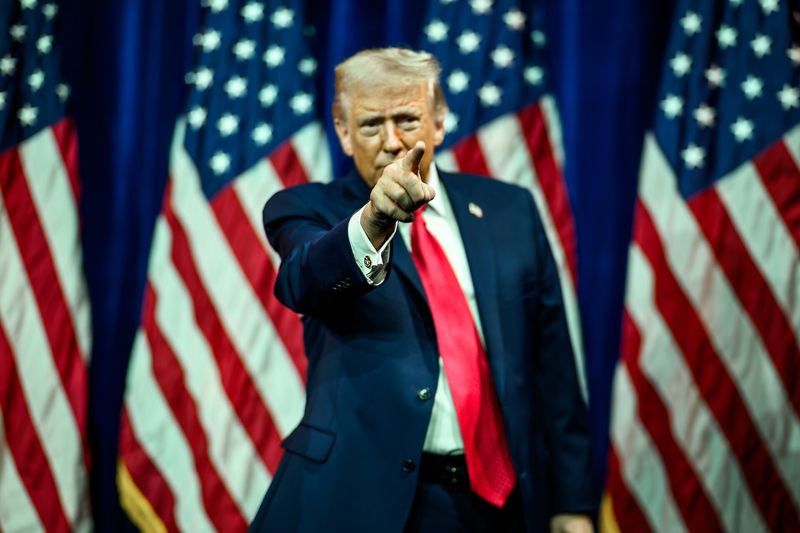
WASHINGTON — It was the last question of the last big speech before Americans vote, and it got the shortest answer of the campaign. As President Donald Trump concluded his closing-argument address at the Lincoln Memorial Reflecting Pool on Monday, November 2 — the eve of the November 3 midterm elections — a reporter asked whether he was considering striking Iran after the midterms. “No,” Trump replied, according to Reuters. One word, on the record, that reframes the Trump Iran deal after midterms question that has hung over the eight-month war for weeks: the deadline the whole region had been counting down to was, in the president’s own telling, no longer a deadline at all.
The answer did not come out of nowhere. In the speech itself, Trump struck a tone of a war already won and a settlement within reach. “We’re winning with Iran – easily winning,” he said. “They want to make a deal, and it could happen.” He noted that the United States has done “very little fighting” lately, said much of Iran’s military capability had been destroyed and its economy left in ruins, and repeated the one condition he has never moved from: “We’re not going to allow Iran ever to have a nuclear weapon, and they understand that.” What the speech did not contain mattered as much: no mention of a new offensive, no warning of strikes to come once the voting ends.
Vice President JD Vance reinforced the diplomatic reading. There had been, Vance said, “a number of good conversations with the Iranians,” and “the president and I both feel pretty good about the prospects for potentially coming to a negotiated settlement. We’re going to keep on working at it.” Reporting by Axios, relayed Monday, added texture to that picture: Trump has told aides there is “no rush” — “One way or the other, we will do something, but there is no rush” — and described Iran as financially broken. “We crippled them financially. They have no money, no gasoline,” he said, per Axios, calling the talks “going fine.” Axios also reported the split that now defines the administration’s Iran debate: Vance and special envoy Steve Witkoff favor a negotiated settlement, while Israeli Prime Minister Benjamin Netanyahu and War Secretary Pete Hegseth favor resuming military operations.
From ‘the hammer’ to ‘no’ in 24 hours
The whiplash is real, and it is worth measuring precisely. Barely 24 hours earlier, campaigning in Dubuque, Iowa, on November 1, Trump warned that the United States might at some point have to give Tehran “the hammer.” “The only reason I haven’t finished things with Iran is because I want to be kind,” he said. “But at some point, we’re going to have to hit them hard.” That was Sunday. On Monday, at the Reflecting Pool, the hammer was gone, replaced by a flat “no” to post-election strikes and a deal that “could happen.”
Two readings of that reversal were being argued within hours. The first is electoral: with the Iran war — and the gasoline prices it has driven — ranking among the heaviest liabilities voters are about to judge, a president closing his campaign had every incentive to sound like a peacemaker, as Reuters noted in its account of the political pressure surrounding the speech. The second is strategic: Trump has alternated threats and olive branches as a negotiating method throughout the conflict, and Sunday’s “hammer” may have been leverage for the very draft Qatari mediators were circulating on Monday. Either way, a president who intended to keep a post-midterm strike visibly on the table had no need to take it off — out loud, on camera, the day before the election.
Signal Post News has tracked this exact question for weeks, as US officials warned Gulf allies to expect a renewed Iran campaign after the midterms and analysts weighed whether the US would bomb Iran after the midterms, with three carrier groups in the picture. Monday’s answer does not erase that reporting — the force posture behind it remains in place — but it is the first time the president himself has answered the question in the negative.
The Doha draft and the condensed seven-step plan
While Trump spoke in Washington, the paperwork was moving in Doha. Iranian negotiators spent a third consecutive day on Sunday with Qatari mediators before the delegation left the Qatari capital — a departure an official briefed on the talks stressed was not caused by a breakdown. A draft proposal is now being circulated, and another meeting is possible. Iran’s foreign ministry spokesman, Esmaeil Baghaei, kept the language deliberately flat: “the dialogues are continuing… the issue is complex,” with messages still passing through mediators rather than across a table. According to Axios, the Qatari draft is built around three days of confidence-building measures designed to restart direct US–Iran talks.
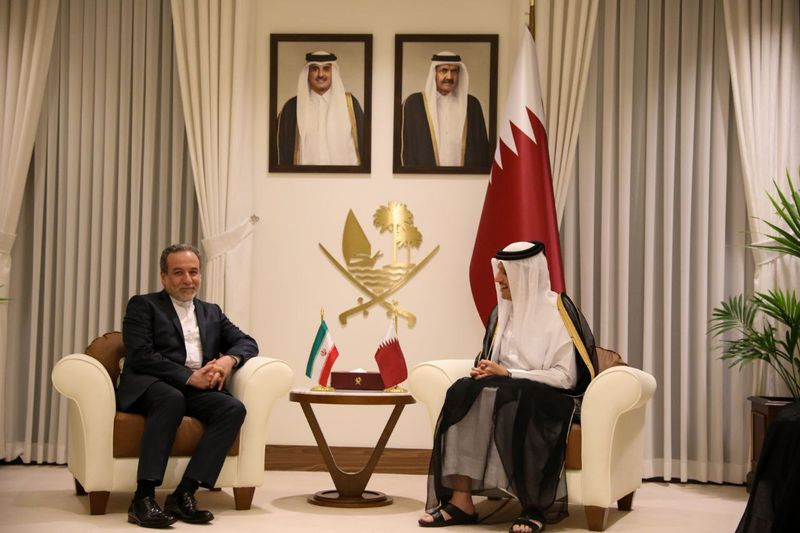
The substance on the table is Iran’s seven-step plan, first put forward in September and now condensed so that, in Tehran’s telling, it “could be implemented within two days.” Its sequence matters, because sequence is the argument: the United States ends its blockade of Iranian ports; Iran reopens the Strait of Hormuz; Washington issues a waiver allowing Iranian oil sales; new sanctions are cancelled; and only then do the two sides move on to talk about everything else. Foreign Minister Abbas Araghchi said on October 31 that Hormuz could reopen within two days under such a deal. Baghaei added the guardrails: nuclear talks come only after Iran verifies its conditions have been met, and the question of transferring Iran’s highly enriched uranium abroad — the stockpile at the heart of the nuclear dispute — was neither raised nor agreed in Doha.
The obstacle is equally clear. Trump rejected the original plan in September, and nothing on Monday suggested Washington has accepted its ordering — American steps first, Iranian steps second, nuclear questions later. A draft being “circulated” is not a text being initialled. Still, for the first time since the June collapse of the 14-point Islamabad Memorandum of Understanding framework, both capitals are publicly describing the same process — mediated talks, a written draft, and a short, testable first step at Hormuz.
Tehran’s two voices: a mandate to talk, and a military told to be ready
Iran’s own signals on Monday pointed in two directions at once — which may be the most honest picture of where this stands. President Masoud Pezeshkian said that Supreme Leader Mojtaba Khamenei has authorized his government to pursue negotiations. “We are trying to solve the problem through dialogue,” Pezeshkian said. That authorization is significant: it gives the elected government in Tehran political cover to deal, and it answers the standing question of whether the negotiators in Doha speak for the system or merely for themselves.
And yet. Iranian sources told Reuters they believe a new American attack is still more likely than a deal — a judgment formed over eight months in which pauses have repeatedly preceded strikes. Khamenei’s October 31 statement ordered Iran’s armed forces to be ready to respond “immediately, effectively, and with no geographical restriction” if attacked. The Tehran that sent negotiators to Doha also told its military to assume the worst — just as the Washington that said “no” on Monday said “the hammer” on Sunday. Each side is pricing in the other’s reversal; the record of this war has taught both of them to.
The war on the water has not paused
If diplomacy advanced on Monday, the shooting war at sea declined to notice. The United Kingdom Maritime Trade Operations centre reported that a tanker was struck by two unidentified projectiles late on Sunday, at 23:47 UTC, roughly 72 nautical miles east of Ras al-Khafji, Saudi Arabia. The crew was safe and no environmental impact was reported. Days earlier, the Qatari energy shipping company Nakilat confirmed that its LNG carrier Al Mayeda was struck on October 30; the vessel remained operational and no crew member was injured. The secretary-general of the Gulf Cooperation Council condemned the targeting of tankers as a dangerous escalation.
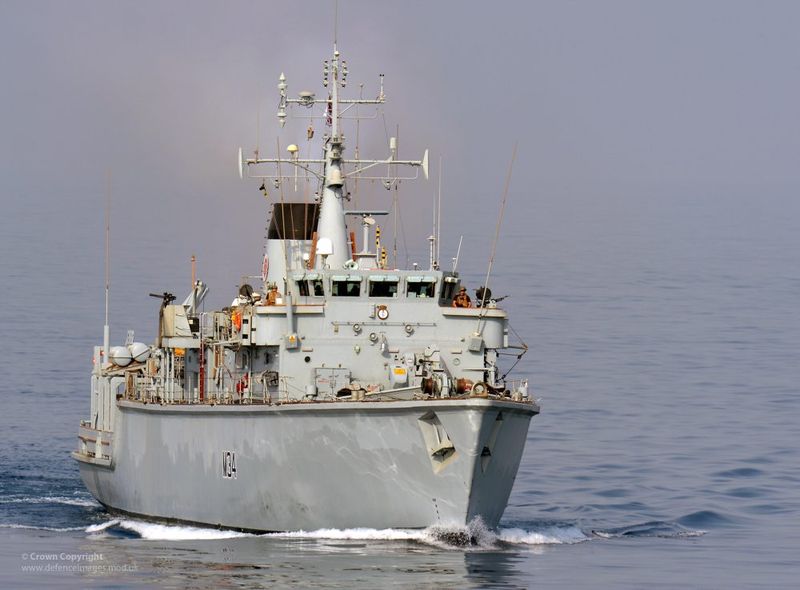
Those strikes keep every optimistic headline honest. The war began on February 28, 2026, with American and Israeli strikes on Iran; Iran closed the Strait of Hormuz; the United States blockaded Iranian ports; and the conflict settled into the grinding pattern — blockade, closure, sporadic attacks on shipping — that has defined it since the Islamabad framework collapsed in June. As long as unidentified projectiles are finding tankers in the Gulf, the strait is a live combat zone whatever the drafts in Doha say, and any “two-day reopening” would have to survive contact with whoever is doing the shooting.
Beijing and Moscow weigh in
The diplomacy is no longer bilateral, even by proxy. China’s foreign minister, Wang Yi, said the Gulf stands at a “critical crossroads between war and peace” and urged a political solution, after meetings in Beijing with Iran’s Ali Bagheri Kani and Saudi national security adviser Musaed Al-Aiban; China’s special envoy is to visit Iran, Oman and Saudi Arabia this month. Russia’s foreign ministry called reports of renewed military action a cause for extreme concern, and Russian and Iranian diplomats in Moscow stressed avoiding a resumption of heavy fighting. Iranian media also reported a call between President Vladimir Putin and Mohsen Rezaei — a report the Kremlin has not confirmed, noted here as reported and unconfirmed. Beijing and Moscow have their own stakes — energy flows; a partner under fire — but their public alignment behind a negotiated end adds weight to the track Vance described.
Why this matters
Start with what the post-midterm countdown had become. For weeks, the days after November 3 functioned as the war’s central deadline: the moment when, freed of electoral constraint, Washington was widely expected — by Gulf allies, by analysts, and evidently by Tehran itself — to decide between a deal and a much larger bombing campaign. Deadlines like that shape behaviour. They shape deterrence, because Iran’s restraint or provocation is calibrated to them. They shape oil markets, which had priced a November escalation risk into every barrel. And they shape the midterm argument itself, in which the war and the price of gasoline are central exhibits. By saying “no,” Trump did not sign anything — but he publicly repriced all three at once, and the oil market’s near-4 percent fall on Monday was the sound of traders doing the arithmetic.
Now the cold water, because one shouted word is not a signed policy. The American force posture around Iran — the carriers, the blockade, the aircraft that would fly any new campaign — has not moved. Trump has reversed himself repeatedly in this conflict, sometimes within a single news cycle: the distance between Sunday’s “hammer” and Monday’s “no” is itself the evidence. And Tehran — the audience that most needs to believe the “no” — has said through its own sources that it does not. A declaration that changes markets but not deployments can become the first sentence of a peace process, or the quote played back after the next strike. Which one depends on Doha, not on the Reflecting Pool.
Who benefits, who loses — and the critics on both sides
The clearest beneficiaries of Monday’s turn are the deal’s constituencies in both capitals. In Washington, Vance and Witkoff’s negotiating track now has presidential cover, stated in public, on the eve of the vote; in Tehran, Pezeshkian’s government has a supreme leader’s authorization to use it. Gulf states living within range of the crossfire, shipowners paying war-risk premiums, and drivers buying gasoline all gain from even a pause in escalation risk. The losers, in the short term, are those whose strategy required the threat to stay maximal: Axios’s reporting places Netanyahu and Hegseth on the side of resuming military operations — a camp that argues, in its own terms, that Iran’s military and economy are at their weakest point in decades and that easing pressure now would spend leverage that cannot be rebuilt.
That argument has its mirror image in Tehran, where hardliners contend the bombing and blockade have failed to break Iran, that Hormuz is a card to trade dearly rather than quickly, and that Washington’s election-eve softness proves pressure works in the other direction. Between the camps sits a shared question, asked from opposite premises: if a settlement was available at this price, what were the eight months for? Deal supporters answer that pressure produced the draft — Iran is negotiating precisely because its economy is, in Trump’s phrase, crippled. Pressure supporters answer that the draft’s terms — American steps first, nuclear questions later, the enriched uranium untouched — show how little the pressure has bought. Both readings are honestly arguable from the same facts, usually a sign the facts are about to be tested.
What the numbers imply
Three numbers carry most of Monday’s meaning. The first is oil’s near-4 percent fall in a single session: markets had priced a visible premium for a post-election strike, and one word stripped much of it out — in this war, rhetoric moves prices almost as efficiently as tankers do. The second is eight months: a conflict begun on February 28 that has outlasted a ceasefire framework, a blockade and repeated predictions of its end, with Reuters identifying it as a leading cause of the high gasoline prices weighing on voters — and therefore on the president’s party tomorrow. The third is a fifth: the share of the world’s oil that normally transits the Strait of Hormuz. That fraction is why a two-day reopening plan drafted in Doha matters in Ohio, and why a shouted answer at a reflecting pool can move a global market before lunch.
What happens next
Four scenarios now branch out of Monday, and they are not equally likely — but all four are live. In the first, the circulated draft does its job: the three days of confidence-building measures Axios described are accepted, indirect exchanges become direct talks, and the condensed seven-step sequence gets a start date. In the second, the test comes even faster than the talks: Araghchi’s two-day Hormuz reopening is attempted as a proof of concept — American blockade steps visibly eased, tankers moving under some agreed arrangement — and either holds, transforming the politics of both capitals, or collapses at the first projectile, confirming every skeptic in Tehran and Washington at once.
The third scenario is slower and quieter: the election passes, the leverage map redraws itself — a president no longer facing voters can afford patience, but also no longer needs the appearance of peace — and the Doha channel grinds through the winter on the nuclear questions the first steps deliberately postponed, above all the enriched uranium. The fourth is the one Iranian sources told Reuters they still expect: talks stall on sequence or verification, the force posture that never left is used, and Monday’s “no” is remembered as a campaign artifact. Nothing in the last eight months entitles anyone to rule that version out.
What can be said plainly is narrower, and it is enough. On the day before Americans vote, the president was asked whether he would strike Iran after the midterms, and he said no — while his vice president described real conversations, a real draft circulated out of Doha, Tehran’s president claimed a mandate to negotiate, and oil traders marked down the price of war. Against that stand a fleet that has not moved, a strait where tankers were hit within the last 72 hours, and an adversary that does not believe him. The post-midterm question has not been answered for good. But for the first time, it has been answered out loud — and the answer, for now, is peace talks rather than the hammer.
What do you think — is a negotiated end to the Iran war now genuinely within reach, or is this another pause before the strikes resume? Like this story if it helped you make sense of a fast-moving day, follow Signal Post News for updates as the Doha draft develops, and join the conversation in the comments.
Sources
- Reuters, November 2, 2026 — reporting on Trump’s closing-argument speech at the Lincoln Memorial Reflecting Pool (the “No” answer on post-midterm strikes; “We’re winning with Iran”; “it could happen”; the nuclear bottom line), Vance’s “negotiated settlement” remarks, oil’s near-4 percent fall, the Doha talks and the Iranian delegation’s departure, Baghaei’s statements, Pezeshkian’s account of Khamenei’s authorization, and Iranian sources’ assessment that a new US attack remains more likely than a deal.
- Reuters, November 2, 2026 — reporting on the regional reaction: Wang Yi’s “critical crossroads between war and peace” remarks and Beijing meetings, the Chinese special envoy’s planned visits, Russia’s foreign ministry statement, the Moscow talks, and the reported — and Kremlin-unconfirmed — Putin–Rezaei call.
- RFE/RL live blog, November 2, 2026 — live coverage of the speech, the Dubuque “hammer” remarks of November 1, Khamenei’s October 31 readiness order, and the tanker incidents in the Gulf.
- Axios reporting, via Newsmax, November 2, 2026 — the “no rush” and “no money, no gasoline” remarks, the Qatari draft’s three days of confidence-building measures, and the reported Vance–Witkoff versus Netanyahu–Hegseth split over a negotiated settlement.
- UKMTO advisory, November 2026 — tanker struck by two unidentified projectiles at 23:47 UTC on November 1, approximately 72 nautical miles east of Ras al-Khafji, Saudi Arabia; crew safe, no environmental impact reported.
- Nakilat company statement, November 2026 — confirmation that the LNG carrier Al Mayeda was struck on October 30, remained operational, and that no crew members were injured; GCC secretary-general’s condemnation of tanker targeting as a dangerous escalation.