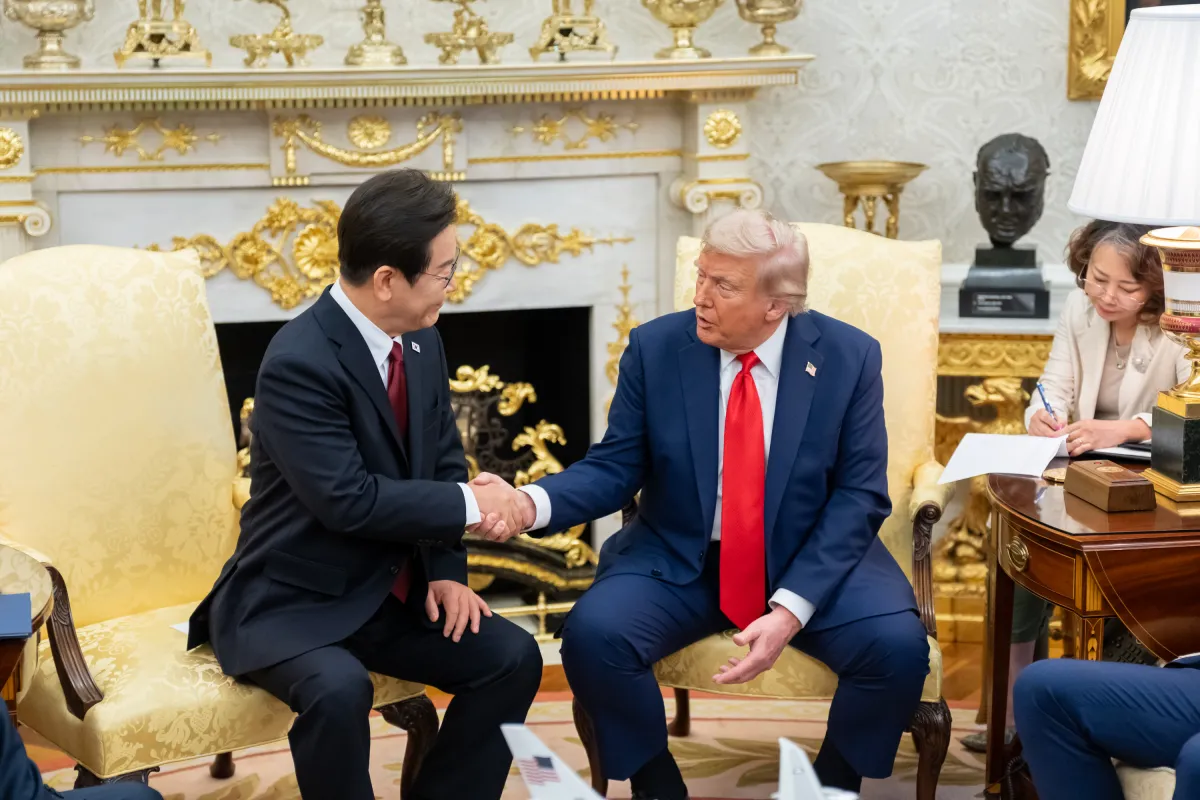
Trump supplied the largest number and the fewest project details. In a Friday post on Truth Social, he wrote: “The Republic of Korea Deal keeps getting BETTER! 8.4 Billion Dollars for an enhanced Oil Recovery Project. Producing more Oil and Gas means American Energy Dominance and Energy Security in the World for the Future!” He did not identify the oilfield, operator, ownership structure, financing schedule or expected production.
Then came the counterclaim. Reuters reported, citing South Korea’s state-supported Yonhap news agency, that an industry ministry official was surprised by the announcement and said the enhanced oil recovery project was not part of the deal. Seoul’s account is narrower: the agreement extends only to the commitments in the November 2025 joint fact sheet. The South Korean Embassy in Washington could not immediately be reached by Reuters, and the White House did not respond to its request for comment.
Why this matters: a deal is not a deal until both sides recognize it
The immediate question is factual—does the project belong to the Trump South Korea trade deal? The larger question is institutional. Cross-border investment packages move through ministries, corporate boards, lenders, regulators and legal reviews. A presidential announcement can set direction, but it cannot substitute for those approvals. When Washington announces a project and Seoul promptly narrows or denies it, investors must price not only construction risk but diplomatic translation risk.
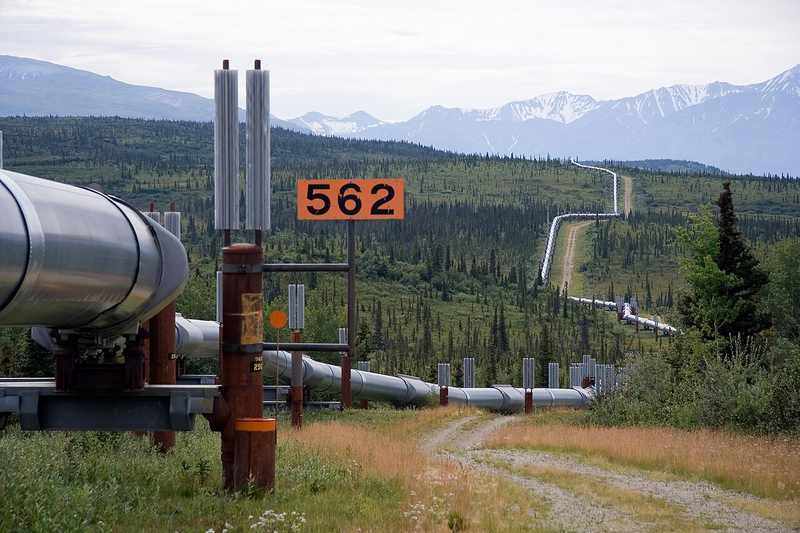
This is the second such gap in three days. On Wednesday, Trump unveiled roughly $200 billion in U.S. projects: eight large nuclear plants, a $54 billion Alaska LNG pipeline and a 6-gigawatt Texas power facility. Seoul immediately said the Alaska element was “not yet set in stone” and would proceed only after commercial and legal review. Friday’s oil claim therefore looks less like an isolated misunderstanding than another announced-versus-confirmed commitment.
What $8.4 billion means in the South Korea $350 billion package
The arithmetic is clarifying. An $8.4 billion investment would equal 2.4% of the full $350 billion strategic package and 4.2% of its $200 billion strategic-investment portion. The other $150 billion is earmarked for shipbuilding. The oil number is large enough to matter, but too small to transform the package by itself—and impossible to value without knowing whether it represents equity, debt, procurement, guarantees, or a multi-project envelope.
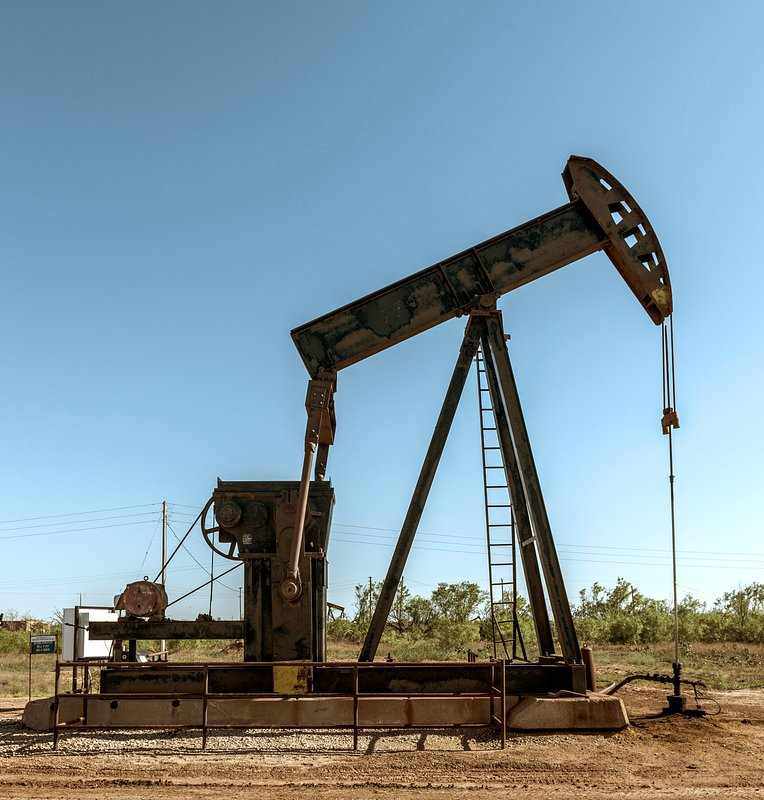
Enhanced oil recovery, or EOR, is a mature but field-specific business. Operators often inject carbon dioxide into depleted reservoirs, changing the fluid behavior underground so remaining crude moves toward producing wells. Economics turn on the reservoir’s response, the cost and distance of the CO2 supply, compression and pipeline infrastructure, tax treatment, oil prices, decline rates and the volume of recoverable barrels. A single headline number cannot answer any of those questions.
That is why the comparison with real EOR economics is not “big versus small”; it is disclosed versus undisclosed. Commercial projects are judged by cost per added barrel, verified reserves, an identified operator, offtake and CO2 transport. Trump’s post offered none of those anchors. Until a field and counterparties are named, $8.4 billion is a political claim, not an investable project model.
Who benefits—and who absorbs the risk
U.S. energy producers would benefit if Korean capital pays for new CO2 networks, injection wells and upgrades that revive mature fields. Contractors and oil-service firms could gain work, while the administration could point to domestic production as protection against supply shocks. The project also fits Trump’s argument that allied investment should deliver visible American assets.
Trump’s midterm pitch is the second beneficiary. The announcement comes one month before the November 3 elections, as voters weigh the Iran war and fuel costs. Gasoline near a reported national average of about $4.40 a gallon is politically potent even after retreating from early-September highs. But EOR cannot lower pump prices on an election calendar: engineering, permitting, contracting and field development take time.
Alaska politics sits alongside the oil claim even though Trump did not identify the EOR location. Republican Senator Dan Sullivan, facing a competitive reelection race against Democrat Mary Peltola, attended Wednesday’s project announcement. A massive Alaska LNG commitment would give him a concrete development story. Seoul’s caveat makes that story provisional.
The potential losers are just as clear. Environmental groups argue that using captured CO2 to produce more petroleum prolongs fossil-fuel dependence and should not be treated as a climate solution. Seoul must manage its credibility with domestic taxpayers and companies if figures announced in Washington appear to outrun Korean approvals. The alliance itself pays a trust cost each time an “agreed” project is walked back.
Seoul disputes Trump claim after a week of bigger promises
Wednesday’s White House presentation was the first major-project list under the broader package. Nuclear plants, the Alaska pipeline and a Texas power facility promised industrial scale and electoral visibility. Yet the sequence reveals a persistent asymmetry: Washington speaks in project totals; Seoul speaks in process conditions.
That distinction does not prove the investment will fail. Governments commonly announce frameworks before contracts close. It does mean readers should separate four stages: political intention, government selection, corporate commitment and final investment decision. The South Korea $350 billion package is real as a framework; every project inside it is not automatically funded.
What happens next
First, Seoul’s industry ministry will need to say whether officials are reviewing an oil proposal outside the November fact sheet or whether Friday’s claim was simply wrong. Second, Washington would have to identify the field, operator and Korean investor. Third, any project would face normal commercial, environmental and legal review. Those are the points at which the south korea oil recovery deal either becomes a transaction or disappears into the announcement archive.
The Alaska review will be the parallel test. If Seoul’s commercial and legal conditions produce a binding commitment, Wednesday’s reveal gains credibility. If the $54 billion figure remains aspirational while the $8.4 billion claim also lacks Korean confirmation, the pattern will reinforce skepticism about the package’s near-term value.
For midterm elections energy prices remain the political deadline. The G7’s Friday agreement to release up to 100 million barrels of diesel and crude reserves can affect near-term supply faster than a new EOR build. But reserves are temporary and projects are slow. Trump is trying to connect both into one argument—immediate relief plus future abundance. Voters may judge that argument on the price sign outside the gas station, not on the size of investment figures announced at the White House.
Sources
Reporting snapshot: October 2, 2026. Figures and responses may change as the two governments clarify the project.