Trump South Korea 200 billion investment
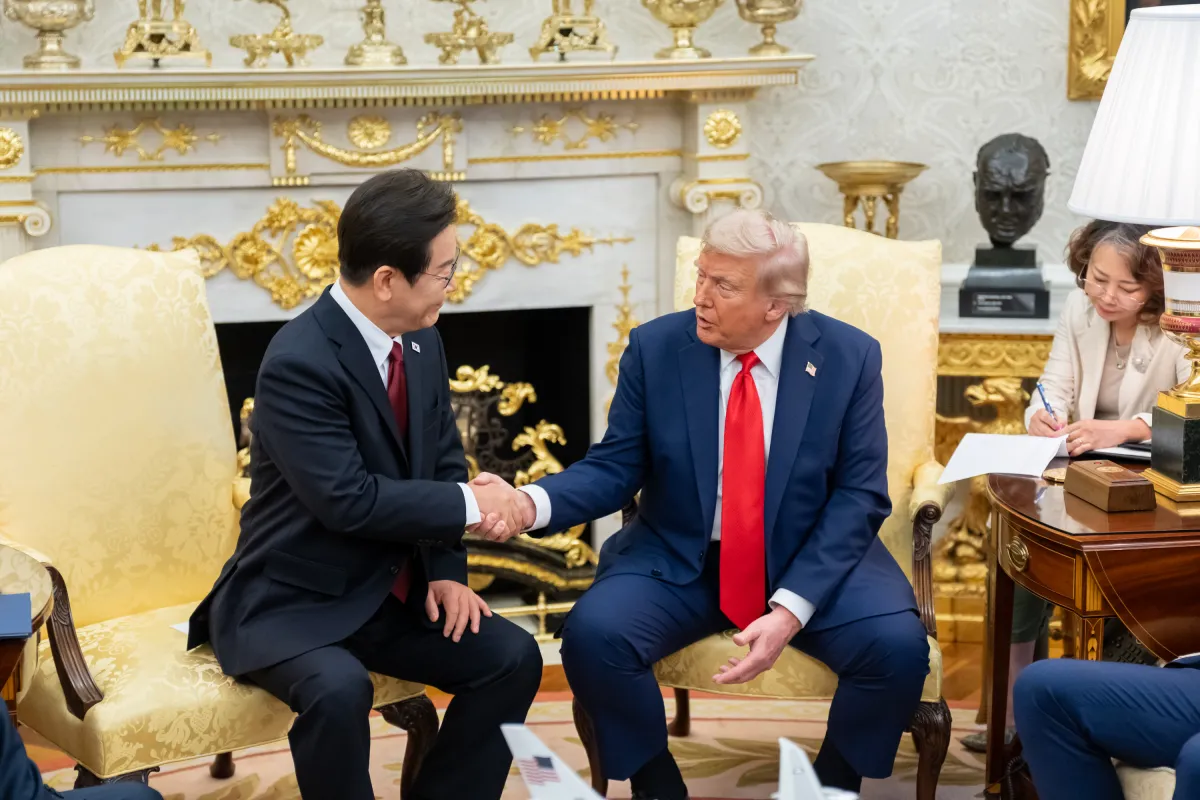
WASHINGTON — The Trump South Korea 200 billion investment announcement ties together three of America's hardest industrial problems: rebuilding nuclear capacity, supplying the power-hungry AI economy and opening an Arctic gas route to Asian customers. President Donald Trump said from the Oval Office Wednesday that South Korea would invest up to $200 billion in U.S. projects, led by a $120 billion eight-reactor program, a roughly $50 billion Alaska LNG proposal and a $22.3 billion natural-gas power complex in Encinal, Texas.
The headline is sweeping. The paperwork is narrower. Nuclear and Texas appear to be broadly accepted parts of the first major project package under the two countries' $350 billion strategic trade and investment framework. Alaska LNG remains conditional. Trump's Truth Social post said Washington and Seoul had “agreed to commence working together” on the project; the joint fact sheet described it as “under review,” and South Korea's industry ministry said no investment decision had been made.
That gap is not a footnote. It is the line between a politically useful pledge and a bankable project. Reuters estimated the Alaska pipeline and export system at $54 billion. Seoul says participation must pass a commercial-viability test. Until buyers, financing, construction risk and long-term gas prices line up, the Alaska number belongs in the conditional column.
What the $200 billion package actually contains
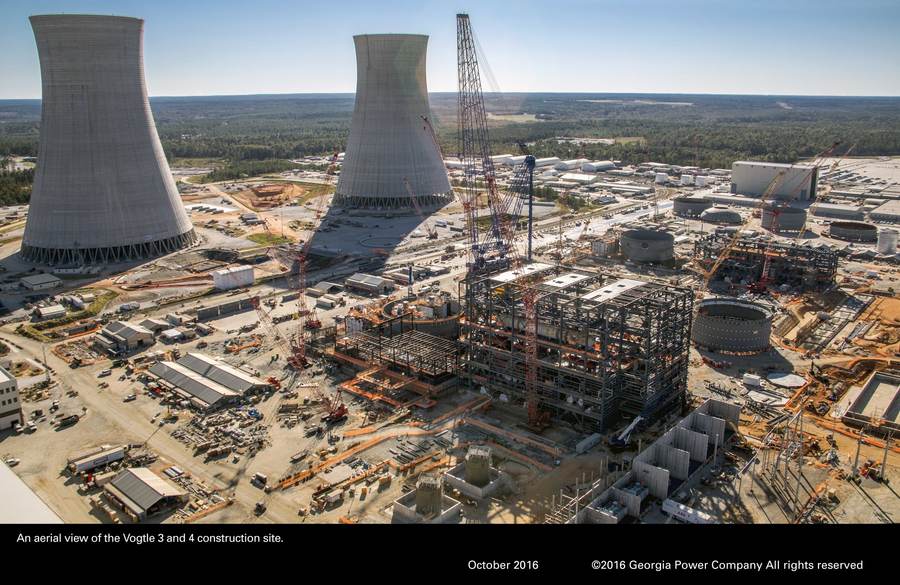
The largest component is a proposed $120 billion nuclear buildout: six Westinghouse AP1000 reactors and two Korean APR-1400 units in the United States. That pairing matters. Westinghouse brings a U.S.-licensed design and domestic political support; Korean companies bring a record of supply-chain discipline, component manufacturing and large-project execution. The Westinghouse AP1000 Korea deal is therefore less a simple import than a division of industrial labor.
The second firm piece is the Encinal Texas gas power plant, a $22.3 billion, 6.4-gigawatt complex aimed at serving AI data centers. It is a revealing bet on the near term: advanced reactors promise steady carbon-free electricity later, while gas turbines can be ordered and connected sooner. In other words, the package uses natural gas as a bridge to the very digital load that makes new nuclear economics more attractive.
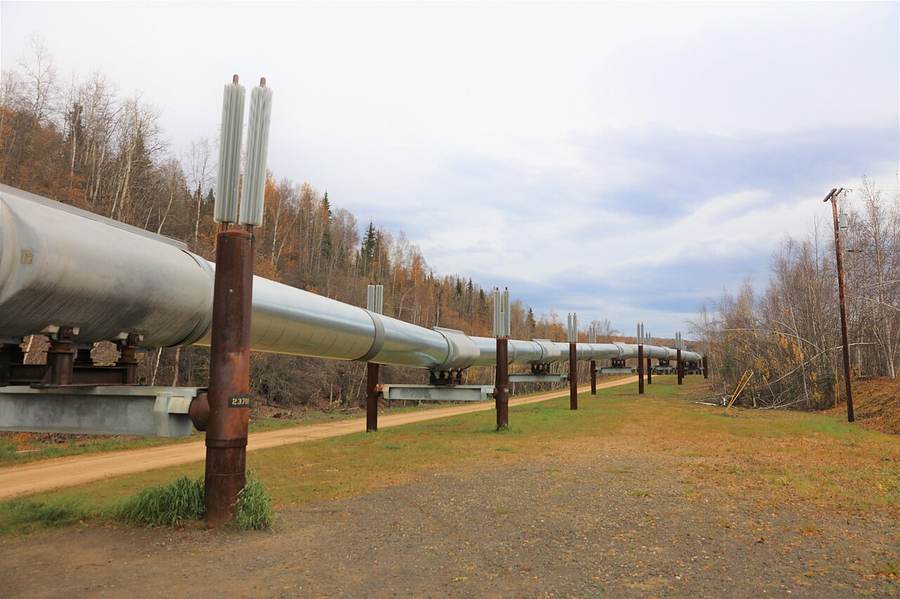
The third component is the Alaska LNG project South Korea is still assessing: a roughly 1,300-kilometer pipeline from the North Slope to southern Alaska, where gas would be liquefied and shipped to Asian markets. Trump described a $50 billion opportunity; Reuters reported a $54 billion estimate. The difference is not material at headline scale, but the approval gap is.
The listed components add to about $192.3 billion using the $50 billion Alaska figure, or roughly $196.3 billion using Reuters' $54 billion estimate. That makes “up to $200 billion” a rounded ceiling, not a signed check for exactly $200 billion.
Why this matters: AI demand meets the nuclear revival
America's electricity debate has changed faster than its power fleet. For years, flat demand made new large reactors difficult to finance and slow transmission projects easier to postpone. AI data centers, semiconductor plants and electrified manufacturing have broken that assumption. The central question is no longer merely how to replace retiring generators; it is how to add dependable capacity quickly without making the grid more fragile.
That is why this package combines gas and nuclear rather than choosing one. A 6.4-gigawatt gas complex can supply dispatchable power when servers need it. Eight large reactors would provide long-duration baseload generation with low operational carbon emissions. The strategic logic is sequencing: gas for the next wave of AI data center power demand, nuclear for a system expected to stay larger for decades.
At full rated output, 6.4 gigawatts equals 6.4 million one-kilowatt household loads at a moment in time. That is not a promise that the project will continuously power 6.4 million homes—plants undergo maintenance, grids lose energy and households vary—but it shows the scale. This is not a captive generator tucked behind one data center. It is utility-system-sized infrastructure.
The Asia export pivot is equally important. An Alaska terminal would shorten the geographic story between North American gas and Northeast Asian buyers. South Korea could diversify long-term supply; Alaska could monetize North Slope reserves; Washington could bind an ally through fuel, steel, shipping and power technology. Yet that geopolitical value does not automatically pay a project's debt.
The Korea $350 billion trade deal behind the announcement
The package sits inside the Korea 350 billion trade deal reached last year: $150 billion for shipbuilding cooperation and $200 billion for strategic investment. Wednesday's announcement is the first major attempt to convert the strategic portion into named U.S. projects.
That distinction matters when comparing the pledge with other foreign-investment announcements. A multi-year project ceiling is not the same as annual foreign direct investment, annual utility capital spending or money already under construction. The $200 billion figure is enormous precisely because it aggregates years of nuclear, pipeline and power-plant spending. Treating it as if it will hit the economy in one budget year would overstate the immediate effect.
It also differs from a conventional acquisition. Much of the money would become concrete, pipe, turbines, reactor modules, engineering contracts and construction wages inside the United States. That is why the White House can present the US energy infrastructure investment as both foreign capital and domestic industrial policy.
For Seoul, the framework is strategic insurance. It preserves market access, supports Korean engineering and shipbuilding champions and turns alliance politics into commercial opportunity. The cost is exposure: Korean public institutions and companies may be asked to shoulder early risk in projects whose returns depend on U.S. permits, power contracts and commodity prices.

Alaska LNG pipeline commercial viability remains the hinge
Alaska LNG has spent decades in the space between strategic appeal and difficult economics. The resource is vast, the route is long, the construction environment is punishing and the competition is global. Gulf Coast exporters have existing industrial clusters and direct access to prolific gas basins. Qatar and other suppliers can offer scale. A North Slope project must overcome distance and upfront cost before its shorter sailing route to Asia becomes decisive.
The Alaska LNG pipeline commercial viability test comes down to four questions. First, will Korean or other Asian buyers sign long-term contracts strong enough to support financing? Second, can sponsors control construction costs across roughly 1,300 kilometers of Arctic and sub-Arctic terrain? Third, will the final delivered gas price beat competing cargoes after liquefaction and shipping? Fourth, can permits and litigation survive a build schedule measured in years?
There are three plausible Alaska scenarios. In the bullish case, Korean offtake anchors financing, other Asian utilities join and U.S. policy support lowers the cost of capital. In the middle case, Seoul participates only in engineering, steel or shipbuilding while declining equity risk. In the bearish case, cost inflation and weak long-term pricing leave the project “under review” through another political cycle.
That is why Seoul's language deserves more weight than the ceremony. “No decision has been made” is not diplomatic decoration; it protects Korean taxpayers and corporate balance sheets from being treated as guarantors before a commercial case exists.
Who benefits—and who carries the risk
Westinghouse is the clearest corporate beneficiary. Six AP1000 orders would turn a hard-won demonstration at Georgia's Vogtle plant into a repeatable fleet, creating work for component makers, engineering firms and specialized trades. Korean reactor suppliers would gain a U.S. foothold through two APR-1400 units and participation across the broader program.
U.S. construction labor stands to gain if projects move beyond memoranda into final investment decisions. Alaska would collect jobs, contracting activity and a new export base. Korean shipbuilders could benefit from LNG carriers and specialized energy infrastructure, while steel-pipe producers see a direct line from political announcement to potential orders. That expectation helped push KBI Dongyang Steel Pipe to its daily limit in Seoul trading, up 29.97%.
The downside sits elsewhere. Korean taxpayers could absorb losses if public financing backs an uneconomic Alaska project. Communities and environmental groups along the route may challenge habitat disruption, emissions and long-lived fossil infrastructure. Existing LNG exporters face a new subsidized competitor if Alaska reaches market. Electricity customers could also bear cost overruns if nuclear contracts place construction risk on regulated utilities rather than investors.
The reactor timeline is its own warning. America's recent large-reactor experience proves AP1000 units can be completed, but also shows how first-of-a-kind execution, contractor failures, quality control and financing costs can multiply budgets. A fleet approach can improve matters only if designs are standardized, sites are prepared and lessons are reused rather than relearned.
Trump's announcement and Seoul's fact sheet do not say the same thing
Trump's language is maximalist by design. His post said he and President Lee Jae Myung had agreed to “launch 200 Billion Dollars of new Investments in AMERICA!” and closed with “AMERICA IS BUILDING AGAIN!” It cast the package as a completed political achievement.
The Lee Jae Myung Trump investment plan is more conditional in Seoul's telling. The joint document places Alaska under review, and the industry ministry says participation will occur only if commercially viable. Texas and nuclear are broadly agreed; Alaska remains an option.
Critics will call that a credibility gap. Supporters will call it normal project development. Both descriptions capture part of the truth: leaders routinely announce frameworks before contracts close, but the more aggressively a headline converts review into agreement, the more investors should read the fine print.
The midterm economy message behind the machinery
This is also a Trump midterm economy announcement. Voters are weighing high gasoline prices and the cost of the Iran war against the administration's promise of industrial revival. Eight reactors, a giant pipeline and an AI-power complex let Trump redirect attention from today's fuel bill to tomorrow's factories and construction sites.
Alaska adds an electoral layer. Senator Dan Sullivan attended the Oval Office event and faces former representative Mary Peltola. For Alaska Republicans, the project is not an abstract trade statistic; it is a decades-old development promise that can be framed as jobs, state revenue and strategic relevance.
The politics work even before groundbreaking. The commercial test arrives later, when developers must identify sites, secure power-purchase agreements, finish engineering, obtain permits and close financing. That lag is where campaign language meets project finance.
What happens next
The nuclear program's first credible milestones will be site selection, utility customers, a delivery structure and licensing. If the six AP1000s are treated as a standardized fleet rather than six bespoke projects, procurement and workforce planning can improve. The two APR-1400s face an additional question: how Korean design expertise will fit U.S. licensing and domestic-content requirements.
Texas should move faster if developers already have land, fuel access and data-center customers, but 6.4 gigawatts still requires transmission, water strategy, turbine supply and firm contracts. The most important number will not be the announced capacity; it will be how much reaches final investment decision with named buyers.
For Alaska, watch for binding Korean offtake, equity commitments and a financing plan. A study, ministerial visit or working group would keep diplomacy moving without proving commercial viability. A long-term purchase contract would be materially different.
The package's ultimate scorecard is therefore simple. Count reactors that enter construction, megawatts that reach the grid, pipeline financing that closes and Korean capital actually deployed. Until then, the announcement is best understood as an ambitious industrial map—with two routes broadly agreed and one still marked in pencil.
Sources and reporting notes
- Reuters: South Korea investment package and $54 billion Alaska LNG estimate
- Donald Trump: Truth Social announcement of the $200 billion package
- Aju Press: Seoul's confirmed project figures and Korean market reaction
- Energy News Today: Alaska LNG remains under review
Reporting note: Project values, reactor counts, capacity, pipeline length and attributed statements are drawn from the cited reporting and official post. Household-load equivalence is a transparent one-kilowatt-per-home calculation; it is not a forecast of customers served. Scenario, beneficiary and risk analysis is Signal Post News analysis.
Signal Post News will update this report as project contracts, sites and financing are disclosed.
Back to all stories