South Korea disputes Trump Alaska LNG investment
.jpg)
SEOUL — South Korea disputes Trump Alaska LNG investment claims at the most basic level: whether any $54 billion commitment exists. A day after President Donald Trump presented Seoul as the financial anchor for the long-stalled Alaska gas project, South Korean officials said no investment decision had been made, no amount had been agreed and work could advance only after commercial and legal tests.
Industry Minister Kim Jung-kwan used a televised briefing to reject the certainty of Washington's language. “Putting figures or using definitive language goes far beyond what was agreed,” he said, adding that Seoul had lodged a strong protest with Commerce Secretary Howard Lutnick. South Korea's interior ministry was equally direct: “No decision has been made on whether to invest or on the size of the investment.”
The difference is not diplomatic nuance. It is the difference between a government exploring a project and committing enough money to cover roughly the project's entire estimated cost. President Lee Jae Myung's X post said the Lee Jae Myung Trump Alaska pipeline discussion would move to the working level only if commercial viability was confirmed and Korean legal procedures were followed. The Commerce Department's own fact sheet used the narrower phrase “commence working” on Alaska LNG “subject to commercial reasonableness,” and attached no dollar figure.
Why this matters
Trade announcements become policy only when their verbs survive contact with contracts. “Invest,” “consider,” “review” and “commence working” are not interchangeable. Washington's version gives Trump an immediate industrial victory: foreign capital, American construction jobs and a giant Arctic export project. Seoul's version preserves the right to walk away if the economics do not work.
That distinction matters for Korean taxpayers, Alaska voters, potential Asian gas buyers and any lender asked to finance tens of billions of dollars across Arctic terrain. It also goes to the credibility of the broader US South Korea 200 billion energy deal. If one of its largest components was presented as settled when it remained conditional, every other headline number invites closer scrutiny.
The clash arrives at a politically useful moment for both governments. Trump is selling investment and energy security while an Iran war squeezes oil supply ahead of the November 3 midterms. Lee is under pressure to show that lower U.S. tariffs did not come at the price of an open-ended commitment to bankroll an American megaproject.
Kim Jung-kwan protest Lutnick: Seoul draws a public red line
The unusually blunt Kim Jung-kwan protest Lutnick episode shows Seoul believed a private correction was not enough. By placing the disagreement on television, the industry minister created a public record that Korean negotiators had not accepted either the $54 billion number or definitive investment language.
That record is important because Trump's September 30 event carried the optics of completion. Lutnick and Alaska Republican Sen. Dan Sullivan stood alongside an announcement that bundled Alaska LNG into a larger Korean investment package. The setting encouraged audiences to treat the component projects as equally firm. Seoul's response separated them again.
White House spokeswoman Taylor Rogers defended the announcement as “historic.” She said the project could support 12,000 construction jobs and 1,300 permanent jobs, generate $25 billion for state and local governments and save Alaskans $10 billion in energy costs. Those are substantial projected benefits. They are not, however, proof that South Korea has authorized an investment.
.jpg)
The numbers in context: $54 billion is not a side project
The $54 billion claim becomes more revealing beside the other figures. Alaska LNG's total estimated cost is roughly $45 billion to $55 billion. In other words, the sum attributed to South Korea is not a minority stake or a purchase agreement; it is approximately the cost of the whole pipeline-and-export system.
The figure also represents 27% of the $200 billion energy and strategic-investment pool, which itself sits within South Korea's $350 billion trade-deal pledge from July 2025. The remaining $150 billion was associated with shipbuilding cooperation. These nested numbers often appear in political speeches as if they were additive checks arriving at once. In reality, they describe ceilings, sectors, possible projects and financing over years.
The South Korea tariffs Trump trade deal bargain matters because Seoul made the broader pledge in return for lower tariff pressure. That gives Washington leverage to demand visible projects and gives South Korea an incentive to keep talks alive. It does not erase Korean procurement law, corporate governance or the requirement that public money be defensible at home.
The jobs math needs the same discipline. Twelve thousand construction jobs would be meaningful, especially in Alaska, but they would be spread across a multiyear build. The 1,300 permanent jobs are the more durable operating base. The $25 billion state-and-local revenue estimate and $10 billion consumer-savings estimate depend on assumptions about production, gas prices, taxes, financing and the project's life. They should be treated as forecasts contingent on construction and operation—not benefits already secured.
Alaska LNG pipeline cost: 800 miles of hard economics
The proposed system would carry North Slope gas roughly 800 miles, or 1,287 kilometers, to an export terminal in southern Alaska. The phrase Alaska LNG pipeline cost 800 miles compresses the central problem: an enormous capital bill must be recovered before the project's shorter shipping route to Northeast Asia creates value.
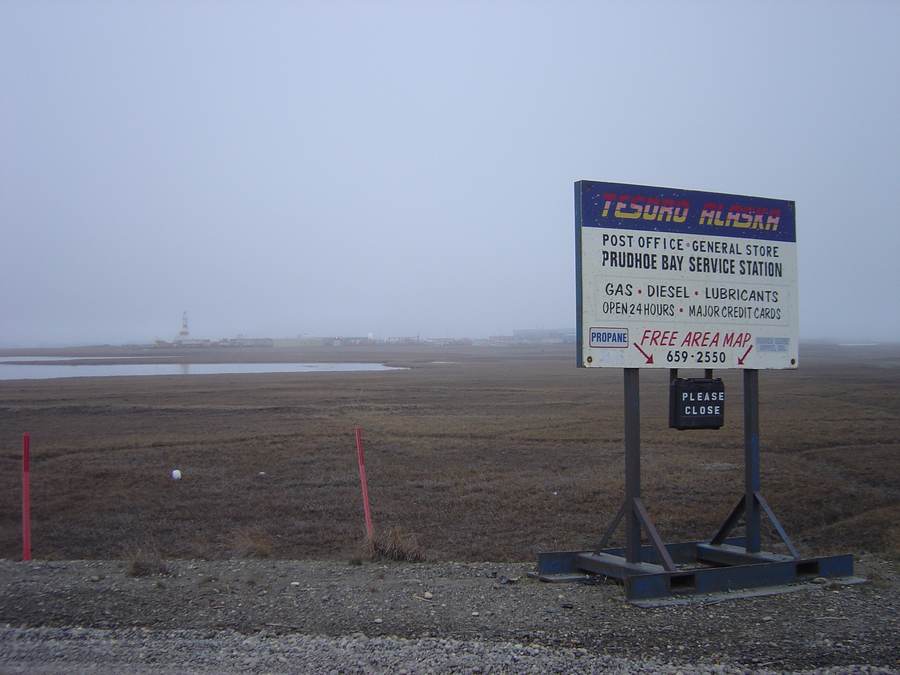
Alaska LNG has endured decades of false starts because its strategic logic has repeatedly outrun its financing. North Slope gas is abundant. Asian allies want diversified supply. Alaska wants a new economic pillar. Yet sponsors still have to build across remote, cold and technically demanding terrain, then compete with established LNG exporters whose terminals and pipeline networks are already operating.
The project has accumulated Alaska LNG non-binding sales agreements with companies in South Korea, Japan and Taiwan. Those documents demonstrate interest; they do not guarantee revenue. Lenders normally need firm, long-term offtake contracts with creditworthy buyers before committing capital at this scale. A memorandum can start engineering conversations. It cannot service debt.
Alaska LNG commercial viability is the real decision
Lee's two conditions are more than procedural cover. Alaska LNG commercial viability requires a delivered gas price that can compete in Asian markets after paying for production, pipeline transport, liquefaction, shipping and financing. Korean legal compliance requires approvals that a presidential conversation cannot substitute for.
Commercial reasonableness will turn on several tests. Will Korean utilities sign binding contracts, and at what price formula? Will Seoul permit public financial institutions to take equity or guarantee debt? Can construction risk be allocated without leaving Korean taxpayers exposed to overruns? Will U.S. permitting and litigation remain predictable through a build measured in years?
Those questions explain why Seoul's language is narrower than Washington's. Korea can support alliance goals, study engineering and encourage private companies to negotiate without declaring that a $54 billion transfer has been approved. That is not retreat. It is the normal sequence for a project whose scale rivals the entire asset being discussed.
Who benefits: Sullivan, Lutnick and Alaska
For Lutnick, the announcement turns tariff leverage into a visible promise of U.S. investment. It supports the administration's argument that aggressive trade negotiations can redirect allied capital into American infrastructure. Even if the details remain unsettled, the headline reinforces a broader economic message.
For Alaska, the potential gains are concrete: construction employment, a long-lived operating workforce, state and local revenue, lower in-state energy costs and a market for stranded North Slope gas. Communities and contractors that have watched earlier versions stall have every reason to want this attempt to succeed.
The Dan Sullivan Alaska Senate race adds an immediate political beneficiary. Sullivan attended the White House event while facing former representative Mary Peltola in a tight contest. A project associated with thousands of jobs and billions in revenue gives the incumbent a home-state development argument before a single trench is dug.
The losers, if rhetoric outruns economics, are also identifiable. Korean public institutions could be pressured toward a weak investment. Alaska communities could make plans around benefits that never materialize. Competing gas suppliers face uncertainty. The U.S.–Korea alliance absorbs friction when one government publicly attributes a commitment the other says does not exist.
Hyundai Georgia ICE raid complicates Korea relations
The dispute does not occur in a vacuum. The Hyundai Georgia ICE raid Korea relations controversy—an enforcement action that arrested about 500 people, most of them Korean nationals, at the Hyundai plant—had already sharpened concern in Seoul about how Korean investment and workers are treated in the United States.
That history makes the Alaska wording more sensitive. South Korea is being asked to help underwrite U.S. industrial and energy expansion while its companies also navigate immigration enforcement, tariff threats and domestic criticism over overseas capital. A precise statement of what was and was not agreed is therefore politically essential for Lee.
For Washington, retaliation through tariffs would be tempting but risky. Reopening the trade fight could weaken the very investment framework the administration is citing as a success. It could also make Korean companies more cautious about committing to projects whose economics already depend on stable policy.
Four paths from here
1. The conditional deal survives. Working-level teams test costs, Korean buyers negotiate binding offtake and Seoul participates only after commercial thresholds are met. Washington keeps the project inside the broader package but drops the claim that $54 billion is already committed.
2. The parties renegotiate the role. Korea could contribute through gas-purchase contracts, engineering, steel, shipping or a smaller equity stake rather than funding the whole project. This would preserve strategic cooperation while reducing concentrated financial risk.
3. Alaska LNG collapses again. If costs remain near $45 billion to $55 billion and buyers will not accept the required price, talks could end without a final investment decision. The broader $200 billion pool might then be redirected to nuclear power, shipbuilding, data-center energy or other U.S. projects.
4. The dispute spills back into tariffs. Trump could argue Seoul is failing to deliver under the $350 billion framework and threaten renewed trade pressure. South Korea could answer that it honored the text: working on a project subject to commercial reasonableness, not guaranteeing a predetermined sum.
The most likely near-term outcome is continued ambiguity. Both sides have reasons to preserve the framework. Trump wants a large investment story; Lee wants tariff relief and strategic stability. The question is whether they can agree on language that allows commercial diligence without treating caution as defiance.
What to watch next
Ignore new ceremonies unless they produce bankable documents. The meaningful milestones are a detailed feasibility review, binding sales-and-purchase agreements, named equity investors, a construction-risk plan and financing commitments. Each would narrow the gap between political intent and an operating export system.
Watch, too, whether official U.S. language converges with the Commerce Department fact sheet. If agencies continue to say “subject to commercial reasonableness” while political speeches repeat a fixed $54 billion investment, the contradiction will remain part of every negotiation.
Our earlier report on the September 30 South Korea energy announcement showed that Alaska was less settled than the nuclear and Texas components. The latest protest makes that caveat the central story. Related energy pressures are examined in our coverage of Trump's diesel-export warning to Europe, while South Korea's capacity to finance overseas commitments sits against its September export surge powered by AI demand.
The clean conclusion is also the least theatrical: South Korea agreed to examine Alaska LNG under two conditions. It did not, by its own account, agree to invest $54 billion. Until contracts say otherwise, the project remains a negotiation—not a deal.
Sources and reporting notes
- CNN: South Korea disputes the Alaska LNG investment figure and definitive U.S. language
- The Wall Street Journal: Seoul contests U.S. claims about the Alaska investment
- New York Post: President Lee pushes back on Trump's Alaska pipeline announcement
Reporting note: Quoted statements, project estimates and administration projections are attributed to the cited reporting, South Korea's televised briefing, President Lee Jae Myung's X post and the U.S. Commerce Department fact sheet. Scenario, beneficiary, risk and jobs analysis is Signal Post News analysis.
Signal Post News will update this report if the governments publish binding contracts, financing terms or a final investment decision.
Back to all stories