Topics:Trump cartelsShield of the AmericasMonroe DoctrineLatin America drug war
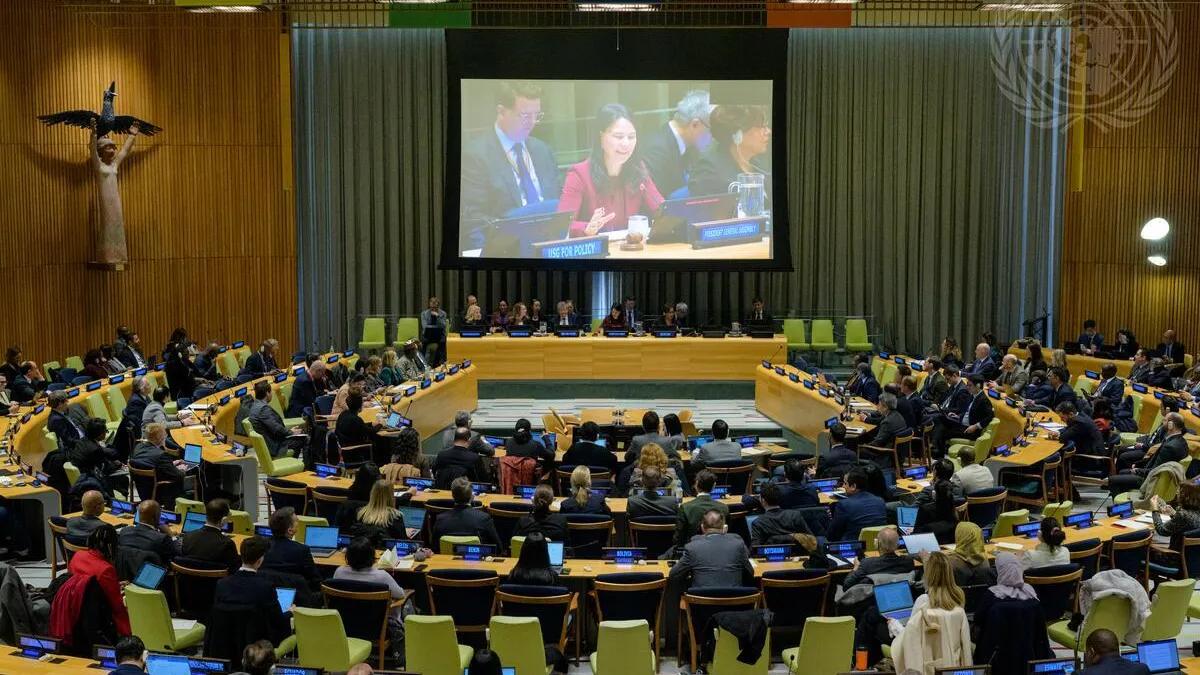
President Donald Trump told a coalition of Latin American partners on Tuesday that the United States was prepared to use force against drug bosses inside their countries if local governments could not do so themselves, turning a campaign that has already moved from interdiction to lethal maritime strikes into an explicit offer of operations on allied soil.
“You let us know, and we take them out. Or you take them out yourself. I like that a little better,” Trump said, according to USA Today’s live report from the Shield of the Americas event on the sidelines of the United Nations General Assembly. “But if you can’t, we’ll do it for you.” The remarks drew laughter in the room, USA Today reported.
The promise followed a UN address in which Trump called drug cartels “the ISIS of the Western Hemisphere” and said the United States would use its “unmatched military might” when necessary to secure its national interests. Reuters reported that he pointed to the January raid that captured former Venezuelan leader Nicolás Maduro and a subsequent oil arrangement with Venezuela’s interim government as evidence that Washington was willing to act.
That rhetoric matters because it collapses several previously separate tools—criminal prosecution, intelligence cooperation, interdiction and military action—into one hemispheric security doctrine. The meeting produced no publicly detailed operational plan, target list, command arrangement or rules of engagement. At the reporting cutoff, no public reaction from the named coalition governments had been confirmed in the reporting reviewed by Signal Post News.
What Trump offered—and what remains unknown
The clearest verified development is the offer itself. Trump spoke to leaders in a coalition of more than a dozen countries. USA Today identified Argentina, Ecuador, El Salvador, Bolivia and Panama among its members. Reuters also described Argentina, Ecuador and El Salvador as closely aligned governments in the group and said the coalition was launched in Florida in March.
A March proclamation described the broader Americas Counter Cartel Coalition as an effort involving military leaders and representatives from 17 countries. It said the United States and partners would train and mobilize partner forces using authorities available under domestic and international law. That document established a cooperation framework; it did not, by itself, authorize a particular strike in another country.
There is also a material difference between a partner requesting intelligence or logistical assistance and inviting a U.S. kinetic operation. Trump’s language left that line undefined. It did not explain whether “take them out” meant arrest, capture, a military strike or another form of joint action. Nor did it say which U.S. agency would lead, what threshold would trigger action, or whether Congress would be consulted in advance.
Why this is an escalation
The administration’s anti-cartel campaign has already become lethal at sea. On September 19, U.S. Southern Command said a strike on a Caribbean vessel killed four people and alleged that intelligence confirmed the craft was involved in narcotics trafficking. Reuters reported that rights groups have characterized the wider boat-strike campaign as extrajudicial killing. An Associated Press report on the same incident said the military had not publicly released evidence that the targeted vessel carried drugs.
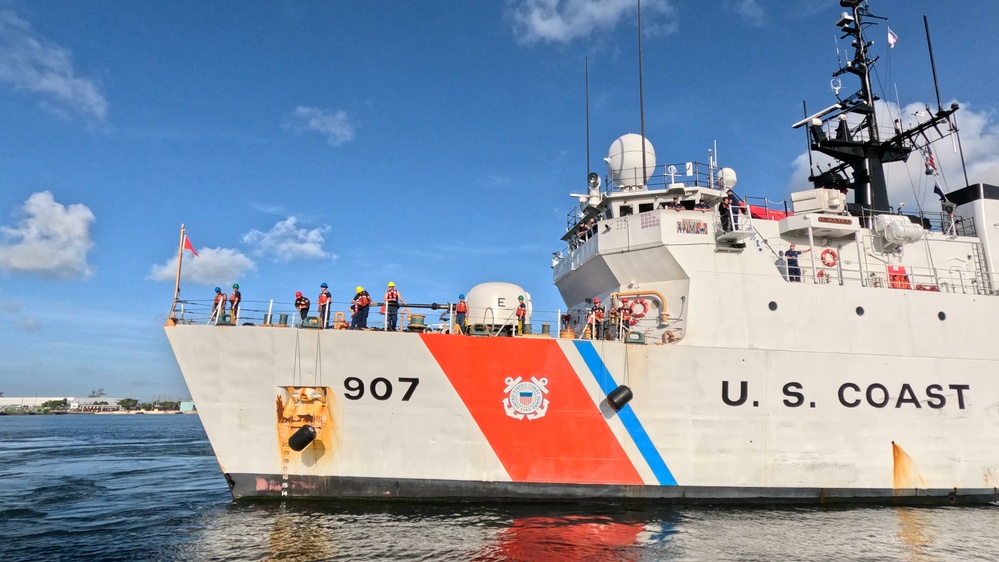
Moving from strikes on alleged trafficking vessels to action against people or facilities on land would raise the stakes. Geography makes land operations more likely to intersect with civilians, police, courts and competing armed groups. Politically, they would test whether coalition membership amounts to consent for U.S. force or only to coordination against organized crime. Operationally, they could widen the mission from stopping shipments to dismantling networks and pursuing leadership—an objective with a more open-ended definition of success.
The January 3 operation in Venezuela is the precedent Trump chose to emphasize. Reuters reported that Operation Absolute Resolve combined intelligence penetration, more than 150 aircraft launched from 20 bases, strikes on military targets and a special-forces raid that captured Maduro and his wife. Reuters also reported that congressional notifications began only after the operation was underway. The scale and timing do not establish that the same model is planned elsewhere, but they explain why an offer to “do it for you” will be read as more than rhetorical pressure.
The legal questions are not settled
Three different questions would have to be answered for any operation: whether the host state validly consented; whether the action complied with international law governing force and human rights; and what authority supported it under U.S. law. Consent could answer part of the sovereignty question, but not every question about targeting, detention, proportionality, civilian protection or accountability.
The public record reviewed for this article does not show that Congress has enacted a cartel-specific authorization for military force covering land operations across the region. It also does not show the legal theory the administration would use for a requested strike. Those gaps matter because a coalition communiqué or presidential offer is not the same thing as a public legal justification for a specific use of force.
Critics begin from the existing maritime record. Reuters reported that rights groups have called the boat attacks extrajudicial killings. The administration says the targets are narco-terrorists and that intelligence supports the strikes. Without public evidence for individual targets, outside scrutiny of necessity, identity and civilian risk remains limited. That is a factual constraint on accountability, not proof that every official allegation is false.
From the Monroe Doctrine to the “Donroe Doctrine”
Trump framed the campaign as a reassertion of American power in the hemisphere. Reuters connected that posture to his administration’s revived Monroe Doctrine, the 19th-century policy asserting U.S. primacy in the Americas. Critics have long associated later uses of the doctrine with decades of intervention across Latin America.
Trump’s personalized phrase, the “Donroe Doctrine,” is political branding for that revival; it is not a treaty, statute or settled source of legal authority. Its practical meaning will depend on what governments accept, what Congress funds or constrains, and whether courts or international bodies ever review particular operations.
Who gains—and who carries the risk
Allied leaders confronting well-armed trafficking groups could gain access to U.S. intelligence, surveillance, transport, training and firepower that their own institutions cannot readily match. U.S. military and interdiction agencies could gain wider access, more partner data and a larger regional operating network. Governments aligned with Trump may also gain domestic political value by presenting themselves as part of a hard-security coalition.
Cartels and their leadership networks are the intended losers. But the costs could extend beyond them. Civilian communities in contested areas face the danger of mistaken identification and retaliatory violence. Partner governments could absorb backlash over sovereignty or casualties. Police and courts could be sidelined by a military-first approach, while mission creep could pull U.S. forces from discrete support into prolonged operations with no clear endpoint.
What the numbers do—and do not—show
The verified figures describe scale, not effectiveness. Reuters said Shield of the Americas includes more than a dozen governments and reported that the boat-strike campaign has killed more than 220 people since 2025. USA Today named five coalition members. The September 19 strike killed four people, according to U.S. Southern Command. Operation Absolute Resolve used more than 150 aircraft from 20 bases, according to the chairman of the Joint Chiefs of Staff as reported by Reuters.
None of those numbers demonstrates that the policy has reduced the supply, price or lethality of drugs reaching the United States. A defensible assessment would require comparable data on trafficking volumes, seizures, drug purity and prices, overdose deaths, cartel recruitment and territorial control, as well as civilian casualties and displacement. It would also need a baseline and a time period long enough to distinguish durable disruption from routes shifting elsewhere.
What happens next
The immediate test is whether partner governments publicly accept Trump’s offer, narrow it to training and intelligence, or reject U.S. action on their territory. Any operational proposal would also bring questions about congressional notification or authorization, host-country consent, targeting standards and civilian-harm investigations to the foreground.
Regional reaction matters beyond the coalition. Brazil and Mexico were not members, Reuters reported, and governments outside the group could treat expanded U.S. action as a security benefit, a sovereignty challenge or both. Cartel retaliation against local officials, infrastructure or U.S. interests is another risk, even before any land operation begins.
For now, the headline is an offer backed by precedent, not a disclosed war plan. The next meaningful evidence will be concrete: a partner’s formal request, a published agreement, congressional action, new force deployments or an operation on the ground. Until then, the gap between political promise and legal-operational detail remains the central fact.
Related coverage
Trump’s broader UN address also threatened Iran, challenged international institutions and pressed Russia over Ukraine. Read Signal Post News’s separate analysis: Trump Threatens to “Annihilate” Iran in UN Speech, Predicts Deal After Midterms.
Sources
- Reuters, September 22, 2026: Trump’s UN remarks, Shield of the Americas, coalition background, maritime campaign and Monroe Doctrine context
- USA Today live updates, September 22, 2026: Shield of the Americas event, participating governments and Trump’s “we’ll do it for you” remarks
- Reuters, September 20, 2026: September 19 Caribbean vessel strike and rights-group criticism
- Associated Press syndication, September 2026: public-evidence limits and regional military-cooperation context
- Reuters, January 3, 2026: Operation Absolute Resolve, Maduro’s capture and congressional-notification timing
- Federal Register public-inspection document, March 2026: Americas Counter Cartel Coalition framework
Reporting cutoff: September 22, 2026, 12:45 p.m. PDT. Contested claims about trafficking and targets are attributed to the officials or organizations making them. No confirmed operational plan or public reaction from the named coalition governments had been established in the reporting reviewed by the cutoff. Analysis is Signal Post News’s synthesis of the cited record.