Trump Iran strikes before midterms
Trump Iran strikes before midtermsTrump Iran strike timingAtlantic Pentagon Iran optionsCENTCOM Iran strike plansIran strikes midterm electionsoil prices Iran war October 2026Trump gas prices midtermsUS Iran war escalationHormuz oil supply risk
WASHINGTON — The debate over Trump Iran strikes before midterms is no longer a hypothetical about what might happen after Election Day. The White House has asked the Pentagon to develop strike options against Iranian targets that could be executed before the November 3 vote, The Atlantic reported on October 7, citing two administration officials. U.S. Central Command is developing the plans, but the targets, scale and timing remain under discussion and President Trump has made no final decision.
The distinction matters. For months, the working assumption in Washington and across oil markets was that Trump would preserve the option of expanded action but avoid a fresh escalation before voters cast their ballots. The new planning does not prove that an attack is coming. It does show that the calendar itself has moved from a constraint to an active part of the decision.
What The Atlantic Reported
Options are being built, not an order to strike
The Atlantic's Nancy Youssef and Jonathan Lemire reported that the White House asked the Pentagon for choices that could be used before the midterms. Their account rests on two administration officials and says CENTCOM is developing the options. A White House official said Trump “has all options available at any time.” That is a statement of presidential flexibility, not confirmation that one of those options has been selected.
Axios separately reported on October 7 that the Pentagon directed CENTCOM to complete preparations for possible new strikes. Potential targets under consideration include Iranian energy infrastructure, military facilities and nuclear sites. U.S. and Israeli officials told Axios renewed combat could come before either the U.S. midterms on November 3 or Israel's election on October 27. Axios likewise reported that no final decision or date had been set.
Taken together, the reports establish a planning shift, not an operational countdown. Military staffs routinely prepare alternatives so a president can choose among them quickly. The news is that “before the election” is now inside the requested planning window — a sharper and more politically charged timetable than the one many officials and investors had been using.
Why the Timing Flipped
Analysis: the White House wants leverage before voters decide
On October 1, Trump told Time that expanded bombing after the midterms was “possible.” The same day, he told CBS News that the United States would win the war “right after the election,” then added, “Maybe before the election.” Those words looked like deliberate ambiguity. A week later, the request for executable pre-election options suggests the ambiguity has become a real branch of Pentagon planning.
Administration officials linked the accelerated work to Trump's desire to show progress in the conflict and lower gasoline prices before the vote. That is the central paradox. A limited operation might be presented as evidence of control and resolve. Yet any strike that widens the conflict could push crude — and eventually pump prices — higher, at least initially. The political objective and the market mechanism point in opposite directions.
What changed in a week was not a public breakthrough with Tehran. It was the administration's assessment of the time available to shape the conflict before November 3. Trump had already warned at the United Nations on September 22 of devastating consequences if Iran pursued nuclear-weapons capability, and in a September 17 Axios interview he floated “annihilating” the Iranian regime alongside other possible courses. The new reporting turns that broad rhetoric into a more immediate question: which military option, if any, could produce a visible gain without producing an uncontrollable cost?
Some advisers still favor waiting until after the midterms. Their political argument is straightforward: American casualties before voting day could hurt Republican candidates. The opposing argument is equally political — waiting could make the administration look passive while fuel prices remain high and the conflict appears unresolved. Neither side can guarantee the result because Tehran and oil traders get a vote too.
What the Strikes Could Hit
Limited and broader campaigns carry different kinds of danger
The reported target categories are wide enough to support very different campaigns. A limited strike against a military facility could be designed as a discrete response intended to restore deterrence. A wider attack on multiple bases or command sites would seek greater battlefield effect but would give Iran stronger incentives to retaliate against U.S. forces or regional partners.
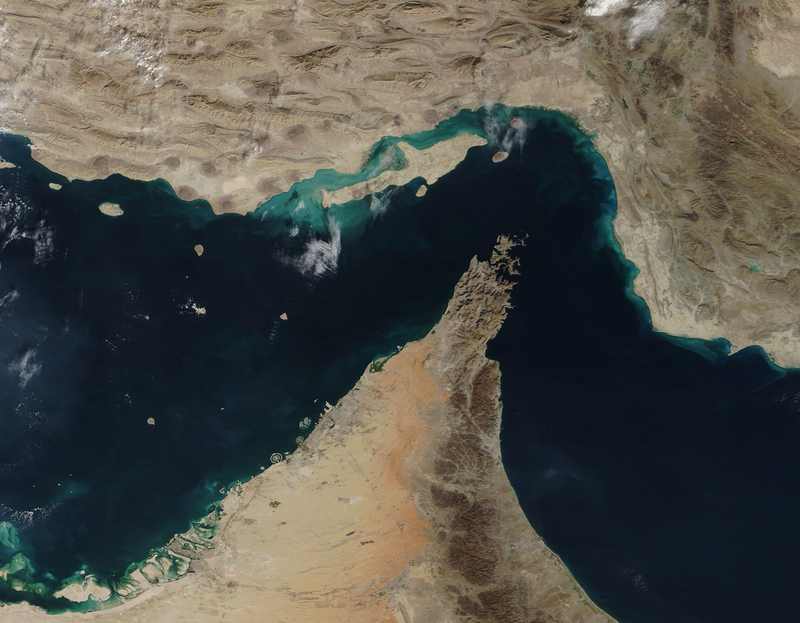
Energy infrastructure is the most economically sensitive category. Hitting production, refining, export or power assets could damage Iranian capacity and signal that Tehran's revenue base is vulnerable. It could also convince traders that more barrels, terminals or shipping routes are at risk. The market would price not only the infrastructure struck but the possibility of escalation around the Strait of Hormuz.
Nuclear sites present a different problem. They may offer a strategically legible target if the stated objective is to constrain Iran's nuclear capability, but hardened and dispersed facilities can demand a larger operation. A campaign that fails to achieve its declared purpose may invite follow-on strikes; one that succeeds militarily may still trigger retaliation or accelerate Tehran's determination to rebuild. Military sites sit between those poles: easier to frame as battlefield targets, but often linked directly to forces capable of striking Americans and allies.
The Oil Market Already Moved
Two shocks arrived at the same time
Brent crude gained 2% to $102.15 a barrel in Singapore after the report, according to Moneyweb's publication of Bloomberg reporting on October 8. West Texas Intermediate traded near $90. The move shows that markets did not treat the planning story as mere campaign rhetoric; traders assigned a higher probability to disruption.
The Iran news was not the only supply pressure. Gulf of Mexico producers had shut in more than 510,000 barrels a day as Hurricane Isaias approached. That is a separate event, but markets trade the combined balance. A temporary U.S. weather disruption and a potential Middle East military escalation landed on the same screen, making it difficult to isolate how much of the price move belonged to each.
Oil above $100 carries political consequences even before all of the increase reaches gasoline stations. Refiners, distributors and retailers pass changes through with lags, while households see the headline immediately. Higher crude also feeds transport and production costs, complicating the inflation picture. The risk for the White House is that an operation intended partly to show progress and ease energy pressure could produce the opposite signal: another war premium layered onto a market already driven higher this year by the U.S.-Iran conflict.
The Risks the Planners See
A military action can be brief; its consequences rarely are
Roughly 50,000 American troops are stationed in the region. That presence gives the United States reach, logistics and defensive depth. It also creates many points at which Iran or aligned groups could retaliate. A strike plan therefore cannot be judged only by whether the first aircraft return safely. It must account for bases, ships, personnel and partners that could remain exposed for days or weeks.
Some advisers fear American casualties before the midterms could damage Republican candidates. That concern is political, but it is also a reminder that escalation control is not unilateral. Washington may intend a limited action; Tehran may interpret it as the opening of a broader campaign and respond accordingly. Iran, for its part, can argue that retaliation is necessary to deter further attacks, even as such retaliation would increase the risk to civilians, regional trade and its own infrastructure.
Even advocates of limited strikes acknowledged that bombs alone would not secure an agreement with Tehran, restore safe passage through the Strait of Hormuz or reduce gasoline prices before Election Day. That concession is crucial. Tactical success and strategic success are different tests. Destroying a target is measurable; converting destruction into a durable political settlement is much harder.
Who Wins, Who Loses
The political rewards are immediate; the costs can outlast the campaign
Trump could gain a forceful campaign narrative if a limited operation is executed cleanly and Iran does not retaliate in a way that dominates the news. He could argue that he acted rather than waited. But the same move exposes that narrative to casualty reports, higher fuel prices or an open-ended mission — outcomes that would give opponents a powerful counterargument days before voting.
Tehran's calculus is also divided. Restraint could preserve forces and deny Washington a wider war, but Iranian leaders may worry that failing to answer a strike invites another. Retaliation could demonstrate resolve while risking a broader U.S. campaign. Neither path is cost-free, and both are shaped by what each government thinks the other will do next.
Oil importers and consumers lose when risk premiums rise. Exporters outside the conflict may benefit from higher prices, but that gain comes with the danger of demand destruction and wider economic slowdown. Israel's October 27 election introduces another calendar: officials there must weigh whether action before their own vote strengthens a security argument or magnifies the consequences of escalation. The people with the least control over any of these calculations are U.S. service members and their families, who would bear the immediate human risk of retaliation and sustained operations.
What Happens Next
Three paths remain open
Limited pre-election strike. The administration could select a narrow set of military or infrastructure targets and present the action as a bounded effort to restore leverage. The near-term signal would be intensified force protection, visible CENTCOM posture changes and presidential language narrowing from general threats to a specific grievance. The best-case projection is a short exchange and renewed bargaining; the downside is retaliation that turns a limited operation into a cycle neither side planned.
Post-election broader campaign. Trump could keep preparations active, use them as pressure and delay a larger decision until after November 3. That would match the earlier assumption and give planners more time, while avoiding an immediate election-week casualty risk. It would not resolve the oil uncertainty, because markets would continue pricing the possibility of action.
Stand-down. The White House could decide that no target package offers a credible route to the stated political goals. De-escalatory signals would include reduced public emphasis on deadlines, stabilized carrier movements and a shift toward negotiations or indirect messaging. A stand-down would avoid the immediate military risk but could be portrayed by critics as hesitation unless accompanied by a visible diplomatic gain.
The signals worth watching are concrete: carrier movements, defensive deployments, changes in CENTCOM force protection and Trump's own choice of words. None alone proves an order has been given. Together, they will show whether options are remaining on paper or moving toward execution. For now, the most important fact is also the most restraining one: no final decision has been made.
Sources
- JFeed — The Atlantic's reporting on pre-midterm Iran strike options
- NewsBeep — Summary of The Atlantic report
- Moneyweb / Bloomberg — Oil gains on report Trump may order strikes before midterms
- Political Wire — Trump is considering striking Iran before the midterms
- Newsmax / Axios — Pentagon prepares for possible Iran strikes