trump take out los angeles
The president insists his Nebraska rally line was about tolerating higher gasoline prices to stop a nuclear-armed Iran — not an invitation to attack American cities. California Democrats aren't buying the cleanup.
WASHINGTON — President Donald Trump said Thursday that his startling suggestion that Iran could "take out" Los Angeles and San Diego was misinterpreted — insisting he was talking about Americans tolerating higher gasoline prices as the price of keeping a nuclear weapon out of Iran's hands.
The Thursday clarification
In a Truth Social post on Thursday, Trump addressed the uproar directly: "What I was talking about was that a temporary increase in the price of Gasoline is a small price to pay for Iran not having a Nuclear Weapon." He added: "If you want to see a big price, can you imagine what it would be like if they bombed San Diego and/or Los Angeles?" — and said he loved both cities.
The post was his first direct response to three days of condemnation that had united California Democrats and made some Republicans visibly uncomfortable.
What he actually said in Nebraska
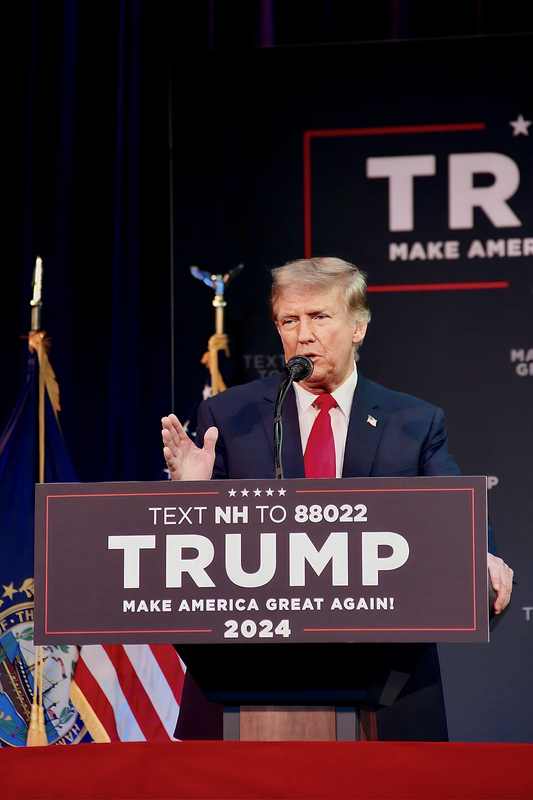
The controversy began Monday at a political rally in Grand Island, Nebraska, where Trump was arguing that wartime economic sacrifice is worth bearing. Speaking about Americans' tolerance for higher fuel costs during the confrontation with Iran, he said: "Remember, with the war, it's just artificial, it's a little bit high, it's a small price to pay. It's a small price to pay for keeping the world safe, for keeping our country safe. They could take out a city. Let 'em take out Los Angeles, let 'em take out San Diego. This is a very small price to pay, and it's going to be over with very soon."
The remarks were reported by Reuters and drew swift rebukes from California's Democratic leaders, with some fellow Republicans also criticizing the language.
The backlash that forced the cleanup
Within hours of the rally, California Democrats accused the president of musing casually about the destruction of two of America's largest cities. Governor Gavin Newsom's office condemned the remarks as dangerous; former House speaker Nancy Pelosi and the state's Democratic congressional delegation joined in.
The criticism had an obvious calendar behind it: the midterm elections are 25 days away, on November 3, and cost-of-living politics dominate the campaign. A clip of a president appearing to shrug at the annihilation of Los Angeles is the kind of thirty-second weapon opposition researchers dream about.
Why this matters
Strip away the noise and this episode is about the hardest sell in wartime politics: asking voters to pay more. Every president who has waged a sustained confrontation abroad has eventually had to tell the public that sacrifice is required — higher prices, disrupted trade, a slower economy. Trump's version was characteristically blunt: gasoline costs a little more, and that's nothing compared to the alternative.
The cleanup matters because it shows the White House concluded the original phrasing was a political liability, not a debating point. When a president clarifies, it means the un-clarified version was losing. And the specific thing being clarified — that Americans should quietly absorb higher gas prices — is itself revealing: the administration knows the Iran confrontation has a household cost, and it is pre-spinning that cost as patriotism.
How we got here
A war, a blockade, and a promise not to strike — yet.
The United States and Israel bombed Iran's nuclear program in February; the conflict later restarted, and Washington now enforces a blockade on Iranian oil. Trump says 22 million barrels moved through the Strait of Hormuz in a single recent night, with "not one barrel coming from, or going to, Iran."
On the same Thursday he issued the Los Angeles clarification, Trump also posted that the U.S. is having "productive discussions" with Tehran and "will not be attacking Iran at any time prior to the Midterm Elections." The two posts belong together: de-escalation abroad, reassurance at home.
The gasoline problem.
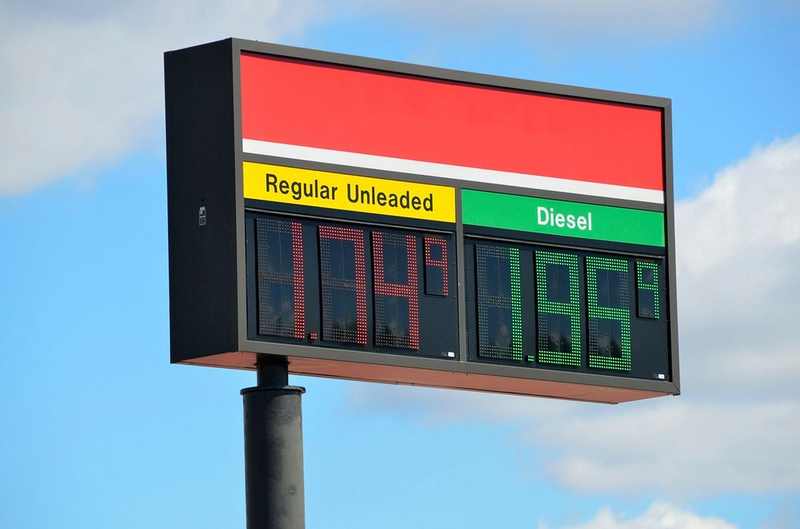
Fuel prices are the most politically visible price in American life — voters see them daily, and they color every judgment about the economy. The Iran confrontation has kept crude elevated (Brent near $104 and WTI near $91 a barrel on Friday morning, easing only after the no-strike pledge), and Hurricane Isaias has now shut in roughly 1.3 million barrels a day of Gulf of Mexico production, about 63 percent of the region's output, adding fresh upward pressure.
"A temporary increase in the price of Gasoline" is doing a lot of work in Trump's sentence: temporary is a forecast, not a fact.
Two readings of the same sentence
The supporters' reading.
His defenders — including the American Enterprise Institute's Marc Thiessen — argue the meaning was plain in context: "it's a little bit high" referred to gasoline; the "small price to pay" was the price at the pump, set against the unthinkable price of a nuclear-armed Iran being able to destroy an American city. On this reading, critics deliberately stripped eleven words of context to manufacture outrage.
The critics' reading.
Democrats reply that a president does not get to muse, even hypothetically, about American cities being leveled — and that the "clarification" is damage control 25 days before an election, not a good-faith reading guide. On this reading, the sentence meant exactly what it sounded like, and the walk-back proves the White House knows it.
What both sides concede.
Both readings agree on one observable fact: the White House felt it had to clarify. Presidents don't issue "I was misinterpreted" posts about lines that are landing well. Whatever Trump meant on Monday, by Thursday his own team had decided the line was a problem.
What the numbers actually say
Oil markets moved on the other half of Thursday's messaging: crude futures fell Friday morning after the no-strike-before-midterms pledge, with traders pricing a de-escalation window. That tells you what the "small price" framing is really competing with — not just the pump price, but the war premium embedded in every barrel.
If diplomacy holds through November 3, the premium bleeds out and Trump can claim he delivered both toughness and relief. If talks collapse or Isaias-driven shut-ins spike retail gasoline in late October, the "temporary increase" line will be replayed against him nightly. The politics here are entirely downstream of two numbers: the price at the pump and the days until November 3.
What happens next
Three things to watch. First, whether the White House repeats the clarification or lets it sit as a one-day story — repetition signals internal polling says the damage is real. Second, California Democrats have every incentive to keep the original clip alive through Election Day; expect it in ads. Third, the Iran talks themselves: "productive discussions" plus a public no-strike pledge creates a window markets already believe in, but windows close. The same president who promised no attack before the midterms bombed Iran's nuclear sites in February. Everyone in Tehran, Riyadh, and the trading desks knows that.
Related coverage
- Trump Says Let Iran 'Take Out' Los Angeles and San Diego: 'Small Price to Pay'
- Trump Delays an Iran Strike Until After the Midterms—Oil Gets a Reprieve
- Trump at 'Decision Point' on Iran: 'Easy Way or the Hard Way'
Sources
- Reuters, October 8, 2026 — Trump's clarification and the full "small price to pay" gasoline quote from his Truth Social post
- Donald J. Trump via Truth Social, October 8, 2026 — the "misinterpreted" post, as quoted by Reuters
- American Enterprise Institute — Marc Thiessen: "No, Trump didn't invite Iran to bomb Los Angeles"
- NY Post — markets coverage, October 9, 2026: crude futures eased after the no-strike-before-midterms pledge (no direct link provided; do not invent a URL)
- The Hindu BusinessLine — oil-market reporting on the Iran confrontation (no direct link provided; do not invent a URL)
- Signal Post News, October 6, 2026 — our report on the original Nebraska rally remarks
Quotations from the president's Thursday post are as quoted by Reuters from his October 8, 2026 Truth Social post. Rally quotations are as reported from video of the October 5, 2026 rally in Grand Island, Nebraska. Oil-price and Hurricane Isaias production figures are as reported Friday morning. Analysis is the author's own.
Analysis by Alany Chu · Published October 9, 2026. All quotations attributed; analysis is the author's own.