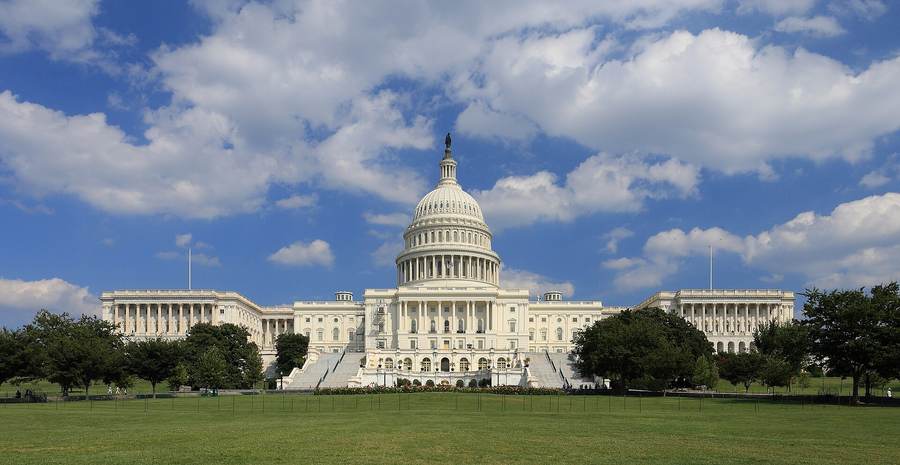
The United States Senate blocked the first major federal attempt to answer a question now sitting on millions of kitchen tables: who pays for the electricity that artificial-intelligence data centers devour? In one of its final votes before leaving Washington until after the November midterms, the chamber voted 57-43 on Wednesday to advance the Ratepayer Protection Act — three votes short of the 60 needed — with Senate Democrats killing the measure and only four members of their own caucus breaking ranks to support it.
The bill, championed by Senator Jon Husted of Ohio, would have required state utility regulators to "consider" rules making large data centers cover the full incremental cost of the power infrastructure built to serve them, rather than passing those costs on to households. It passed the House earlier this month by a resounding 417-3. Its Senate death was not about the idea — nearly everyone agrees in principle that tech giants should pay for their own grid upgrades. It was about whether Washington should mandate it, suggest it, or leave it to the states and the next Congress.
Why this matters
The most important thing about this vote is not the bill itself, which was modest to the point of symbolism. It is that both parties treated an obscure piece of utility regulation as a closing argument for the midterm elections. Republicans scheduled the vote to prove they take affordability seriously; Democrats blocked it to prove Republicans do not. That tells you everything about where the 2026 campaign is being fought: not on abstractions, but on the monthly power bill.
Data centers have quietly become one of the most potent political issues in America. The facilities that train and run AI models consume staggering amounts of electricity, and utilities are building new generation, transmission lines, and substations to serve them. In many states, the costs of those upgrades are spread across all ratepayers — meaning a family running a refrigerator and a window air conditioner helps subsidize the power supply of a hyperscale server farm. Polls show broad public opposition to data centers even as President Donald Trump champions their construction, and the backlash has become a rare issue that cuts across party lines in state and local races.
Wednesday's vote was Congress's first real test of whether that backlash can be converted into federal policy. The answer, for now, is no — and the failure leaves both parties with a weapon and a wound. Republicans can tell voters Democrats stood in the way of relief. Democrats can tell voters Republicans offered a bill so weak it would not have delivered any. Both claims will be tested on November 3.
The vote, in brief
The procedural vote fell 57-43, short of the 60-vote threshold needed to overcome a filibuster and begin debate. Only four Democrats — Senators Amy Klobuchar of Minnesota, Jon Ossoff and Raphael Warnock of Georgia, and Maggie Hassan of New Hampshire — voted to advance the measure, breaking with party leadership. One of the four, according to USA Today, sits in caucus leadership, a sign of how awkward the politics were for the party.
Ossoff, who faces a competitive reelection race in battleground Georgia, defended his vote afterward. "Thanks to Donald Trump, it costs more than ever in American history to power your home," he told USA Today, calling the legislation "worthy of debate." The comment captures the cross-pressure on Democrats in swing states: oppose the bill and risk being painted as indifferent to energy costs; support it and defy a leader who called it, in his words, a fraud.
Senate Minority Leader Chuck Schumer did not mince words. He called the bill "shoddy" and "toothless," arguing it set up a voluntary system in which "not a single company has to comply." Democrats, he said, want data centers to fully shoulder their own power upgrades "by law — not by suggestion or hope or whim." On the floor Tuesday, he mocked the approach: "Here we need some real action on data centers and what does the Republican senator from Ohio come up with? Something that is optional."
Republicans countered that Democrats were blocking the only bipartisan vehicle available. Senate Majority Leader John Thune noted that nearly every House Democrat had voted for the same bill weeks earlier — a 417-3 margin that included overwhelming Democratic support. The inconsistency, Republicans argued, exposed the Senate vote as politics rather than principle.
How we got here
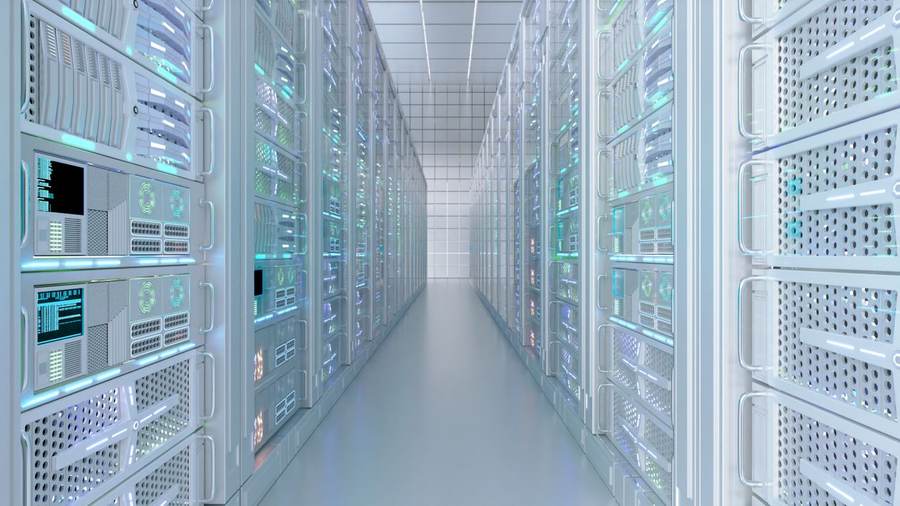
The AI data center boom arrived faster than the regulatory system built to manage it. Over the past two years, tech companies and infrastructure funds have poured hundreds of billions of dollars into new facilities, and Goldman Sachs estimates investors have provided roughly $500 billion to AI-linked companies and infrastructure this year alone. The spending spree behind the boom keeps growing — see our coverage of the White House AI self-policing pact and the $11.6 billion Anthropic-Akamai cloud deal. Each new campus needs power on a scale once associated with small cities, and utilities — many of them regulated monopolies — have moved to build the generation and grid capacity to serve them.
The cost question followed immediately. When a utility builds a substation to serve a single hyperscale customer, should every household in the territory help pay for it? Consumer advocates and a growing number of state regulators say no; the industry says the facilities bring jobs, tax revenue, and economic development that justify shared investment. Several states have begun rewriting their own cost-allocation rules, creating a patchwork that Congress was being asked to harmonize.
The House acted first, passing the Ratepayer Protection Act 417-3 on September 16 — a margin that suggested the politics of "make data centers pay" were irresistible in an election year. In the Senate, the bill became the project of Jon Husted, an Ohio Republican facing a fiercely competitive reelection campaign against former Senator Sherrod Brown. Husted has been hammered on the data center issue at home, and he took up the bill at the behest of a leadership eager to give vulnerable members an affordability credential before the recess.
The push stalled last week when Husted tried to pass the bill by unanimous consent and Senator Martin Heinrich of New Mexico objected — a preview of Wednesday's outcome. Heinrich argued the measure was "all message and no substance" and pointed to his own alternative, the GRID Savings Act, which would actually require large-load users to pay for their grid upgrades rather than asking states to consider it.
Who benefits, who loses
The winners are easier to name in politics than in policy. Husted gets the clearest benefit: even in defeat, he can tell Ohio voters he fought to shield their bills while his party's leadership backed him. The four Democratic defectors — particularly Ossoff in Georgia — buy themselves distance from a party-line vote that Republicans will spend the next five weeks describing as a vote against affordable electricity. And the GOP as a whole gains a crisp attack line for the closing stretch: Democrats had a chance to act on energy costs and said no.
Democrats accept that risk because they believe the substance favors them. A voluntary standard, they argue, would have let Republicans claim a win while changing nothing — "all message and no substance," as Heinrich put it on X. By blocking it, Schumer preserves the demand for a mandatory bill and denies the GOP a bipartisan talking point. The gamble is that voters will remember the promise of stronger legislation rather than the fact of Wednesday's "no."
The losers, for now, are households. No federal standard exists, the Senate will not return until after the midterms, and state-by-state fights over cost allocation will continue with no national backstop. Data center developers face the mirror-image problem: regulatory uncertainty across dozens of jurisdictions, with the threat of a much tougher mandatory regime if Democrats follow through on their promise. And utilities, caught between the two, must keep building grid capacity for customers whose cost responsibilities remain legally unresolved.
What the numbers say
The arithmetic of the vote tells the story of a chamber performing for an audience. Fifty-seven senators voted to advance the bill — a clear majority — but the 60-vote filibuster threshold turned a majority into a defeat. Three votes separated the measure from debate. Compare that with the House's 417-3 passage, and the gap between the two chambers measures the difference between a body that can pass messaging bills freely and one where the minority can demand substance.
The 100-megawatt threshold in the bill's text is the technical heart of the dispute: facilities above that line — the hyperscalers — would have been covered by the proposed federal standard. Below it, nothing changes. Critics noted that even covered facilities faced no real obligation, since the bill only required state regulators to "consider" the standard. "Consider" is doing extraordinary work in that sentence: it is the difference between a mandate and a suggestion, and the entire Senate fight turned on that single verb.
The calendar matters as much as the count. With the midterms on November 3 and Republicans holding a 53-47 Senate majority, every vote in this window is campaign material. Senators are now expected to leave Washington and not return until after the election, which means the affordability debate will be litigated in ads and town halls rather than in committee rooms. Both parties have chosen their lines: Republicans will say Democrats blocked relief; Democrats will say Republicans offered a fraud. The voters who actually pay the power bills get to decide which story is true. And the fight over energy costs is not limited to electricity — Trump's diesel export ban warning to the EU is running on a parallel track.
What happens next
The near-term future is a campaign, not a negotiation. Expect the vote to feature in Republican advertising in competitive Senate races — particularly in Ohio, where Husted and Brown are fighting over the data center issue, and in Georgia, where Ossoff's break with his party will be cited by both sides. Democrats, meanwhile, have promised a stronger bill with real teeth, and Heinrich's GRID Savings Act now becomes the marker for what "serious" looks like: mandatory cost allocation, not voluntary consideration.
The structural question does not go away with the recess. AI infrastructure investment is accelerating, not slowing, and every new data center campus creates a new local fight over who pays for the power. States will keep writing their own rules, utilities will keep building, and the costs will keep landing somewhere. If Congress returns after the midterms with a different majority or a different mood, the mandatory version of this bill — the one Schumer says Democrats want — could move quickly. The lesson of Wednesday is that "make data centers pay" is now a consensus position in American politics; the only remaining argument is whether anyone in Washington is willing to make it law.
Sources
- USA Today — "Data center bill pushes four Senate Democrats to break ranks," September 30, 2026
- Reuters (via Freedom 96.9) — "US Senate blocks bill to address data center costs," by Richard Cowan and Nichola Groom, September 30, 2026
- CNN — "Republicans' last-ditch effort to lower costs ahead of midterms fails in key Senate vote," September 30, 2026
- Washington Examiner — "Democrats deny GOP a midterm win by blocking Husted data center bill," September 30, 2026