The Amy Acton mother video — a 60-second clip in which the Democratic nominee's estranged mother, Donna Arthur, calls her daughter a "liar" and urges Ohioans not to elect her — spread through conservative accounts on Monday night, October 19, and by Tuesday morning Acton's brother had answered, accusing Vivek Ramaswamy of turning the sexual abuse Acton endured as a child into a campaign weapon.
U.S. Politics / A 60-second clip from a candidate's estranged mother, a furious response from her brother, and a brand-new poll showing her ahead — two weeks before Ohio chooses its next governor.
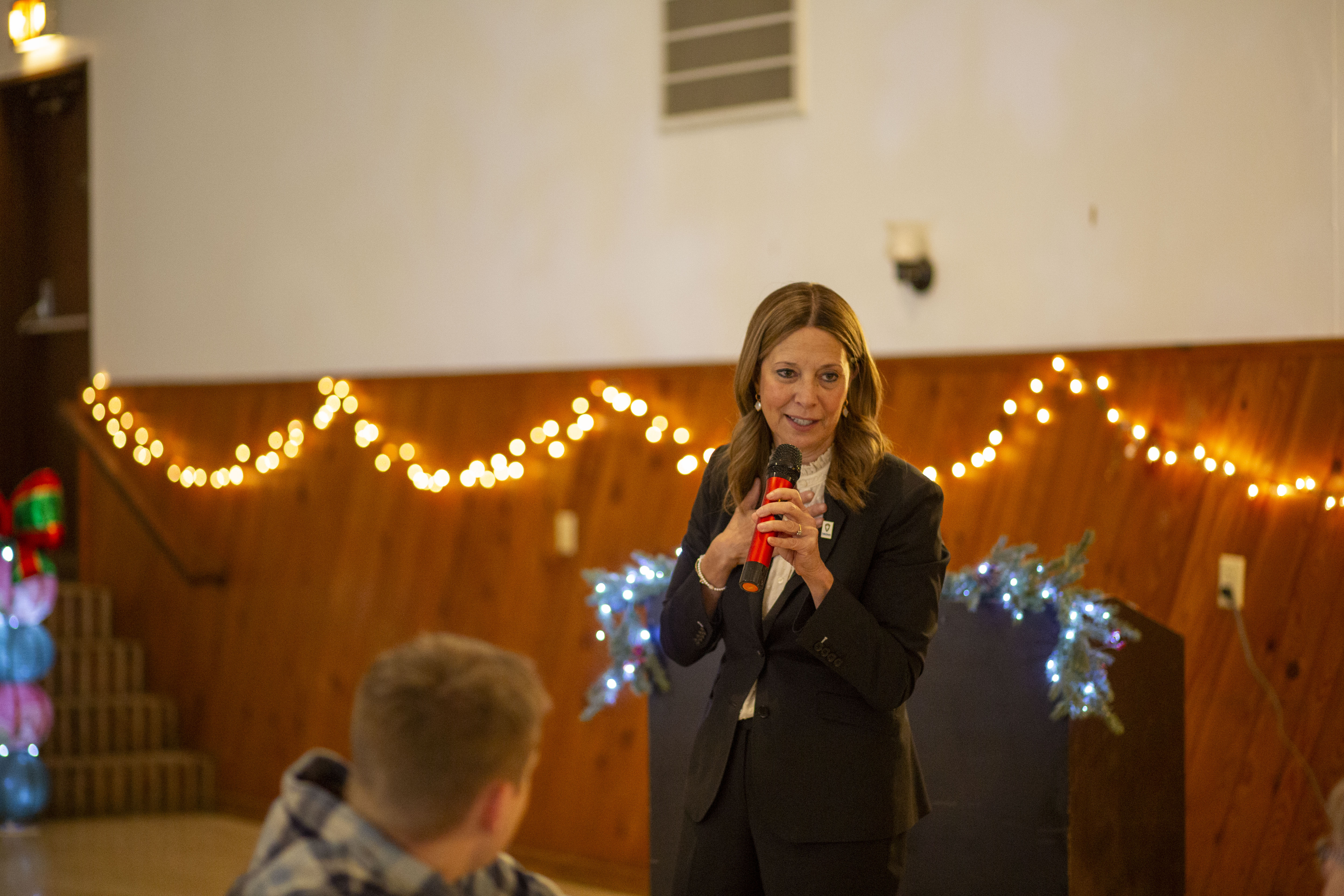
What the video says — and what has not been established
The video is short and direct. Arthur speaks to the camera and challenges the biographical story Acton has told throughout her public life — the childhood with her mother, the abuse by her mother's husband, the stretches without stable housing. "She says she grew up living in a tent," Arthur says in the clip. "None of that is true." She describes her daughter as dishonest — a "liar" — and says "Amy has a serious problem," before ending with the appeal to voters quoted above.
What is established, on the record, is narrower than the reaction suggests. The Rooster, an Ohio outlet, first reported the full video on Monday night, and the clip then spread via pro-Ramaswamy conservative accounts into Tuesday. Acton's campaign blames Ramaswamy's side for the video's circulation, and The Rooster reported rumblings that his operation recruited Arthur to record it. But no reporting available on Tuesday established that the Ramaswamy campaign produced the video, and the campaign itself had not issued a public response to it in the coverage available. Those are separate claims — who is in the video, who amplified it, and who, if anyone, arranged it — and they should not be merged.
The brother's answer
On Tuesday, the Acton campaign published a statement from Philip Stearns, Acton's brother, dated October 20, 2026. Stearns called the video's circulation a "despicable low." In his account, Ramaswamy was attempting to turn the sexual abuse his sister endured at twelve years old — abuse by their birth mother's husband — into a political talking point. Stearns said that after the man was arrested, he and Amy were removed from the household's custody, and that their birth mother remained married to the man until he died. He closed by calling Ramaswamy a pathetic excuse for a man "willing to hurt anyone as long as it gets him what he wants."
That is the campaign's position: the opposing campaign is responsible for weaponizing the family's history. The Ramaswamy campaign had not publicly answered that charge in Tuesday's coverage. The two family accounts now in public — the mother's video and the brother's statement — contradict each other directly, and neither, on its own, is proof of the other's falsity. What can be checked is the older record: Acton's version is not new to this campaign — she has told it for years, in detail, on the record.
The childhood Acton has described for years
The fullest early account is a 2019 profile in the Youngstown Vindicator, published when Acton was Ohio's director of health. Acton, now 60, grew up in Youngstown. After her parents divorced, she lived with her mother. She has described abuse by her mother's husband — her stepfather — and periods of homelessness that included living in a tent. Criminal charges were filed against the stepfather. Acton and her brother were removed from the home, and she went to live with her father and relatives. She has said she last saw her mother in a courthouse, after the arrest.
That history is the foundation of Acton's political biography — the doctor who grew up with nothing, in a city that knows hard times, and built a career in public health. It is also, precisely, what her mother's video disputes. Voters are being asked to choose between two irreconcilable family accounts — one resting on a contemporaneous court record — charges filed, children removed — that has been part of the public telling of Acton's life since 2019, and one that arrived, without corroborating documentation attached, in the final fortnight of a campaign.
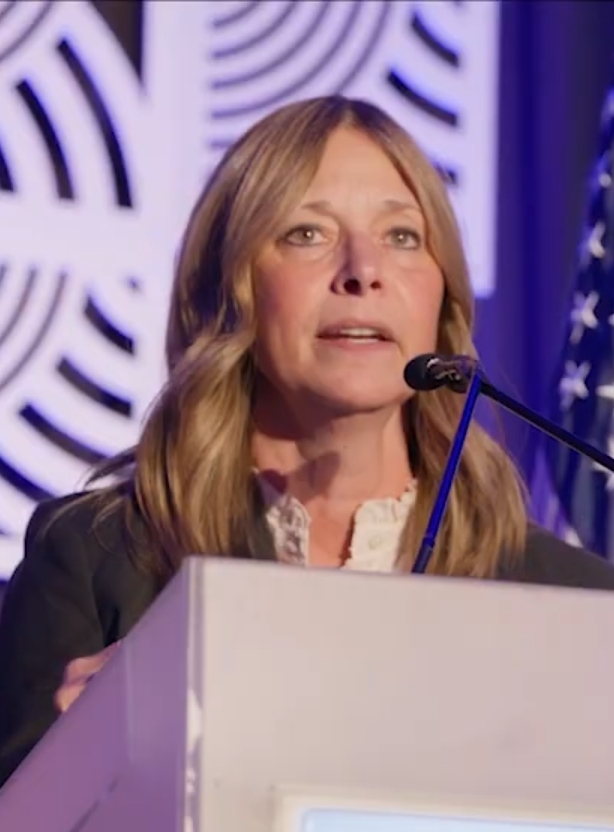
A race already saturated with personal attacks
The video did not land in a quiet campaign. The pro-Ramaswamy outside group V-PAC — "Victors, Not Victims" — has spent tens of millions of dollars on personal attack advertising against Acton, much of it blaming her for Ohio's COVID-era shutdowns, when she served as health director under Republican Governor Mike DeWine. One V-PAC nursing-home ad was fact-checked as misleading — the woman it described died in Kentucky, after Ohio had lifted its order — and DeWine has said he bears responsibility for his administration's decisions. Ramaswamy has also attacked Acton for declining to debate him — a more conventional line of attack.
Even in that context, the mother video struck some on Ramaswamy's own side as a line crossed. A Republican strategist quoted by Raw Story called the video "vile" and warned it could backfire on Ramaswamy. That reaction frames the strategic question: a campaign already outspending its opponent on attack ads gains what, exactly, from a mother's denunciation of her own daughter? The strategist's answer — possibly less than nothing — is the judgment both campaigns will now spend two weeks testing.
Why this matters
American campaigns have always used biography as a weapon, but the weapon here is unusual in kind: not an opponent's research file, not a resurfaced quote, but a parent, on camera, disputing the most painful chapter of a candidate's life — a chapter that involves the alleged sexual abuse of a twelve-year-old. If the video's circulation was organized by anyone connected to a campaign, it is a tactic with no real modern precedent at this level of American politics — and precedents, once set, do not stay in Ohio. If it was not organized — if it was a family rupture surfacing on its own and merely amplified by partisans — then the question becomes what responsibility campaigns bear for the material they benefit from and decline to disavow. Either way, the two weeks left in this race now include a question no voter questionnaire anticipated: how a candidate's family trauma should be litigated in public.
There is also the narrower, colder calculation, and both campaigns are surely running it. Acton's biography is not decorative; it is her central argument — that she understands struggle because she lived it, in Youngstown, in a tent. An attack on the biography is therefore an attack on the argument, which is presumably the point. But attacks on biography cut differently than attacks on policy. Voters who doubt a jobs plan shrug; voters who watch a mother call her daughter a liar, and a brother answer with the word "rapist," are being asked to adjudicate a family's worst years from a campaign video — and the backfire warning reflects a long pattern: voters punish the side they believe dragged a family into the mud, regardless of which side actually did. With early voting already under way, part of the electorate has already voted; the rest will decide, in part, on how this felt.
The numbers: a lead, but a contested one
The video arrived on the same morning as the race's most authoritative new data point. A Marist poll released Tuesday, October 20 — 1,176 registered voters surveyed October 15–18, with a margin of error of ±3.9 points among registered voters and ±4.5 among likely voters — puts Acton ahead of Ramaswamy 50% to 43% among likely voters, a seven-point lead driven substantially by independents, who back Acton 53% to 34%. The same poll gives Democrat Sherrod Brown a 48%–44% lead over Republican Senator Jon Husted in Ohio's Senate race, and puts President Trump's job approval in Ohio at 43%.
Marist is the strongest recent number for Acton, but it is not an outlier so much as the top of a cluster. CNN/SSRS has Acton up 50–42; the New York Times/Siena poll has her ahead 49–45; BGSU/YouGov puts her at 50–44. Two polls cut the other way: co/efficient, a Republican firm, has Ramaswamy ahead 45–43, and ActiVote gives Ramaswamy a 2.8-point edge. The averages settle around a four-to-five-point Acton lead, the three major raters — Cook Political Report, Inside Elections and Sabato's Crystal Ball — all call the race a toss-up, and the prediction market Kalshi priced Acton at roughly 72% on Tuesday. Read together: Acton is ahead, the lead is real but not safe, and in a toss-up race a late October surprise can still move the ending.
The money race underneath it
Money is the other asymmetry. Ramaswamy has raised about $38.7 million — including more than $36 million of his own money lent to his campaign — against Acton's $31.9 million. But the trend lines favor her: Acton outraised Ramaswamy in July, in August and again in September, when she raised $6.1 million to his $3.1 million, and she leads in individual donors, the metric campaigns cite as a proxy for grassroots energy. Outside money, meanwhile, leans the other way, with V-PAC's tens of millions in attack spending stacked on Ramaswamy's side of the ledger.
That structure explains the campaign's shape. A self-funding candidate with an outside-group air force can afford a strategy of saturation attack; a candidate raising smaller checks from more people has to make each story about character and stakes. The mother video, whoever is responsible for it, lands in the middle of that asymmetry — it costs nothing to spread, it seizes the news cycle both campaigns were otherwise buying, and it forces the better-funded side either to own it, disown it, or let silence do the work.
Who is Amy Acton — and who is she running against
Acton is a physician who served as Ohio's director of health from February 26, 2019, to June 11, 2020, appointed by Republican Governor Mike DeWine, and became the public face of Ohio's early COVID-19 response — the daily-briefing doctor whose guidance defined the state's first pandemic months. She received a John F. Kennedy Profile in Courage Award for that service. She is campaigning on affordability, health care and public education, with a Working Families Tax Cut for Ohio parents as a leading proposal. If she wins on November 3, she would be Ohio's first Democratic governor since Ted Strickland left office in January 2011, the first woman elected governor of Ohio, and its first Jewish governor.
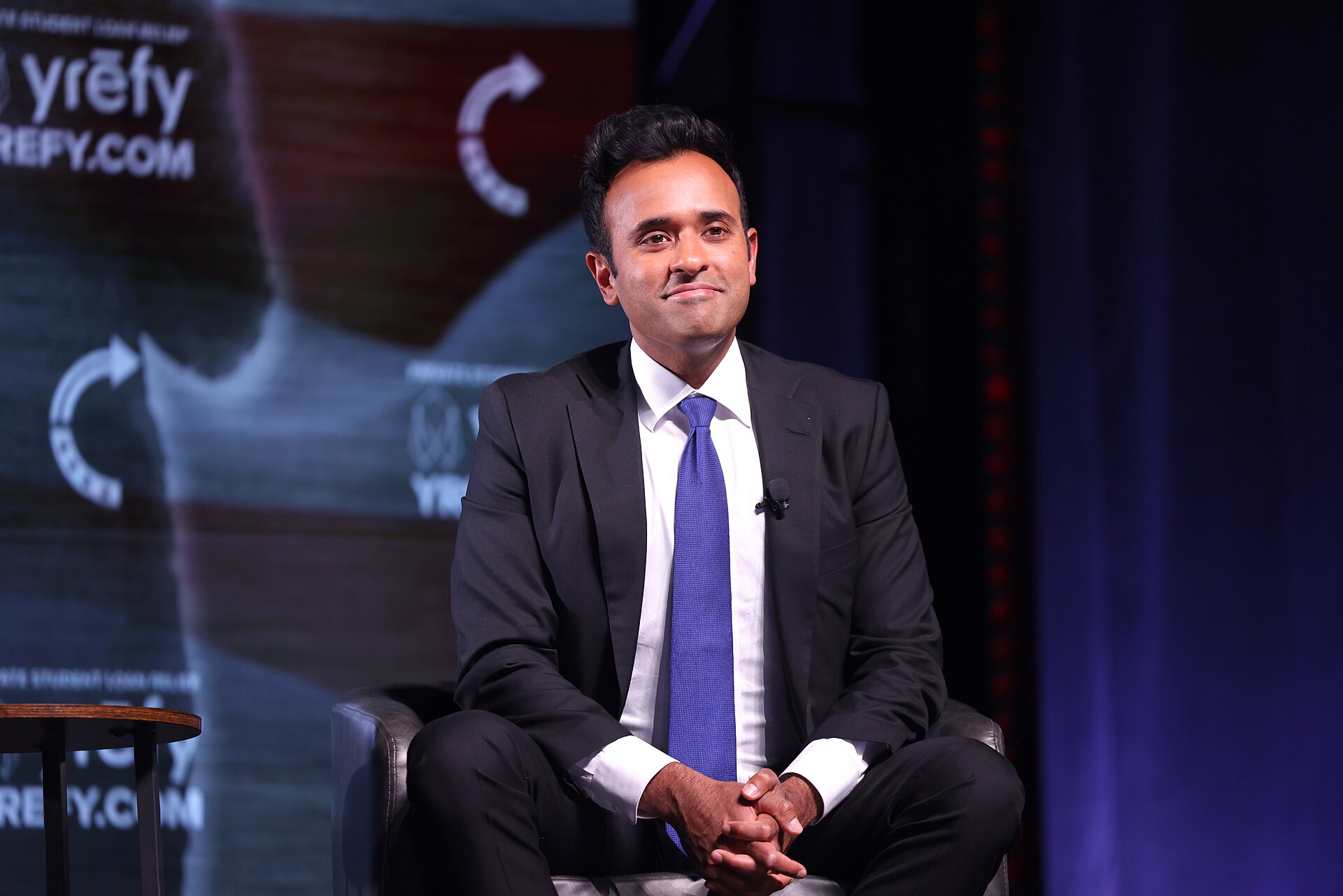
Ramaswamy is a businessman and former 2024 presidential candidate, endorsed by President Trump, who rallied for him in Youngstown on October 12 — Acton's hometown, a choice of venue that was itself a message. Both are seeking their first elected office. Our earlier coverage of the race includes Trump's Youngstown rally for Senator Husted, where the governor's race ran through the undercard, and the Vandalia rally that framed Ohio's midterms around the same two names.
What happens next
Early voting is already under way, and the election is November 3 — fourteen days from the morning the brother's statement went out. Three things will decide how much of those fourteen days this video consumes. First, whether the Ramaswamy campaign responds: silence leaves the Acton campaign's accusation as the only frame on the record; a denial shifts the story to attribution; disavowal would concede the video was beyond the pale while distancing the campaign from whoever spread it. Second, whether the debate dispute reopens — Acton's refusal to debate has been Ramaswamy's cleanest attack, and pressure for a face-to-face meeting will now carry a new charge, since a debate is the one place the video's claims could be put to both candidates directly. Third, whether any further documentation emerges — about the video's origins, or about the family history itself — because the public record currently consists of a one-minute video, a one-page statement and a 2019 newspaper profile, and a story built on that little paper rarely stays still for two weeks.
What is certain is the shape of the ending: on November 3, Ohio elects either its first Democratic governor in fifteen years — a woman whose biography is now the subject of a public family war — or a self-funding newcomer backed by the president, whose campaign must decide whether the ugliest week of the race helps or haunts it. The polls say Acton leads; the last two weeks of a toss-up are where leads go to be tested.
Sources
Acton for Governor, October 20, 2026 — statement of Philip Stearns on the video's circulation (actonforgovernor.com). The Rooster, October 19–20, 2026 — first report of the full Donna Arthur video and reporting on its origins. Washington Examiner, October 20, 2026 — Marist poll results (Acton 50%–43% among likely voters; independents 53%–34%; survey of 1,176 registered voters, October 15–18) and campaign fundraising figures ($38.7 million Ramaswamy, $31.9 million Acton; September $6.1 million to $3.1 million). Marist poll via Political Wire, October 20, 2026 (margins of error ±3.9 registered voters, ±4.5 likely voters; Brown 48%–44% Husted; Trump Ohio approval 43%). Raw Story, October 2026 — Republican strategist describing the video as "vile" and warning of backfire. Youngstown Vindicator, 2019 — profile documenting Acton's childhood account (abuse by her stepfather, homelessness, charges filed, removal from the home). IB Times, October 2026 — Acton biography and race background. Comparative polls: CNN/SSRS, New York Times/Siena, BGSU/YouGov, co/efficient, ActiVote; race ratings from Cook Political Report, Inside Elections and Sabato's Crystal Ball; Kalshi market pricing as of Tuesday. Donna Arthur's claims are reported as her claims; Philip Stearns's account is reported as his statement; this article does not assert who produced the video, which reporting on Tuesday had not established.