Trump NATO naughty nice list
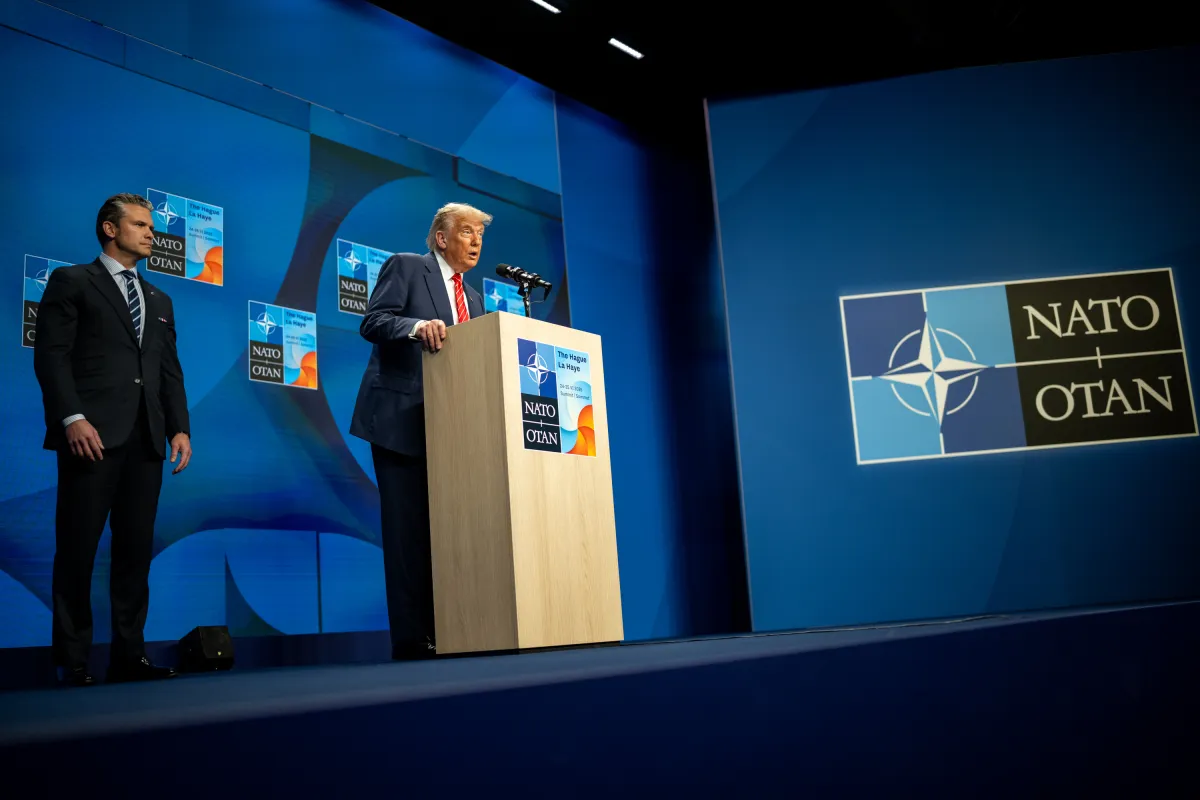
WASHINGTON — The Trump NATO naughty nice list has moved from an internal White House paper to a concrete question of who gets a seat at the table. Pentagon policy chief Elbridge Colby is organizing a November meeting in Poland on NATO’s future for Norway, Sweden, Finland, Poland, Germany and the Netherlands, according to Politico’s September 30 report, which cited six diplomats familiar with the planning. The United Kingdom, France, Estonia, Latvia and Lithuania were not invited. Denmark may join later following a U.S.-Denmark agreement concerning American basing in Greenland.
The Pentagon has not published a roster or agenda. Politico said the White House did not respond to questions and the Pentagon declined to comment. That makes the diplomats’ account the best public description available, but it also requires a note of caution: plans for a closed working session can change before November.
What is already clear is why the exclusions are politically combustible. Britain and France are Europe’s nuclear powers and permanent members of the U.N. Security Council. Estonia, Latvia and Lithuania sit on NATO’s exposed northeastern frontier, have spent heavily on defense and bring direct experience of Russian pressure. A format that discusses NATO’s future without them may be administratively narrow; strategically, it cannot look narrow.
Why this matters: process can become policy
Small groups are normal in diplomacy. They can move faster than 32-member alliances, test proposals away from television cameras and return with language others can amend. Colby’s defenders make precisely that case: the Bergen Group NATO Colby format is said to develop proposals for the full alliance, not replace NATO’s North Atlantic Council. Participants, they argue, are allies moving quickly toward the spending commitments made at the 2025 Hague summit, and the purpose is to “pull the whole alliance along.”
The problem is that selection itself sends a message. Access determines which threat assessments shape the first draft, whose military constraints are understood before a plan hardens and which governments gain privileged contact with Washington. A country can formally retain its vote while losing influence upstream. In alliances, the room before the room often matters most.
That is why the phrase “Trump splits NATO allies” is not merely overheated headline language, even if no formal split has occurred. Repeatedly convening a favored subset can create an inner circle by practice. A diplomat from an excluded country told Politico: “We’re doing everything that is being asked of us ... trying to understand what the criteria is.” Another warned: “If they try splitting NATO into the good ones and the bad ones, it is dangerous for the U.S. ... for Europe, this is existential.” Those are judgments from unnamed officials, not proof of an American plan to fracture the alliance. They do show the level of distrust the process has already produced.
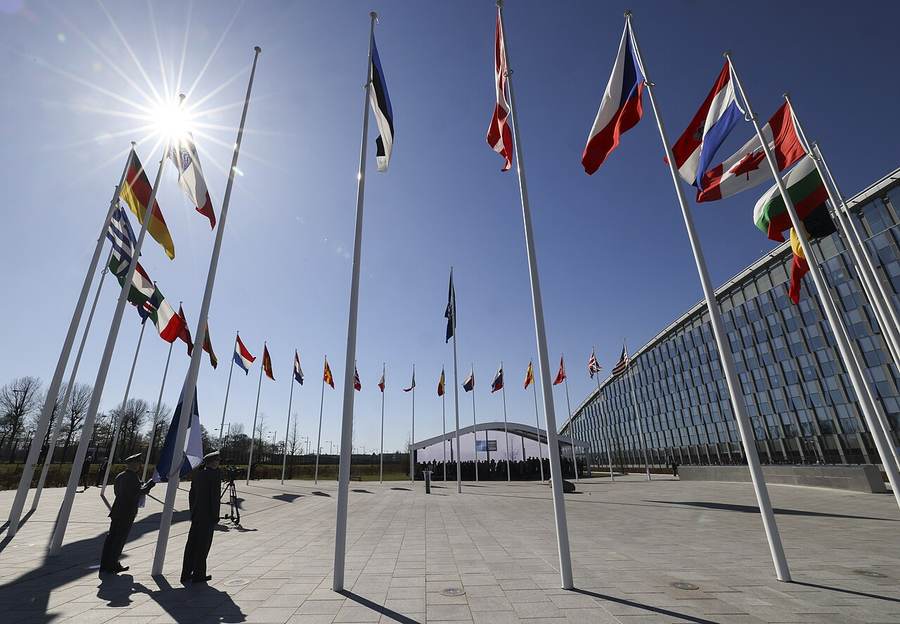
Bergen Group NATO Colby talks: from Norway to Poland
The group takes its shorthand from Bergen, Norway, where its first meeting was held in June 2026. Colby has since convened two meetings with the same core six, according to the reporting. The planned Poland session would therefore be a continuation, not a one-off conference assembled in reaction to the latest dispute.
That history strengthens both sides’ arguments. The Pentagon camp can say continuity makes the group effective: the same officials can build trust and complete work. Critics can say continuity is exactly the issue: an Elbridge Colby NATO working group that repeatedly uses the same selective roster can acquire institutional weight without a formal mandate.
The invited countries are not random. Poland and the Nordic states are central to Baltic and Arctic defense; Germany and the Netherlands are logistical and industrial anchors. Together they form a useful north-European corridor. Yet the geographic logic is incomplete without the Baltics themselves, and the military-industrial logic is incomplete without Britain and France. The format reflects a choice, not an inevitable map.
NATO defense spending: the 5 percent Hague summit pledge
At The Hague in June 2025, allies committed to work toward spending 5% of gross domestic product on defense and security by 2035: 3.5% for core defense and 1.5% for related resilience, infrastructure and security needs. The deadline matters. The pledge is a trajectory, not a requirement that every country spend 5% in 2026.
NATO estimates reported by Reuters in July 2026 complicate the idea that the Poland invite list simply rewards the highest spenders. Lithuania was estimated at 5.33% of GDP, Estonia at 5.10% and Latvia at 4.92% — all outside the meeting. Poland, an invitee, stood at 4.68%. Among the other invited states, Sweden was estimated at 3.22%, Norway and the United States at 3.17%, Germany at 2.69%, Finland at 2.65% and the Netherlands at 2.58%.
Britain’s estimate was 2.56%, slightly below the Netherlands and above France’s 2.22%. Denmark, a possible later entrant, was at 3.49%. Those numbers support a limited version of the administration’s case: several invited allies are moving faster than some larger western members. But they do not explain why all three Baltic countries — among NATO’s highest spenders — are out. The “NATO defense spending 5 percent Hague summit” rationale therefore appears to be one criterion, not the entire test.
The April list put favored and disfavored allies on paper
The November controversy lands after a related episode in April. Politico reported on April 23 that the White House had prepared an internal paper sorting NATO countries according to their contributions and their support for the U.S. war against Iran ahead of Secretary-General Mark Rutte’s Washington visit. Options under discussion reportedly included troop shifts, reduced exercises and redirected military cooperation. Poland and Romania were viewed favorably; Spain was identified as a holdout.
That paper did not itself alter NATO’s treaty guarantees, and internal option documents often contain proposals that never become policy. Still, it established a framework in which alliance management could be conditional and differentiated. The November invite dispute looks less like a scheduling curiosity when read against that background. Trump NATO burden sharing Europe policy has long combined a valid question — whether wealthy allies contribute enough — with a confrontational method designed to make noncompliance costly.
The method is not confined to Europe. In August 2026, President Trump ordered a scale-back of the annual Ulchi Freedom Shield exercises with South Korea after Seoul declined to join the U.S. war against Iran, according to reporting by the Associated Press. The situations are not identical: NATO and the U.S.-South Korea alliance have different structures, missions and legal foundations. The common feature is the use of military cooperation as leverage over an ally’s political choices.
Who benefits, who loses — and why both camps have a case
The invited six gain access. Poland and the Nordic members can put eastern-flank and Arctic priorities at the center of U.S. planning. Germany and the Netherlands gain a stronger voice in the logistics, industrial capacity and force-generation debate. Washington gets a manageable group of governments it regards as capable of moving decisions quickly.
The excluded five lose agenda-setting power. Britain and France risk seeing major European defense questions framed before their nuclear, expeditionary and diplomatic capabilities are incorporated. Estonia, Latvia and Lithuania risk being treated as the terrain to be defended rather than as strategists in their own right. Their absence may also weaken the group’s credibility with governments that regard the Baltic frontier as NATO’s most immediate deterrence test.
Defenders say a workshop is not a directorate. A focused regional coalition can generate practical answers that the full alliance later approves, and no country has been stripped of a treaty right. NATO already relies on coalitions, framework nations and regional plans.
Critics answer that repetition changes the meaning. One technical session can be harmless; a recurring roster around the Pentagon’s senior policy official can become a channel of influence. The risk is not a legal division between “good” and “bad” allies. It is a political hierarchy that makes some capitals doubt whether consultation is genuine.

UK, France and Baltics excluded: the deterrence paradox
The UK France Baltics excluded NATO talks story exposes a paradox. If the group is chiefly about burden sharing, Estonia, Latvia and Lithuania look like model participants. If it is chiefly about military capability, Britain and France are difficult to omit. If it is chiefly a north-European format, the Baltic states are central to the region. The membership makes the most sense only as a hybrid: geography, political alignment, speed of delivery and Washington’s confidence in particular governments.
Hybrid criteria are not necessarily illegitimate. Every administration chooses interlocutors. But opaque criteria are destabilizing because allies fill the silence with political conclusions. The Pentagon’s refusal to comment leaves no official explanation against which those conclusions can be tested.
The Russian factor makes that ambiguity more serious. Moscow’s interest is not simply in whether NATO spends more; it is in whether allies believe the United States will consult and defend them under pressure. Any visible NATO alliance divided Trump administration story becomes useful material for Russian messaging. That does not mean the disagreement was manufactured by Moscow, nor that public debate should be suppressed. It means alliance managers should understand that process disputes can become deterrence signals.
Denmark, Greenland and the next possible seat
Denmark’s possible inclusion adds another layer. Politico’s reporting connected a future Danish seat to the U.S.-Denmark agreement over American basing in Greenland. That creates an appearance — fair or not — that cooperation on a bilateral American priority can affect access to the preferred NATO channel.
The Denmark Greenland US military NATO connection is strategically real. Greenland sits astride Arctic and North Atlantic routes and hosts Pituffik Space Base, central to missile warning and space surveillance. Bringing Copenhagen into a northern-defense group would be logical. Tying that move publicly to a basing accord, however, reinforces the transactional reading that allies are rewarded for accommodating Washington.
What happens next at the November Poland meeting
The first test is whether the roster changes. Denmark may join; Britain, France or a Baltic state could be invited as the agenda develops; or the six-country core could hold. A broader list would support the Pentagon’s claim that the format is practical and flexible. An unchanged list would deepen concern that the core is becoming a preferred caucus.
The second test is the work product. If the NATO future meeting Poland November 2026 session produces a proposal circulated transparently to all allies, the group may function as an incubator. If decisions appear predetermined when they reach Brussels, excluded governments will see consultation as theater.
The third test is how Washington explains the selection. Spending data alone cannot do the job. A credible account would need to state whether the group is regional, capability-based, performance-based or politically aligned — and whether membership rotates. Silence preserves flexibility but spends trust.
No public evidence shows the United States intends to withdraw Article 5 protection from any excluded ally, and no formal NATO body has been replaced. The more immediate risk is subtler: a two-speed alliance in which every capital keeps its vote but some believe the strategic conversation happens elsewhere. That is not yet a rupture. It is, however, exactly the kind of doubt deterrence is supposed to prevent.
Sources
- Politico — “Trump administration leaves out key allies from talks about NATO’s future,” September 30, 2026; six-diplomat account of the roster, quotes and Pentagon response.
- AseanNow — follow-up report on the Bergen Group, Colby’s public explanation and participating allies, October 2, 2026.
- Reuters — NATO’s 2026 defense-spending estimates and Hague pledge structure, July 7, 2026.
- ThePress Nigeria — summary of Politico’s April 2026 reporting on the White House’s internal NATO assessment, April 24, 2026.
- SRN News / Associated Press — scale-back of the 2026 U.S.-South Korea joint exercise, August 16, 2026.
Reporting basis: The meeting roster and quoted diplomatic reactions originate with Politico’s report citing six diplomats and remain unconfirmed on the record by the Pentagon. Spending percentages are NATO estimates reported by Reuters. Signal Post News independently compared the reported invite list with those estimates; analysis of alliance process, leverage and deterrence is original. This is a fixed October 2, 2026 reporting snapshot.