Russia's president made the Baltic exclave an explicit nuclear red line, even as he denied plans to attack Europe and NATO leaders split over how seriously to take the threat.
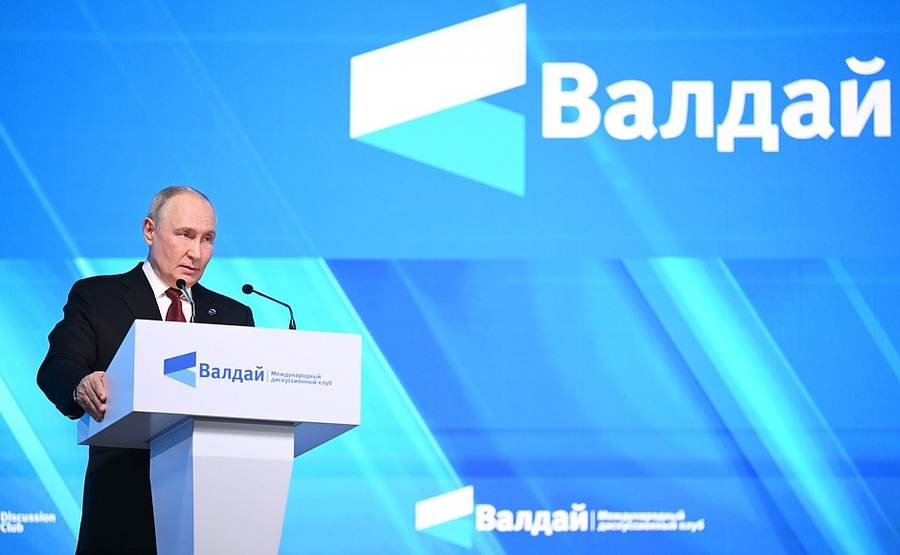
The Putin Valdai nuclear warning on Kaliningrad placed one of Europe's most exposed territories at the center of an explicit escalation threat. Addressing the Valdai Discussion Club in the Moscow region on October 1, Russian President Vladimir Putin said a direct attack on Russia — specifically naming Kaliningrad and potentially other territory — would put “all the weapons at our country's disposal” immediately on the agenda.
“If it comes to a direct attack on the Russian Federation – in this case, we are referring to Kaliningrad, and perhaps other territories as well – the question of the Russian Federation deploying all the weapons at our country's disposal will, of course, inevitably and immediately be on the agenda.”
“This is inevitable.”
The language was unusually direct, but the rest of the speech pulled in the opposite direction. Putin said Russia had no plan to attack a European country, wanted peaceful coexistence and was not trying to frighten anyone. That combination — reassurance paired with an unmistakable warning — is the architecture of deterrence messaging. It is designed to make the cost of crossing a line vivid while leaving Moscow room to say it seeks no wider war.
The stakes lie in what remains undefined. “All weapons” plainly includes Russia's nuclear arsenal, yet neither the speech nor the diplomatic note that preceded it established what Moscow would count as a direct attack, who would decide that threshold had been crossed, or whether an effort to isolate the exclave would qualify. The Times reported that the exact prompt for the earlier note was unclear. That ambiguity can strengthen deterrence by forcing an adversary to consider the worst case; it can also make a crisis harder to control.
Why this matters: a public nuclear red line around Kaliningrad
A senior European defence official told Reuters that this was the first time since the Cold War that Russia had threatened Europe in this way. More specifically, Moscow has now named Kaliningrad publicly in a nuclear warning rather than leaving the exclave inside general statements about Russian territory. That turns a familiar strategic concern into a stated red line.
Russia's revised 2024 nuclear doctrine broadened the circumstances under which the president could consider nuclear use. It treats aggression by a non-nuclear state backed by a nuclear power as a joint attack and allows a nuclear response to a conventional assault judged to create a critical threat to the sovereignty or territorial integrity of Russia or Belarus. A doctrine is not an automatic launch order. It is a political and military framework that preserves discretion. But connecting Kaliningrad to “all weapons” gives planners a clearer warning about how Moscow wants the doctrine interpreted in a Baltic crisis.
The operational question is whether the warning is meant to deter an actual invasion, a blockade, interdiction of military transit, strikes on missile sites or some combination. Those are materially different events. If they are folded into one elastic category, commanders on both sides may have less confidence that a limited action can remain limited. Critics of nuclear rhetoric argue that this uncertainty raises the risk of miscalculation even when neither side intends to start a larger war.
Putin warns West over Kaliningrad after NATO diplomatic note
The speech followed a Russian diplomatic note to NATO reported on September 30. Moscow said it was prepared to use its entire arsenal, including nuclear weapons, if the alliance tried to cut off Kaliningrad. The note converted a long-running strategic anxiety — that NATO could isolate the exclave in wartime — into a formal warning. What event triggered it was not clear in The Times' account.
Asked about the note on October 1, NATO Secretary General Mark Rutte said, “Putin knows that he can never win from NATO. So I don't take this that serious.” His response projected alliance confidence and denied Moscow the psychological effect of a public alarm. The unnamed European defence official quoted by Reuters took the opposite view: “It's the first time since the Cold War that Russia is threatening us like this. So this is serious.”
Both reactions serve a purpose. Rutte's dismissal supports deterrence by refusing to imply that nuclear pressure can intimidate NATO. The official's alarm supports deterrence by insisting that the alliance not normalize a threat simply because Moscow has used nuclear language before. The policy challenge is to combine the two: remain publicly composed while privately preparing for contingencies.
The statement also belongs to a wider run of Russian nuclear messaging: the non-paper to NATO, repeated warnings directed at governments enabling Ukrainian strikes, and claims that Russia's weapons provide “competitive advantages.” The phrase matters because it frames nuclear and advanced conventional systems not only as a last-resort shield, but as leverage in an ongoing competition. That can benefit the Kremlin by forcing allies to debate risk each time they consider aid or deployments. It can cost Russia by accelerating the very NATO planning and military reinforcement it says it opposes.

Why the Kaliningrad exclave carries nuclear weight
Kaliningrad is a Russian exclave on the Baltic Sea, separated from mainland Russia and wedged between NATO members Poland and Lithuania. Its population is roughly one million. The territory hosts the headquarters of Russia's Baltic Fleet and military infrastructure associated with air defence, naval operations and Iskander missile systems capable of carrying conventional or nuclear warheads.
Its military density is therefore unusual. Kaliningrad is far smaller than Russia's mainland military districts, yet it concentrates fleet facilities, missile units and surveillance assets next to NATO territory. In peacetime, it extends Russian reach into the Baltic. In a crisis, the same geography makes it vulnerable to isolation and places alliance capitals, ports and bases within a compressed warning environment.
South and east of the exclave sits the Suwalki Gap, the narrow land corridor between Poland and Lithuania that connects the Baltic states with the rest of NATO territory. Military planners have long treated it as a potential pressure point because Russian forces in Kaliningrad and allied Belarus could threaten the route from opposite sides. NATO's Baltic Sentry mission, created to protect critical undersea infrastructure and improve maritime awareness, adds another layer of surveillance and presence in waters where commercial cables, naval movements and military signalling overlap.
That geography explains why a NATO Kaliningrad blockade warning has resonance even without evidence that the alliance plans one. Any move affecting sea access, airspace, rail transit or the Suwalki corridor can be interpreted through wartime scenarios already built into both sides' planning. The danger is a security dilemma: measures one side calls reassurance or infrastructure protection can look to the other like preparation for isolation.
The Valdai forum, relocation and Putin's “dangerous moment” speech
Putin spoke at the plenary session of the 23rd Annual Meeting of the Valdai Discussion Club. The four-day forum ran from September 28 through October 1 under the theme “Responsibility for the Future: Limits of the Possible, or Limitless Possibilities?” The meeting was moved from its customary setting in Sochi to the Moscow region. The Times and Financial Times linked the relocation to security concerns, although Russian officials did not frame the move as a concession to Ukrainian reach.
In the Putin dangerous moment speech, the president argued that the world was passing through an especially perilous period. His warning over Kaliningrad fit that diagnosis, but so did his effort to deny aggressive intent. Russia, he said, had no plans to attack European states and wanted peaceful coexistence. He also said Moscow was not trying to scare anyone. For audiences outside Russia, the test is not the reassurance alone but whether Russian operations, deployments and diplomatic channels make escalation less likely.
For the Kremlin, Valdai offers a controlled forum to address domestic elites and foreign policy audiences at once. The Valdai forum Putin nuclear weapons message can therefore work on several levels: reassuring Russians that strategic territory will be defended, warning NATO against interdiction, and inviting governments to restrain Ukraine out of fear of a wider confrontation.
Energy attrition and the meaning of Putin's 1% GDP figure
Putin also acknowledged that Ukrainian attacks on Russian energy sites had reduced Russia's gross domestic product by approximately 1%. The claim is notable because Moscow has often emphasized resilience to sanctions and wartime damage. One percentage point of an economy measured in trillions of dollars represents economic output measured in the tens of billions, even before accounting for repair costs, lost exports or the redistribution of activity into military production.
The figure should not be treated as a clean independent estimate. Putin did not provide a methodology, baseline or period in the reported remarks, and wartime GDP can rise when governments spend more on weapons even as civilian welfare and productive capacity deteriorate. Still, the acknowledgment is evidence that Ukraine's campaign against refineries, depots and energy infrastructure is imposing costs that the Kremlin considers large enough to address publicly.
The attrition runs both ways. Russia has repeatedly attacked Ukraine's electricity, fuel and transport systems, while Ukraine has pushed drones and missiles deeper into Russian territory. Energy infrastructure is economically valuable, geographically fixed and difficult to defend everywhere. Each side presents its own strikes as pressure on war-making capacity and condemns attacks that harm civilian life. The practical result is a contest in which grids, refineries and logistics hubs increasingly sit inside the battlespace.
107 drones the same night: rhetoric and combat move together
The night of the speech underscored that nuclear rhetoric did not replace conventional violence. Russia launched about 107 drones across Ukraine, according to Kyiv, which said 87 were destroyed or jammed. A school and the supports of Kyiv's Southern Bridge were hit. A fire also broke out at a nuclear research facility, although officials said its reactor was undamaged.
The numbers warrant precision. “Destroyed or jammed” combines kinetic interceptions with electronic-warfare effects and does not mean every remaining drone struck a target. Nor does a fire at a nuclear research site establish reactor damage; authorities said there was none. But the episode shows how quickly damage near sensitive infrastructure can create fear and pressure decision-makers before a full technical picture is available.
Ukraine's new capacity matters on the other side of that equation. Our report on Russia's September nuclear non-paper to NATO explains the warning that preceded Valdai. Earlier coverage traces a separate Kaliningrad blockade scenario and Moscow's response. On October 1, Ukraine also announced the first combat use of its domestically produced FP-7 ballistic missile. Those developments increase strike options and therefore the need for clear boundaries.
Who benefits, who loses — and why Europe is split
The Kremlin benefits if the Putin Kaliningrad nuclear threat deters NATO from contingency planning, slows military aid or turns Kaliningrad into a political veto over alliance activity in the Baltic. It also benefits domestically from presenting Putin as the guardian of territory that Russians know is geographically exposed. The threat loses value, however, if repetition makes it easier to discount or if it produces stronger air defence, dispersal and reinforcement around the Baltic.
NATO benefits from Rutte's refusal to appear intimidated, but only if confidence is matched by credible defensive preparations and crisis communications. Baltic and Polish officials may gain reassurance from a firmer allied presence; they also bear more immediate risk when Russian and NATO systems operate close together. Ukraine benefits if allies reject coercive limits on support. It loses if fears of a Russia nuclear threat over Kaliningrad cause partners to narrow the weapons, targets or intelligence Kyiv may use.
Critics of Moscow's nuclear language argue that it lowers the rhetorical threshold and attempts to shield conventional military activity behind strategic weapons. Russian officials contend that the warnings clarify defensive red lines and answer Western scenarios that threaten Russian territory. Both claims can be true as descriptions of intent, yet neither guarantees control in a fast-moving crisis. Nuclear deterrence works through fear of consequences; the same fear can drive pre-emption if leaders believe an attack is imminent.
What happens next: four paths to watch
Deterrence holds. The most likely near-term scenario is that no party tests the stated red line. Russia continues to signal, NATO avoids language suggesting a blockade, and both sides maintain forces without direct contact. In this path, the warning is coercive but not operationalized.
NATO adds reassurance measures. The alliance could increase air policing, maritime patrols, infrastructure surveillance and exercises around the Baltic while stressing their defensive purpose. Such steps may reassure Poland and the Baltic states, but Moscow could cite them as evidence that its warning was necessary. The details — locations, notice, scale and communication — will shape how escalatory they appear.
A strike creates ambiguity. A Ukrainian attack near Kaliningrad, an unidentified drone, a maritime incident or damage to transit infrastructure could force leaders to decide whether the event falls under Putin's definition of a direct attack. The distinction between Ukrainian action and NATO-enabled action would become especially important under Russia's 2024 doctrine. Attribution, not only damage, could drive escalation.
Diplomacy narrows the red line. The safest outcome would be private clarification of what Moscow meant, paired with military deconfliction and restoration of crisis channels. Neither side has to accept the other's legal claims to reduce uncertainty about exercises, transit, undersea infrastructure or missile launches.
Watch next for follow-up language from the Kremlin and Russian Defence Ministry, changes in Iskander or Baltic Fleet posture, NATO decisions on Baltic Sentry and air defence, and whether the diplomatic note receives a formal alliance reply. Also watch the evidence behind Putin's 1% GDP assertion and the targeting pattern in the energy war. The Putin October 2026 Valdai speech will matter less as a single performance than as a guide to what Moscow does when the next ambiguous incident arrives.
Sources
- Reuters — Putin says world is living through a dangerous moment, warns West not to escalate (October 1, 2026)
- The Times — Putin Russia nuclear threat report (October 1, 2026)
- Kremlin — Plenary session of the 23rd Annual Meeting of the Valdai Discussion Club (October 1, 2026)
- crisis.zone — Putin cites Kaliningrad in nuclear warning to NATO after diplomatic note (October 1, 2026)