Poland is shortening the chain between detection and a possible shoot-down, replacing a visual-identification requirement with a multi-source radar test. Swedish Gripens are arriving at the same time to protect NATO’s eastern flank and the Rzeszow route carrying aid to Ukraine.
Why Poland's air defense rules matter now
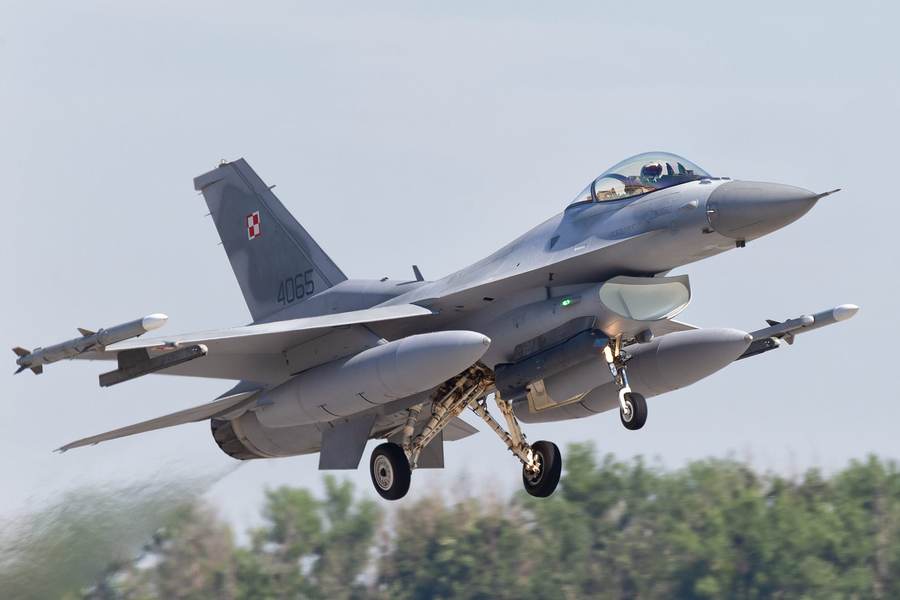
Warsaw's change is designed for the interval in which modern air-defense decisions are hardest: after a radar track crosses a border but before a fighter can get close enough to identify it visually. Deputy Defense Minister Cezary Tomczyk said on September 28 that “positive identification” would replace the older visual-identification requirement, a standard he described as normally reserved for war or martial law. Defense Minister Wladyslaw Kosiniak-Kamysz said two days later that the new procedure would operate from the beginning of October without new legislation.
The change does not mean every unidentified track becomes a target. Kosiniak-Kamysz described positive verification as a combination of radar evidence, entry into a no-fly zone and information from the Ukrainian side. That is a lower operational threshold than waiting for a pilot's eyes, but it is still a corroboration test. The distinction matters because a faster rule can close a genuine defense gap only if the sensor picture and command chain are reliable enough to prevent a mistaken engagement.
The September 23 helicopter episode explains the urgency. A Russian Mi-8 was reported to have crossed about 300 meters into Polish airspace near Braniewo for just 42 seconds. Scrambling a fighter, reaching the track, matching speed and obtaining a visual identification could not realistically happen in that window. A radar-led decision compresses the timeline from minutes toward seconds; it does not create more seconds in which commanders can judge intent.
From visual identification to positive verification
In peacetime, air-defense rules of engagement generally put a premium on certainty because the cost of shooting down the wrong aircraft can be catastrophic. A visual check can distinguish a military aircraft from a civilian or friendly platform, observe markings and behavior, and give commanders another chance to issue warnings. Its weakness is geometry: slow drones, cruise missiles and aircraft making shallow border incursions may be gone before an interceptor arrives.
Poland's answer is to shift some of that certainty upstream. Radar tracks, restricted-airspace data and Ukrainian reporting can be fused before a Polish pilot sees the object. Maj. Gen. Ireneusz Nowak, Poland's operational commander since June 11 and an F-16 pilot with more than 3,500 flight hours, recommended the change. That professional background is relevant: the proposal comes from the commander responsible for translating sensor evidence into an engagement decision, not simply from political pressure after a headline-grabbing breach.
Tomczyk also said drones enter Polish territory “almost every day.” The frequency cannot by itself prove Russian intent in every case—navigation error, electronic warfare and debris may produce different kinds of crossings—but repetition changes the risk calculation. A procedure built for rare, clearly observable incursions becomes less useful when short-duration tracks are routine. The revised Poland rules of engagement are therefore best understood as an attempt to make deterrence credible under recurring ambiguity.
Swedish Gripens add capacity around the Rzeszow aid hub
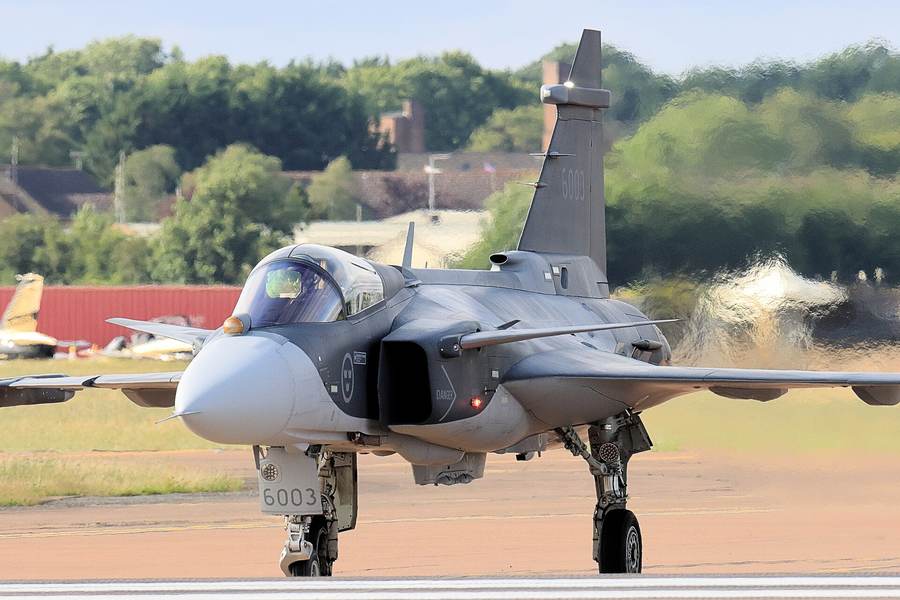
Sweden's contribution answers a different part of the same problem. Swedish Defense Minister Pal Jonson said Gripen fighters would again support NATO's mission in Poland from October, with protection of Rzeszow-Jasionka airport among the core tasks. The airport is the main logistics gateway for military and humanitarian assistance moving toward Ukraine and hosts the Poland Logistics Hub under NATO Security Assistance and Training for Ukraine.
Most of the Swedish fighters are expected to operate from Sweden, supported by a smaller forward presence in Poland. Stockholm has not disclosed the number of aircraft or the mission's duration, so claims of a major permanent buildup would go beyond the available evidence. What is clear is that the deployment links Swedish sensors, pilots and readiness to the defense of a critical NATO node while leaving Sweden able to retain much of the force at home.
This is Sweden's second such deployment since joining NATO on March 7, 2024. In 2025, six Gripens from Norrbotten Wing operated at Malbork from April to September, while six aircraft from Blekinge Wing joined in May with the Loke radar and command aircraft. Prime Minister Ulf Kristersson framed the return as Sweden taking responsibility for allied security. Operationally, the repeat mission is also a test of whether NATO can rotate national forces without creating gaps in air policing.
Who benefits—and who carries the new risks
Poland gains a more credible response to short intrusions. Ukraine gains additional protection for the Rzeszow corridor that sustains its war effort. Sweden gains integration experience inside NATO's command network, while the alliance demonstrates that membership can translate into deployable capacity rather than political symbolism.
The costs are less evenly distributed. Polish commanders assume greater responsibility for decisions based on sensor fusion rather than direct sight. Civil aviation and neighboring forces have an interest in impeccable identification and deconfliction. Russia faces a higher chance that an aircraft crossing the border will be engaged, whether the crossing is deliberate or disputed. Moscow has repeatedly denied targeting NATO territory, and the intent behind specific incursions remains contested; the new rule cannot settle that argument before a commander has to act.
Critics can reasonably ask whether faster authority creates an escalation trap: a tactical shoot-down made in seconds could produce a strategic crisis lasting months. Supporters can answer that a rule nobody can execute during a 42-second incursion is not meaningful deterrence. Both points are valid. The policy's quality will be measured not by how permissive it sounds, but by the accuracy of the common operating picture, the clarity of command authority and the discipline to distinguish capability from automatic action.
What the numbers say about the decision window
The contrast is stark. The Mi-8 episode lasted 42 seconds and penetrated roughly 300 meters. A traditional intercept requires detection, classification, launch authorization, aircraft takeoff or redirection, closing distance and visual confirmation. Even an aircraft already airborne may need several minutes to reposition. The arithmetic makes visual identification a poor match for a border probe measured in hundreds of meters.
Radar-led positive verification shifts the decisive work to systems that are already watching: national radar, NATO tracks, restricted-zone data and information from Ukraine. That may make a response possible against longer or deeper incursions, but a 42-second crossing could still end before weapons authority is issued. The practical value is therefore broader than one helicopter: it raises the probability of timely action against drones, missiles or aircraft whose track persists, while signaling that repeated short probes will be recorded and assessed under a tougher standard.
The earlier precedent is September 2025, when NATO aircraft shot down Russian drones over Poland—the alliance's first engagement of Russian aircraft since the full-scale invasion of Ukraine. That episode showed that force could be used when a threat was sufficiently identified. The October 2026 change is about making that identification possible sooner, before a fast-moving object reaches a city, base or logistics route.
What happens next: three paths for NATO air policing
Managed deterrence is the most likely near-term path. Poland uses the new procedure selectively, Sweden adds coverage around Rzeszow and the number of ambiguous incursions declines or remains contained. In this scenario, the rule works mainly because adversaries believe it could be used, not because Polish aircraft fire more often.
An engagement and alliance debate is the higher-risk path. If Poland shoots down a Russian aircraft, NATO members would immediately have to separate the tactical facts from the political response. Article 4 consultations could follow if Poland judged its security threatened. Article 5 is not automatic: allies would assess whether an armed attack occurred and decide their response collectively. A shoot-down over Polish territory could therefore strengthen deterrence while simultaneously forcing the alliance to debate where an airspace violation ends and an armed attack begins.
Regional imitation is the structural path. Baltic states and Romania face similar problems with short warning times near Russian, Belarusian and Ukrainian airspace. They may study Poland's radar-based threshold, especially if it proves faster without producing false engagements. Copycat rule changes would make NATO's eastern flank more consistent, but only if allied data, legal standards and command procedures are aligned; different national thresholds could otherwise create confusion across one shared air picture.
For now, Poland's policy and Sweden's deployment should be read together. One changes the authority to act; the other adds aircraft and allied capacity. Neither eliminates uncertainty about Russian intent, and neither guarantees a 42-second violation can be stopped. Together, however, they move NATO's posture from documenting incursions after the fact toward trying to make a real-time response feasible.
Related coverage
Sources
- Reuters — “Poland set for quicker air defence procedures, defence minister says” (September 30, 2026)
- Reuters — “Sweden contributes fighter jets to NATO mission in Poland again” (September 30, 2026)
- Dagens — “Usually Reserved for War or Martial Law: Poland Changes Rules for Shooting Down Air Threats”
- Defence Blog — “Swedish Gripens to protect Ukraine aid hub in Poland”
- MILMAG — “Swedish Gripens return to Poland to guard NATO's eastern flank”
- Image source — Portal Militarny: Polish F-16 Jastrzab fleet