Breaking · United States · Washington, D.C.
Three days after Democrats seized the House and Senate, President Donald Trump reached for the most combative aide he has: Stephen Miller, 41, the architect of his immigration crackdown, takes over the West Wing on Monday. Susie Wiles, the first woman ever to serve as White House chief of staff, resigned Thursday night and heads to Trump’s political operation — and the president says more changes may follow.
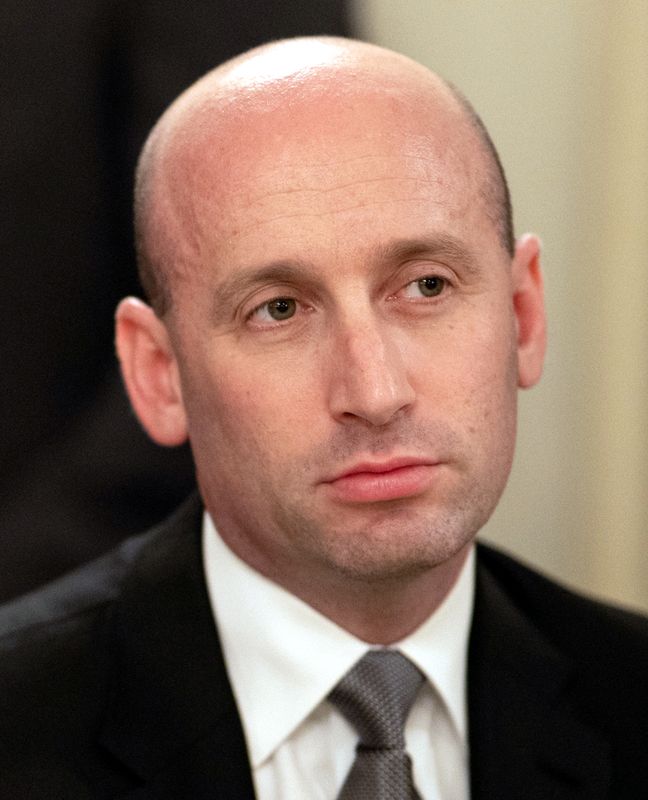
WASHINGTON, November 6, 2026 — President Donald Trump announced on Friday that Stephen Miller, his deputy chief of staff and one of his most trusted and most controversial advisers, will become White House chief of staff starting Monday, November 9 — the first major personnel shake-up since Republicans lost control of both the House and the Senate in Tuesday’s midterm elections. Susie Wiles, who has run the West Wing since January 2025 and was the first woman in American history to hold the job, submitted her resignation on Thursday evening and will move to the Trump Political Operation, the president’s political arm.
“I am pleased to announce that Mr. Stephen Miller, the current Deputy Chief of Staff of the Trump Administration, and one of my most trusted advisors, will become the Chief of Staff starting Monday, November 9, 2026,” Trump wrote on Truth Social. “Susie Wiles, who has done an outstanding job, will be moving over to the Trump Political Operation. I want to thank her for her service as Chief of Staff — She has done a great job!” Wiles confirmed the timeline in her own statement on X, saying Friday was her last day as chief of staff and calling the job “the honor of a lifetime.” “While my role may be changing, my commitment to the President and the mission never will,” she wrote.
Speaking to reporters as he left the White House for Florida, Trump framed the change as his own choice rather than a concession to the scale of Tuesday’s defeat. “I think I wanted to make a change,” he said. “I think Susie’s done a very good job, great job. Stephen’s been great. We’ve got to make moves. Sometimes in life, you have to make moves.” Of Miller, he added: “Stephen’s been with me from the beginning. He gets it, very good politically. He’ll do a great job. Great manager.” Miller, for his part, posted on X that he was “honored beyond words” and declared: “The mission now is more clear than ever: Fight with all of our soul to support our President and defend this magnificent Republic.”
How the shake-up unfolded
The speed of the move tells its own story. As recently as October 16, Trump insisted Wiles would remain in the job “for a long time.” What changed was Tuesday. Democrats won House districts that had voted for Trump by double digits in 2024 and flipped Senate seats in historically Republican states including Texas, Kansas and South Carolina — a repudiation, in a midterm that became a referendum on the president, of an agenda built on mass deportation, high prices linked in part to the war in Iran, and record-low approval ratings. According to CNN, Trump grew angrier as he watched coverage of the losses, vented about his political team’s strategy at a tense election-night reception in the East Room, and was among those who blamed Wiles for the trajectory she had failed to change. Wiles, concluding that the president should have a chief of staff he had confidence in, resigned on Thursday evening.
The public pressure had been building in plain sight. Steve Bannon, Trump’s former chief strategist, had spent the days after the election attacking Wiles and the president’s political consultants by name. “You have to look to people like Susie Wiles, the chief of staff, and the political consultants that are there and, quite frankly, my strong belief is because of the results they should be removed and removed immediately,” Bannon said in a YouTube interview just hours before Trump announced the decision. Trump also signaled on Friday that the Miller appointment may not be the last change: asked by CBS News whether he intended to fire people, he answered “I do,” adding, “I love my Cabinet. I think they’re good. But I’ll be doing maybe a few changes. I don’t want to mention who.” USA Today also reported that three Justice Department officials resigned on Friday, and Trump separately urged Republicans to re-elect Joe Gruters as Republican National Committee chairman despite the defeat.
Why this matters
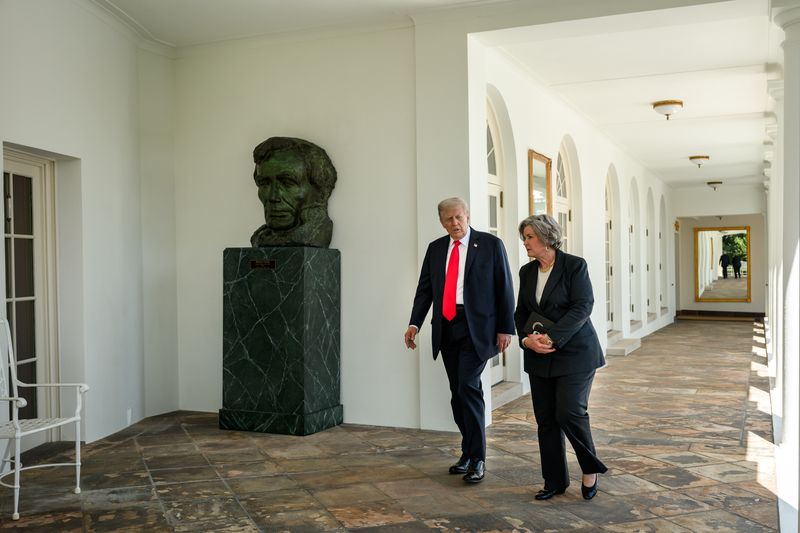
A chief of staff is the presidency’s gatekeeper — the person who decides what reaches the president, who gets his time, and which fights the White House picks each day. Replacing the gatekeeper three days after an electoral rout is therefore never just a personnel story; it is a statement about how the president intends to govern for his remaining two years. And the statement here is unusually legible. Faced with a result widely read as voters rejecting his agenda, Trump did not reach for a conciliator, a deal-maker, or a figure who might build bridges to the incoming Democratic majorities. He reached for the aide most identified with the hardest edges of that agenda — the man two administration sources described to USA Today as “known for being combative,” whose appointment, they said, signals that Trump is “girding for a fight.”
That choice matters concretely because the second half of Trump’s term will be fought on terrain where a chief of staff’s instincts are decisive. With Democrats controlling both chambers from January, legislation will require negotiation Trump has rarely needed — or else the White House will govern around Congress, through executive action, veto threats and litigation. Signal Post News reported before the election that the White House was already planning to govern without Congress, with Miller and budget director Russell Vought drawing up an executive-action strategy for a Democratic Congress. Elevating Miller puts the leading advocate of an expansive view of executive power in charge of the machinery that would execute that strategy. It also guarantees a confrontation: House Democrats have already named Miller a top oversight target, and Rep. Robert Garcia, the ranking Democrat on the House Oversight Committee, responded to the appointment on Friday with a warning: “Stephen Miller should lawyer up.”
Who Stephen Miller is
Miller, 41, was born in Santa Monica, California, in 1985 and graduated from Duke University in 2007. He has been at Trump’s side longer than almost anyone in the current White House: he wrote Trump’s first immigration policy paper as a campaign staffer in 2015 and served in the first administration as a senior adviser and speechwriter, where he was a central figure in the travel ban and the family-separation policy. In the second administration he has held the twin roles of deputy chief of staff for policy and homeland security adviser, and his influence has long extended well beyond immigration into virtually every major policy decision.
His operating style is part of the story. CNN has reported that Miller ran daily 10 a.m. calls with Homeland Security officials at which he demanded updates and pressed agencies that fell short, and that last year he directed immigration officials to meet daily arrest goals of 3,000 — a figure the White House and the Department of Homeland Security have repeatedly denied was a quota. His public record is equally blunt. Before the polls closed on Election Day, he urged voters on social media to “send a message to the corrupt media, corrupt Democrats and corrupt leftwing politicians who want to steal your future.” After a federal agent shot and killed Alex Pretti during immigration enforcement in Minneapolis earlier this year, Miller called Pretti a “domestic terrorist” — a characterization the administration later softened amid public uproar. On foreign policy he has championed a muscular use of American power, declaring of Greenland that “nobody’s going to fight the United States militarily,” and saying after the U.S. operation that removed Venezuela’s Nicolás Maduro that “the United States is using its military to secure our interests unapologetically in our hemisphere.” Miller has also been the subject of earlier Signal Post News coverage of his role in FBI training controversies.
Susie Wiles: from ‘ice maiden’ to first casualty
Wiles, 69, arrived at the chief of staff’s office with a résumé no predecessor could match: a veteran Florida political operative who had worked on Trump’s three presidential campaigns and co-managed the 2024 campaign that returned him to power. Nicknamed the “ice maiden” for her cool under pressure, she ran a West Wing that deliberately did not try to change how Trump governed; instead, she worked through the influential figures in his orbit to shape outcomes, and she is credited with steering his signature “Big, Beautiful Bill” through a closely divided Congress in 2025. She also did the job through personal adversity: diagnosed with early-stage breast cancer in March, she announced in September that she was cancer-free after treatment.
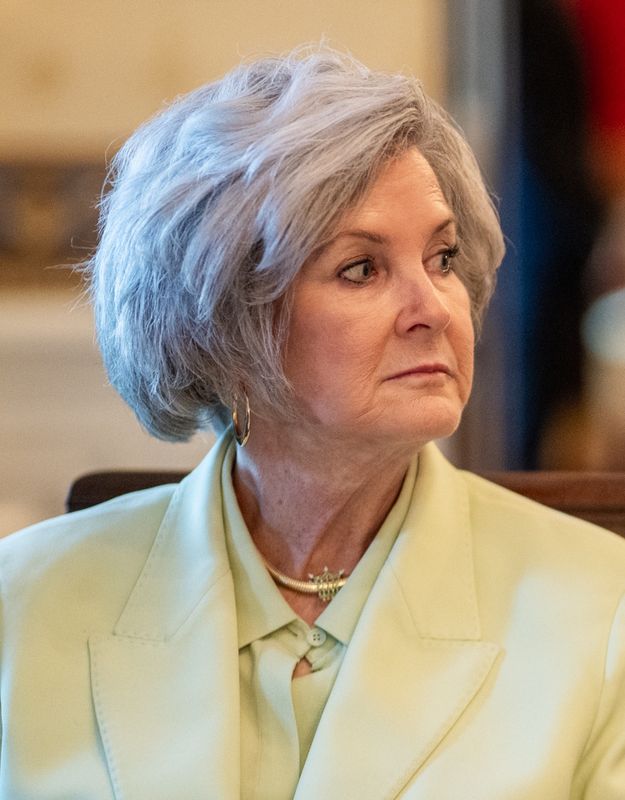
Her tenure — from January 20, 2025 to November 6, 2026 — makes her the longest-serving chief of staff of Trump’s presidency; he cycled through four in his first term. But longevity bought her no protection once the results came in. Two sources close to the administration told USA Today that Wiles is being blamed for the midterm catastrophe after failing to change its trajectory, and within the West Wing the reaction to her departure mixed resignation with alarm. “Susie keeps the trains running on time. I don’t know what this looks like moving forward,” one White House official told CNN, while another Trump ally called her exit a “catastrophic loss” for the president. Wiles is also the latest in a series of senior women to leave the administration and be replaced by men, following the departures of officials including the attorney general, the Homeland Security secretary and the Labor secretary. Her move to the political operation keeps her inside Trump’s world — but outside the room where the daily decisions will now be made.
Reaction: ‘Patriots in control’ meets ‘learned nothing’
Inside the administration, the appointment was celebrated by the faction that had pushed for it. “Patriots in control,” Defense Secretary Pete Hegseth wrote on X, calling Miller an “America First fighter” who “never backs down.” A Homeland Security official put it more colorfully: “Trump got his MAGA mojo back.” Democrats responded with a unified line that the appointment proves the White House intends to change nothing. “Donald Trump learned nothing from his historic defeat,” Senate Democratic leader Chuck Schumer said in a statement. “Stephen Miller is the architect of the most barbaric, inhumane policies of this administration. Trump couldn’t have made a worse choice. Our Democratic majorities will fight him every step of the way.” Héctor Sánchez Barba, president of the Latino voter group Mi Familia Vota, said the president was “doubling down on the very policies that do little to improve the lives of Americans,” noting that Latino voters shifted sharply toward Democrats in the midterms after a year of aggressive immigration enforcement that sparked nationwide protests.
Both readings can be true at once, and that is precisely the point. For Trump’s base, Miller’s promotion rewards loyalty and promises no retreat. For the voters who delivered Tuesday’s verdict — including in districts Trump carried by double digits two years ago — it signals that the policies they voted against will be run by their most committed defender. Which of those audiences matters more for 2027 and 2028 is the political question now hanging over the West Wing, alongside the raw aftermath coverage of an election night that saw Trump attacking Fox News on election night on Truth Social.
What happens next
The handover itself is simple: Miller takes the office on Monday, November 9, and Wiles begins work at the political operation. Everything after that is contested terrain. Three scenarios will shape the next two years. First, the confrontation path: a Miller-run White House leans into executive action, dares Democratic majorities to sue or subpoena, and treats oversight as a campaign asset — the path Miller’s own Friday statement, with its promise to “fight with all of our soul,” seems to advertise. Second, the attrition path: further resignations follow — Trump has already warned more changes may come — and the factional West Wing that CNN described this week consumes the administration’s remaining agenda. Third, the forced-deal path: with government funding and must-pass bills requiring Democratic votes, even a combative chief of staff eventually has to negotiate, and the question becomes whether Miller, who has shown little appetite for compromise, can or will.
What is not in doubt is the calendar. A new Congress arrives in January with subpoena power, an oversight agenda that already names Miller personally, and majorities in both chambers for the first time in Trump’s second term. The president who cycled through four chiefs of staff in four years has now made his fifth change of the job — and, in choosing the aide most synonymous with the agenda voters just rejected, has told the country plainly which of those three scenarios he intends to try first.
Sources
Reuters, “Trump promotes Stephen Miller to post of chief of staff” (Nov 6, 2026); CNN, “Stephen Miller replacing Susie Wiles as chief of staff” (Nov 6, 2026); USA Today, “Trump names Stephen Miller new chief of staff, replacing Susie Wiles” and “In elevating Stephen Miller, Trump taps anti-immigration champion” (Nov 6, 2026); The Wall Street Journal, “Trump Names Stephen Miller His New Chief of Staff” (Nov 6, 2026); NPR via KENW, “Stephen Miller will replace Susie Wiles as Trump’s chief of staff” (Nov 6, 2026); President Donald Trump’s Truth Social announcement and Susie Wiles’ and Stephen Miller’s statements on X (Nov 6, 2026). Photos: Wikimedia Commons, as credited in the captions.