U.S. · Politics · Media
Trump attacks Fox News from the White House on election night — turning on the network his own voters rely on, mocking one of its best-known hosts, disputing its ratings, questioning its parent company's donations to Democrats and scorning its election poll, all before control of Congress was called.
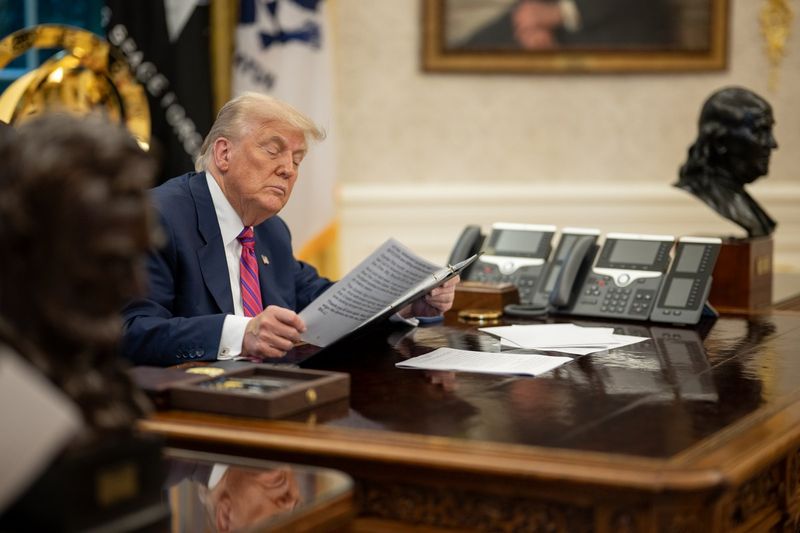
WASHINGTON — President Donald Trump spent election night at the White House doing two things at once: watching the midterm returns arrive, and waging open war on the television network most of his own voters watch. In a series of posts on Truth Social, Trump attacks Fox News on nearly every front available to him — one of its best-known hosts, its ratings, its parent company's political donations and its election-night polling — while the votes that will decide control of Congress were still being counted.
The barrage was tracked live on election night, most fully in the Palm Beach Post's live blog, which was following the president's posts as they landed at 8:23 p.m. Eastern, and in reporting by the Daily Caller and Newsmax. It was not a single stray aside. The posts came in stages across the evening, each one widening the indictment — from a personal insult aimed at a single co-host, to the network's business model, to the political giving of its corporate parent, Fox Corp.
What made the night unusual was the setting. Election night is when a president's party learns its fate, and when the country's most-watched cable news channel is the arena in which that fate is narrated to his coalition. Trump chose that moment — with Senate races being called against Republicans and control of Congress still unresolved — to tell his followers that the arena itself was rigged against him.
The first target: Jessica Tarlov's voice
The opening shot was personal. Trump posted that he could not stand the voice of Jessica Tarlov, the liberal co-host of The Five, Fox News's highest-rated program. He called her "DUMB AS A ROCK" and a "LOSER," and said he would go elsewhere — watch something else — until she was off the air.
Tarlov is the designated Democratic voice on The Five's panel, and her presence there has been a standing grievance in Trump's posts about the network: she is, in his telling, the proof that Fox books its critics into its biggest hours. Tuesday night's post stripped the complaint down to its rawest form. It was not an argument about coverage or bias in the abstract. It named one host, attacked her intelligence in capital letters, and announced a personal boycott measured in minutes — until she was off the air.
Then the evening produced its strangest beat. Later in the program, co-host Greg Gutfeld read on air a text message he said was from Trump, in which the president responded to points Tarlov had been making about inflation and the Iran war. The president who had just announced he could not listen to Tarlov's voice was, it turned out, still watching — closely enough to rebut her segment by text, in real time, through a friendly co-host sitting a few feet away from her.
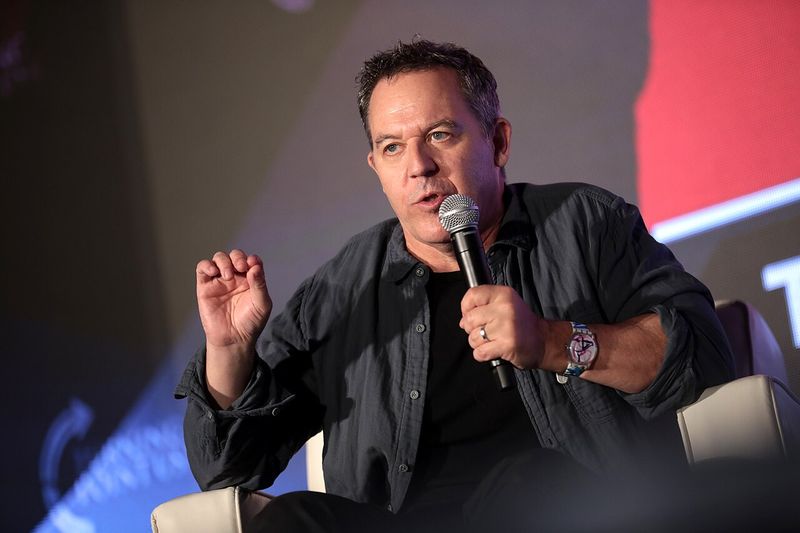
The exchange captured the whole Trump–Fox relationship in miniature. The feud is real, but so is the intimacy: no other president has had a direct line into a network's flagship show while publicly denouncing it, and no other network has had its programming answered, mid-broadcast, by the president it covers. Trump was simultaneously Fox's angriest critic and its most engaged viewer.
The ratings attack — and what the numbers actually say
From the personal, Trump moved to the commercial. "FoxNews Ratings are way down (27%!) because they're spending too much time covering the Trump Deranged Dumocrats!" he posted, arguing that the network's ratings were collapsing because, as he put it, they are against him. "It's them, not me," he added. "My numbers are better than they have ever been."
Two parts of that claim can be checked, and one cannot. The checkable part first: the 27 percent figure has a real basis. Nielsen data reported by the Financial Times put Fox News's average total-day audience at about 1.1 million viewers in October 2026, down 27 percent from a year earlier. The decline Trump cited exists. What is disputed is his explanation for it. Fox Corp chief executive Lachlan Murdoch has told investors that audiences are watching less television overall — a structural slide in TV viewing that has pressured every network, not a verdict delivered by Trump supporters on one channel's editorial line. On the available evidence, both things are true at once: Fox's audience is down by roughly the figure the president cited, and the industry explanation points to a shrinking TV pie rather than a MAGA walkout.
The uncheckable part should be labeled plainly. Trump also pointed to a CNN poll he said showed him at 99 percent among Republicans. That figure is an unverified claim: no published CNN result matching it was identified in election-night reporting, and it is recorded here as the president's assertion, not as data. It sat in his posts alongside the Nielsen-based figure, but the two numbers do not carry the same weight, and readers should not treat them as if they do.
The donations question
The third front was corporate. Trump questioned political donations by Fox Corp — Fox News's parent company — to Democrats, naming House Democratic leader Hakeem Jeffries, Representatives Jamie Raskin, Ted Lieu and Pete Aguilar, the California Democratic Party, and the party's House and Senate campaign arms, the DCCC and DSCC.
Here, too, there is a paper trail behind the rhetoric. Federal Election Commission records cited in election-night media reports put Fox Corp's giving to those Democratic recipients at at least $268,500 in total — including $50,000 to the California Democratic Party, $30,000 each to the Democratic Congressional Campaign Committee and the Democratic Senatorial Campaign Committee, and $2,500 to Jeffries. Those are disclosed, lawful corporate political contributions of the kind large media companies routinely spread across both parties' establishments; what Trump was attacking was not their legality but their existence. In the president's framing, a network whose parent funds Democratic leaders cannot claim to be on his side. The reports of the posts did not include a response from Fox Corp.

'Always the worst': the Florida poll
The final target of the night was the network's own polling. After polls closed in Florida, Trump turned on the Fox News poll — the network's election survey operation — calling it "always the worst" and "so insulting." The insult landed on a night that was, in Florida at least, going his party's way: Republican Ashley Moody held the state's Senate seat. The president's complaint was not with the result but with the measurements that preceded it, and it extended a pattern that runs through his career — polls that flatter him are celebrated, polls that do not are denounced, and the pollster's motives are treated as the story.
The election night around the feud
All of this unfolded against a genuinely consequential set of results. By the time Trump's posts were circulating, Democrats had been projected to win Senate races in Georgia, where Jon Ossoff held his seat, in North Carolina, where Roy Cooper's win flipped a Republican seat, and in New Hampshire, where Chris Pappas prevailed. Moody's hold in Florida limited the damage for Republicans. An NBC exit poll put Trump's approval rating at 38 percent among midterm voters — the number hanging over every close race of the night, and the context for the president's insistence that his own numbers had never been better.
Control of Congress, the prize the entire night was about, had not been called when the posts were published, and California's polls remained open until 8 p.m. Pacific — a reminder that the verdict Trump was already contesting, at least as Fox presented it, was not yet final. The scale of the early vote, which we examined in our reporting on America's record early-voting surge, and the final pre-election surveys, covered in our look at the closing polls of the midterms, had both pointed to a long night rather than a coronation.
The contrast inside the administration was visible in real time. While the president fought with a television network, Vice President JD Vance used his election-night post on X to talk about governing — ending taxes on overtime, on tips and on Social Security. One message was an agenda; the other was a feud. Both were aimed at the same coalition, and the distance between them described the two registers in which this White House now speaks to its voters.
Why this matters
Start with what Fox News is. It is not simply a friendly outlet; it is the communications infrastructure of the Republican coalition — the channel through which the party's voters receive the news and through which its leaders address them. When Trump attacks Fox News on election night, he is not swiping at the opposition press. He is conducting coalition discipline in public, at the moment of maximum attention, and warning the institution that intermediates between him and his voters that its access to those voters is conditional.
Second, the ratings argument matters because it is the leverage. A president cannot order a network to change its programming, but he can attempt to move its audience — and Fox's audience is down 27 percent year over year on the Nielsen figures, whatever the cause. Trump's theory is that the cause is disloyalty, and that he can accelerate the decline by naming it. Murdoch's theory is that the cause is the collapse of television viewing generally. The honest assessment is that the data establish the decline and not the motive: no ratings release can say whether the missing million viewers left because of Jessica Tarlov, because of cord-cutting, or because a midterm October lacked a presidential race at the top of the ticket. Trump is filling that evidentiary gap with the interpretation that serves him, and Fox's defenders fill it with the one that serves them.
Third, the timing does work of its own. With his approval at 38 percent in the exit poll and Senate seats falling, the posts pre-position an explanation for a bad night that locates the failure anywhere but the top of the ticket: the network was against him, the poll was insulting, the coverage was a betrayal. His supporters will hear accountability — a president refusing to let a drifting network take his movement for granted. His critics will hear pressure on election-night news judgment from the most powerful man in the country, applied while votes were still being counted. Both readings are available in the same posts, which is precisely why the posts are effective politics and unsettling press relations at the same time.
A feud with a long memory
None of this began on Tuesday. It is the latest round of a fight that has run, with truces, for years: Fox's election-night Arizona call against Trump in 2020, the network's $787.5 million settlement with Dominion Voting Systems in 2023 over false election claims aired in that period, and a long cycle since of attacks, interviews and reconciliations. As recently as last month, as we reported when Trump blasted Fox News over its rally coverage, the president was warning that MAGA viewers would "very quickly stop watching" over skipped rallies, invoking Maria Bartiromo's departure and amplifying a White House adviser's boycott campaign.
Tuesday night's posts extended that October indictment in two new directions. The donations attack moved the fight up the corporate ladder, from producers and hosts to Fox Corp's political giving — a pressure point aimed at the parent company rather than the channel. The poll attack moved it onto the newsroom's most sensitive election-night function. A feud that began over rally airtime now covers the network's talent, its audience numbers, its parent and its data, all at once.
What happens next
The immediate questions are electoral, not editorial. Control of Congress was uncalled as the posts circulated, with California's late polls and slow counts set to shape the House picture over the coming days; the final margins will determine whether Tuesday is remembered inside the White House as a setback to be explained or a catastrophe to be avenged — and how much of the explanation continues to be aimed at Fox.
For the network, the test arrives in the ordinary course of business: November's ratings, its post-election bookings, and whether its news side adjusts anything in response to a pressure campaign now running from the podium of the presidency itself. Fox has absorbed these rounds before and emerged still first in cable news; it has also, at the margins, adjusted before. For Trump, the open question is whether the feud stays a negotiating instrument — loud on election night, quiet by the weekend — or hardens into the kind of sustained boycott his advisers were already urging in October. Either way, the terms he restated on Tuesday stand: the president regards the most important screen in Republican politics as his to praise or to punish, and he used the biggest night of the political year to say so.
Sources
Palm Beach Post, election-night live blog, November 3, 2026 (updated 8:23 p.m. ET) — the Tarlov post, the ratings and donations posts, and Gutfeld's on-air reading of the president's text. Daily Caller and Newsmax, election-night reports, November 3, 2026. The Hindu BusinessLine and the Washington Post — the Florida poll remarks and election-night context. Nielsen total-day audience figures for October 2026 as reported by the Financial Times; Fox Corp chief executive Lachlan Murdoch's remarks to investors on television viewing trends. Federal Election Commission records on Fox Corp political contributions, as cited in the reports above. Trump's claim of a CNN poll showing him at 99 percent among Republicans could not be verified against any published result and is reported as his claim only.