Politics · U.S. Elections · White House
Politics / U.S. Elections — Two days before voters decide control of Congress, President Donald Trump has given his answer to the question hanging over the midterms: if Democrats win, he will veto their bills until they deal — and, according to Reuters, his senior aides have spent six months quietly preparing to run the government by executive action if Congress changes hands.
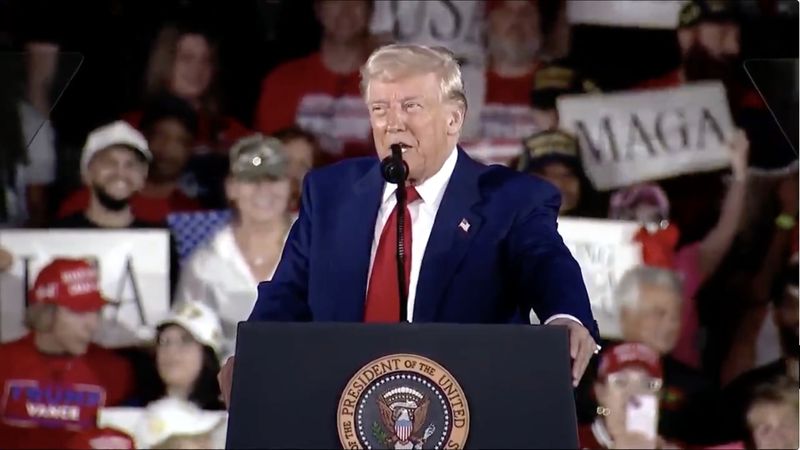
WASHINGTON — The Trump Mr Veto midterms plan is no longer a private contingency. In an interview for Pod Force One, the New York Post podcast hosted by Miranda Devine, an excerpt of which aired Sunday on Fox News’ Sunday Morning Futures ahead of the full interview’s release on Monday, Trump was asked what happens if Democrats win control of Congress in Tuesday’s midterm elections. His answer was a nickname for himself. “I guess I’ll become Mr. Veto,” he said. “They’ll be sending stuff up, you veto it. Eventually, after a month or two of getting all vetoed — you know, it’s just waste — they come over and make a deal.” He added that “at some point, we’ll probably make deals,” before returning to the outcome he is campaigning for: “Hopefully we don’t have to worry about that.” It was a rare public acknowledgment from Trump that his party could lose — delivered on the same day he rallied supporters in Iowa and Kansas, and two days before an election in which, according to Reuters, polls favour Democrats to take the House while the Senate remains too close to call. With a record early vote already under way — more than 51 million ballots cast before Election Day, as we reported in our coverage of the record midterm early vote — the president’s remarks landed less as speculation than as the public half of a plan his White House has been building since spring.
Six months of quiet planning inside the White House
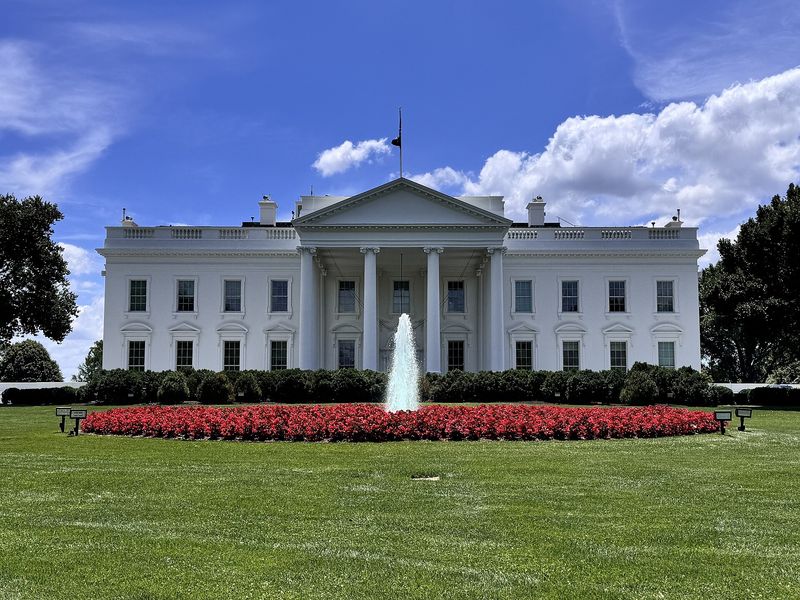
Reuters reported on November 1 that since April, senior Trump aides — deputy chief of staff Stephen Miller, budget director Russell Vought and the office of White House counsel Will Scharf — have been mapping out executive actions Trump could take without Congress if Democrats win one or both chambers. The work, Reuters said, has focused on immigration, tariffs, housing costs and federal spending, and has amounted to a systematic review of “what Trump can legally do on his own, where he could push the limits of his authority and how to defend those decisions in court.” Trump himself has been briefed on the planning and involved in it, according to the report, and a person familiar with the discussions told Reuters the president would be “very comfortable” governing that way if Democrats take control. The timing is the point: this is not a scramble begun in the campaign’s final week, but a standing workstream that has run in parallel with the rallies — the administrative twin of the “Mr. Veto” line. Where the veto is the defensive weapon, blocking whatever a Democratic Congress sends him, the executive-action map is the offensive one, a list of policies the administration believes it can advance without asking Capitol Hill for anything.
What the executive-action playbook contains
The options under consideration, as described by Reuters, sketch the outline of a 2027 agenda that never touches the House floor. On trade, aides have weighed new tariffs on critical minerals and on wind turbines — extending a tariff programme Trump has already built largely on emergency and national-security authorities rather than new statutes. On immigration, the planning includes tighter visa rules for international students and for temporary foreign workers, categories the administration can restrict through regulation and executive direction. On housing, officials have examined measures aimed at construction costs that could be pursued through federal agencies rather than legislation. And on spending — the lever budget director Russell Vought knows best — the review has considered how the administration could use money Congress has already appropriated, and how changing grant rules could give political appointees more say over where federal funds go. Federal agencies have submitted their own proposals and legal reviews to the White House, Reuters reported, and Justice Department opinions are planned to defend the resulting actions in court — an acknowledgment that much of the playbook would be challenged the moment it is used, and that the administration intends to arrive in court with its legal reasoning already written.
The numbers: a knife-edge Congress and a veto built to hold
The arithmetic explains why the veto sits at the centre of the plan. Republicans currently hold the House 218–214 and the Senate 53–47, according to Reuters. All 435 House seats and 35 Senate seats are on the ballot on November 3. Polls favour Democrats to win the House; the Senate, where the map forces Democrats to defend difficult terrain, is rated too close to call — the picture drawn by the final midterm polls we analysed last week. A veto, however, does not need a majority to work — it needs only a loyal minority. Overriding a presidential veto requires two-thirds of both chambers: 290 votes in a full House and 67 in the Senate. Even a strong Democratic night would leave the party far short of those numbers, which means legislation Trump opposes would die at his desk almost regardless of the size of a Democratic majority. The veto’s real teeth, in other words, are structural. What a Democratic majority would control instead is the agenda: which bills reach the floor, what the committees investigate, and — in the Senate’s case — who gets confirmed. A Democratic Senate could block Trump’s nominees across the executive branch and the judiciary, including any Supreme Court vacancy, a power no executive order can route around. That is why the White House planning matters most in the areas where presidential power is genuinely independent — and why the presidency Trump describes is one of vetoes on Capitol Hill’s priorities and unilateral action on his own.
The one thing a veto cannot stop: investigations
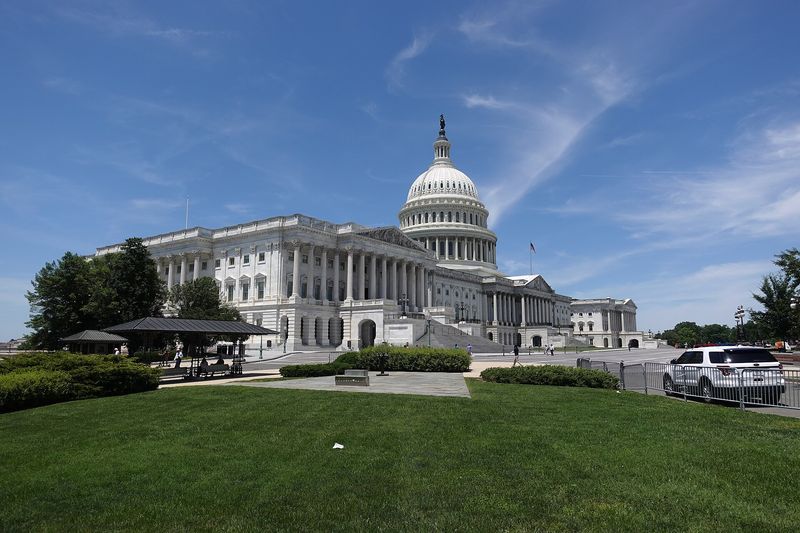
There is a second front the executive-action map cannot close off, and the White House knows it. Reuters reported that House Democrats have discussed using a majority to open hearings, issue subpoenas and file document requests examining whether Trump has used his power to benefit himself, his allies or his donors. Oversight is the majority’s constitutional machinery, and it runs on committee gavels rather than bills — a veto pen has no jurisdiction over a subpoena. The administration is preparing for that fight too: White House lawyers have briefed political appointees on how congressional inquiries work, and the counsel’s office has sought a Justice Department opinion on the reach of executive privilege over the president’s communications with private advisers — the legal ground on which fights over testimony and documents would be fought. The legal perimeter of the election itself has already been contested in court, most recently when a federal judge barred the Justice Department from threatening election workers days before the vote. A Democratic House would move that contest from courtrooms to committee rooms, and it is the part of divided government that neither vetoes nor executive orders can sidestep.
The White House pushes back: ‘deliver wins for the American people’
The administration publicly rejects the premise that it is planning for defeat. White House spokeswoman Lauren Bis told Reuters: “This administration and commonsense Republicans will continue to secure our borders, restore law and order, putting more money back into the pockets of hard-working Americans, and deliver wins for the American people.” She accused the media of promoting a false narrative about Republican losses in the midterms. That denial and the planning are not necessarily contradictory: every modern White House war-games the loss of Congress, and Trump’s own podcast answer framed the veto less as surrender than as leverage — a way of forcing the other party to negotiate on his terms. But the scale and seniority of the preparation Reuters describes — the deputy chief of staff, the budget director and the counsel’s office, working since April, with agency homework and pre-drafted legal defences — goes beyond the usual contingency memo. It reads, instead, as a governing doctrine for 2027 assembled in advance: if the legislative road closes, the administration already knows which executive roads it intends to drive down, and how it plans to defend them.
A presidency already run from the Oval Office
Context makes the plan more credible, not less. Since returning to office in January 2025, Trump has governed heavily through executive authority — sweeping tariffs imposed without new laws, an immigration enforcement drive run through executive agencies, cuts to the federal workforce, and a war with Iran conducted without fresh authorisation from Congress. His one great legislative achievement of the term, the big tax-and-spending package, passed through the Republican Congress and was signed in July 2025; it may also prove to be the last big bill of the presidency if the House flips. Trump has repeatedly invoked national emergencies to unlock powers Congress never voted on directly, and the emergency architecture itself is veto-proofed: Congress can vote to terminate an emergency declaration, but the president can veto that vote — and an override needs the same two-thirds that Democrats are almost certain not to have. Sunday’s rallies in Iowa and Kansas closed a month of campaigning in which Trump has been the Republican Party’s chief messenger, and his podcast remarks carried a tone his rally speeches rarely do: an acceptance, however hedged, that campaigning might not be enough. “Hopefully we don’t have to worry about that,” he said of the veto scenario — a hope, not a prediction.
Why this matters
Analysts who spoke to Reuters were split less on whether Trump would govern this way than on how much would actually change. Nathan Gonzales of Inside Elections noted that Trump “has basically ignored Congress and tried to do as much as possible through executive orders,” and would continue doing so under Democratic majorities — suggesting the practical distance between unified and divided government, for this president, is smaller than for any in modern memory. Andrew Busch of the University of Tennessee at Knoxville pointed to the confirming power as the sharpest change, predicting Democrats would be “very reluctant to approve any of the president’s appointments.” History offers both of Trump’s scenarios precedent. Divided government has produced pure gridlock, and it has also produced the deal-making Trump described — presidents who vetoed freely and then negotiated from the strength of the pen, because a Congress that cannot override must eventually bargain. Who benefits from the veto-first strategy is clear in the short term: the White House keeps control of the policy agenda it can reach alone, and Republican minorities keep a blocking role far larger than their numbers. Who loses is equally clear: a Democratic majority elected, in part, to legislate would find its bills reduced to messaging exercises, and voters in the middle would watch two institutions each claiming a mandate produce very little law. The deeper stake is the one Reuters’ reporting exposes — a presidency designed, in advance and in detail, to need Congress as little as possible, at the exact moment voters may be about to make Congress its opponent.
What happens next
Everything now waits on Tuesday. Three scenarios cover the plausible outcomes. If Democrats flip the House but Republicans hold the Senate — the result most forecasters treat as likeliest — Trump gets his veto pen’s full value, the executive-action playbook becomes the administration’s main policy engine, and the House’s Democratic majority turns to investigations and messaging bills, while a Republican Senate keeps confirming nominees. If Democrats take both chambers, the nominee pipeline freezes, oversight doubles, and the administration’s reliance on executive action — and the court fights defending it — becomes near-total; the pre-written Justice Department opinions Reuters described would be tested within months. If Republicans hold both chambers, the playbook goes back in the drawer, the legislative programme resumes, and Sunday’s interview becomes a footnote — though the six months of planning would remain on file for the next scare. In every scenario, the first test arrives quickly: government funding, must-pass bills and the new Congress’s opening moves in January 2027 will show whether “Mr. Veto” was a negotiating posture or a governing plan. Trump himself predicted the sequence — vetoes first, then, after a month or two, deals. Whether Washington follows his script is the question the midterms cannot answer on their own. So we will ask it plainly: if Democrats win Congress, do you expect vetoes and gridlock — or vetoes first, and then deals?
Sources
Reporting based on: Reuters, Nandita Bose and Tim Reid, report on the Trump White House mapping a path to govern without Congress if Democrats win the midterms (November 1, 2026), via SRN News, https://srnnews.com/trump-white-house-maps-path-to-govern-without-congress-if-democrats-win/ ; Bloomberg reporting on Trump’s “Mr. Veto” remarks, via The Hindu BusinessLine (November 2026); and Fox News, Sunday Morning Futures, airing the Pod Force One (New York Post, Miranda Devine) interview excerpt (November 1, 2026), with the full interview scheduled for release Monday.