Alberta referendum results 2026: Alberta has voted decisively to stay in Canada. In Monday's referendum, about three in four voters chose Option 1 on Question 10 — remain a province of Canada — and rejected the option that would have started the legal process toward a binding vote on separation, according to CBC's projection and the unofficial Elections Alberta count.
Remain takes 76 percent — and a quarter of the province voted to start the process of leaving anyway
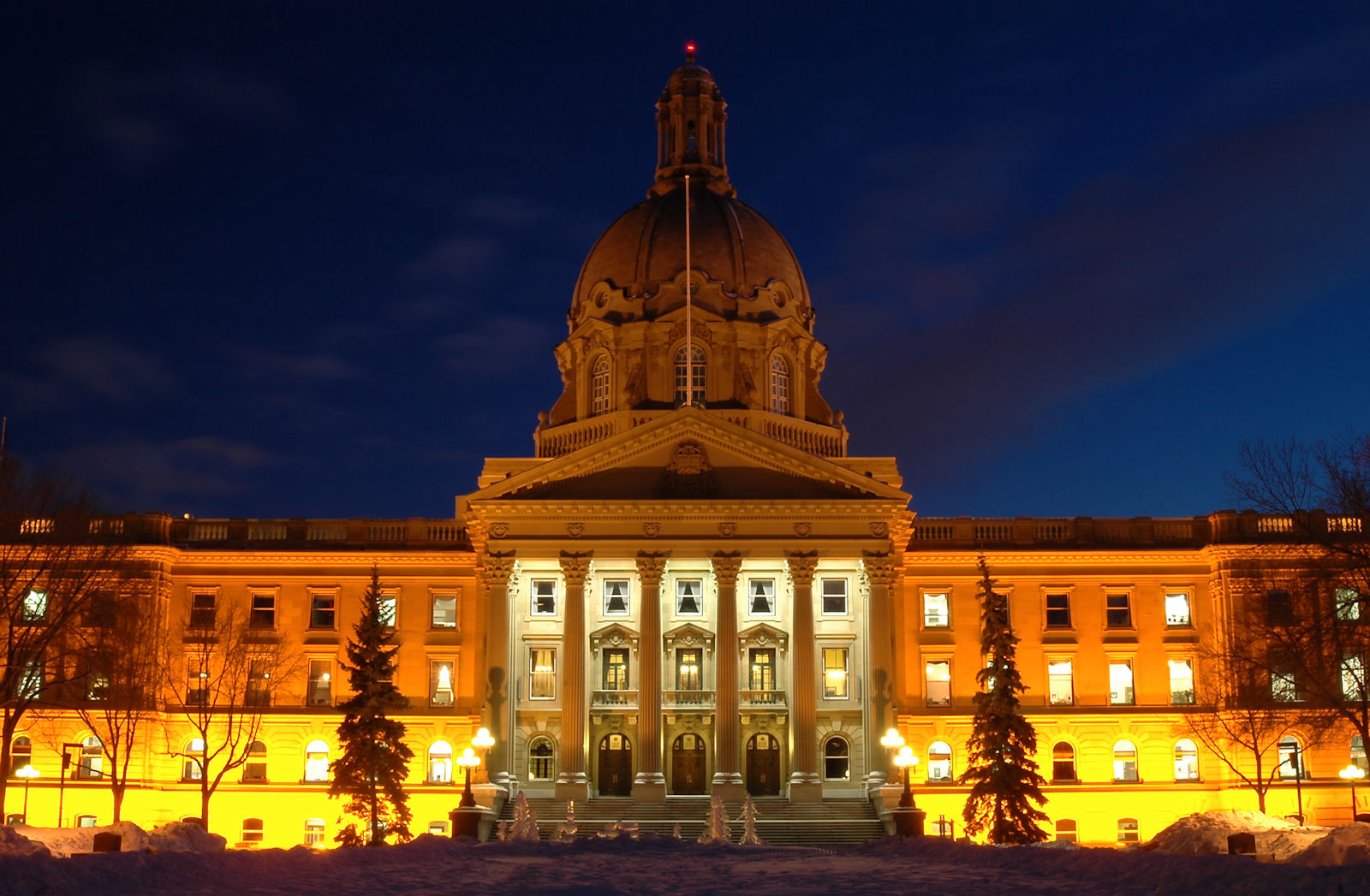
EDMONTON, Alberta — Alberta votes to stay in Canada. CBC News projected late Monday that voters had rejected the separation-process option on Question 10 of the province's ten-question referendum, and the hand count that followed through the night confirmed the shape of the result: remain above 76 percent, the process option just under 24 percent, a margin of roughly three to one. So the answer to the question Canadians had asked for months — did Alberta vote to separate from Canada? — is no, emphatically, on the numbers available early Tuesday. Option 1, "Alberta should remain a province of Canada," defeated Option 2, which would have directed the provincial government to commence the legal process required under the Canadian Constitution to hold a binding provincial referendum on whether Alberta should separate. The question was non-binding, and Monday's vote does not by itself change Alberta's status in any legal instrument. What it changes is the politics: the separation question has now been put to the whole province for the first time, and the whole province has answered it.
The numbers behind the Alberta separation referendum result
Alberta referendum Question 10 results
The Elections Alberta unofficial results — hand-counted at voting stations, with Question 10 counted first at every location — moved in one direction all night. At one check in the early hours of Tuesday, October 20, the tally stood at 1,079,074 votes for remain against 334,796 for the process option: 76.32 percent to 23.68 percent, out of 1,413,870 reported votes. A later update, at 2:33 a.m. Mountain Time with 60 percent of voting areas reporting, showed 1,164,607 votes for remain (76.0 percent) and 367,094 for the process option (24.0 percent), from 1,531,701 valid votes. The percentages barely moved as the count grew, which is why CBC was able to project the outcome while most ballots were still being tallied. The Alberta remain vote 76 percent figure held in every region of the province: remain led everywhere, running above 80 percent in Edmonton and Calgary and still above 60 percent in some rural central areas, according to the Wall Street Journal's account of the CBC projection. Full unofficial figures are published by Elections Alberta as returning offices confirm them.
When are Alberta referendum official results?
Everything published so far is unofficial. Ballots were counted by hand, the count for the remaining nine questions trails far behind Question 10, and Elections Alberta will publish official results on Thursday, October 29, 2026. The agency has been explicit that figures reported during the count period are subject to verification and are not final until the official release — worth remembering before either camp engraves 76 percent, or 24 percent, into its literature.
A count that started more than two hours late
The result arrived late because the vote itself ran long. A total of 106 polling stations opened late on Monday, and under Alberta's rules no results could be released until every voting location in the province had closed. The last station — Edmonton's Westminster School, scheduled to close at 8 p.m. — did not close until 10 p.m. Mountain Time, pushing the first numbers more than two hours past the expected release, as Elections Alberta explained in its results-reporting notice. Turnout was heavy by any measure: 837,791 Albertans voted at advance polls over five days and another 519,082 voted by special ballot — about 1.36 million ballots, 43.1 percent of eligible voters, cast before referendum day even began, with the Associated Press reporting more than 1.35 million advance and special ballots. In the Maskwacis area, stations ran out of ballots entirely and Elections Alberta sent couriers with more. Whatever else Monday was, it was not apathy: a province of about five million people treated a non-binding question like a decision, because both campaigns told it that it was one.
Carney: "Canada is so much greater than the sum of its parts"
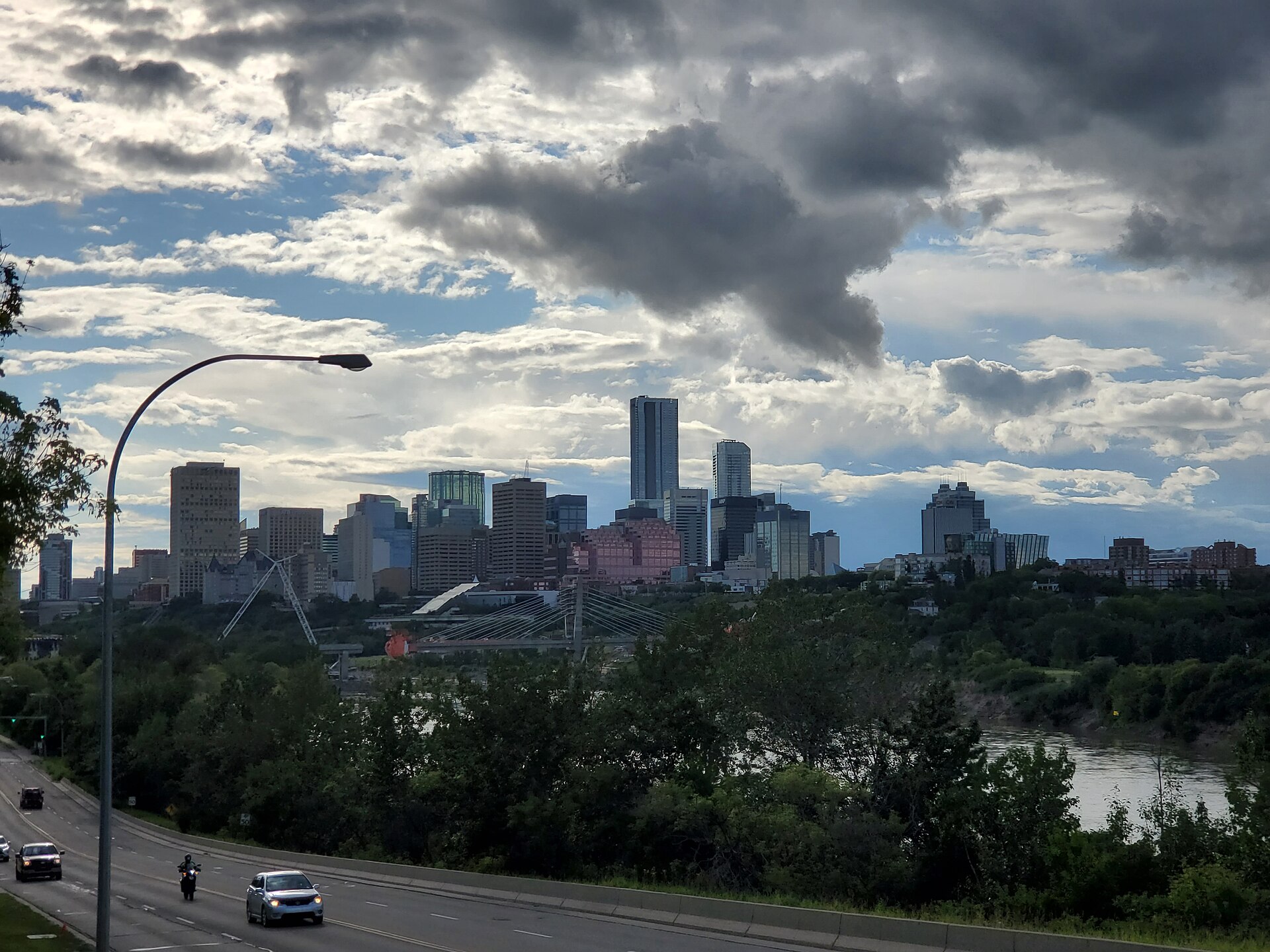
The Mark Carney Alberta referendum reaction arrived in a statement on Tuesday. The results on the separation question, the prime minister said, "mean that Albertans and all Canadians will move forward together with renewed purpose and high ambition," adding: "Canada is so much greater than the sum of its parts." Carney had campaigned against the process option as hard as a prime minister can campaign in a provincial vote. He called the referendum a "dangerous bluff," drew directly on his experience leading the Bank of England through Brexit to warn that separation would carry crippling economic costs, and closed the campaign at a Friday rally in Edmonton — the city where he grew up — with an appeal that doubled as the remain campaign's epitaph: "Vote like Canada's future depends on it because it does." In the campaign's strangest and most telling image, Carney and Alberta Premier Danielle Smith — adversaries on energy, immigration and the reach of Ottawa — had shared a stage in Red Deer days earlier to urge an Option 1 vote, before arguing in public over the other nine questions. Smith has said Albertans voted for a stronger Alberta inside a united Canada; she is expected to address the province on Tuesday.
The other side of 24 percent
The separatist movement did not pretend Monday was a win, but it refused to call it an ending. Keith Wilson, a leader of the separatist movement, pointed to the size of the minority: at least a quarter of Albertans, he said, feel Alberta needs to be treated better. Mitch Sylvestre of the Alberta Prosperity Project, the organisation whose petition drive forced the separation question onto the political agenda, put the movement's position in one sentence: "Tonight isn't the finish line. We've awoken something in this province and that spirit isn't going anywhere." The grievance underneath the vote was audible at polling stations all day. In Wainwright, voter Dustin Degenhardt told the Associated Press that Alberta has "essentially been treated as, you know, a colony" — a one-line summary of the case the process side made for months: that Ottawa takes Alberta's energy wealth through equalization and federal transfers, regulates its signature industry through energy and environmental rules the province did not choose, and gives the province a voice in national decisions out of proportion to what it contributes. The federalist case, made by Carney and by the cross-party Forever Canadian campaign, was that those grievances are real subjects for negotiation inside the federation — and that none of them is solved by starting down a constitutional road whose costs, as Brexit showed, arrive on schedule while the benefits remain theoretical. On Monday, three voters in four found the second argument more persuasive. The fourth voter is the story now.
The other nine questions
Question 10 was one of ten questions on the ballot; the other nine covered immigration, healthcare, education and provincial constitutional powers, and they were counted after Question 10 at every station, so far fewer of their ballots had been tallied by early Tuesday. On the early partial counts, Yes was leading on seven of the nine, with No narrowly ahead on Questions 6 and 8. Those figures are preliminary and partial — a fraction of the votes counted for Question 10, with the proportions liable to move as the hand count proceeds — but they point to the result Premier Smith's government may treat as its own mandate from Monday: a province that voted to stay in Canada and, simultaneously, to demand more control within it. The full picture on the nine will only settle as Elections Alberta completes the count ahead of the October 29 official release.
How Alberta got to a separation vote
Alberta holds the world's fourth-largest proven oil reserves, and resentment toward Ottawa — over equalization payments the province does not receive, over federal energy and environmental policy, over a sense of being governed by voters in Ontario and Quebec who will never depend on its industries — runs generations deep. What it had never done, before Monday, was translate into majority support for independence, and after Monday it still has not. The road to the vote ran through a citizen-initiated petition by the separatist Alberta Prosperity Project, a rival pro-Canada petition drive, and Premier Smith's decision to place a tenth question of her government's own drafting on a ballot already carrying nine of its proposals. The vote also took place in a shadow from the south: U.S. President Donald Trump's trade war against Canada and his repeated annexation threats, which Carney argued made national unity a practical necessity rather than a sentiment, and which pushed Canadian patriotism — and, in Alberta, the remain vote — in the same direction all year. Context from earlier in the campaign, including the deaths of two Canadian soldiers in a live-fire training fire at CFB Wainwright days before the vote, formed part of the sombre backdrop against which Albertans cast their ballots.
Why this matters
Legally, Monday settles less than it appears to. The question was non-binding; it asked only whether the province should begin a process toward a second, binding referendum, and even that second vote, had it ever happened and passed, would under the Supreme Court's Secession Reference and Parliament's Clarity Act have opened negotiations — over borders, debt, currency, pensions, pipelines and First Nations treaties — rather than declared a country. Politically, though, the margin is the message. Federalists argue that a three-to-one verdict on a clear question closes the Clarity Act path for the foreseeable future: no plausible reading of 76-to-24 produces the "clear majority" a separation process would need to be taken seriously in Ottawa, in the courts or in foreign capitals. Separatists argue the opposite reading of the same number: that a movement which was a fringe a decade ago has now recorded roughly a quarter of a province — hundreds of thousands of voters, professionally organised, with a petition machine that has already forced one referendum — as a base to build on, and that the grievances that produced it, from equalization to energy regulation to representation, were not on the ballot and have not been settled by the result. Both readings are honestly available from the same tally, which is precisely why the argument will continue. What Monday did settle is the burden of proof: it now sits with anyone who claims Alberta is on its way out of Canada, and with anyone in Ottawa who claims Alberta is content as it is.
Who benefits, who loses
Carney is the clearest winner. He intervened personally and repeatedly in a province where his party is weakest, attached his name to the remain cause and to a Brexit warning drawn from his own biography, and received the decisive margin he asked for; he can now claim the national-unity file and a working relationship with Alberta in the same news cycle. Smith emerges with a subtler victory: the question she placed on the ballot was answered the way she said she wanted on Question 10, while the nine questions she actually authored were, on early counts, largely going her way — a combination that lets her go to Ottawa claiming both loyalty and leverage. The separatist movement loses the vote and keeps the infrastructure: a quarter of the electorate, a donor and volunteer base, and a grievance list no one has negotiated away. The clearest losers are clarity itself — voters who cast a process vote as a protest message are now recorded in the same column as committed separatists, and no recount can separate the two — and, potentially, the issues that were never asked about: First Nations leaders objected throughout that Treaties 6, 7 and 8 predate Alberta and cannot be renegotiated by a provincial ballot, an objection Monday's result makes moot for now without answering it.
What happens next
The immediate calendar is administrative: the hand count continues, the nine other questions are tallied, and Elections Alberta publishes official results on Thursday, October 29. Then the politics resumes on two tracks. In Edmonton, Smith must convert Monday's dual verdict — stay, but change the terms — into a negotiating position on immigration control, constitutional powers and the energy files her government has fought Ottawa over for years, now carrying referendum mandates she can quote. In Ottawa, Carney must decide what "renewed purpose and high ambition" costs: the remain campaign was won partly on the promise that Alberta's complaints would be heard inside the federation, and the 24 percent is the standing reminder of what happens if they are not. The separatist movement, for its part, has already announced its interpretation — a beginning, not an ending — and the true test of that claim will be whether a quarter of the province stays organised between referendums, in party politics and petition drives, or whether Monday proves to have been its high-water mark. Alberta has now asked itself the biggest question a province can ask, and answered it three to one. Is a question answered that decisively settled for a generation — or has putting it on a ballot at all made it a permanent feature of Canadian politics?
Sources
Elections Alberta — unofficial referendum results (Question 10 counted first; tally checks on October 20 including 1,079,074 remain to 334,796 process, and the 2:33 a.m. MT update of 1,164,607 remain to 367,094 process with 60 percent of voting areas reporting) and the agency's unofficial results reporting notice of October 19, 2026 (106 late-opening stations, last close at 10 p.m. MT, advance and special ballot turnout of 43.1 percent, official results October 29) · CBC News — projection that voters rejected the separation-process option, with remain above 76 percent at 41 percent of polls reporting · The Wall Street Journal — "Albertans Vote to Stay in Canada in Historic Referendum" (regional breakdown: remain above 80 percent in Edmonton and Calgary, above 60 percent in some rural central areas; Carney statement) · The Associated Press (advance and special ballot totals above 1.35 million; Maskwacis ballot shortage and courier resupply; Wainwright voter Dustin Degenhardt) · The Guardian (separatist reaction: Keith Wilson; Mitch Sylvestre of the Alberta Prosperity Project).
Related coverage: Alberta Referendum: Carney and Smith Share a Stage to Keep Alberta in Canada · Alberta to hold separation referendum in October 2026 · Deaths Confirmed in CFB Wainwright Fire as Training Disaster Overwhelms Alberta Hospitals