Trump Kim Jong Un talks
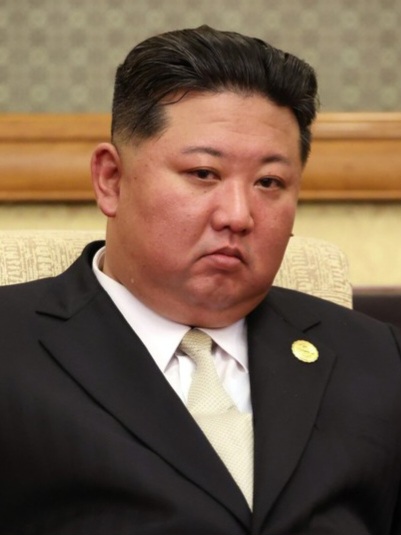
SEOUL — Trump Kim Jong Un talks are being tested by a familiar contradiction: the American president says a personal relationship can reopen diplomacy, while North Korea answers the moment with a missile, an expansive capability claim and a warning designed to make every defense planner listen. On October 3, Pyongyang launched a ballistic missile from near Wonsan. North Korean state media said Kim Jong Un supervised what it called an intermediate-range, hypersonic strategic weapon system. Hours later in Vandalia, Ohio, President Donald Trump told a rally, “I get along great with Kim Jong Un. Isn't it nice to get along with the leaders of massive nuclear nations?”
The sequence is politically striking, but timing alone does not prove cause. Former U.S. Forces Korea analyst and former National Intelligence Council officer Sydney Seiler cautioned that a launch requiring extensive preparation was almost certainly planned before Trump's remarks. The safer conclusion is that two messages crossed in public: Trump advertised access and revived outreach; Kim advertised leverage.
What is independently confirmed is narrower than the North Korean presentation. South Korea's Joint Chiefs of Staff detected a missile flying more than 700 kilometers eastward. Japan said it landed outside its exclusive economic zone. KCNA said the weapon covered roughly 1,000 kilometers on a maneuvering, “wave-like” path and used artificial intelligence to become difficult to intercept. Seoul did not confirm those capability claims. That gap between observation and assertion—not the rhetoric alone—is the core of the story.
Why this matters: diplomacy met deterrence in the same news cycle
The deeper significance is not that a missile “responded” to a speech. It is that both governments are attempting to shape the bargaining table before talks exist. Trump wants the symbolism of leader-to-leader access to create movement where working-level negotiations failed. Kim wants any renewed contact to begin with the premise that North Korea is a more capable nuclear power than it was during their first summit.
Missile signaling helps Pyongyang in three ways. It can raise the perceived cost of waiting, challenge confidence in regional defenses and give Kim a domestic image of command. Diplomacy helps Trump in a different way: it lets him argue that personal rapport can manage a nuclear crisis even when formal negotiations are frozen. The collision is therefore not merely military versus diplomatic. It is leverage versus access—two methods of forcing the other side to acknowledge political reality.
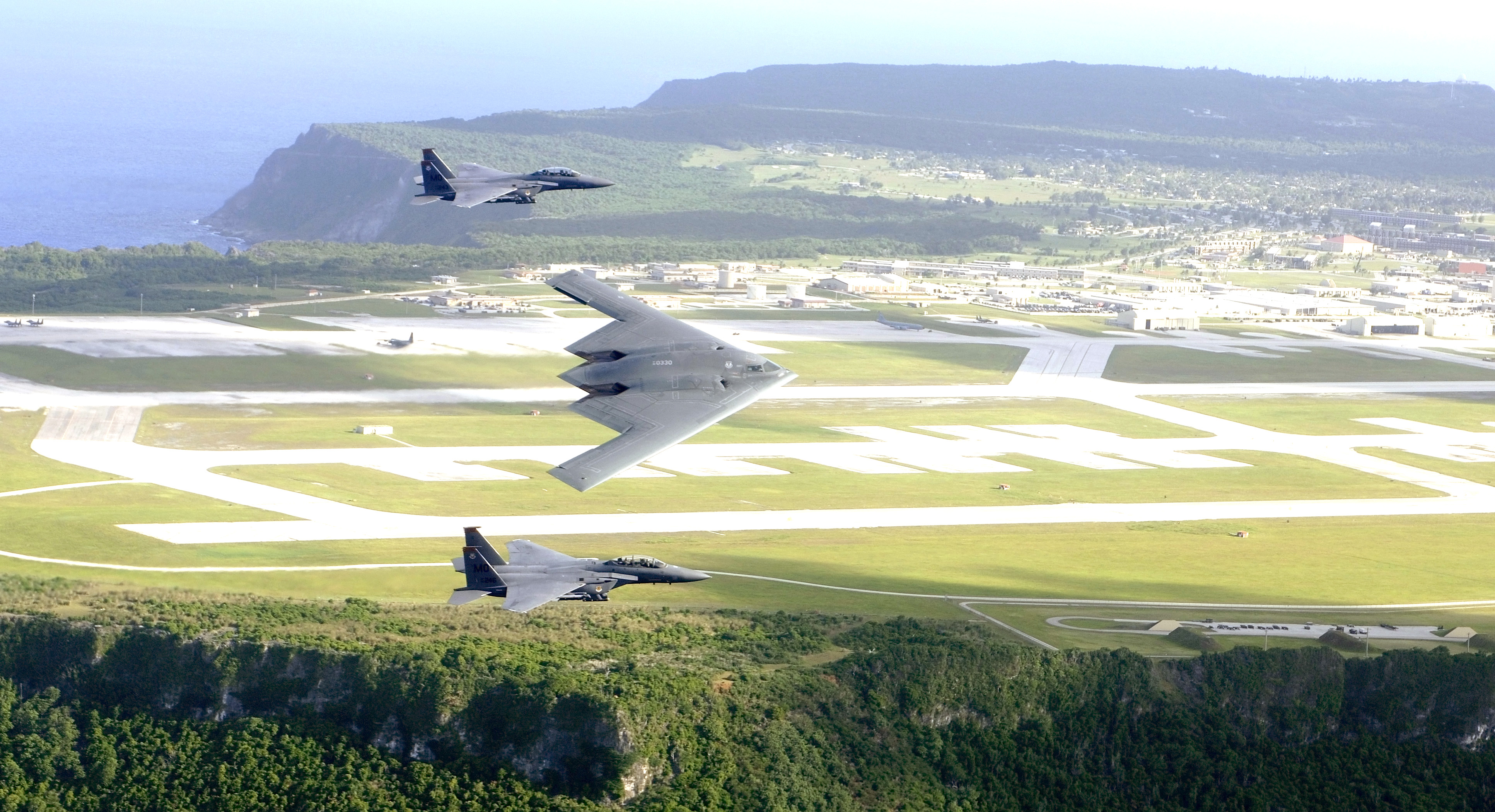
The Guam-range label is especially useful. Guam is a major U.S. military hub in the western Pacific and sits roughly 3,400 kilometers from North Korea. A true intermediate-range ballistic missile, commonly defined in the 3,000-to-5,000-kilometer band, could reach it. But a test that demonstrated only 700 to 1,000 kilometers did not itself prove a Guam strike. North Korea is asking adversaries to infer potential from a deliberately constrained flight; regional intelligence agencies are asking for more evidence.
Trump North Korea diplomacy 2026 carries the weight of three unfinished summits
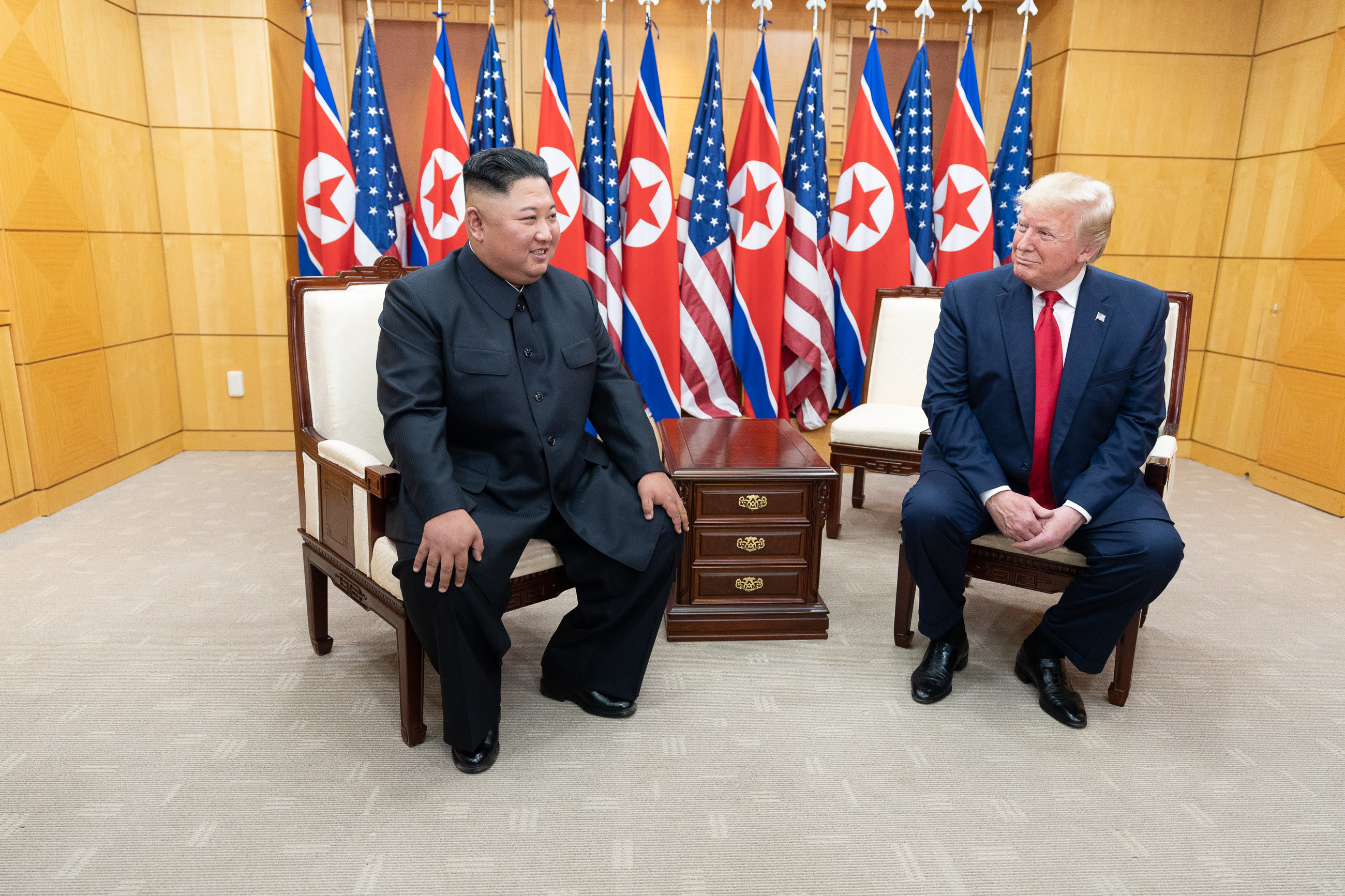
Trump and Kim's first summit in Singapore in June 2018 produced a broad commitment to work toward denuclearization and a new bilateral relationship. The document was deliberately spare. It created political space but left the difficult sequencing—sanctions relief, weapons declarations, verification and dismantlement—for later negotiations.
Hanoi in February 2019 exposed that gap. The meeting ended without an agreement after the sides failed to bridge North Korea's demand for sanctions relief and the United States' demand for a sufficiently broad nuclear concession. Their improvised June 2019 meeting in the Demilitarized Zone restored the spectacle of contact but did not repair the substantive process. Working-level talks later stalled.
That history explains both the appeal and the weakness of second-term outreach. A presidential meeting can break protocol and authorize compromises lower-level officials cannot. It can also become a substitute for the technical work that makes an agreement enforceable. Trump is again emphasizing the relationship. Kim can accept the attention without surrendering the weapons that increase his bargaining power.
The immediate environment is worse than in 2018. The September 21 explosions near the Military Demarcation Line wounded South Korean soldiers. Seoul said North Korean landmines caused the blasts and demanded an apology. Kim Yo Jong rejected the accusation as groundless and refused the demand. The DMZ landmine blast Korea tensions moved quickly from a disputed border incident into the strategic arena, with each side accusing the other of misrepresentation.
North Korea IRBM test Wonsan: what 700–1,000 kilometers actually proves
The North Korea IRBM test Wonsan evidence begins with two measurements. Seoul assessed a flight of more than 700 kilometers. KCNA claimed roughly 1,000 kilometers into the East Sea. Differences can arise from sensor coverage, flight-path definitions and state-media presentation. Neither figure independently establishes maximum range.
A missile can be tested short of its design range. Engineers may use a lofted, depressed or maneuvering trajectory to keep the impact area within a safer corridor while evaluating propulsion, thermal loads or guidance. That makes Pyongyang's IRBM classification possible. It does not make it proven. Independent analysts would want detailed telemetry, verified launch imagery, engine characteristics and repeated performance.
The comparison with 2017 is useful. The Hwasong-12 demonstrated the intermediate-range category through flights that made Guam a credible planning problem. The Hwasong-14 tests pushed into intercontinental-range territory and transformed the debate from regional defense to potential U.S. homeland reach. Saturday's demonstrated distance was far shorter than either strategic benchmark. Its importance lies in what North Korea says the system can do—and in the possibility that the test profile concealed capacity—not in the measured distance alone.
Pyongyang has conducted roughly 16 ballistic missile launches this year, according to the reporting around the test. That cadence matters more than a single count comparison with an arbitrarily chosen year. Repetition trains crews, validates command procedures and gives engineers data. It also gives Seoul, Tokyo and Washington more sensor tracks with which to test North Korean claims. The balance is dynamic: each launch can improve both the missile force and the defenses studying it.
Kim Jong Un hypersonic missile and North Korea AI missile guidance claims
KCNA described a Kim Jong Un hypersonic missile using a maneuverable “wave-like trajectory mode.” Kim Yo Jong said South Korea and Japan failed to track the weapon from its first skip points, highlighted its speed and low-altitude changes, and declared, “there is no way to avoid this attack.” Those statements are official North Korean claims, not independently verified performance data.
A maneuvering vehicle can make interception harder because the future track is less predictable than a simple ballistic arc. Flying lower may compress detection and decision time. But hypersonic speed alone does not make a weapon invulnerable; most ballistic missiles travel at hypersonic velocity during parts of flight. The meaningful questions are sustained maneuverability, accuracy under thermal stress, sensor quality and whether the vehicle can reach its target after evasive moves.
The North Korea AI missile guidance claim is even harder to assess from public evidence. Artificial intelligence could describe onboard route adjustment, sensor processing or merely an automated control system branded with a prestigious label. No released information establishes what model was used, whether it operated onboard or whether it improved accuracy. Arms-control analysts therefore have reason to treat the claim as a collection priority rather than a demonstrated breakthrough.
Kim Yo Jong missile statement turns tracking uncertainty into a weapon
The Kim Yo Jong missile statement was designed to make uncertainty look like defeat. If Seoul and Tokyo did lose parts of the track, the episode would expose gaps that deserve technical review. If the public claim is exaggerated, it still forces defense officials to explain what their sensors saw without revealing sensitive capabilities. Pyongyang benefits from either outcome.
Seoul's response is to separate detection from classification. Its military confirmed the launch and gave a minimum distance while withholding endorsement of the “hypersonic,” “AI-assisted” and intermediate-range labels. South Korean officials have repeatedly accused the North of overstating weapons performance. Japan's report that the missile landed outside its EEZ adds a concrete endpoint but not a complete reconstruction of every maneuver.
For Seoul and Tokyo, the political risk is confidence. Missile defense does not promise certainty; it layers warning satellites, radars, command networks and interceptors to improve the odds. A public claim that trackers lost a target can erode trust even before the evidence is evaluated. That is why technical transparency matters, but so does restraint: advertising sensor detail can help the very force trying to defeat it.
Sydney Seiler Guam warning: who gains and who absorbs the cost
The Sydney Seiler Guam warning puts the range debate into operational terms. Seiler told Fox News Digital that the IRBM class—roughly 3,000 to 5,000 kilometers—brings Guam, parts of Alaska and Japan into reach. That does not mean Saturday's flight reached those places. It means the advertised class would change the geographic problem if independently confirmed.
Kim gains leverage because uncertainty forces planners to consider the higher-end possibility. The presence of Kim's daughter Ju Ae and his wife, Ri Sol Ju, in KCNA's Sunday photographs reinforces the domestic presentation: strategic capability is shown as an achievement of leadership and continuity. The Kim Jong Un daughter Ju Ae imagery may also serve a dynastic message, though photographs alone cannot prove a succession plan.
Seoul and Tokyo absorb immediate costs. Every test activates tracking, analysis and public-warning systems. Claims about low-altitude maneuvers and lost tracks create questions about Patriot, Aegis and allied sensor integration. The United States absorbs a different cost: if Guam enters the conversation, regional reassurance may require more visible bomber deployments, exercises or missile-defense readiness—steps that North Korea can cite as justification for more tests.
There is also a risk of overreading the chronology. A complex missile drill is not improvised in the hours after a campaign-rally line. Seiler's caution is important because treating the launch as a direct answer to Trump would give a planned North Korean operation more responsiveness than the evidence supports. The political juxtaposition is real; the causal link is not established.
What happens next: talks, a freeze, or a larger test
Scenario one: quiet contacts resume. Trump could use private channels to test whether Kim wants a meeting, while allies press for a clear agenda before another summit. A viable process would need more than personal assurances: phased measures, verification, sanctions sequencing and crisis communications would all have to be negotiated.
Scenario two: diplomacy freezes again. Pyongyang may decide that weapons development produces more leverage than talks, particularly if it expects no near-term sanctions relief. Washington may conclude that a summit without preparatory commitments would repeat Hanoi. In that case, both sides could keep the language of openness while doing nothing.
Scenario three: North Korea proves—or revises—the claim. A longer-range launch, a test on a sharply different trajectory or detailed state-media imagery could reveal whether the system belongs in the IRBM class. Another test toward Japan would increase regional risk; an intercontinental launch would escalate it sharply. Absence of follow-up evidence would leave the 700-to-1,000-kilometer discrepancy unresolved.
Scenario four: the United States tightens posture. Washington can rotate bombers through the region, expand trilateral exercises and strengthen radar and interceptor coverage. Guam already hosts major American forces; THAAD deployments and Aegis-capable ships give planners layered options. Those steps improve readiness but do not make interception certain, especially against salvos or maneuvering targets.
The indicators to watch are specific: any North Korean designation for the missile, imagery of the launcher and reentry vehicle, revised South Korean or Japanese track data, activity around Wonsan, a U.S. bomber or THAAD posture change, and evidence of a working-level diplomatic channel. The test has not proved that Guam is newly vulnerable, and Trump's rally line has not proved that talks are near. What has been proved is that any revived diplomacy will begin under the shadow of a faster, more practiced and more rhetorically ambitious North Korean missile program.
Sources and reporting notes
- Reuters: North Korea says it conducted an intermediate-range strategic missile drill
- Reuters: Kim Yo Jong says an intermediate-range missile test was conducted
- Associated Press via Military.com: missile test and tensions over mine blasts
- Fox News Digital: Seiler on the missile class, Guam and Trump's outreach
Reporting note: launch detection, public statements and the missile's reported flight are attributed to the governments and outlets that reported them. Descriptions of hypersonic performance, artificial-intelligence guidance, tracking failures and a 1,000-kilometer flight are North Korean claims that Seoul had not independently confirmed.