North Korea missile test October 2026
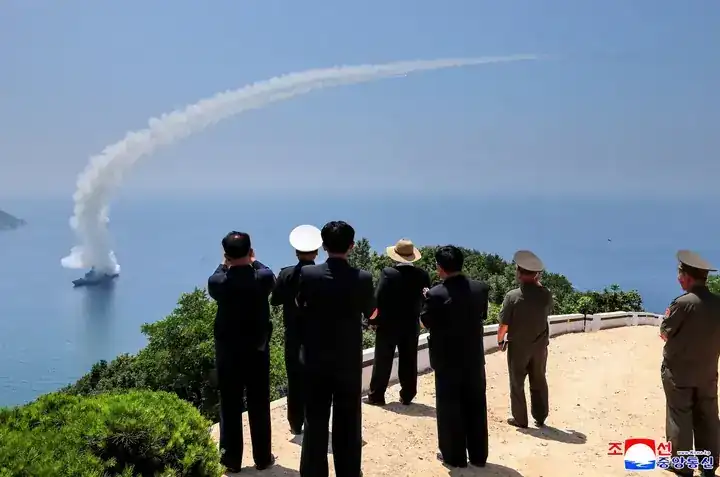
SEOUL — The North Korea missile test October 2026 began near Wonsan at about 6:30 a.m. Saturday local time, according to South Korea's Joint Chiefs of Staff. The ballistic missile traveled more than 700 kilometers toward the East Sea, also called the Sea of Japan. Japan measured roughly 680 kilometers and a maximum altitude near 90 kilometers. It fell outside Japan's exclusive economic zone, and authorities reported no damage or casualties.
Those are the observable facts. The dispute is over what they mean. Kim Yo Jong, a senior Workers' Party official and sister of leader Kim Jong Un, said North Korea tested an “intermediate-range strategic missile” in a drill supervised by her brother. South Korean and U.S. intelligence services had not confirmed that classification and were considering three possibilities: an intermediate-range ballistic missile flown well short of its maximum reach, a medium-range system, or a Hwasong-11-family short-range missile.
Pyongyang's message was broader than a range label. Kim said a firepower unit with an “exclusive special mission” conducted the drill, claimed the weapon used a wave-like path that caused opposing trackers to lose it after the first skip, and said artificial-intelligence technology helped alter its flight path at low altitude. These are North Korean assertions. The single public trajectory does not independently establish every claimed guidance or evasion feature.
Why this matters: a Kim Yo Jong intermediate range missile claim
The launch matters because it merges three kinds of pressure: technical uncertainty, political timing and operational rehearsal. A missile that flies 700 kilometers is dangerous on its own. Calling it intermediate-range asks planners to assume it could travel several times farther. Describing it as unpredictable asks missile-defense operators to devote more sensors and interceptors to every future alert. Placing Kim Jong Un at the drill turns the event into a statement of command authority as well as engineering.
Ambiguity can be useful even when outsiders remain skeptical. If Seoul, Tokyo and Washington cannot immediately agree on the missile class, Pyongyang can portray that uncertainty as evidence that the weapon defeated surveillance. Regional militaries, however, work from multiple radars and define flight endpoints differently. A 680-kilometer estimate and a 700-plus-kilometer estimate are close enough to describe the same event without proving a tracking failure.
The most important restraint is analytical: rhetoric about an unavoidable attack is not evidence that defenses are useless. Missile defense is a probability problem. Lower, maneuvering flight paths can compress warning time and complicate interception, but every maneuver consumes energy and the effectiveness of a system depends on sensors, command networks, geometry and the number of incoming weapons. One launch cannot answer all of those questions.

North Korea Wonsan missile launch: what is confirmed
The North Korea Wonsan missile launch was detected at approximately 2130 GMT Friday, corresponding to 6:30 a.m. Saturday in Korea. Seoul said the missile flew eastward for more than 700 kilometers. Tokyo's estimate was about 680 kilometers with an apogee of roughly 90 kilometers. The splashdown was beyond Japan's EEZ, and Japan warned ships to remain alert for falling objects.
South Korea's presidential national security office convened an emergency meeting, increased monitoring for follow-on launches and called the launch a violation of United Nations Security Council sanctions. U.S. Pacific Command said the event posed no immediate threat to American personnel, territory or allies. South Korean, American and Japanese officials also held a call to coordinate their assessment.
That response pattern is deliberate. Public warnings reassure citizens and establish a legal position; intelligence sharing improves the joint track; avoiding claims beyond the available evidence reduces the risk of being maneuvered by Pyongyang's narrative. The “Seoul emergency meeting missile” story is therefore less about one conference room than about whether the three allies can reach a common technical picture quickly.
From the DMZ mine blast to missile pressure
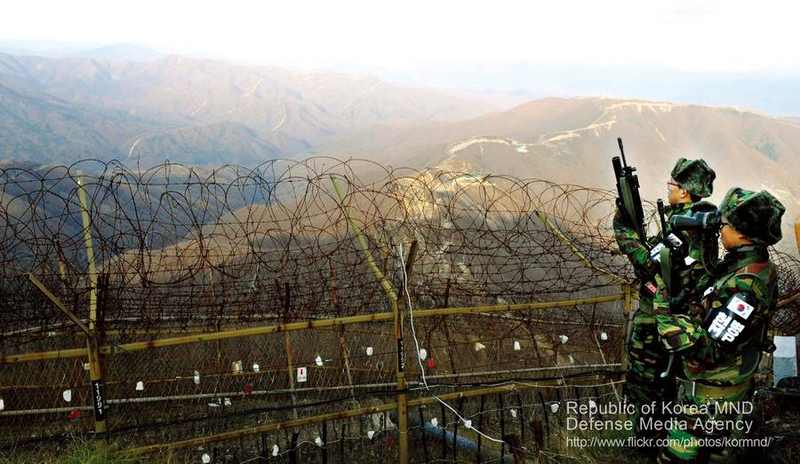
The immediate backdrop was an explosion on September 21 about 10 meters south of the Military Demarcation Line. South Korean authorities and the U.S.-led United Nations Command concluded that North Korean mines caused it. Seoul said three South Korean soldiers were wounded while conducting reconnaissance and demanded an apology. Kim Yo Jong rejected the accusation and demand, called Seoul's position contemptible, said ties would remain severed and warned that the North was ready for any response.
The phrase “DMZ mine blast South Korea soldiers” now connects a local border incident to a strategic weapons demonstration. That linkage does not prove the launch was planned only in response to the mine dispute—missile drills require preparation—but it gave Pyongyang an immediate political frame. It could answer an accusation without addressing the mine evidence, raise the costs of further pressure and move the dispute from the demarcation line to the regional security agenda.
South Korean President Lee Jae Myung had urged a return to dialogue on Thursday. The next day's rejection and Saturday's launch narrowed his room to maneuver. Engagement depends on an ability to show that restraint can produce stability. A visible weapons test allows domestic opponents to argue the opposite: that offers of dialogue create space for coercion.
The structural backdrop is even less forgiving. Kim Jong Un designated South Korea the “principal enemy” in 2024, abandoning the older language of eventual reunification. North Korea has conducted more than 10 missile tests in 2026. Each launch provides some training and technical data even when its immediate political purpose is signaling. That sustained cadence makes it harder to treat Saturday as an isolated protest.
The 700-kilometer problem: short-range track, longer-range claim
Range categories describe a weapon's potential reach, not the distance of every test. A medium-range ballistic missile is generally associated with about 1,000 to 3,000 kilometers; an intermediate-range ballistic missile with roughly 3,000 to 5,500 kilometers. By distance alone, Saturday's 700-kilometer flight resembles a short-range profile. That is why the North Korea IRBM test label remains contested.
There are two plausible ways to reconcile the numbers. Pyongyang may have flown a longer-range system on a depressed or otherwise restricted trajectory, keeping the impact point over the sea while demonstrating a lower path. Or it may have tested an upgraded short-range weapon and attached a more strategically valuable label. Without independently verified imagery, engine data or more detailed telemetry, outside observers cannot choose confidently between those explanations.
A genuine IRBM would matter beyond the peninsula. Much of Japan lies inside a range measured in the low thousands of kilometers, while Guam—the major U.S. military hub in the western Pacific—is a benchmark target in the IRBM class from North Korea. A short-range Hwasong-11 derivative would present a different problem: South Korea and nearby forces would face less warning time and potentially more maneuvering, but Guam would not be within its natural reach.
The August 12 launch from Wonsan also traveled about 700 kilometers but was never publicly identified. On September 20, North Korea said a Hwasongpho-11Ma-1 hypersonic weapon covered 908.2 kilometers at a much lower reported altitude of 35.8 kilometers. Those comparisons show why range alone is insufficient. Similar distances can result from different motors, payloads, trajectories and test objectives.
Skip glide missile trajectory and North Korea AI missile guidance
Kim Yo Jong said the missile followed a wave-like trajectory and that opposing systems lost the target after its first skip point. In missile terminology, “skip-glide” can describe a body that descends into denser atmosphere, generates lift and climbs again, producing a path that differs from a simple ballistic arc. Such movement can complicate prediction because the future track is not determined solely by the launch point, speed and gravity.
But the phrase is not self-verifying. A maximum altitude near 90 kilometers would place much of the flight near the upper atmosphere, where aerodynamic control, heating and sensor coverage all matter. Proving controlled skip-glide performance would require continuous track data, the vehicle's maneuver record and evidence that a desired aim point was reached. None of that was publicly available immediately after the launch.
The North Korea AI missile guidance claim deserves similar caution. Machine-learning tools could in principle support sensor processing, target recognition, route selection or control tuning. “AI” can also function as a prestige label for advanced automation. The public evidence does not show which task was automated, whether any model operated onboard, how it was trained or whether it performed better than conventional guidance. The claim should be treated as a hypothesis for intelligence analysis, not a demonstrated capability.
Who gains, who loses—and the two competing readings
Pyongyang's leverage calculus
North Korea gains bargaining power if adversaries must prepare for the most capable plausible interpretation. The Kim Jong Un missile drill also signals internal control and gives state media an image of the leader directing a specialized strategic unit. Linking the test to perceived tracking weaknesses turns measurement uncertainty into political theater.
Seoul's de-escalation bid loses ground
Lee's government is the immediate political loser. Dialogue proposals now coexist with a mine dispute, a hostile statement and a missile launch. Seoul can keep communication channels open, but it must also demonstrate that outreach does not weaken readiness. The tension between those goals will intensify if another border incident or launch occurs.
Sanctions violation versus deterrence demonstration
Seoul's legal framing is direct: ballistic missile launches violate U.N. Security Council restrictions imposed on North Korea. Pyongyang's framing is deterrence: it portrays the drill as protection against hostile forces. Both describe real parts of the confrontation, but they are not equivalent factual claims. The sanctions resolutions exist; whether this test materially improved an operational capability is still being assessed.
For Japan and the United States, the immediate cost is operational. An East Sea missile launch outside Japan's EEZ may cause no damage, yet it still triggers tracking, maritime warnings, command coordination and the possibility that a future test follows a riskier path. Repetition consumes attention and exposes seams between national sensor pictures that Pyongyang can study.
Korea tensions October 2026: four paths from here
1. Dialogue stalls. Pyongyang may keep rejecting Lee's outreach until Seoul softens its position on the mine investigation or broader alliance issues. That would make crisis management more transactional and reduce the chance of early confidence-building steps.
2. More tests refine the claim. A follow-on launch at a different range or altitude, accompanied by clear state-media imagery, could identify the system more convincingly. It could also expose that Saturday's label overstated the hardware shown.
3. Border fortification accelerates. More mines, barriers, patrols and surveillance around the DMZ would increase separation but also the odds of another accidental or disputed incident. The danger is a tactical event that leaders feel compelled to answer strategically.
4. U.S.–ROK–Japan posture tightens. The likely near-term response is not an immediate strike but stronger missile tracking, information sharing, air-and-missile-defense exercises and visible readiness. That posture can improve deterrence; Pyongyang can also cite it to justify another round of testing.
The indicators worth watching are concrete: any official missile designation, imagery of the launcher and airframe, revised range or altitude estimates, additional activity near Wonsan, changes around the DMZ blast area and new trilateral exercises. For now, the defensible conclusion is narrower than Pyongyang's rhetoric but still consequential: a 700-kilometer ballistic missile was launched, its path may have been designed to complicate tracking, and the uncertainty itself has become part of the weapon.
Sources and reporting notes
- Reuters: Kim Yo Jong says an intermediate-range missile test was conducted (October 3, 2026)
- Sky News via Capital FM: launch details, missile claims and regional response
- Sky News via Radio X: Kim Yo Jong's skip-glide and guidance claims
- Aju Press: launch range, altitude, emergency meeting and trilateral response
- Army Recognition: range classes and reduced-range IRBM analysis
Reporting note: Signal Post News distinguishes measurements reported by South Korea and Japan from North Korean claims about weapon type, maneuverability and guidance. Technical assessments are labeled as analysis; future scenarios are not predictions.