who is running Iran
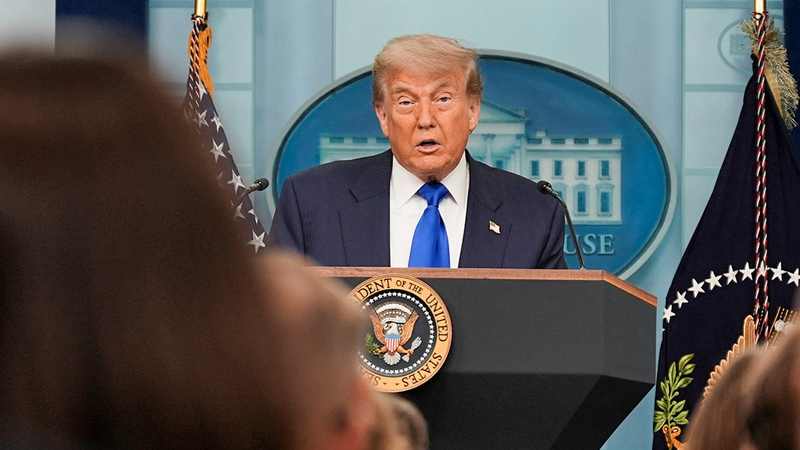
On Tuesday, October 6, President Trump said that no one knew who is running Iran during the war, according to reporting from Reuters journalists Gram Slattery and Kanishka Singh. Days earlier, Iranian Foreign Ministry spokesperson Esmaeil Baghaei had answered exactly that question — saying on Sunday that the United States knows who Trump's counterpart is and how Iran's decision-making process works. Two statements, one contradiction, and a window into why this war keeps refusing to end.
What Trump said
Trump's Tuesday remark was more than a taunt about political disarray. It framed the question of wartime leadership as an operational problem: if Washington wants to negotiate, whom can it trust to speak for Iran, make a commitment and enforce it across the state?
That concern can be read in two ways. The first is literal. Wars disrupt command structures, elevate competing institutions and make outsiders uncertain about which official can deliver the armed forces, nuclear establishment and political leadership at once. The second is strategic. By saying no one knows who is in charge, an administration can argue that diplomacy has no reliable endpoint and military pressure must continue.
Those readings are not mutually exclusive. A government can face real uncertainty and still use that uncertainty as leverage. What matters is whether Washington is testing potential channels or dismissing them before they can work.
Tehran's answer
Baghaei's Sunday answer rejected the premise. He said the United States knows who its counterpart is and understands Iran's decision-making process. Tehran's message was that ambiguity lies not in the identity of the other side, but in Washington's willingness to recognize and engage it.
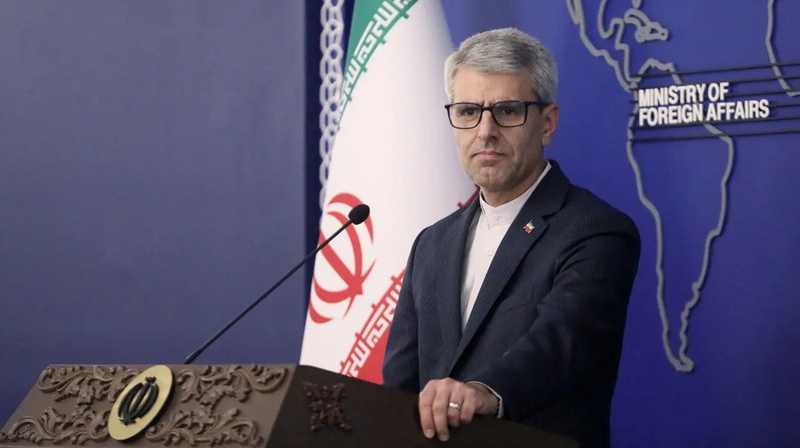
That does not by itself prove that every Iranian institution would accept a deal negotiated through the foreign ministry. It does, however, put a specific claim on the table: established channels exist, the American side has used them before and the machinery of authorization is known to both governments.
The dispute is therefore not simply factual. It is a contest over responsibility. Trump presents uncertainty on the Iranian side; Baghaei presents a known counterpart whom Washington is choosing not to treat as one.
Why this matters
No war ends without a counterpart. Battlefield commanders can arrange pauses, diplomats can draft terms and intermediaries can carry messages, but a settlement survives only when someone has the authority to say yes and the capacity to make that yes binding.
If Trump is describing a genuine fog of leadership, any proposal could fail between the negotiating room and implementation. A ceasefire might not reach units in the field. A nuclear commitment might not bind the institutions controlling enrichment. A shipping agreement might not restrain actors capable of striking tankers.
If the “no one in charge” framing is instead being constructed as a pretext for continued military action, the implications are different. It would mean a political obstacle is being presented as a technical impossibility. In that case, every potential interlocutor can be dismissed as too weak before talks begin, and escalation becomes the default not because negotiation was tried and failed, but because no negotiator was deemed legitimate.
How we got here
The argument arrives in the middle of the ongoing U.S.-Iran war, as both governments publicly describe conditions for an end while disputing whether the other side is negotiating in good faith. The central American demand is measurable: Iran must make a “meaningful” reduction in nuclear enrichment.
Vice President JD Vance set out that position in an October 6 Reuters interview. As our analysis of Vance's enrichment demand explains, Washington wants more than a change in rhetoric. It wants a material cut in capability. Tehran, meanwhile, insists the United States knows who it deals with and therefore knows where to take a serious proposal.
The public split inside the American case is also important. Trump and Vance have not always emphasized the same explanation for the war's direction. One message stresses Iranian responsibility and pressure; the other identifies a concrete nuclear concession that could change the course of the conflict. That tension leaves Tehran asking whether the price of peace is a number, a political capitulation or both.
Who benefits, who loses
Stalled talks benefit hardliners on both sides. In Washington, officials who doubt Iranian commitments gain evidence that diplomacy is unreliable. In Tehran, factions skeptical of engagement can say the United States will reject an Iranian counterpart even when one is identified. Each side's distrust becomes the other's proof.
The losers are less abstract. Civilians absorb the immediate cost of prolonged strikes, shortages and economic pressure. Commercial shipping absorbs the risk around the Strait of Hormuz. The United Against Nuclear Iran organization counts at least 12 tankers struck between September 29 and October 5, according to an OSINT conflict log. That tally is attributed reporting rather than an independently verified Signal Post News count, but it captures the scale of danger facing crews, cargo owners and insurers.
Negotiators also lose. Back channels depend on discretion, but they still require a shared belief that messages reach someone empowered to answer. Publicly denying that such a person exists narrows the space for those channels and makes any contact look politically suspect.
What the numbers say
The most concrete number in this debate is 60%. Vance questioned why Iran needs uranium enriched to 60% if it does not seek a nuclear weapon, according to Reuters reporting summarized in the Just Security Early Edition for October 7.
That figure matters because it turns an argument about intentions into a dispute about capability. Sixty-percent enrichment is below weapons grade, but far above levels generally associated with civilian power generation. Washington sees a meaningful cut as a test that can be measured and verified. Tehran has historically framed enrichment as a sovereign right and evidence of scientific independence.
A percentage does not solve the leadership question, but it can discipline the negotiation. If both sides can define the acceptable level, verification and sequence, they have a documentable path. If they cannot agree on who has authority to sign, even the clearest number remains politically unusable.
What happens next
1. Back-channel talks produce a deal
In the most constructive scenario, both governments continue speaking through a counterpart they publicly minimize but privately recognize. A limited agreement could pair a verified enrichment cut with reciprocal military restraint and a protected shipping channel. Its strength would be precision; its vulnerability would be hardline resistance and the difficulty of sequencing concessions during active war.
2. The “no one in charge” framing justifies escalation
Washington could conclude, or declare, that no Iranian official can reliably deliver. Military action would then be presented as the only instrument capable of shaping events. Tehran would almost certainly treat that logic as proof that American demands were never designed to produce a negotiated end.
3. The stalemate grinds on
The most familiar outcome is also the bleakest: indirect contacts continue, neither side accepts the other's terms, attacks persist around strategic infrastructure and shipping, and every failed exchange makes the next one harder. A war can remain politically unresolved long after both sides have described the conditions for peace.
The argument over who is running Iran is therefore not a side dispute. It is the war's most revealing battle. If Washington truly cannot identify a counterpart, diplomacy lacks an address. If it can identify one but refuses to acknowledge that fact, the barrier is not confusion but choice. The difference will determine whether the next phase is a negotiated narrowing of the war or another justification for widening it.