Trump Iran fake Hormuz attacks is the charge President Donald Trump laid against Tehran on Thursday: that Iran is inventing hits on ships, phantom mine strikes and staged incidents in and around the Strait of Hormuz to drive up the price of oil twelve days before the US midterm elections — a claim posted hours after Iran's Revolutionary Guard Navy said it had set four vessels ablaze and disabled three more, and one that the independently documented maritime record supports only in part.
Tehran Says Seven Ships Burned in One Night. Trump Says It Never Happened — and the Maritime Record Complicates Both Stories
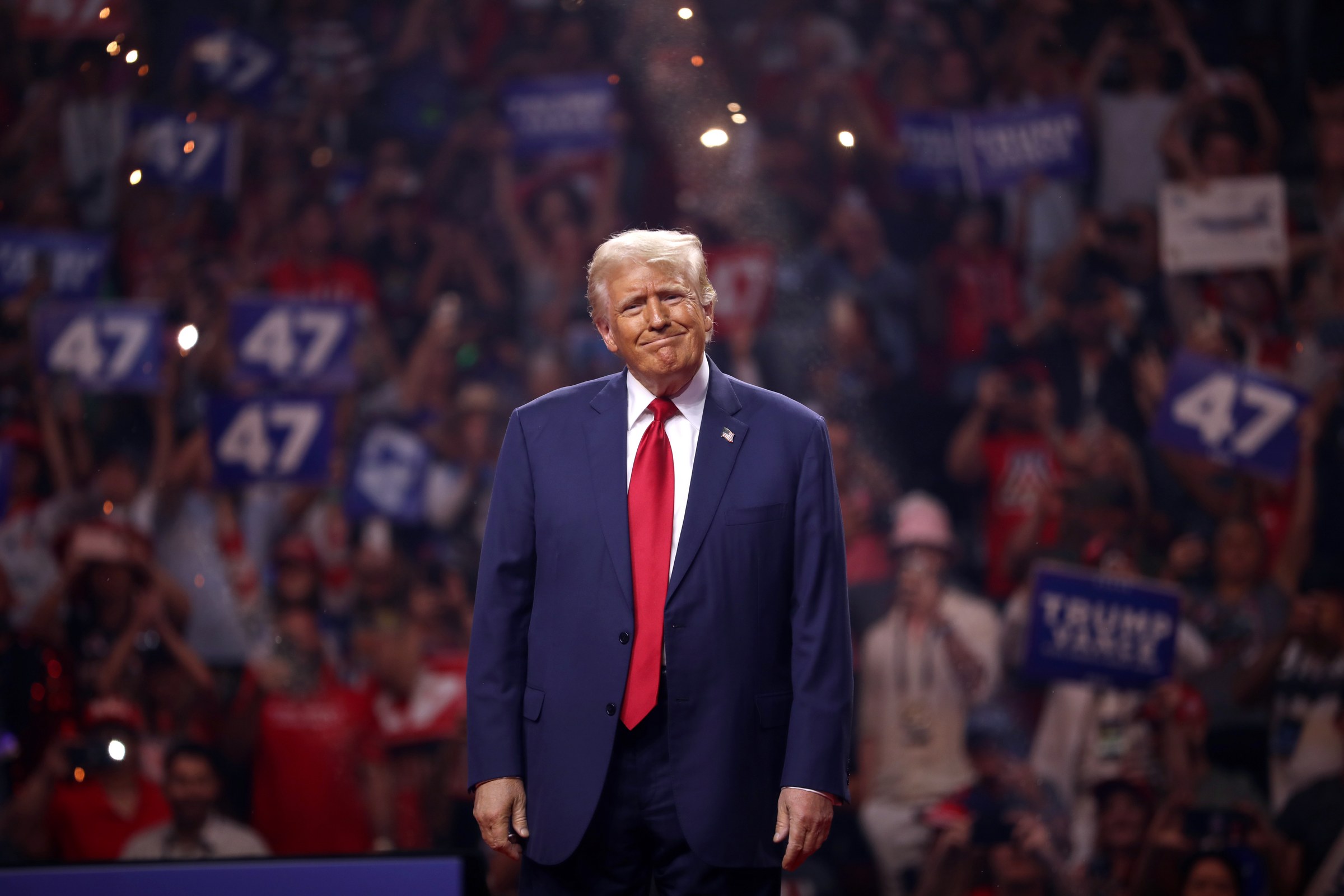
WASHINGTON — President Donald Trump on Thursday accused Iran of fabricating attacks on commercial shipping in and around the Strait of Hormuz — "fake hits, mines, and everything else" — in a deliberate effort to drive up the price of oil before the US midterm elections on November 3, and insisted that more oil is moving through the waterway now than before the US-Iran war began. The charge, posted on Truth Social and reposted by the White House's @WhiteHouse account on X, was a direct rebuttal of an Iranian claim made the same day: that seven vessels had been hit in the northern Persian Gulf and near the strait overnight. Neither government has produced verifiable evidence for its version of the night. Iran named none of the seven ships, and no independent source has confirmed any of the seven incidents. Trump, for his part, cited no tanker data behind his claim about oil flows, and no source for a figure of 75,000 dead protesters that he repeated in the same post — a figure that has not been independently verified.
The post itself is worth reading in full, because its argument is the story. "Iran is doing everything they can to drive up the price of Oil prior to the U.S. Midterm Election," Trump wrote. "They are even making up fake hits, mines, and everything else, because more Oil is coming through the Hormuz Strait now than it did even prior to the beginning of the Conflict." He went on to accuse Tehran of continuing to kill protesters — "75,000 protestors lie dead in less than seven months," he wrote — and closed with the line that has anchored his Iran policy all year: "IRAN CAN NEVER HAVE A NUCLEAR WEAPON." The protest figure deserves its own caution, and gets one in the coverage of the post: Newsmax, reporting the post on Thursday, noted that Trump provided no source for the death toll, and that he had cited the same 75,000 figure at a Kansas rally on Monday while describing a different period — eight months rather than seven. No independent body has verified a toll anywhere near that number, and this article treats it as an unverified presidential claim, not a count.
Track it live: Iran war tracker · Live oil price tracker · Live global wars tracker
The claim the post was answering: seven vessels in one night
Trump's post did not arrive in a vacuum; it answered a specific and maximal Iranian claim. On Thursday, Iran's Islamic Revolutionary Guard Corps (IRGC) Navy said it had simultaneously struck four vessels conducting ship-to-ship oil transfers in the northern Persian Gulf — all four set ablaze, on routes Iran says it had declared prohibited — and that three more vessels had hit naval mines west of the Strait of Hormuz, caught fire and stopped. The IRGC accused the US military of encouraging ships to cross mined routes, and warned that continued American involvement could bring attacks on US bases across the region. We reported that claim in full, with its verification status stated plainly, in our coverage of how Iran says seven vessels were hit in the Persian Gulf and near Hormuz: as of publication, Tehran had named none of the seven vessels, published no photographs, and no shipping company, flag state, insurer or maritime reporting centre had confirmed any of the incidents.
That is the narrow ground on which Trump's rebuttal stands firmest. If the question is whether the specific seven incidents the IRGC described on Thursday have been shown to have happened, the answer is that they have not — not by UKMTO, not by any owner or flag state, not by satellite imagery released to the public. Iran's claim follows a pattern this site has documented all autumn, most recently the Guards' October 17 claim that two laden tankers struck mines in the strait, which likewise named no ship and remains unconfirmed. A president saying "this did not happen" about an unverified adversary claim is making a statement his own side also cannot yet prove — absence of confirmation is not confirmation of absence — but he is pointing at a real gap in Tehran's evidence, and Tehran put the gap there itself by naming nothing.
Where the 'fake' claim overreaches: a record month of real attacks
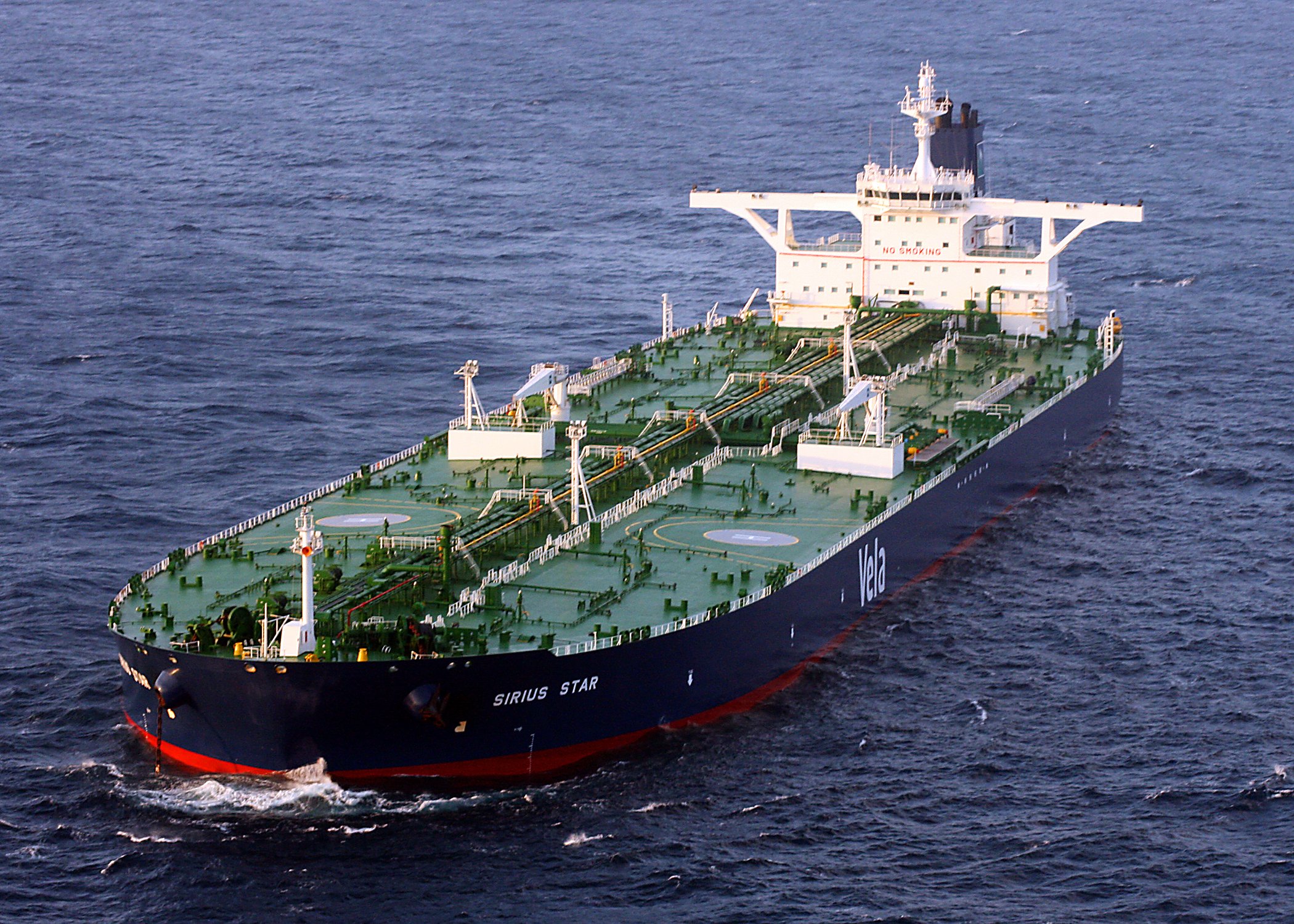
As a general statement about Hormuz this month, however, "fake" does not survive contact with the record. The UK Maritime Trade Operations (UKMTO) agency — the Royal Navy-run centre that logs incidents reported by merchant shipping in the region — has recorded more than two dozen attacks on ships in October, a record for the month, and says a majority of attacked vessels are not reporting incidents at all, which means the documented count is a floor, not a ceiling. Our running coverage of the Hormuz tanker attack wave logged by UKMTO has tracked that ledger incident by incident: projectiles, drones, mines and boardings, many of them attributed by the reporting ships themselves, in a waterway that has become the most dangerous on earth for commercial crews. Whatever did or did not happen on Wednesday night, ships in and around Hormuz have been hit, repeatedly and verifiably, all month.
The honest summary therefore cuts against both capitals' headlines. Against Tehran: the seven-vessel claim is unconfirmed in every particular that could be checked, and the side making it has a record of maximal claims that produced no named ship. Against Washington: a blanket dismissal of Hormuz attacks as inventions is contradicted by the one neutral ledger that exists, kept by an allied navy, which shows the most attack-dense month of the war. And against both: the dispute is no longer really about Wednesday night. It is about who gets believed about the strait as a whole — because belief, in this market and in this election season, is what moves prices and votes.
Oil at $113: a market pricing fear, not missing barrels
The numbers describe a market that has learned to separate physical supply from perceived risk, and to charge heavily for the second. Brent crude rose about 3 to 4 percent on Thursday to around $112 to $113.17 a barrel — its highest level since May, within sight of the wartime peak of $118 a barrel set in March, and up about 46 percent since the US-Iran war began on February 28. US West Texas Intermediate rose about 2.4 percent to about $99.47. Yet the physical picture, as Reuters' Open Interest column laid out the same day in "Don't mistake Mideast oil rebound for normality", is one of adaptation rather than shortage: the volume of crude aboard tankers worldwide was slightly above year-ago levels on a four-week average, and Persian Gulf exports averaged around 24 million barrels a day. The oil is moving — through multi-ship transfers of exactly the kind Iran says it struck, under military protection, at insurance rates that have risen to roughly a tenth of a cargo's value and tanker charter rates near all-time highs. Prices keep rising anyway, on fear of renewed fighting — fear that each new claim, confirmed or not, feeds. Houthi attacks on Saudi infrastructure the same week added a second front of supply anxiety.
That distinction matters for judging Trump's flow claim. On the narrow arithmetic, the recovery he gestures at is real: Gulf exports have rebuilt to levels at or above pre-war averages, as we reported in our analysis of how Gulf oil exports recovered to pre-war levels, and Hormuz transits have climbed back through the autumn. But the post claimed something more specific — that more oil is coming through the strait itself than before the conflict began — and for that, throughput data through Hormuz rather than around it is the test, and the president cited none: no tanker count, no barrels figure, no source. Reporting on the post noted the same omission. The strongest documented version of his argument is "flows have adapted and exports have recovered"; the version he posted, "more than before the war, through the strait," remains, like Tehran's seven ships, a claim awaiting its evidence.
Why this matters
Analysis, kept separate from the reporting above: Thursday's exchange is the information war over the world's most important oil chokepoint reaching its logical form — two governments disputing not a battle's outcome but whether the battle exists, twelve days before an election in which the price of gasoline is a central issue. The Strait of Hormuz carries roughly a fifth of the world's oil consumption. Its price signal does not wait for verification: a claim of seven burning ships moves Brent within the hour, a presidential denial moves it back only if traders believe it, and the spread between those two reactions is, in effect, a market-priced credibility rating for both governments. That is why the argument matters beyond the strait. Every unverified claim and every unsourced counter-claim spends a little of the credibility that either capital will need if a genuinely catastrophic incident — a sunk tanker, a closed strait, dead crews — ever has to be believed quickly.
Who gains, who loses
Tehran gains the fear premium either way: if its claim is believed, Hormuz looks closed and prices rise; if it is doubted, it has still advertised that it can set the agenda for a news cycle at zero verifiable cost — though each maximal claim that produces no named ship taxes the next one's effect. Washington gains if the story becomes "the strait is open and flowing," which export data supports, but loses when its own unverified flourishes — an unsourced flow superlative, an unsourced protest toll with a shifting timeframe — hand critics a reason to discount the parts of its case that are documented. Shippers lose on both branches, paying war-risk premiums set by perceived danger; insurers collect those premiums regardless of which story is true; and American drivers, the audience both governments are really addressing, pay the difference at the pump whichever capital is lying, if either is.
What the critics on each side say
Critics of the president's post make three points, all documented above: that UKMTO's record October contradicts any blanket suggestion that Hormuz attacks are invented; that the flow claim was asserted without the tanker data that would settle it; and that the 75,000 protest figure was offered without a source and with a timeframe that changed between Monday's rally and Thursday's post. Critics of Iran's claim make the mirror-image points: that a force announcing the largest one-night toll of the shipping war named no vessel, released no imagery and produced no casualty or flag-state corroboration; that its warning against US bases reads as escalation packaged as reportage; and that its claim targeted precisely the ship-to-ship transfer trade on which the region's export recovery depends, which gives Tehran an obvious motive to exaggerate. Both critiques can be true at once, and on the evidence available Thursday, both substantially are.
What happens next
The calendar now does the arguing. The midterm elections fall on November 3, and energy costs will be on the ballot in every close district: September's inflation data, showing gasoline up 34 percent year-on-year, is the statistic the opposition is running on and the one the president's post was written to answer. Trump has said the United States will not attack Iran before the midterms, even as he has sent additional warships to the region and threatened future strikes on Iranian nuclear facilities; reporting indicates that American and Israeli planning for possible renewed action after the elections continues, as we covered in our report on the US-Israel strike plans taking shape for after the midterms, and Israel's prime minister said on Thursday that Israel could resume strikes on Iran. Speaking to reporters on Thursday before a campaign rally in Iowa, Trump conceded the politics while holding the policy: "There's a price to pay, which I knew immediately when I did it. But we can't let Iran have a nuclear weapon," he said, adding that the United States "may do it a little bit further."
At sea, the verification gap is the story to watch. Seven damaged vessels — if they exist — will be hard to keep invisible: UKMTO advisories, insurer notifications, flag-state inquiries, AIS tracking gaps and satellite passes have identified this war's real victims one by one, and continued silence from all of them will steadily convert "unconfirmed" into something closer to "did not happen as described." Equally, a single named, photographed ship would vindicate Tehran and badly damage the White House's broader dismissal. Until one of those things occurs, the accurate state of the record is the uncomfortable one this article has tried to hold: attacks in Hormuz are real and at a record pace; the seven claimed on Thursday are not confirmed; more oil is moving out of the Gulf than the market feared, though not demonstrably more through the strait than before the war; and the price of a barrel — $113 and rising — is being set by the distance between those sentences.
Sources: President Donald Trump's Truth Social post of October 22, 2026, as reposted by the White House @WhiteHouse account on X; Newsmax, "Trump: Iran Faking Attacks to Drive Up Oil Before Nov. 3" (Oct 22, 2026) — including its note that Trump provided no source for the 75,000 protest toll and had cited the figure at a Kansas rally with a different timeframe; Rudaw, "Trump accuses Iran of fabricating ship attacks to drive up oil prices" (Oct 22, 2026); CoinDesk live coverage of the post (Oct 22, 2026); Reuters Open Interest, "Don't mistake Mideast oil rebound for normality" (Oct 22, 2026) — tanker volumes, Gulf export averages and the cost of the adapted supply system; Reuters (Oct 22, 2026) — the IRGC Navy's seven-vessel claim and warning to the US; UKMTO October attack records as reported October 22, 2026. The IRGC's seven-vessel claim and the president's protest-toll and strait-throughput figures have not been independently verified.