Iran seven tankers hit Hormuz is the claim Tehran put to the world on Thursday: Iran's Islamic Revolutionary Guard Corps (IRGC) Navy said seven vessels were hit in a single night — four that caught fire in the northern Persian Gulf and three that struck mines west of the Strait of Hormuz — a claim reported by Reuters with the explicit caution that it has not been independently confirmed.
Seven Ships in One Night — Tehran's Biggest Claim of the Shipping War, and Still Nothing Confirmed
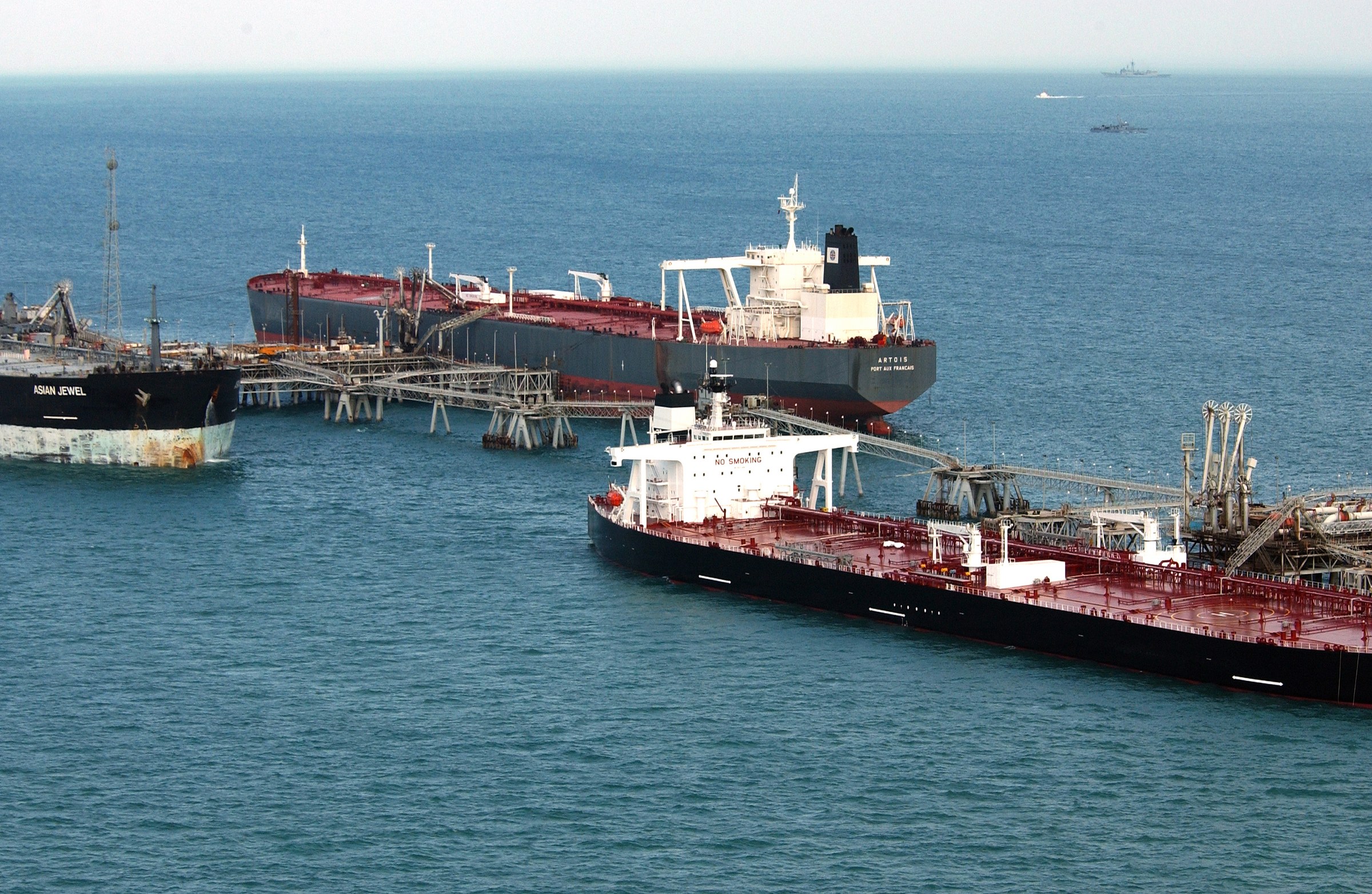
PERSIAN GULF — Iran seven tankers hit Hormuz is a claim, not a confirmed fact, and it is reported here as one. Iran's IRGC Navy said on Thursday that four vessels involved in illegal oil transfers in the northern Persian Gulf were hit simultaneously and caught fire after being tracked by its forces on Wednesday, and that three more vessels collided with mines west of the Strait of Hormuz, Reuters reported from Dubai. The Guards accompanied the claim with a direct warning to Washington: continued provocations, it said, could lead to a wider response against US military bases across the region. Nothing in that account had been independently verified by Thursday — no vessel name, flag or casualty figure has been published by anyone, and the British military's maritime reporting centre, UKMTO, had not reported any of the seven incidents.
The scale of what is being claimed is what makes the absence of confirmation so consequential. Iranian state television, in reporting carried by the UNB news agency and The Business Standard, said seven oil tankers were damaged or caught fire overnight — four set ablaze after being targeted while transferring oil, and three damaged and immobilised after striking naval mines. If confirmed, that would be the highest number of vessels damaged in the waterway in a single day since the Iran war began on February 28. It would also mark a step-change from claim to campaign: not one disputed mine strike, but a coordinated night of attacks at both ends of the Gulf's oil artery, paired with an explicit threat against American bases. Whether any of it happened as described is, at the time of publication, unknown — and this article will keep those two sentences separate throughout.
Track it live: Live global wars tracker · Iran war tracker · Live oil price tracker
What Tehran says happened
The IRGC Navy's account, as reported by Reuters, divides the night into two operations. In the first, four vessels that the Guards describe as conducting illegal oil transfers in the northern Persian Gulf — ship-to-ship movements of crude outside authorised channels, the trade Tehran calls smuggling and sanctions evasion — were tracked by IRGC forces on Wednesday and then, in the Guards' telling, hit simultaneously and set on fire. In the second, three further vessels collided with mines in the waters west of the Strait of Hormuz. State television's version, via UNB, adds that the three mine-struck vessels were damaged and immobilised. Neither account names a single ship. Neither gives a flag, an owner, a port of destination or a casualty figure — and the state television report carried no details on casualties at all.
The warning attached to the claim was as carefully worded as the claim itself. The IRGC told the US military that continued provocations could lead to a wider response against its regional bases, Reuters reported. In the state television account, the trigger was specified more precisely: any American attempt to facilitate tanker movements through what the Guards called 'illegal passages' could prompt a broader response, including attacks on US bases. Read together, the two versions amount to a doctrine stated in public — that the convoy system by which the US Navy has been shepherding tankers through the strait is itself, in Tehran's framing, the provocation, and that the price of continuing it may be collected not at sea but against American installations ashore.
What is known — and what is not known
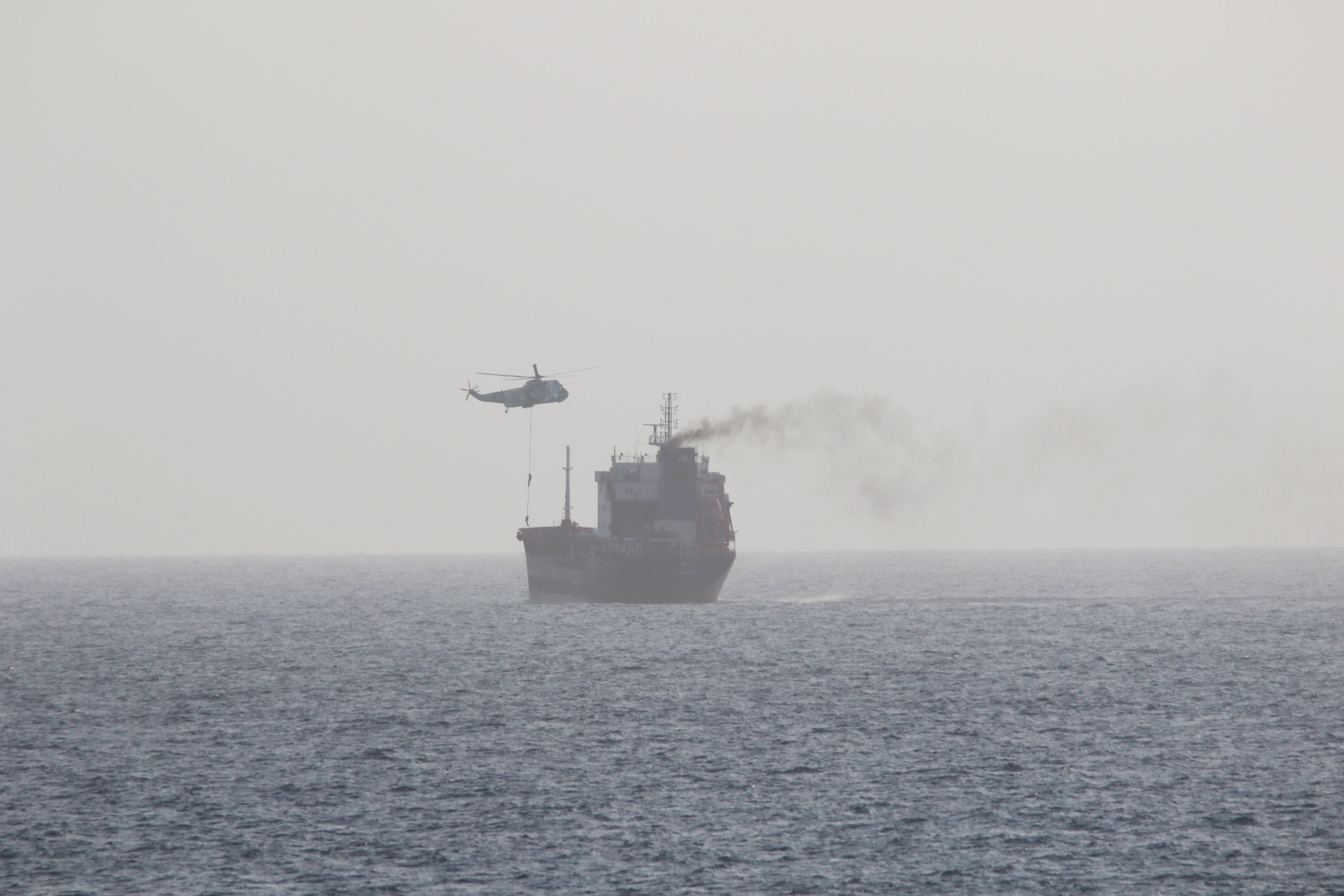
It helps to separate the record into its two unequal halves. What is known: the IRGC Navy made the seven-vessel claim on Thursday, through channels that Reuters, Iranian state television and the AP/PA wire all carried; the claim covers four vessels said to have caught fire in the northern Persian Gulf and three said to have struck mines west of Hormuz; Tehran paired it with a warning of a wider response against US regional bases; oil markets moved sharply on Thursday (below); and Iran's foreign minister, Abbas Araghchi, said on Wednesday that Tehran remains open to diplomacy while ready to defend itself. What is not known: whether any vessel was hit at all. UKMTO — the Royal Navy-run centre that has documented this autumn's Hormuz attacks, including twelve in or around the strait last week alone — did not report these attacks. No shipping company, flag state, port authority or insurer had confirmed a fire, a mine strike or a casualty. The AP/PA report of the claim stated plainly that it could not be independently verified.
Two cautions cut in opposite directions, and both belong on the record. Against the claim: seven vessels burning or disabled in the world's most watched waterway would ordinarily leave traces — distress calls, satellite fire detections, AIS tracking gaps, oil-slick reports, a flag state asking questions — and none had surfaced in the reporting available on Thursday. For the claim, or at least against dismissing it: maritime monitors themselves have noted in recent days that some shipowners are reluctant to report incidents at all, fearing retaliation, insurance consequences or being named in a belligerent's statement — which means the absence of a UKMTO advisory is evidence, but not proof. Our earlier coverage of the Guards' claim that two tankers hit mines in the strait on October 17 applied the same standard, and that claim, too, remained unconfirmed by any independent source. The accurate sentence on Thursday is the narrow one: Iran says seven vessels were hit. Nobody else has yet said so.
A claim that follows a pattern
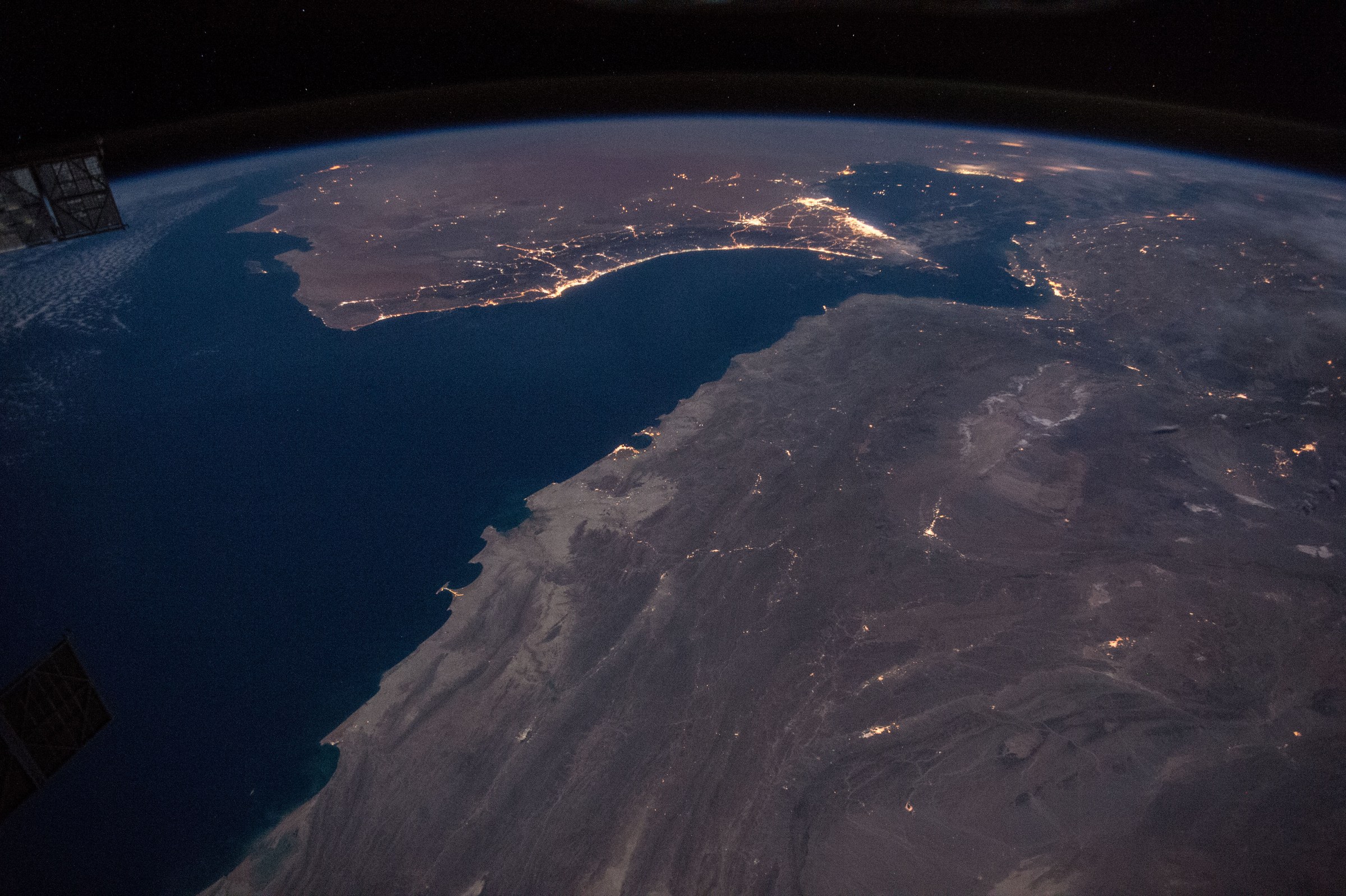
Thursday's statement did not arrive in a vacuum; it arrived at the end of the most incident-dense month of a shipping war that has run alongside the wider Iran war since February 28. The Strait of Hormuz normally carries about a fifth of the world's oil consumption through a channel a few miles wide, and since the summer it has also carried a running argument about who controls it — Tehran, which claims the right to license transit and calls the routes tankers actually use unauthorised, or the United States, which says its navy and partners keep the strait open. The October 17 mine claim, in which the IRGC said two laden supertankers struck mines and burned, was the direct precedent for the three mine collisions claimed on Wednesday — the same weapon, the same framing, the same absence of a named ship. Alongside the claims sits a documented ledger: UKMTO reported twelve attacks in or around Hormuz last week, a record high, and analysts believe the true number is higher because many owners do not report. Among the incidents UKMTO did document was a tanker struck by a projectile off Bukha, Oman, at the strait's entrance, which we covered in our report on the tanker struck off Oman near Bukha.
The economic backdrop makes the claim harder, not easier, for Tehran's adversaries to wave away. Middle East crude exports averaged 17.3 million barrels per day in October, according to Kpler data cited by Reuters — up from 16.4 million in September and above the 16.9 million pre-war average — while flows through Hormuz itself reached 11.7 million barrels per day, about 82 percent of pre-war levels, as we reported in our analysis of how Gulf oil exports recovered to pre-war levels. That recovery rests on two legs: US-navy-protected convoys sailing close to the Omani coast, and the roughly one-third of crossings that still use the Iran-controlled northern route. The seven-vessel claim strikes at both legs at once — the four 'illegal transfer' vessels in the northern Gulf, the three mine victims west of the strait, and a warning aimed squarely at the convoy system. A claim does not have to be true to do that work; it only has to be believed by the people who price risk.
The market reaction: risk priced, proof or no proof
Whatever did or did not burn on Wednesday night, the price of oil treated Thursday as a dangerous day. Brent crude rose to its highest level since May, climbing $3.06, or 2.81 percent, to $111.88 a barrel by 1104 GMT after touching $112.55 earlier in the session — its highest since May 18 — while US West Texas Intermediate gained $2.04, or 2.1 percent, to $99.19 after reaching $100.07, Reuters reported from London. Precision about causes matters here, because the brief is often mis-stated: Reuters attributed Thursday's rise to a combination of factors, of which the Hormuz ship attacks were one and Houthi attacks in Saudi Arabia — a separate story, in a separate theatre, which this site has covered on its own terms — were another. The IRGC claim alone did not produce the $112 print; it landed on a market already tightened by falling US inventories, with crude stocks down 3.06 million barrels to 412.5 million last week, according to the Energy Information Administration, against an expected draw of just 820,000 barrels.
The analyst framing quoted by Reuters captured the market's mood exactly. Reports of Middle East exports exceeding pre-war levels, PVM analyst Tamas Varga said, are more than countered by the attacks on ships in Hormuz and the Houthi strikes on Saudi Arabia and its oil infrastructure — and no de-escalation should be anticipated until after the US midterm elections. That is the data in context: export volumes say the oil is flowing, incident counts say the waterway is at its most violent of the war, and the price — Brent at $112 against the far lower levels of the pre-war winter — is the sum of those two facts, not a verdict on whether Wednesday night happened as Tehran describes.
Why this matters
Analysis, kept separate from the reporting above: the seven-vessel claim is best understood as three moves in one statement. The first is economic. A single night in which seven vessels are said to be hit raises the perceived risk of every transit that follows, whether or not a single hull was touched — war-risk insurance premiums, charter rates and routing decisions are set by exactly this kind of claim, and they are set within hours. The second move is legal-political. By describing the four Gulf vessels as illegal oil transfers and the convoy routes as illegal passages, Tehran is asserting a licensing regime over the strait and daring Washington to keep defying it in public; every week the convoys sail, the US position is demonstrated, and every incident Tehran announces, the Iranian position is advertised. The third move is the escalation of the threat itself — from ships to bases. Previous IRGC statements in this campaign threatened shipping and the strait's users; Thursday's warning names US regional bases as the address of a 'wider response,' which, if it reflects policy rather than rhetoric, moves the next round of this conflict off the water and onto land, where American personnel, Gulf-state hosts and regional air defences all become part of the calculation.
The gains and losses distribute unevenly, and not always as the claimant intends. Iran gains leverage and a fear premium at zero verifiable cost — but spends credibility each time a maximal claim produces no named, photographed, independently logged ship, as with the still-unconfirmed October 17 mine claim. The United States gains nothing from ambiguity: its case rests on the strait being demonstrably open and safe, a case that export data supports and incident claims corrode. Gulf exporters and the shipowners still lifting crude from the region lose on both branches — if the claim is true, their ships are sailing into mines and missiles; if it is false, they are paying war-risk prices set by fiction. And consumers far from the Gulf pay the difference either way, in a Brent price that has now printed its highest level since May. The one actor insulated from the fog is the insurer: premiums are collected on claims of danger, not on proof of it.
The other side: convoys, silence and a door left open
Washington's position, stated before Thursday's claim and not withdrawn after it, is that passage through the strait is being kept open by the US Navy and its partners — the convoy system that has lifted Hormuz flows back to roughly 82 percent of pre-war levels — and that Iranian claims of control are propaganda. The American argument has the stronger documentary record behind it: named ships are moving, in counted volumes, under escort, and Kpler's export figures are compiled from tracking data rather than communiqués. But the US position carries a vulnerability that Thursday's statement was designed to probe: an escort can defeat a missile boat or a drone, yet it cannot publicly disprove a mine, and it cannot escort a ship past a headline. Tehran's counter-framing — that the convoys themselves are the illegal act, and that facilitating them invites retaliation ashore — is aimed at the Gulf states hosting those bases as much as at Washington, since they would absorb the first consequences of any wider response.
Between the two governments sits the industry that has to sail through both narratives, and its behaviour on Thursday was its own kind of evidence: no owner announced a suspension, no flag state issued a warning of its own, and no casualty or damage report emerged from the companies whose ships would have had to be the victims. Monitors' observation that some shippers are now reluctant to report incidents complicates that silence without erasing it. And above the confrontation, one line from Tehran pointed the other way: Foreign Minister Abbas Araghchi said on Wednesday that Iran remains open to diplomacy even as it stands ready to defend itself — the formula Iranian officials have used before periods of negotiation as well as before periods of escalation, and therefore a signal that resolves nothing until it is tested.
What happens next
Four tracks will decide what Wednesday night becomes. First, verification: seven damaged vessels is a very large fact to hide — UKMTO advisories, flag-state inquiries, insurer notifications, satellite passes and the shipping press's relentless identification of hulls will either produce names, positions and photographs, or the continued absence of all four will itself become the finding. Second, the American answer: Washington disputed Tehran's account of earlier incidents with its own attribution when it chose to, and whether it confirms, denies or ignores the seven-vessel claim will signal how it wants the strait's control narrative to stand — as will any change to convoy patterns or base force-protection postures in the region. Third, the calendar: with the PVM assessment that no de-escalation is expected before the US midterms now the market consensus, both capitals are pricing a confrontation that runs at least into November, and claims like Thursday's are the currency it trades in. Fourth, diplomacy: Araghchi's open-door line offers the only off-ramp either side has mentioned this week, and whether it is followed by contacts — direct or mediated — will matter more than any single night's communiqué.
Until one of those tracks produces evidence, the honest headline remains the one on this article. Iran says seven vessels were hit in the Persian Gulf and near Hormuz, and it has warned the United States of a wider response. The ships, if they exist, have not been named; the fires, if they burned, have not been photographed; and the mines, if they were struck, have not been confirmed by the navy-run centre that has logged this war's other attacks one by one. Readers should hold the claim at exactly that weight — no lighter, because the threat attached to it is real and on the record, and no heavier, because nothing else about it yet is.
Sources: Reuters, Dubai (Oct 22, Tala Ramadan) — IRGC Navy seven-vessel claim and warning to the US; The Business Standard / UNB (Oct 22, reporting Iranian state television) — seven tankers damaged or on fire, no casualties or vessel names given; Associated Press / PA Media wire reporting (Oct 22, via UK national press) — same claim, no casualties mentioned, UKMTO had not reported the attacks, Araghchi diplomacy remarks; Reuters, London (Oct 22) — Brent and WTI prices, PVM's Tamas Varga, EIA stock data, and Kpler export figures. The IRGC's claims could not be independently verified.