Trump Iran strike plans are being drawn up in Washington and Tel Aviv for a possible attack on Iran in early November, once the U.S. midterm elections are over — and President Donald Trump, campaigning in South Carolina, is telling voters that "one way or another, something will happen fairly soon."
The Plans Are Drawn for Early November — the Decision to Use Them Has Not Been Made

WASHINGTON — Trump Iran strike plans moved from briefing rooms to the front page on Thursday. The U.S. and Israel are preparing plans for a possible attack on Iran in early November, after the U.S. midterm elections on November 3, according to a person briefed on the war planning who spoke to NPR. The United States is amassing forces in the region to be ready, the person said — while cautioning that the preparations could also be part of a campaign to pressure Tehran into a diplomatic deal. The New York Times, in reporting carried by Haaretz, added operational detail: the two militaries have stepped up exercises, including flights over Iraq to rehearse strike manoeuvres, and the plans envisage a short, intensive campaign against Iranian energy infrastructure, nuclear facilities and missile and drone arsenals.
The public statements from the three capitals on Thursday pointed in three different directions, and all three are on the record. In Washington, a White House official declined to discuss the planning, saying the administration does not comment on military plans "that may or may not exist." In Tehran, Foreign Minister Abbas Araghchi told Iranian state media that Iran is "just as prepared for diplomacy as we are for war," adding: "Any scenario is conceivable including the possibility of an attack by the U.S. and Israel." And at a rally in South Carolina, the president at the center of the decision said the quiet part aloud — that he does not believe the United States is negotiating, and that something will happen soon either way.
Track it live: War tracker
What the reporting says
NPR's account rests on a single source — a person briefed on the U.S. and Israel's war planning, speaking on condition of anonymity to discuss the preparations — and its claims are specific enough to be tested against the calendar. Israel, the person said, had initially planned to strike Iran in mid-October, roughly two weeks before Israeli elections on October 27, but President Trump objected. The planning then shifted to early November, after the U.S. midterms, with American forces amassing in the region to be ready to attack by then. The same source offered the alternative reading in the same breath: the buildup could be pressure, designed to force Iran back to a diplomatic settlement rather than to open a second round of the war.
The New York Times reporting, as carried by Haaretz, describes planning at a more advanced stage than contingency paperwork. U.S. officials and others briefed on the deliberations told the Times that the two militaries developed specific plans for renewed strikes after the midterms, that exercises have been stepped up — including flights over Iraq, Iran's western neighbour, to practise strike manoeuvres — and that Defense Secretary Pete Hegseth discussed the plans with Prime Minister Benjamin Netanyahu during a visit to Israel this week. The contemplated campaign was described as short but intensive — in some accounts roughly three days — with likely targets including Iran's energy infrastructure, its nuclear facilities, among them the Pickaxe Mountain site, and its missile and drone arsenal. Some officials told the Times that one more large round of attacks could push Iran's economy over the brink and force Tehran to make diplomatic concessions after nearly eight months of conflict; others noted that strikes on Iran's oil infrastructure might be avoided to limit further rises in fuel prices.
Against all of that stands the record of the man who decides. The Times reporting is explicit that it is far from certain Trump will approve the operation: he has repeatedly vetoed a return to major combat this year, and earlier this month, when both militaries were close to ready to strike, he postponed the attack at the last minute — a pattern one source described as causing day-to-day whiplash among military planners. The White House's only on-record response was its refusal to respond: an official said the administration does not comment on military plans "that may or may not exist," while adding that the president is keeping all options on the table to ensure Iran cannot acquire a nuclear weapon. Netanyahu, for his part, dismissed reports that he was pushing for renewed attacks while being restrained by Trump as "incorrect," and declined to elaborate on his recent discussions with the president. What is established, then, is narrower than the headlines: the plans exist, the forces are moving, the exercises are being flown — and the order has not been given.
Trump's message in South Carolina
If the planning reporting is the war's machinery, the president's rally remarks on Thursday were its soundtrack — and they were not the words of a man describing a negotiation. "I don't think we're negotiating," Trump told the crowd in South Carolina, adding: "One way or another, something will happen fairly soon." He went further: "It'll end very soon. We could leave now, but we want to make sure it lasts for a long time." In the same remarks, he claimed the United States had defeated Iran militarily and financially, repeated that Tehran will "never have a nuclear weapon," and referred to the U.S. blockade on the Strait of Hormuz — the American counter-blockade imposed after Iran closed the waterway at the start of the war.
Rally language is not an operations order, and it should not be read as one. But it does two kinds of work at once, and both are consistent with the reporting. To a domestic audience three weeks before the midterms, it presents the Iran war as a conflict already won and now merely awaiting its formal conclusion — "we could leave now." To an audience in Tehran, the same sentences read as a deadline: the president is not negotiating, the end will come soon, and the only open question is whether it arrives by signature or by strike. That dual address is precisely what makes the plans-as-pressure reading plausible — a threat does not coerce unless the other side believes it might be carried out — and it is also what makes the plans-as-preparation reading impossible to dismiss. Trump has made the threat in public, in his own words, with a timeframe attached: fairly soon.
How Iran is responding
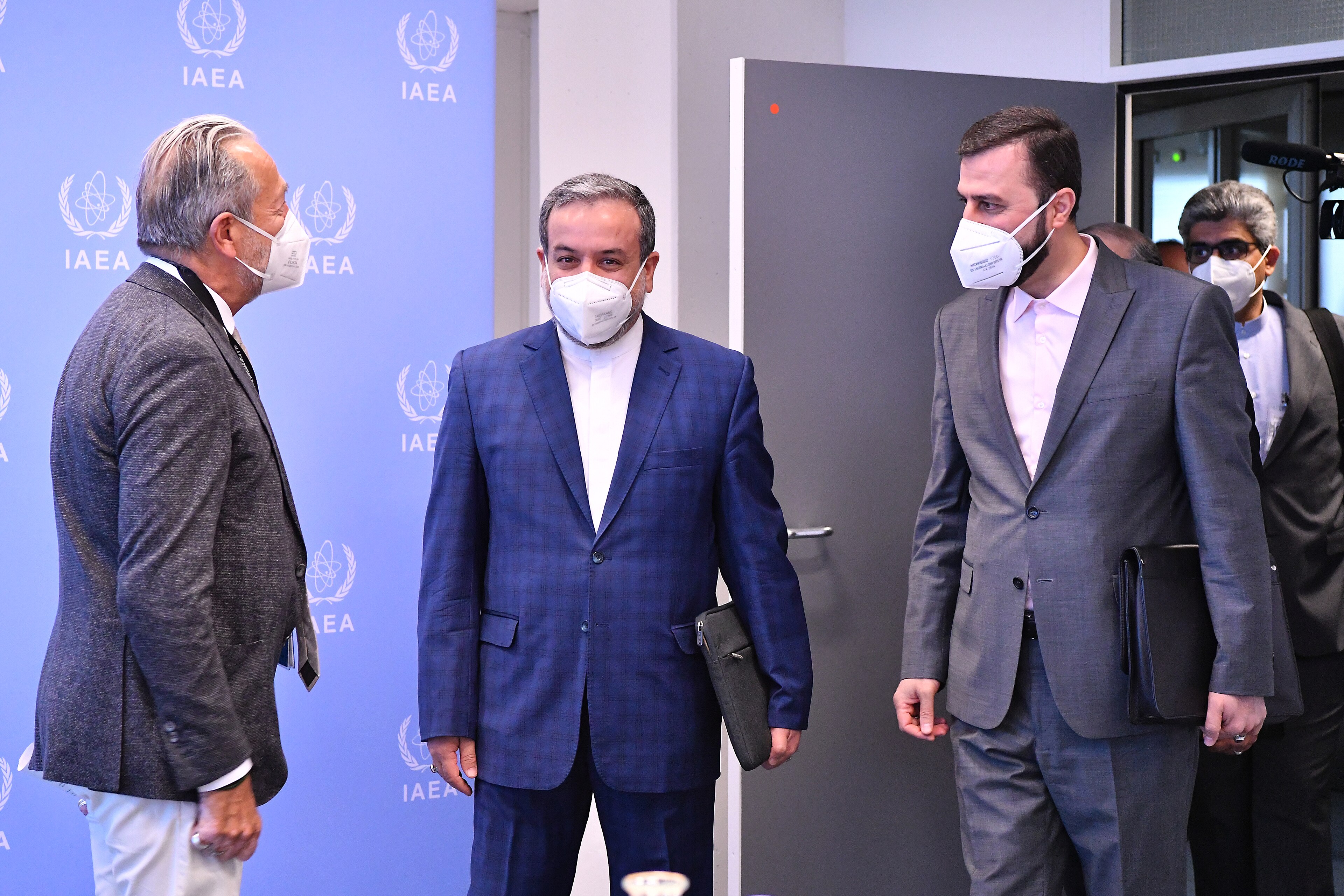
Tehran's public answer on Thursday was a sentence constructed to be quoted both ways. Foreign Minister Abbas Araghchi told Iranian state media that Iran is prepared for diplomacy and prepared for war in equal measure: "We are just as prepared for diplomacy as we are for war." He did not wave away the reporting: "Any scenario is conceivable including the possibility of an attack by the U.S. and Israel." The formulation does what Iranian officials have done at each escalation point of this war — it keeps a negotiating door visibly open while pricing the alternative as high as possible, and it avoids any concession offered under visible duress, which Tehran has treated throughout as the one outcome worse than continued conflict.
The harder edge of Tehran's message ran alongside the foreign minister's. Iranian state media also quoted a security source saying that if Iranian officials or civilian infrastructure were attacked, Iran would retaliate by targeting U.S. interests in the region, as well as the infrastructure and assets of countries participating in the war. Read with Araghchi's remarks, the two statements divide the labour of deterrence between them: the foreign minister addresses Washington's stated hope — that pressure produces a deal — by affirming that diplomacy remains possible, while the security source addresses Washington's stated threat by attaching named costs to it, aimed not only at American bases but at the Gulf states and partners whose facilities and economies sit within range. Neither statement concedes anything about the issue at the center of the dispute, Iran's nuclear programme, and neither announces any change in Iran's control of the Strait of Hormuz, the waterway it has blocked since the war's first days.
Why the timing matters
Every date in this story is doing analytical work, because the planning is explicitly scheduled around two elections. The first is November 3, when U.S. voters decide control of Congress. A major new bombing campaign in the days before that vote would hand the war's costs — fuel prices, casualties, retaliation risk — to voters at the moment of decision; the same campaign launched after it faces a president with two years before the next national test. The reporting's central timing claim, that the plans are built for early November and the buildup will be complete by then, fits that logic exactly, as does the earlier episode in which Trump postponed a nearly-ready strike this month: whatever his reasons, the effect was to keep major combat out of the election's final stretch.
The second date is October 27, when Israel votes. Netanyahu is seeking re-election campaigning, in NPR's account, on a threat to topple Iran's regime — the most expansive war aim any leader in this conflict has stated publicly. The original mid-October strike window would have put Israeli jets over Iran days before Israelis voted, and it was Trump, not Netanyahu, who objected to that timing. The sequence matters for understanding who is driving the calendar: on the reporting, the pressure for speed has come from Jerusalem and the restraint from Washington, even as Netanyahu publicly rejects that characterisation. After October 27, an Israeli prime minister returned to office on a regime-threat mandate would hold both the motive and the democratic cover he currently lacks; after November 3, an American president who has kept the war out of his midterms would face the decision with the political cost at its lowest point of the year. The two calendars converge on the same window the planners have chosen: early November.
Background: a war paused, not settled
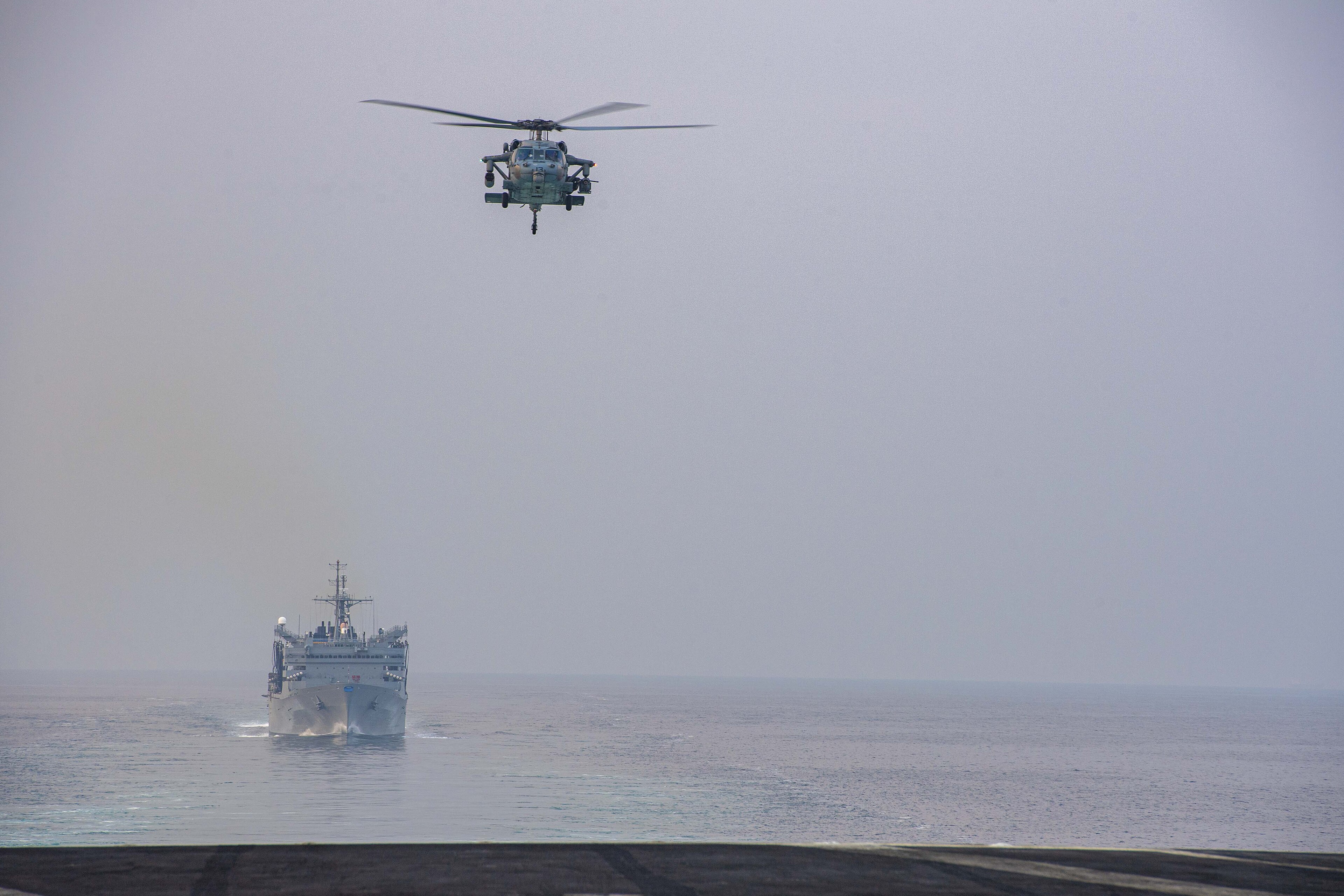
The war these plans would reopen began on February 28, when the United States and Israel launched their attack on Iran, killing its supreme leader and a number of senior officials. In the months since, the two sides have traded strikes over control of the Strait of Hormuz — the channel, a few miles wide at its narrowest, through which about a fifth of the world's oil normally passes. Iran blocked the waterway from the war's start, targeting commercial shipping; the United States answered with a blockade of Iranian ports and oil shipments. A ceasefire framework embodied in a June memorandum of understanding, mediated by Pakistan and Qatar, never consolidated: it has stalled, among other disputes, over navigation through Hormuz — who may transit, on whose authority, and under whose protection.
That is the essential context for Thursday's reporting: this is not a war that ended and might restart, but a war that paused and never resolved the questions it was fought over. Iran's nuclear programme — the stated casus belli — remains in place, its facilities damaged but its knowledge and much of its infrastructure intact. The Hormuz dispute remains exactly where the June memorandum left it. The sanctions and blockade pressure that Washington says is defeating Iran "financially" has not produced the concessions it was meant to produce. A conflict in that condition does not need a new cause to resume; it needs only a decision, which is why the reporting of plans matters more here than the reporting of grievances. The grievances are eight months old. The plans are new.
Who gains, who is exposed
For Washington and Jerusalem, the gains on offer are leverage and, if the plans are executed, degradation. A credible, visibly prepared strike option strengthens the American hand in any resumed negotiation: Tehran is being asked to concede on its nuclear programme and on Hormuz under the shadow of a dated, resourced alternative. If the strikes happen, the stated aims are concrete — set back the nuclear programme again, thin the missile and drone arsenals that constitute Iran's retaliation capacity, and damage the energy infrastructure that funds the state. The officials who told the Times that one more round could push Iran's economy "over the brink" are describing the theory in its strongest form: that the next campaign succeeds where the first one's aftermath did not, because this time the pressure is financial as much as military.
The exposure runs in the opposite direction, and it is distributed well beyond the two planning capitals. American forces at bases across the region are the named targets of Iran's threatened retaliation, and the Gulf states hosting them — whose infrastructure an Iranian security source explicitly put in scope on Thursday — would absorb consequences of a war they did not schedule. Energy markets are the second exposure: a renewed campaign against Iranian energy sites, and any Iranian answer against Gulf facilities or shipping, would land on oil prices that have carried a war premium since February, with fuel costs feeding directly into the U.S. economy the midterms were just fought over. Civilians are the third: energy and dual-use infrastructure in a country of some 90 million people cannot be struck at scale without civilian harm, a cost the first campaign already demonstrated. And the strategic exposure is the quietest: a second campaign that also ends in a paused, unsettled war would spend the credibility of the threat itself, which is the asset the pressure strategy runs on.
Iran's position inverts the same ledger. Its gains are deterrent and presentational: by answering every report of planning with a priced threat — U.S. interests, partner infrastructure, the strait it already controls — Tehran raises the expected cost of the operation its adversaries are advertising, and it does so while keeping the diplomatic door open on terms that cost it nothing to state. Its exposure is material and cumulative: an economy already strained by blockade and sanctions, infrastructure already damaged once this year, and a military whose missile and drone stocks a short, intensive campaign is specifically designed to deplete. The regime's hardest constraint is presentational in the other direction — concessions extracted under an announced strike deadline would be read, in Tehran and abroad, as capitulation, which is why Araghchi's formula pairs the open door with the drawn line in a single sentence.
What happens next
The decision window opens in early November, and the signposts between now and then are identifiable. The first is the Israeli election on October 27: a Netanyahu victory on his stated Iran platform removes the last political obstacle on the Israeli side; a defeat reopens every assumption in the planning. The second is the U.S. midterm result on November 3, after which the domestic cost calculation that has shadowed the war all autumn changes overnight. The third is the force posture itself — whether the amassing forces the NPR source described settle into a sustained presence, which supports the pressure reading, or complete their deployment and hold at readiness, which supports either. The fourth is diplomacy's vital signs: the Pakistani and Qatari mediation channels that produced the June memorandum still exist, and any revival of contact through them — or any direct signal that the memorandum's Hormuz dispute is being renegotiated — would be the strongest available evidence that the buildup is leverage rather than prelude.
Until one of those signposts resolves, the honest summary of Thursday is the one the reporting itself supports. The United States and Israel have plans for renewed strikes on Iran, built for the days after November 3, rehearsed in the skies over Iraq and discussed this week between a U.S. defense secretary and an Israeli prime minister who is campaigning on toppling Iran's regime. The president has not approved them, has stopped them before, and said at a rally that he is not negotiating and that something will happen fairly soon. Iran has said it is ready for the diplomacy and ready for the war. Readers should hold all three of those sentences at once, because the people involved are holding all three at once — and the next move belongs, as it has all year, to the one man who has so far declined to make it.
Sources: NPR (Oct 22, 2026, Daniel Estrin, Hadeel Al-Shalchi and Ruth Sherlock, via WNCW) — U.S. and Israel preparing plans for a possible attack on Iran in early November after the midterms; Israel's earlier mid-October plan and Trump's objection; Netanyahu campaigning on a threat to topple Iran's regime; Araghchi's diplomacy-and-war remarks; The New York Times (Oct 22, 2026), as reported by Haaretz — U.S. and Israeli militaries' specific plans for renewed strikes after the midterms, "short but intensive" campaign, stepped-up exercises and flights over Iraq, Hegseth–Netanyahu discussions, possible energy, nuclear and missile targets, and the White House declining to comment on military plans "that may or may not exist"; reporting of President Trump's South Carolina rally remarks (Oct 22, 2026) — "something will happen fairly soon," "never have a nuclear weapon," and the Strait of Hormuz blockade. The strike plans have not been confirmed by the U.S. or Israeli governments, and no attack has been approved.