Taiz fighting 260,000 displaced — Yemen's government says its forces carried out 835 operations against the Houthis around Taiz in a single day, and the United Nations says nearly 260,000 people have been displaced across Yemen since August, about half of them in Taiz province itself.
War / Middle East — a government counter-offensive around Yemen's third city, a defence-ministry warning that Houthi gatherings will be treated as targets, and a UN count that shows the war's newest displacement wave falling hardest on children
What happened in Taiz
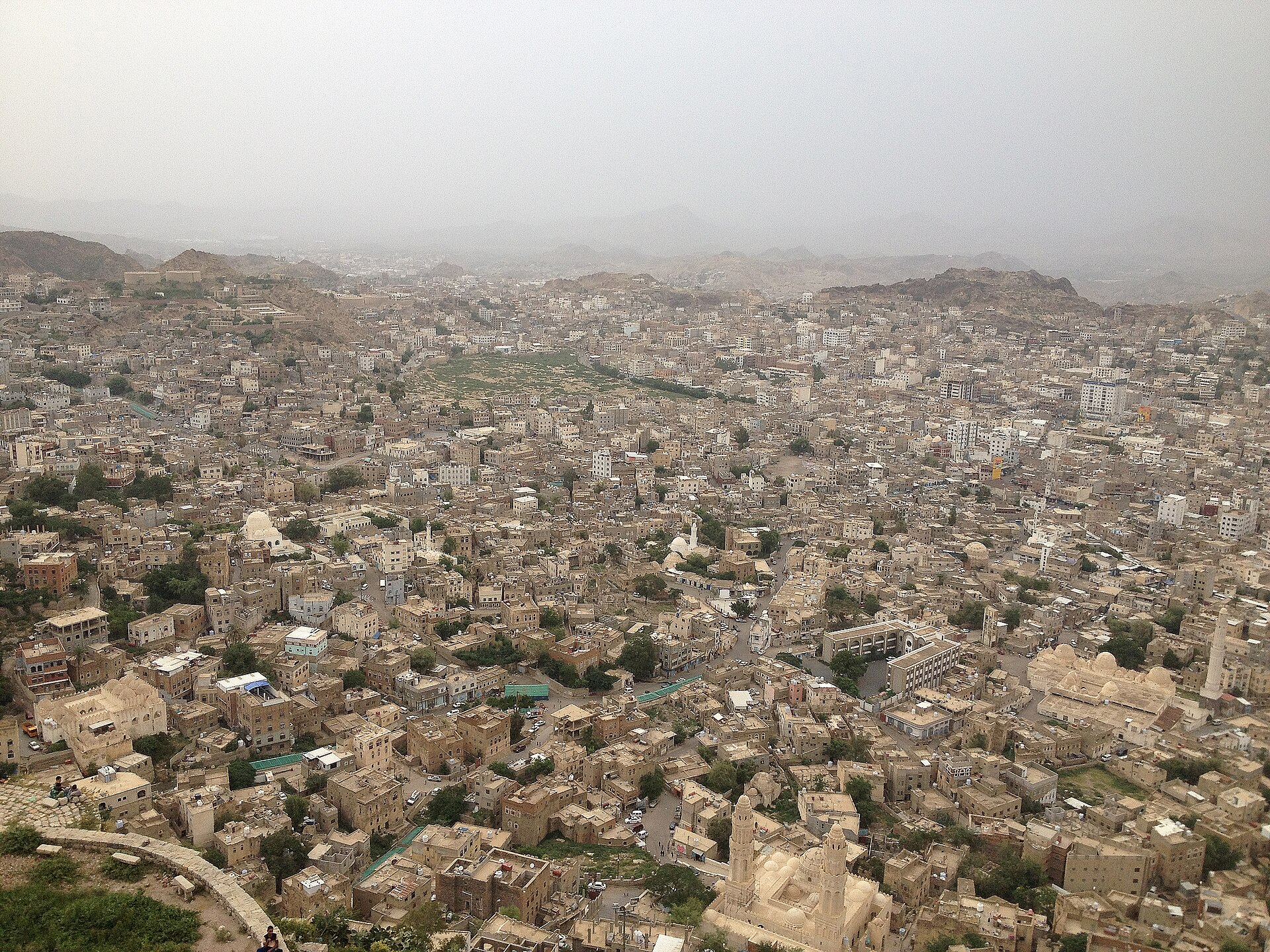
The heaviest fighting was reported in the strategic highlands of Jabal Han in western Taiz, which overlook the routes connecting the province to Aden, the seat of the internationally recognised government, Al Jazeera reported. Heavy fighting was also reported in the Dhubab and al-Masrakh districts — al-Masrakh fell to Houthi forces only last week, in the advance that tightened the siege ring around the city — and a source in the Yemeni government's military told Al Jazeera that government air raids had struck Houthi gatherings and infrastructure in the Maafar directorate, south of Taiz.
On Thursday, the government's Ministry of Defence went a step further, warning civilians in Houthi-held areas to stay away from Houthi rallies and the group's "cultural courses", and saying those gatherings would be viewed as legitimate military targets. The government says the Houthis use such events to recruit children into combat. No Houthi response to the warning was included in the reporting available when this article was published, and the Houthis have not published a casualty account of Wednesday's operations; the government's figure of 285 Houthi fighters killed or injured is a claim by one side and cannot be checked independently.
The road south: a Houthi advance, assessed from the fighters' own footage
The government's offensive is only half of the week's movement around Taiz. The Institute for the Study of War (ISW), assessing geolocated footage posted by Houthi fighters, reported on Thursday that the Houthis had almost certainly captured a major segment of the Taiz–Aden road in the al-Dhabab valley, between al-Masrakh and the city's southwestern limits, and had likely taken the Hangar checkpoint on the same route — which would give them effective control of the road from al-Turbah to the edge of the city. ISW also noted footage of Houthi fighters on the Jabal Han highlands, but said it could not assess whether the group had consolidated control there, as government forces have repeatedly retaken parts of the heights. Anti-Houthi Yemeni media reported the same day that government-aligned Southern Giants Brigades and Homeland Shield Forces had re-established full control of the al-Aradi camp on the southern Red Sea coastal plain. The Dhabab assessment rests on ISW's reading of the fighters' own footage and has not been confirmed by a second outlet; it is reported here as an assessment, not as a verified capture.
Amnesty International, also on Thursday, called on the Houthis to open the Taiz roads immediately, saying the group cut the main Taiz–Aden road this month and has blocked aid from reaching the city. Citing UN agencies, Amnesty said hospitals in Taiz are running low on fuel and oxygen, that wheat and flour could run out in under three weeks, that food prices have risen by about half, and that cooking gas is largely unavailable. The UN Human Rights Office figures Amnesty cited cover a specific window — August 1 to October 19 — over which it verified 32 civilians killed across Taiz governorate, 14 of them children, and 115 injured; that is a narrower count than the escalation-wide OHCHR tally in the OCHA report below, and the two should not be merged. The UN human rights chief, Volker Türk, had warned on Tuesday that the Houthi closure of the Taiz–Aden route puts civilians at grave risk.
The UN's numbers: 260,000 displaced, and half the dead are children
The OCHA report is the harder evidence, because it counts civilians rather than combat claims. The UN Human Rights Office (OHCHR) has verified 251 civilian casualties in the current escalation — 57 people killed and 194 injured — and half of those killed were children. Humanitarian partners have reached more than 174,000 displaced people since August, nearly six in ten displaced households, with food, hygiene kits and emergency cash in the first days after families were uprooted. "Newly displaced families say that their most pressing need is shelter, followed by food and cash," OCHA said. The UN refugee agency, UNHCR, says about 33,700 families still require shelter assistance, amid severe underfunding of the response.
Doctors Without Borders (MSF), reporting on October 21, gives the same picture from the ground on a slightly different measure: more than 230,000 people displaced from Yemen's western coast since September, many fleeing as far as possible from the front line. At Atira camp in Lahj governorate, MSF met Maher, 19, a fisherman from the Red Sea port of Mocha, who fled with five other families last month. "We fled by a miracle, because the roads were closed," he said. "It was a long distance; we walked almost a day and a half and took a bus." His family spent almost a week sleeping under trees before receiving a tent. MSF mobile teams have provided more than 1,000 consultations since mid-September — the most common complaints, upper respiratory infections, urinary tract infections and gastritis, are the illnesses of crowded, unsanitary displacement, and MSF says malnutrition and cholera are rising.

Why this matters
Taiz is the hinge of this war. It is Yemen's third city, it sits on the road between Aden and the north, and it has been besieged in one form or another since 2015 — a decade in which its people have learned to price bread by the state of a single mountain road. The fighting of the past three months is not another turn of that old siege alone. It is one front of a general war that restarted when the 2022 UN-brokered truce collapsed in July: the Houthis declared a blockade on Saudi Arabia through the Bab al-Mandeb strait and seized ground along the Red Sea coast; the government answered this month with a counter-offensive it calls "Dawn of Yemen", aimed at recapturing Houthi-held territory; Houthi missiles and drones have in turn struck Saudi airports, and on Wednesday the US State Department ordered non-essential staff and families to leave its embassy in Riyadh. A battle for the Jabal Han highlands is therefore also a battle over whether the Aden road stays open, whether the Red Sea shipping crisis deepens, and whether the war pulls its neighbours back in.
The defence ministry's warning about rallies and "cultural courses" matters for a different reason. Warnings that civilian gatherings will be treated as military targets shift risk onto civilians in advance: they ask people in Houthi-held areas to choose between the events their rulers organise and their own safety, and they will be tested against the OHCHR's verified count, in which children already account for half the dead. Aid officials make the mirror-image criticism of the Houthis, whose siege restrictions around Taiz and port blockades have strangled supply lines for years. Both armies say they are protecting civilians; the UN's verified figures say civilians are, as usual, the ones being buried.
How we got here
The Houthis seized the capital, Sanaa, and several other provinces in 2014. A Saudi-led coalition intervened in March 2015 in support of the internationally recognised government, and Yemen has been at war, in phases, ever since — a conflict that had already forced more than four million people from their homes before this summer. Taiz was encircled early and stayed encircled: Houthi forces hold the heights and the main roads around the government-held city centre, and supplies have repeatedly had to come in over steep mountain tracks. The April 2022 truce froze most front lines; when it collapsed this July, the fronts did not merely reopen — they widened, to the Red Sea coast, to Saudi Arabia's airports, and now, at full intensity, back to Taiz. This site has followed the sequence: Houthi forces cut the Taiz–Aden supply road at al-Turbah on October 4, then took Misrakh and tightened the siege by October 14, when government sources put the number who had fled at 80,000. Wednesday's 835-operation day is the government's largest claimed answer so far — and the UN's displacement figure has more than tripled in the week and a half since that earlier count.
What the numbers actually say
Read side by side, the figures describe a war whose civilian cost is compounding faster than its front lines are moving. Nearly 260,000 displaced since August is roughly the population of a mid-sized city emptied in under three months; that only about six in ten displaced households have received even first-days assistance, and that 33,700 families still lack shelter with the highland winter approaching, measures the gap between the war's speed and the aid system's money. The verified civilian toll — 251 casualties, half the dead children — is a floor, not a total: OHCHR counts only cases it can verify, in a country where many strike sites cannot be reached. Against those verified numbers, set the unverifiable ones: 835 operations and 285 enemy fighters hit in a day are the kind of figures every army in this war issues and no outside observer can confirm, and they should be read as statements of intent — the government wants it known that it is attacking everywhere at once — rather than as measurements. Yemen's Ministry of Education adds the slowest-moving figure of all: more than 2.5 million children are out of school because of the conflict.
What happens next
Three things will show whether this offensive changes the war or only its casualty lists. First, the highlands: if government forces hold Jabal Han and reopen ground toward al-Masrakh, the siege of Taiz loosens for the first time in years; if the Houthis retake the heights, Wednesday's operations will read in retrospect as a surge, not a turning point. Second, the warning: whether strikes actually follow the defence ministry's threat against gatherings will determine how other governments and the UN judge the government's conduct of the offensive — and how civilians in Houthi-held areas weigh attending the events their rulers stage. Third, the region: the same week has seen Houthi strikes on Saudi airports and an American diplomatic drawdown in Riyadh, and the wider Saudi–Yemeni escalation this site examined in how the Saudi–Yemen war restarted is still widening. For the 260,000 already displaced, none of these questions is abstract: shelter, food and cash, in that order, are what they told the UN they need.
Sources
Al Jazeera, "Fighting rages in Yemen's Taiz as UN warns nearly 260,000 now displaced," October 22, 2026 (government spokesman's statement, Jabal Han/Dhubab/al-Masrakh fighting, Maafar air raids, defence-ministry warning, war background). UN Office for the Coordination of Humanitarian Affairs (OCHA) report released October 21, 2026, as reported by Al Jazeera and The Peace Today (displacement total, OHCHR verified casualties, assistance reached, shelter needs, UNHCR shelter figure). Doctors Without Borders / MSF, "People from Yemen's western coast are facing displacement again," October 21, 2026, via ReliefWeb (western-coast displacement, Atira camp testimony, mobile-clinic consultations). Casualty claims by the Yemeni government (285 Houthi fighters killed or injured) are attributed to its spokesman and have not been independently verified. Institute for the Study of War / Critical Threats Project, Iran Update, October 22, 2026 (al-Dhabab road segment and Hangar checkpoint assessment from geolocated footage; Jabal Han consolidation unassessed; al-Aradi camp report via anti-Houthi Yemeni media). Amnesty International, press release, October 22, 2026 (call to open the Taiz roads; UN-agency supply figures for Taiz; UN Human Rights Office figures for Taiz governorate, August 1–October 19, 2026).