Trump H-1B visa fee blocked
OAKLAND, Calif. — President Donald Trump's $100,000 fee on new H-1B visas suffered its second courtroom defeat on Wednesday, when a federal judge in California blocked the unprecedented charge and ruled that immigration agencies skipped the legally required rulemaking before imposing it. The decision lands as the White House digs in: Trump recently extended the fee for another year, and the Department of Homeland Security is separately moving to lock in a permanent fee of about $103,000.
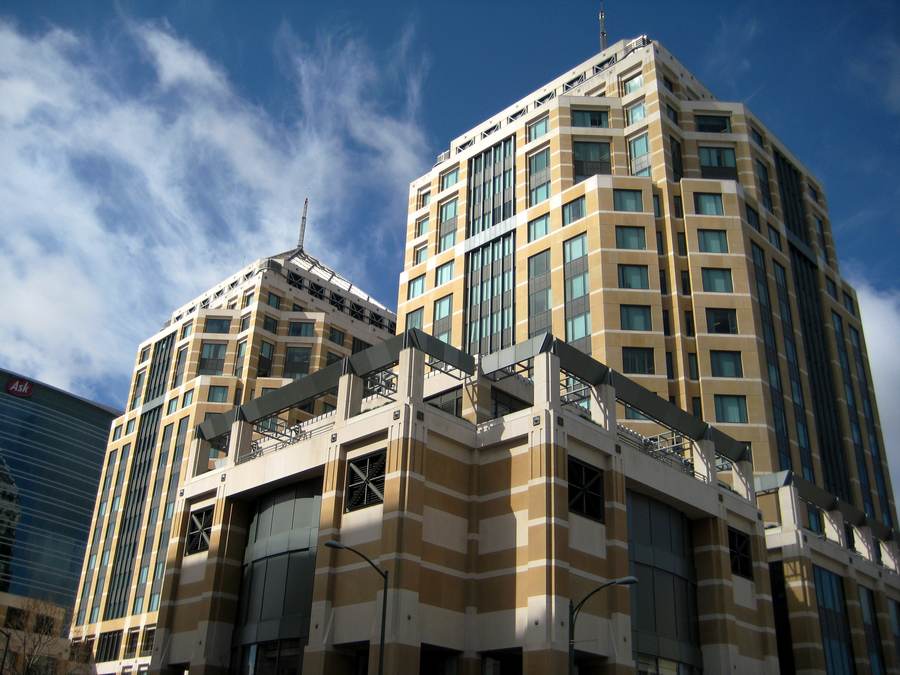
U.S. District Judge Haywood Gilliam in Oakland granted a request from a coalition of unions, employers and nonprofits to halt the fee while their lawsuit proceeds. Gilliam, appointed by President Barack Obama, found that U.S. Citizenship and Immigration Services and the State Department failed to follow necessary rulemaking processes — the notice-and-comment machinery federal agencies must use before imposing major new charges — before rolling out Trump's fee.
The ruling does not end the fee. It pauses it, pending the outcome of a lawsuit the coalition filed in October. And it arrives alongside a parallel legal war: the fee was first blocked in June by a federal judge in Boston in a separate case brought by 20 states, a decision a Boston-based appeals court declined to pause in July. The U.S. Chamber of Commerce, the country's largest business lobby, has filed a third lawsuit and is appealing a judge's rejection of its argument that Trump lacked authority to set the fee at all.
Why this matters
The H-1B program is the main legal channel through which American employers — above all in technology, but also in medicine, finance, engineering and academia — hire highly skilled foreign workers. A $100,000-per-visa surcharge does not merely raise the price of that channel; at that level it functionally closes it for startups, universities, hospitals and mid-size firms that cannot absorb a six-figure tax on every hire. That is precisely why the business backlash has been unusually broad, uniting the Chamber of Commerce with unions and nonprofits in the same courtroom.
The deeper significance is institutional. Gilliam's ruling is not about immigration policy; it is about how policy gets made. The Administrative Procedure Act requires agencies to publish proposed rules, take public comment and justify their choices before imposing sweeping new fees. The administration's defenders argue the president has broad authority over immigration and national-interest fees. The plaintiffs argue — and two judges have now agreed, at least preliminarily — that even broad authority must travel through lawful process. If the fee ultimately falls on procedural grounds, the lesson for the White House is expensive: the shortcut cost months of chaos and litigation it could have spent writing a defensible rule.
There is also a political clock. Trump extended a fee that was set to expire September 21 for another year, signaling the charge is central to his immigration posture, not a bargaining chip. DHS's August move toward a permanent $103,000 fee suggests the administration expects the Trump-imposed version to remain tied up in court and wants a regulation-based successor that can survive the procedural challenges now succeeding against it. The fight is therefore shifting from whether the fee exists to which legal foundation can hold it.
What the judge actually ruled
Gilliam's order is a preliminary injunction, not a final verdict on the merits. Its logic is procedural: before an agency can impose a fee of this magnitude, it must follow the rulemaking steps Congress prescribed — publishing the proposal, receiving comment, and explaining its reasoning. The administration, in the plaintiffs' account, effectively announced the fee and began enforcing it without that process. The judge agreed the challengers were likely to succeed on that claim and that the harm of letting the fee operate meanwhile — disrupted hiring, abandoned visa petitions, workers stranded mid-process — justified blocking it now.
Democracy Forward, the left-leaning legal group representing the plaintiffs, framed the ruling as protection for a system "thrown into chaos overnight," in the words of its lawyer Steve Bressler. The White House did not immediately respond to a request for comment, according to Reuters.
It is worth noting what the ruling does not decide. It does not rule that a president can never set a large visa fee. It does not resolve the Chamber of Commerce's separate claim that Trump lacked the underlying authority entirely. And it does not touch the DHS effort to adopt a permanent $103,000 fee through formal rulemaking — a track designed, quite deliberately, to avoid the procedural trap that just caught the original fee.
Background: how a $100,000 fee became the center of the skilled-immigration fight
The fee landed as part of Trump's broader immigration crackdown, which has paired enforcement against unlawful immigration with new barriers to legal channels. The same week Gilliam ruled, the State Department was touting a separate milestone: more than 250,000 visas revoked since Trump took office, part of what officials describe as continuous vetting of visa holders for crimes, fraud and security risks. The administration's message is consistent — a U.S. visa is, in its telling, a privilege to be priced and policed, not a right.
The business community's answer has been litigation on three fronts. Twenty states sued first and won a temporary block in Boston in June; the First Circuit declined to disturb it in July. The union-employer-nonprofit coalition sued next and won Wednesday's Oakland injunction. The Chamber of Commerce filed a third case pressing the deeper constitutional question of presidential authority, and is appealing an adverse ruling on that theory. Three lawsuits, three theories, two injunctions — and the fee still formally extended for another year by presidential order.
Meanwhile the bureaucracy hedges. DHS's August move to adopt a permanent fee near $103,000 through the regular regulatory process is the administration's insurance policy: if courts keep striking down the president's unilateral fee, a properly promulgated regulation might survive. But formal rulemaking invites its own litigation — over the agency's cost justification, its economic analysis and whether the fee is so large it effectively rewrites the statute. The lawsuits over Trump's fee focused on presidential power; the coming fights will focus on regulatory reason.
Who benefits, who loses, what critics say
The immediate beneficiaries are employers and workers caught mid-process. Companies that had frozen H-1B hiring or watched petitions stall get breathing room. Foreign professionals — many already in the United States on other statuses, many recruited by American universities and hospitals — avoid a fee that would have priced many of them out of the American labor market entirely. For a startup deciding whether to sponsor a single engineer, the difference between a few thousand dollars in filing fees and $100,000 is the difference between hiring and not hiring.
The administration loses momentum but not the war. Critics of the fee argue it was designed less as revenue than as deterrence — a way to shrink skilled immigration without changing the statute. Supporters of the fee counter that the H-1B program has been abused by outsourcing firms to undercut American wages, and that a steep price restores the program's original intent of filling genuinely scarce roles. Both claims contain partial truths, which is why the policy debate will outlive any single injunction.
The courts are becoming the immigration policymaker of last resort — again. When the executive imposes major changes by proclamation and opponents respond with emergency injunctions, policy lurches between announcement and court order. Employers cannot plan, workers cannot rely on timelines, and each ruling decides only the case before it. The Boston and Oakland injunctions block enforcement for now, but neither is a national final judgment, and the Chamber's authority challenge could yet produce the definitive ruling on whether a president can do this at all.
DHS's permanent-fee track is the quiet tell. An administration confident its unilateral fee would survive does not rush a $103,000 regulatory replacement through formal rulemaking. The August move reads as an admission that the procedural challenges have teeth — and a bet that a higher, properly promulgated number can succeed where the shortcut failed. Watch whether that rulemaking draws the same coalition of challengers, and whether its economic justification survives scrutiny.
What the numbers say
The H-1B program is capped at 85,000 new visas a year — 65,000 for general applicants plus 20,000 for holders of advanced U.S. degrees — a ceiling Congress set in 2004 and has not raised since. Demand routinely exceeds supply several times over; the annual lottery draws hundreds of thousands of registrations. Against that scarcity, a $100,000 fee does not ration by merit. It rations by balance sheet: the largest tech firms can absorb it as a cost of doing business while smaller competitors, research labs and rural hospitals cannot.
Consider the arithmetic from an employer's perspective. Standard H-1B filing fees already run into the thousands of dollars per petition. Adding $100,000 multiplies the cost roughly twentyfold. For a company sponsoring ten engineers — unremarkable at a mid-size software firm — the surcharge alone is $1 million before a single salary is paid. That is not a fee calibrated to processing costs, which is exactly the plaintiffs' point: it looks less like cost recovery and more like a policy lever dressed as a charge.
The $103,000 permanent-fee figure matters for a different reason. It suggests DHS's own costing exercise landed near — slightly above — Trump's number, which the administration will cite as evidence the amount is reasonable. Challengers will cite the same proximity as evidence the outcome was predetermined. Either way, the number will be litigated on the administrative record: the studies, the comments, the alternatives considered. That is a slower, drier fight than Wednesday's injunction — and a harder one for challengers to win quickly.
What happens next
Three tracks now run in parallel. First, the Oakland and Boston injunctions will be tested on appeal; the government can seek stays, and the Ninth and First Circuits' handling of those requests will signal how durable the blocks are. Second, the underlying lawsuits proceed toward final judgments on the procedural and authority questions — a process measured in months, during which the fee remains formally extended but judicially frozen. Third, the DHS permanent-fee rulemaking grinds forward, with its own comment period, final rule and inevitable challenge.
The most likely near-term outcome is continued limbo: fee on the books, fee unenforceable, employers hiring under a cloud of legal uncertainty. The more consequential question is whether the administration completes a defensible regulation before the courts finally resolve the president's version. If DHS finalizes the $103,000 rule with a solid record, the debate moves from "can he do this" to "is this reasonable" — a question courts answer with far more deference to the executive.
For the workers and companies in the middle, the practical advice is unchanged from June: proceed as if the fee is blocked, but budget as if it might return. Two judges have now said the shortcut was unlawful. The administration's response — extend the fee, build a permanent one — says it has no intention of abandoning the policy. The courts will decide the process. The politics will decide whether the price of a skilled-worker visa in America is set by statute, by regulation, or by presidential proclamation.
Sources and reporting notes
- Reuters — Judge Gilliam's Oakland ruling, the Boston June block, the DHS permanent-fee move and the Chamber of Commerce lawsuit.
- Los Angeles Post (Reuters syndication) — corroborating account of the September 30 ruling and the fee's extension.
- New York Post — State Department's 250,000-visa revocation milestone and the administration's vetting posture.
Published as a September 30, 2026 snapshot. The injunctions are preliminary; the underlying lawsuits and the DHS permanent-fee rulemaking remain in progress.