State Department revokes 250,000 visas
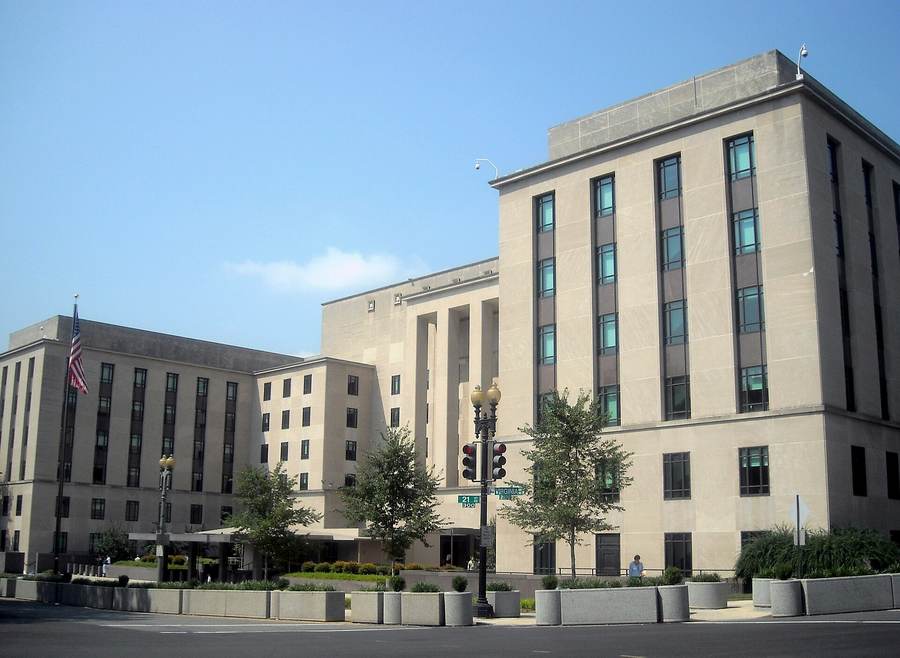
WASHINGTON — The State Department has revoked more than 250,000 visas since President Donald Trump took office on January 20, a total spokesperson Tommy Pigott announced Wednesday as “a historic milestone” under “President Trump and Secretary Rubio.” The count marks a central feature of the administration’s immigration policy: using the visa system not only to screen new applicants but to keep reviewing people who already hold permission to travel to the United States.
Pigott said the revocations covered people who violated visa terms, committed crimes, called for violence against the United States or Americans, defrauded Americans, abused the immigration system or endangered national security. The announcement was first reported by Fox News Digital and also covered by the New York Post. It did not provide a complete category-by-category breakdown of the quarter-million total, so the headline number is clearer than the composition behind it.
That distinction matters. Visa revocation can cover very different conduct, from a breach of travel terms to an alleged national-security risk. Treating every case as identical would overstate what the total proves. At the same time, the scale shows that revocation has become an active enforcement tool rather than an exceptional response reserved for a small set of cases.
Why did the State Department revoke 250,000 visas?
The administration’s answer is continuous vetting. Pigott framed every visa decision as part of national security, not as a one-time judgment completed when a document is issued. “Every visa decision is a national security decision,” he said. “A U.S. visa is a privilege, not a right — and if you violate the terms of that privilege, you will lose it.”
The listed grounds combine immigration compliance, criminal conduct, fraud, advocacy of violence and broader security judgments. That breadth is the policy’s power and its central point of scrutiny. It gives the department room to act when information emerges after issuance, but it also means the public total alone cannot show how many cases arose from each rationale or how consistently those rationales were applied.
Among the cases the department did quantify, 2,300 were connected to “birth tourism,” the practice of pregnant foreign nationals traveling to the United States to give birth so the child receives U.S. citizenship. That subset is less than one percent of the announced total, making it politically prominent but numerically only one part of the wider campaign.
How continuous immigration vetting changes the visa system
The shift is from front-end screening to an ongoing review model. Under that approach, a visa holder may be reassessed when the government identifies conduct it considers incompatible with the visa’s terms or with national-security standards. The September 30 announcement presents the 250,000 figure as the accumulated result of that process since January 20.
For the administration, the advantage is speed: the department can withdraw a visa without waiting for the holder to make another application. For travelers, employers and families, the consequence is uncertainty because a previously issued document can cease to be usable. The announcement does not say how many affected people were abroad, already in the United States or seeking to travel, and those different situations can carry different practical consequences.
The policy also places unusual weight on administrative decision-making. A large aggregate number can signal enforcement intensity, but accountability depends on the underlying reasons being specific enough for each affected person to understand what happened. The department’s statement gives the policy categories; it does not release case files or a full numerical breakdown.
What happened to 27 Latin American officials’ visas?
Monday’s action shows how the same authority is being used as a foreign-policy instrument. On September 28, the State Department revoked visas held by 27 Latin American officials, former officials and family members over corruption accusations. The people targeted were from Bolivia, Colombia, Ecuador and Peru.
Those revocations are distinct from the birth-tourism cases and from ordinary visa-term violations. They illustrate how access to the United States can be used to impose a personal consequence on foreign political figures and their relatives without the broader economic impact of countrywide sanctions. The department’s corruption allegations are the stated basis for the action; the September 30 total does not disclose what share of the remaining cases involved foreign officials.
The Latin America move also sits within a wider pattern of visa pressure in U.S. diplomacy. In recent Sudan coverage, Washington’s visa policy became part of negotiations around a proposed ceasefire. Signal Post News has reported on Abdel Fattah al-Burhan’s rejection of U.S. visa pressure, the earlier U.N. visa and 90-day truce dispute, and Sudan’s challenge to Washington’s legitimacy remarks. The cases differ, but together they show how travel permissions can become leverage in broader policy disputes.
What is the B1/B2 asylum revocation plan?
Over the summer, the administration began preparing to revoke business and tourist visas held by as many as 200,000 foreigners who later applied for asylum in the United States. B1/B2 visas are used for temporary business and visitor travel; the proposed action focuses on holders whose later asylum claims the administration views as inconsistent with the purpose under which they obtained those visas.
Deputy Secretary of State Christopher Landau said Americans were “fed up” with “bogus asylum claims.” The plan therefore links visa enforcement to the administration’s wider argument that some travelers are using temporary permissions as a route into the asylum system. The September 30 announcement does not establish that all 200,000 possible B1/B2 cases have been completed or that they account for the new total. The plan and the announced revocation count should be read as related policy tracks, not automatically treated as the same set of people.
That is an important boundary for assessing scale. “As many as 200,000” describes the pool the administration was preparing to review, while “more than 250,000” describes visas the department says it has revoked since January 20. Without a released overlap figure, subtracting one number from the other would create a breakdown the government has not supplied.
Who is affected, and what happens after a U.S. visa is revoked?
The affected groups described publicly range from travelers accused of violating visa conditions to people linked to crimes, fraud, threats or national-security concerns; the total also includes birth-tourism cases and targeted foreign officials. What connects them is the loss of the visa as a valid travel document, not a single factual allegation shared by all 250,000-plus people.
For a person outside the United States, the immediate practical effect is that the revoked visa can no longer be relied on for travel. Any next step depends on the basis of the revocation and the person’s circumstances. The department’s announcement does not spell out a single review or reapplication path for every category, so affected holders would need case-specific guidance rather than assuming the public statement answers their individual status.
What comes next politically is a fight over two standards: whether the administration can show that continuous vetting is identifying real violations and risks, and whether the process is transparent and consistent enough to distinguish serious threats from less severe compliance disputes. The 250,000 figure demonstrates reach. The unanswered category breakdown will determine how fully the public can judge precision.
Sources and reporting notes
State Department spokesperson Tommy Pigott’s September 30 announcement, first reported by Fox News Digital and covered by the New York Post, supplies the total, the stated grounds and the birth-tourism figure. The September 28 Latin America action and the administration’s summer B1/B2 asylum plan provide the related policy context. Where the government has not released a breakdown or case-level detail, this analysis says so rather than inferring one.