The investment is indirect, the envoy role is unpaid, and no public evidence establishes that Kushner shaped Gaza policy for private gain. The overlap still presents a serious test of transparency.
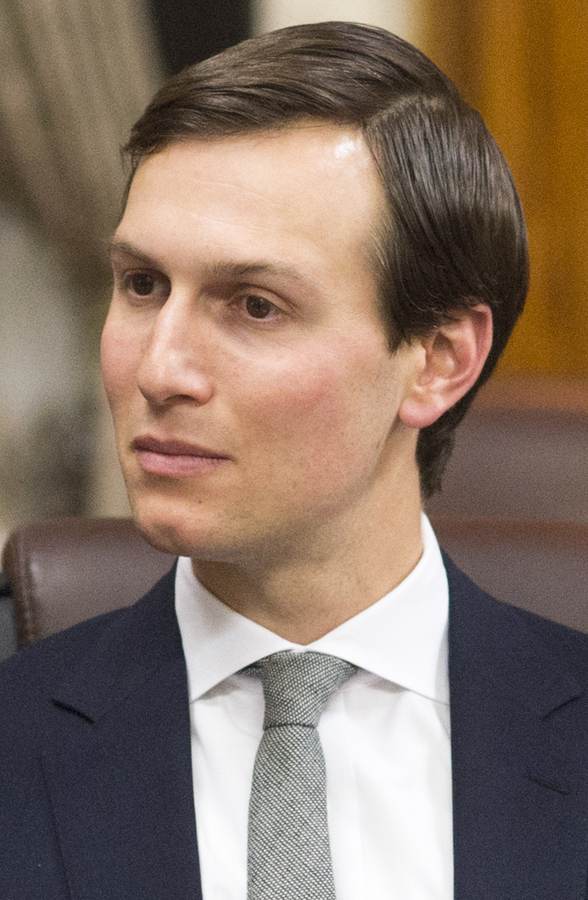
The Kushner Gaza negotiator conflict of interest is no longer an abstract ethics question. A CNN investigation published October 1 traced Jared Kushner's investment firm, Affinity Partners, to the largest shareholder position in Phoenix Financial, a Tel Aviv-based financial group whose portfolio includes companies supplying equipment used by Israel's military. Kushner, meanwhile, has been working as President Donald Trump's volunteer envoy in negotiations over Gaza.
The structure matters. Affinity does not directly own the nine military-linked companies CNN identified. It owns a stake in Phoenix, and Phoenix owns the underlying positions. But Affinity can benefit when Phoenix's value rises. CNN and subsequent reports said Affinity retained a 7.4% stake worth more than $1 billion after selling part of its holding in July, while Phoenix had at least $465 million invested across nine companies tied to military supply chains.
That financial connection does not prove corruption or show that Kushner changed U.S. policy to benefit himself. It does create a conflict question that ordinary disclosure rules are designed to expose and manage. Because Kushner is serving as an unpaid adviser rather than a formal government employee, the public receives less information about his finances, recusals and contacts than it would from a Senate-confirmed official.
Why this matters
Gaza diplomacy is not a routine portfolio. Decisions about ceasefires, reconstruction, security arrangements, arms transfers and the role of Israeli authorities can move markets and alter the prospects of companies tied to defense work. A negotiator with a large private stake in a financial institution exposed to those companies faces two tests: whether policy judgment is independent, and whether the public can verify that independence.
The distinction between an actual conflict and the appearance of one is essential. The reporting does not establish that Kushner directed Phoenix's investment decisions, nor does it identify a diplomatic decision he made for financial gain. Yet public trust also depends on rules that identify interests, require disclosure and, when necessary, mandate recusal before a decision is made.
The money trail
CNN said it used Israeli financial-transparency records to examine a portion of Phoenix's holdings. The records showed hundreds of millions of dollars invested in Elbit Systems, Israel's largest defense manufacturer, and positions in at least eight other companies connected to drones, artillery components, warships, armored vehicles and demolition equipment. Among the reported holdings were about $68 million in Next Vision, which makes cameras used in military drones, and at least $40 million in Reshef Technologies, a maker of electronic fuzes for artillery shells.
Affinity became a Phoenix investor in 2024 and later expanded the position. In July 2026, reports said the firm sold roughly 2.5% of Phoenix for about $343 million while keeping a 7.4% stake valued above $1 billion. Kushner has described Phoenix as Affinity's “best investment.” The financial gains are therefore real and measurable even though the exposure to individual defense companies is indirect.
The portfolio also predates parts of Kushner's current diplomatic role, and some Phoenix military-linked holdings predate Affinity's investment. Timing alone cannot answer the ethics question. The relevant inquiry is whether Kushner or Affinity received information, access or policy influence that could affect Phoenix, and whether safeguards separated his public work from his financial interests.
What his camp says — and what the critics say
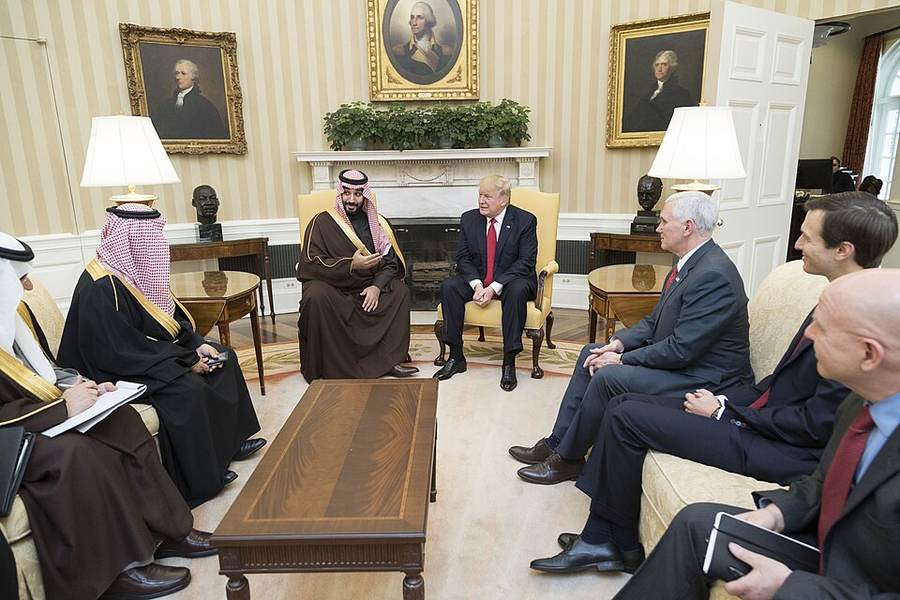
An attorney for Kushner told CNN that Kushner “never participated in or directed Phoenix's decisions” about whether to buy, hold or sell the nine companies identified in the investigation. The lawyer said Kushner spoke with Phoenix management about the company and potential strategic opportunities, but that his involvement decreased after he took on diplomatic work.
The White House drew an equally firm line. Principal deputy press secretary Anna Kelly told CNN that Kushner's personal business activities “have nothing to do with his diplomatic engagements,” which he undertakes as a volunteer at the president's request. Affinity has also said its Middle Eastern investors are passive and do not direct either Affinity or Phoenix.
Critics answer that control over the underlying stocks is not the only issue. Cynthia Brown, chief ethics counsel at Citizens for Responsibility and Ethics in Washington, told CNN that “the people profiting should not be the people making the decisions.” Their argument is about incentives and visibility: an envoy need not pick a stock personally for a policy outcome to change the value of an investment vehicle he controls.
The ethics gap: why “unpaid envoy” matters
Calling a role unpaid can sound like a safeguard because the government is not paying a salary. In practice, the designation can produce the opposite result. A formal federal appointment typically brings financial-disclosure obligations, conflict-of-interest rules, ethics agreements and clearer lines of accountability. A volunteer adviser can wield significant influence without the same public record.
That gap does not itself make Kushner's conduct unlawful. Applicable rules depend on the precise legal status of his service, what authority he exercises and whether he is treated as a special government employee or outside adviser. Those details should not be left ambiguous in a matter involving war, reconstruction and a billion-dollar private holding. The administration can resolve much of the uncertainty by publishing his mandate, disclosure arrangement and any recusals.
The issue also reaches beyond one envoy. Modern presidents rely on informal advisers, family members, private-sector experts and special representatives precisely because they can move quickly. If their status becomes a way to escape rules that apply to officials doing comparable work, the exception swallows the ethics framework.
Winners, losers, and the ones watching
The most obvious financial winner is Affinity if Phoenix continues to appreciate. Phoenix shareholders can benefit from the performance of its wider insurance, asset-management and investment businesses, including but not limited to defense-linked holdings. Companies selling military technology may also benefit from sustained government demand. None of that establishes that war policy was designed to create those returns.
The potential losers are public confidence and diplomatic credibility. Palestinians and Israelis asked to trust a U.S.-backed process may question whether private capital shadows decisions about security and rebuilding. American taxpayers and lawmakers lack the disclosures needed to judge the separation for themselves. Other investors could also face reputational or regulatory risk if the arrangement attracts deeper scrutiny.
Those watching include congressional ethics and oversight committees, federal ethics lawyers, Israeli regulators, Affinity's investors and the parties to Gaza negotiations. They are not all asking the same question. Regulators focus on legal compliance; negotiators focus on trust; investors focus on returns and exposure; the public needs to know whether policy decisions are insulated from personal financial stakes.
What comes next
The immediate test is transparency, not speculation. The White House can disclose the legal basis for Kushner's envoy role, the ethics rules that apply, any written recusal commitments and whether he receives nonpublic information capable of affecting Affinity or Phoenix. Affinity and Phoenix can explain governance boundaries around contacts with Kushner and decisions involving military-linked companies.
Congress can seek documents or testimony if voluntary disclosure is incomplete. Journalists can continue tracing public filings and testing whether Phoenix's portfolio changes alongside major policy events. Investigators would need evidence of a specific official act, intent or exchange before moving from an appearance problem to an allegation of misconduct.
The Gaza debate is already carrying immense human and political weight, from Trump's proposed Board of Peace and recovery plan to the rising death toll and stalled ceasefire and the regional diplomacy tracked after the first Abraham Accords ministerial meeting since October 7. An envoy's private financial exposure cannot be treated as a side note. It needs rules visible enough for supporters and critics to test on the same facts.
Sources
- CNN — Kushner's company has large stake in firm with Israeli military links as he negotiates in Gaza (October 1, 2026)
- Daily Caller — Jared Kushner allegedly profiting off Israel military while serving as Trump's Gaza negotiator (October 1, 2026)
- Political Wire — Jared Kushner's massive conflict of interest (October 1, 2026)
- NewsBeep — Kushner's firm profited from Israeli defense investments while he negotiated Gaza war (October 1, 2026)
- The AWB News — Kushner's Gaza role meets Phoenix's defense exposure (October 1, 2026)
- Wikipedia — Affinity Partners
- Reuters via WIXX — Jared Kushner may visit Israel for talks on Gaza (August 13, 2026)