Trump France student protests
The U.S. president and Ambassador Mike Waltz blame open borders for France's unrest. Students name absent teachers, unsafe buildings and oversized classes — and France's own far right has not adopted Trump's causal claim.
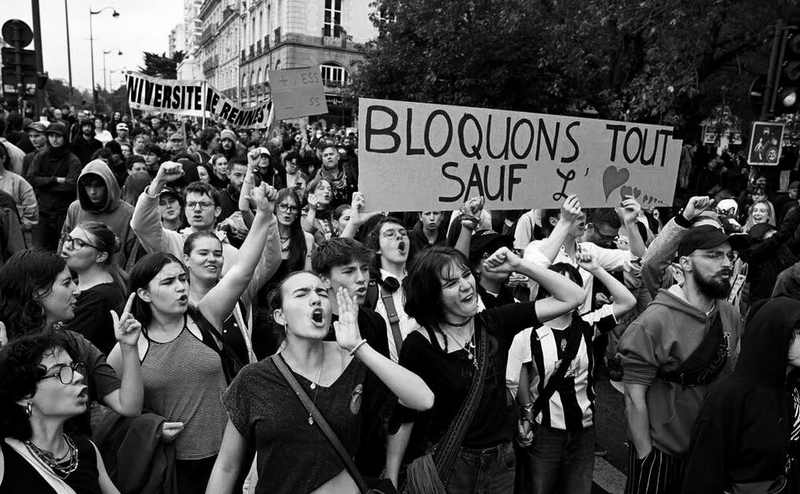
Trump France student protests became a transatlantic political argument Tuesday evening, October 6, when President Donald Trump said France's three-week school protest movement was really about mass migration and Islam. His intervention arrived after the movement's largest day: the French Interior Ministry counted more than 256,000 demonstrators nationwide, organizers claimed 450,000, and police used tear gas and water cannon amid clashes in Paris, Marseille, Lyon, Strasbourg, Rennes and Toulouse. Yet the students' published demands center on schools — missing teachers, crumbling buildings, crowded classrooms and heat — not immigration or religion. The honest conclusion is narrower than either side's certainty: Trump's claim fits his long-running diagnosis of European disorder, but the available evidence does not establish migration as the cause of this movement.
Why this matters
Trump did more than comment on a foreign disturbance. He converted a French fight over public education and policing into an American midterm message: weak borders, high spending and social fracture. That framing gives U.S. conservatives a vivid warning image one month before the November elections, while forcing President Emmanuel Macron and Prime Minister Sébastien Lecornu to answer a debate they did not start.
It also tests a basic rule of evidence. Violent footage can show that disorder occurred; it cannot, by itself, explain why it occurred. The students' demands, police records, arrest data and party statements provide pieces of the explanation, but no released demographic analysis ties the demonstrations to migration, and no national student platform names Islam. Conversely, the absence of an immigration demand does not prove France's broader migration tensions are irrelevant to every participant. It means the causal leap remains unproven.
What Trump and Waltz said
Trump's Truth Social post
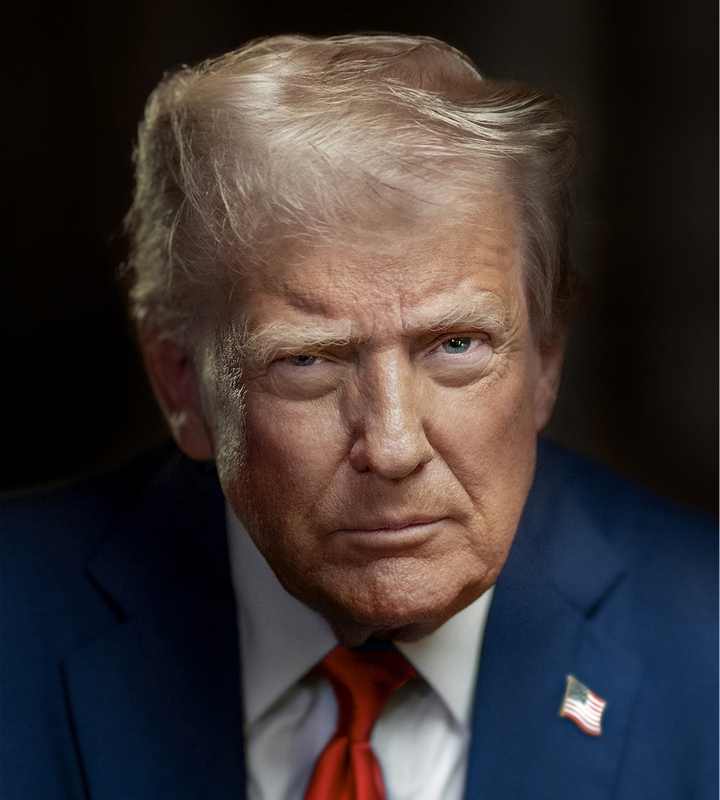
In his Tuesday evening post, Trump wrote: “What's happening in France is nothing less than out of control mass migration. This isn't about schools, this is about Islam wanting to take over a once great Country! President DJT.” The post offered no figures or evidence connecting protesters, arrests or damaged schools to migration or religion.
Supporters see a pattern rather than an isolated dataset. They point to years of European disputes over integration, policing, energy costs and government spending, and argue that unrest is the predictable result of institutions losing public confidence. For that audience, the French scenes function as a warning to the United States even if the immediate protest demands are educational.
Mike Waltz's broader argument
U.S. Ambassador to the United Nations Mike Waltz made the case in more policy-oriented terms in an interview with Fox News Digital. He condemned lawlessness and violence, then linked French frustration to “open borders,” unchecked immigration, constrained energy policy and excessive public spending. Waltz's version is broader than Trump's religious claim: it describes multiple pressures that, in his view, make disorder more likely.
The distinction matters. A claim that migration helped create social strain is different from a claim that Islam caused a specific school movement. The first is a political interpretation that can be debated against long-run economic and demographic evidence. The second requires direct evidence about this movement's participants, organizers and demands; none has been publicly produced.
Background: from Créteil on September 17 to a national revolt
The movement began on September 17 at a high school in Créteil, southeast of Paris, where teachers struck over working and learning conditions. Local grievances spread because they were recognizable elsewhere. Students described water damage, vermin, missing soap and toilet paper, absent substitute teachers, buildings poorly adapted to heat and classes too large for staff to manage.
Over three weeks, school blockades grew into coordinated marches. Justice Minister Gérald Darmanin said there was no single national demand because the movement developed from local problems rather than one centralized platform. That fragmentation helps explain both its reach and its ambiguity: students can rally under a shared complaint that the state is neglecting schools while disagreeing about tactics and remedies.
By Tuesday, the High School Students Union said about 2,000 high schools were blockaded or otherwise at a standstill. Education Minister Édouard Geffray said at least 24 schools had been ransacked or set on fire. The two figures describe different realities within the same movement: mass participation in disruption, and a smaller but serious pattern of destruction that authorities cannot dismiss as peaceful dissent.
What French students say they want
Teachers, buildings, class sizes and heat
Students and unions consistently list understaffing, decaying facilities, oversized classes, missing substitutes and overheated rooms. Those are measurable administrative problems. International comparisons cited in coverage show France has an unusually high share of pupils affected by teacher absences, while the government itself says roughly one in ten lessons is lost and a quarter of pupils encounter inadequate infrastructure.
A rat filmed at Paul Eluard Lycée in Saint-Denis, a collapsed canteen ceiling at Jean Jaurès Lycée near Montpellier and reported shortages of basic supplies in schools around Paris became symbols because they turn an abstract budget argument into visible evidence. They do not explain every act of violence, but they do explain why complaints moved quickly from one campus to another.
What is not in the demands
Neither immigration nor religion appears in the movement's stated national demands. Even Marine Le Pen's National Rally — the French party most closely associated with restricting immigration — has not publicly made Trump's link between migration and the school protests. That does not settle France's wider immigration debate; it is significant evidence about how domestic political actors are reading this particular crisis.
The numbers — and what they actually imply
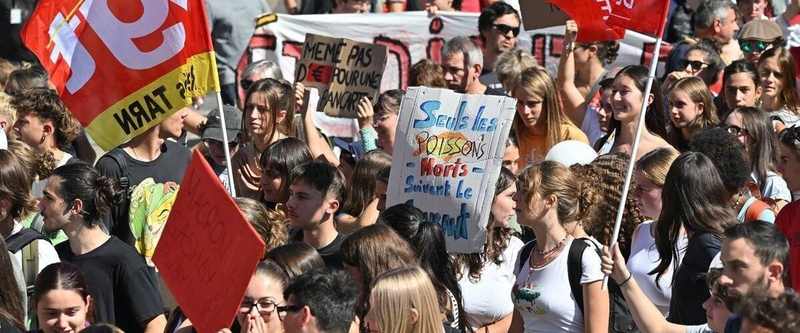
256,000 versus 450,000: the Interior Ministry's estimate and the organizers' count differ by 194,000, or roughly 76 percent of the official total. Such gaps are common in French demonstrations because police and unions use different methods and have political incentives. The safe conclusion is scale, not precision: Tuesday was the movement's largest day by either account.
6,100-plus arrests, including 1,483 minors: minors make up about 24 percent of the reported arrests, a striking share but not a majority. The figure indicates that teenagers are directly exposed to the criminal-justice response while also showing that the arrest pool extends well beyond school-age protesters. It should not be used to claim, without further data, that those arrested were overwhelmingly minors.
715 officers, 215 teenagers and 85 school staff injured: the toll runs in several directions. Police have faced projectiles, fires and assaults; young demonstrators and education workers have also been hurt. Prime Minister Lecornu called it the school system's “heaviest toll in decades.” Each number comes from institutional reporting and may be revised, but together they rule out a simple story of violence flowing only one way.
24 damaged schools and 2,000 high schools at a standstill: the first figure marks a severe public-safety and education loss; the second, a union claim, measures the movement's disruptive reach. They should not be conflated. A blocked school is not necessarily a burned school, and participation in a blockade is not proof of responsibility for vandalism.
Who benefits, who loses, what critics say
Trump, Waltz and conservative supporters
Trump benefits by placing a foreign crisis inside his strongest domestic frame: border control. Waltz benefits by connecting immigration to energy and spending, widening the critique from culture to governance. Conservative commentators sharing French footage can argue that Europe offers a preview of policies they oppose at home. Their weakness is evidentiary: dramatic images may persuade politically while leaving causation unresolved.
Students and unions
Students gain international attention but risk losing control of their own message. Every burned barricade can displace the story of missing teachers; every foreign intervention can push local demands behind a global culture war. Union spokesperson Alice Cohen-Morzadec said the movement would “amplify even more until we get our demands,” and coordinated protests are scheduled for Thursday. The opportunity is leverage. The danger is escalation that alienates parents and the wider public.
Macron, Lecornu and the police
Macron convened an emergency meeting Tuesday evening with Lecornu, Interior Minister Laurent Nuñez and Education Minister Geffray. Lecornu must now show he can protect schools, restrain violence and fund credible repairs while defending a strained 2027 budget. Police face the opposite operational pressure: restore order without producing injuries that deepen the revolt.
That balance changed after a 15-year-old lost a hand to an EF-SON stun grenade in Lens on Monday. Nuñez suspended the weapon at student protests Wednesday morning. A 14-year-old had already lost teeth and suffered a fractured jaw when struck by a tear-gas grenade in Saint-Ouen on September 28; an officer was charged. LFI coordinator Manuel Bompard said it took children being permanently maimed before the government acted. Police representatives and officials answer that officers have faced organized violence and require workable crowd-control options. Our related reports examine the grenade suspension and the Lens injury.
The French public
Parents, commuters and taxpayers absorb both sides of the crisis: closed classrooms and transport disruption now, higher spending or deeper cuts later. Public sympathy can move quickly when children are injured, but it can reverse when schools burn or daily life is paralyzed. The constituency Lecornu must persuade is not only parliament; it is the majority that may agree schools are underfunded while fearing disorder.
What happens next
Lecornu is scheduled to address the nation at 7 p.m. Wednesday on both the protests and the 2027 budget. The pairing is unavoidable. Replacing absent teachers, repairing buildings and changing long school days all cost money, while France is already fighting over a proposed €54 billion fiscal adjustment. Our guide to Lecornu's budget crisis explains why concessions to schools will be judged against debt, taxes and cuts elsewhere.
Thursday's coordinated protests will provide the first test of whether the grenade suspension and Lecornu's address lower the temperature. Watch four things: turnout against Tuesday's competing benchmarks; whether blockades expand beyond the reported 2,000 high schools; whether violence and arrests fall; and whether the government announces funded commitments rather than consultations alone.
The longer horizon is the 2027 presidential election. Macron cannot seek a third consecutive term, Lecornu's authority is tied to his handling of both streets and budget, and Le Pen's National Rally is positioned to convert public frustration into electoral support without yet adopting Trump's specific migration explanation. In the United States, the same images will continue to circulate in a midterm argument about borders. That transatlantic framing will be politically powerful. It should still be kept separate from what the evidence can presently prove about why French students walked out.
Sources
- The Times: France protests live coverage
- Fox News Digital: Trump and Waltz link unrest to migration
- TBS News: Trump's post and French protest context
- Devdiscourse: student and teacher march, government response
- The White House: official Trump photography
Reporting note: Crowd, arrest and injury figures are attributed to the ministry, unions or officials that released them. Trump's migration claim is reported as his assessment; no direct causal evidence has been publicly presented. Analysis and framing are by Signal Post News.