France Bastille student protest
The third week of France's student movement peaked Thursday as tens of thousands filled Place de la Bastille, forcing the education minister to promise 3,000 substitute teachers — while evening clashes brought tear gas back to Paris streets.
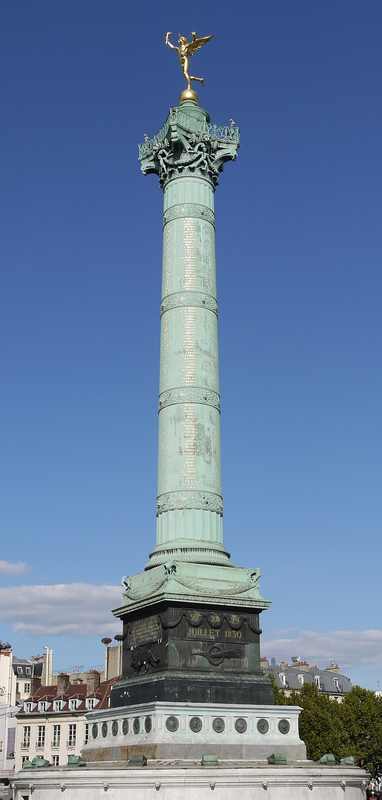
France Bastille student protest reached its symbolic peak on Thursday, October 8, 2026, as 71,500 people marched nationwide and 24,500 filled Place de la Bastille in Paris — the revolutionary square the students had vowed to "take." The Interior Ministry figures, reported by Le Monde and Reuters, confirmed the scale of "Act IV" of a movement now in its third week. By evening, the largely peaceful march gave way to clashes: tear gas and water cannon in the capital, arsonists attacking a police station in Bordeaux, a school ransacked in Saint-Étienne, and a teacher struck in Toulouse.
Why this matters
The choice of the Bastille was the message. In 1789, the storming of the fortress-prison announced that the old order could fall; on Thursday, tens of thousands of teenagers and their teachers chose the same square to announce that the education system, as currently funded, cannot stand. Movements are often judged by whether they can name a place and fill it. The students named the most symbolically loaded square in France — and filled it with 24,500 people, by the government's own count.
That matters because the government's counter-narrative all week has been that the movement is fading. Officials pointed to school-closure numbers falling from 224 in the morning to 157 by lunchtime — 96 percent of schools operating — and to turnout dropping from Tuesday's 266,000. But a "waning" movement does not put twenty-four thousand people on the Place de la Bastille on a Thursday. The images from the square, including aerial footage of the dense crowd around the July Column, tell a different story than the ministry's spreadsheet. When the state's numbers and the street's pictures disagree, the pictures usually win the argument about momentum.
There is a second reason this day matters: it forced a concrete concession. Education Minister Édouard Geffray went on TF1 and promised 3,000 substitute teachers for schools facing critical shortages. That is the first tangible policy offer of the crisis — an admission, however qualified, that the students' core complaint about missing teachers is real. Movements that extract concessions tend to grow, not shrink, because participants learn that marching works.
From suburban blockades to the Bastille
The movement began on September 17 in the Paris suburbs, with students blockading lycées over dilapidated buildings, classes of 37 pupils, and chronic teacher shortages. What started as a local facilities dispute spread school by school until it became a national question about what France is willing to spend on public education. Last week the crisis escalated dramatically: nearly 900 schools were disrupted, a student was seriously injured in Lens, and the government suspended the use of stun grenades in protest policing — a rare admission that its own crowd-control tactics had become a liability.
Thursday was "Act IV," the fourth national day of action, and the students set themselves a theatrical objective: take the Bastille. They did. The Paris march converged on the square in the afternoon in a largely festive atmosphere — banners, chants, the July Column draped in the symbolism of 1789, 1830, and 1848. Jean-Luc Mélenchon, leader of France Unbowed, declared on X that the Bastille had been "retaken" and called the next demonstration for Tuesday, October 13.
The numbers behind "Act IV"
The figures deserve careful reading, because both sides use them as weapons. The Interior Ministry counted 71,500 demonstrators nationwide on Thursday, with 24,500 in Paris. That is down sharply from the 266,000 the ministry counted on Tuesday — a drop the government cites as proof of decline. But Tuesday's figure covered a broader coalition including teachers' unions and other sectors; Thursday was a student-led day. Comparing the two directly is misleading, and the students know it: their benchmark is whether they can keep filling symbolic spaces, and on that measure Thursday was a success.
The school-closure numbers tell a similar contested story. The ministry reported 224 schools closed in the morning, falling to 157 by lunchtime — which it presented as 96 percent of schools operating normally. But closures are a crude proxy for a movement whose tactics include blockades, walkouts, and demonstrations after hours. A school can be "open" while its students are in the street.
Against the government's arithmetic stands its own concession: 3,000 substitute teachers. You do not promise three thousand emergency hires to a movement that is fading. The number also reveals the scale of the underlying problem — a system missing thousands of teachers in October, weeks into the school year.
Two Frances
The students and teachers describe a school system in physical decay: leaking roofs, 37-pupil classes, and "critical shortages" that leave classes without instructors for weeks. Their demands are concrete — more teachers, renovated buildings — and their anger has a specific target in what they see as years of budget austerity.
What the government offered
The government describes a country with no money to give. France is under severe bond-market pressure, the prime minister is reviewing €43 billion in proposed savings, and every concession to the students must be weighed against creditors. From this vantage point, the 3,000 substitutes are a significant gesture, and the falling closure numbers show the crisis management is working.
What critics say
Critics of the movement, including voices on the right, allege far-left infiltration and point to the violence — the Bordeaux arson, the Saint-Étienne ransacking — as proof that the protests have been hijacked. The students reply that a handful of arsonists do not define tens of thousands of peaceful marchers, and they point to police violence, including the Lens injury, as the real escalation.
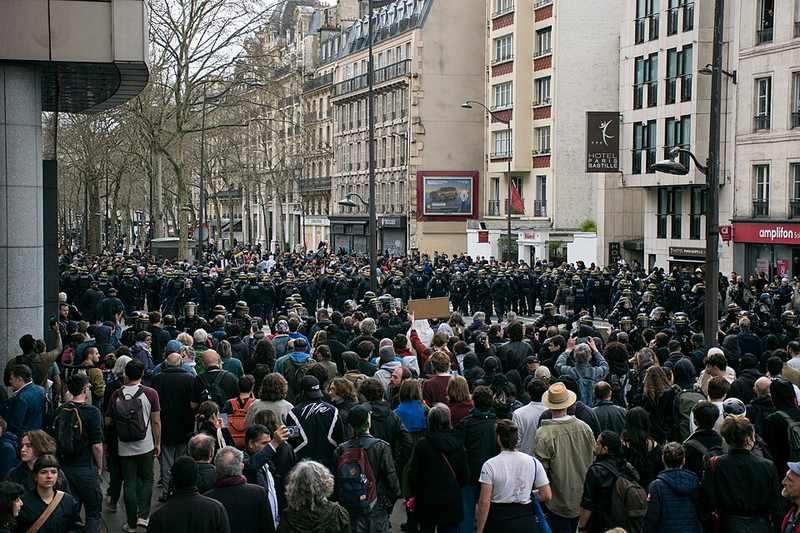
The police themselves are caught in the middle. Wednesday's suspension of stun-grenade use in protest policing was a concession to the movement's anger, but Thursday evening still brought tear gas and water cannon to Paris. The question of how France polices its teenagers is now as central as the question of how it funds their schools.
What happens next
Mélenchon's call for Tuesday, October 13, sets the next test. If the students match or exceed Thursday's turnout, the "waning" narrative collapses entirely and the government will face pressure for bigger concessions. If numbers fall, the movement may fragment into local disputes — still disruptive, but no longer a national crisis.
The 3,000 substitute teachers are the variable to watch. If they materialize quickly in the worst-hit schools, they could defuse the most acute anger. If the promise dissolves into bureaucracy — as emergency education pledges often do — it will become evidence for the students' core claim: that the government makes promises it does not keep. The movement's slogan might as well be "show us the teachers."
Beyond October, the structural pressures are not going away. France's budget crisis, the bond market's verdict on French debt, and a polarized political landscape with elections looming mean every protest is also a rehearsal for larger confrontations. The students took the Bastille for a day. Whether they have taken the initiative for the season will be decided on Tuesday.
Sources: Le Monde; Reuters via LA Post; New York Post.