'A Disgrace': Trump Turns on Zelenskyy Over the Refinery War
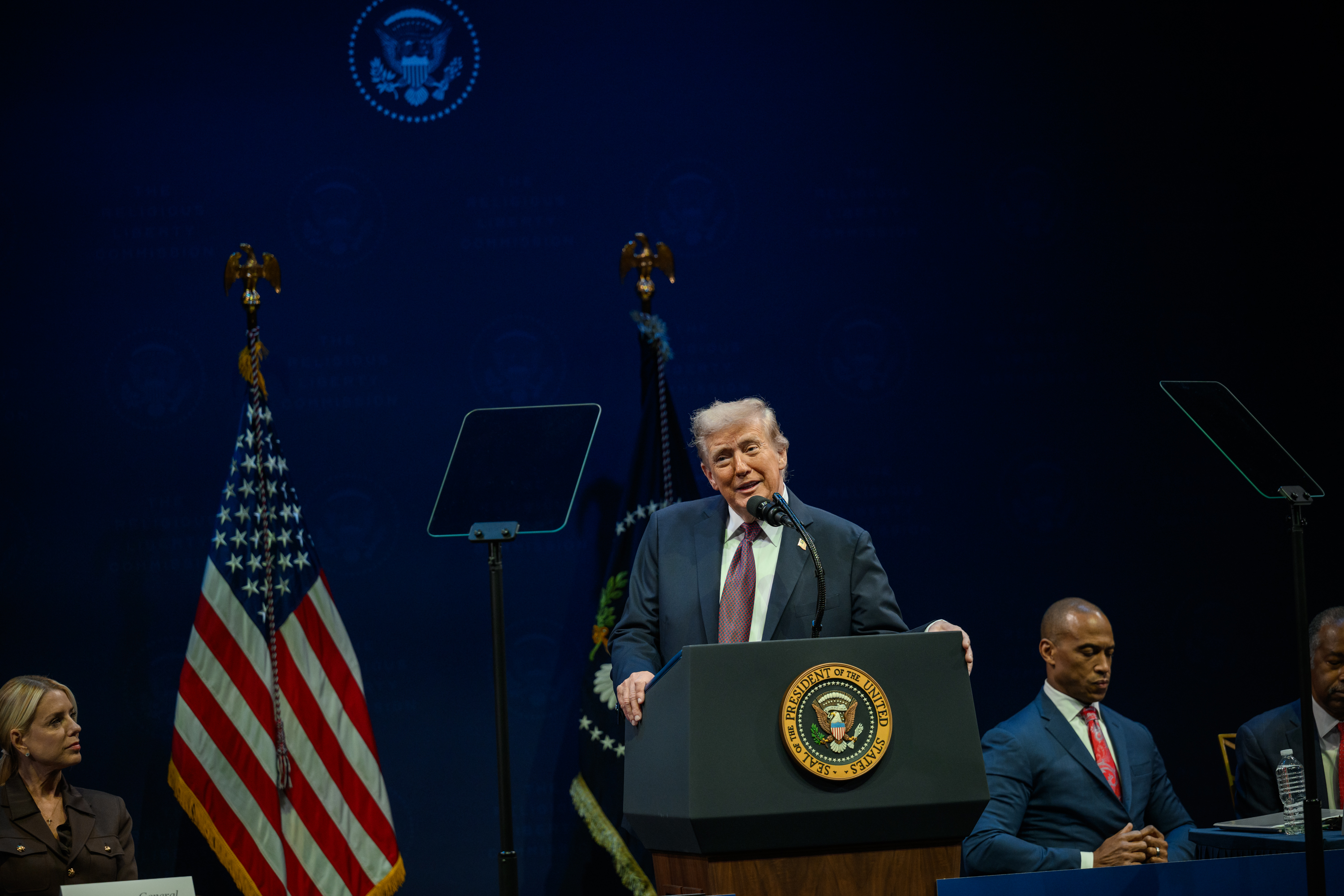
WASHINGTON, October 15, 2026 — The Trump Ukraine refinery strikes row stopped being a private pressure campaign on Thursday night and became a public rupture. In an exclusive Newsmax interview with Rob Finnerty, recorded at the White House and aired Thursday, President Donald Trump condemned Ukraine's decision to resume attacks on Russian oil refineries, arguing the strikes push up the world oil price at the moment his administration is trying to bring energy costs down. All Zelenskyy is doing, Trump said, is making prices higher — and he called that a disgrace. There are plenty of other targets Ukraine could hit, he argued, but diesel refineries are different, because the world needs the diesel they produce. The remarks are the sharpest public criticism Trump has aimed at Kyiv since the war's diplomacy restarted, and they came on the same day Ukrainian drones set fire to Rosneft's Ryazan refinery, southeast of Moscow.
Track it live: Ukraine war map — live front-line and strike tracker.
What Trump said on Newsmax
The interview ranged well beyond one refinery. Trump said flatly that he is "not a big fan" of Zelenskyy, repeated his view that the Ukrainian leader says he wants a settlement but does not act like it, and said he finds Zelenskyy more difficult to deal with than Putin — while also saying he believes both men would like the war to end, and that the personal hatred between them is what makes a deal so hard. Newsmax's own report of the interview captured the same register: Trump calling Zelenskyy not a good partner to deal with, and blaming the continuation of the war in part on Kyiv's refusal to accept the terms on offer. The Washington Examiner, reporting the same interview, noted Trump's argument that a settlement should not depend on Zelenskyy at all if he does not want one. Read together, the message to Kyiv was not subtle: the refinery campaign is now, in the president's public framing, an obstacle to peace rather than a contribution to it — a reversal of how Washington talked about Ukraine's deep strikes for most of the war.
How the energy ceasefire collapsed
The timeline matters, because each capital tells it differently and both versions contain part of the record. On Sunday, October 11, Trump announced an energy ceasefire, saying strikes on energy infrastructure would stop. Moscow never publicly confirmed it had agreed to any such truce. Kyiv says it then held its refinery attacks for three days. During those same days, by Ukraine's account and by the strike record, Russian attacks on Ukrainian energy facilities continued — culminating in one of the largest drone nights of the war. On Thursday, Zelenskyy told the Financial Times the pause was over, in the phrase that has since travelled everywhere: the block on attacking refineries is out — "we're done." Within hours, Ryazan Governor Pavel Malkov confirmed a major Ukrainian drone attack had set the Rosneft refinery in his region on fire, and a senior Ukrainian official confirmed the strike. The plant, roughly 300 kilometres (180 miles) southeast of Moscow, helps supply the capital and accounts for about 5 percent of Russia's total refining capacity. Washington sources have since offered a narrower reading of the truce — that Moscow understood it to cover refineries only, not the power plants Russia kept bombing. Kyiv's reading is that a ceasefire Russia never signed, and kept violating in spirit, bound no one. Our earlier report traced the resumption itself: Zelenskyy says Ukraine will resume strikes on Russian refineries as ties with Washington fray.
The night Ukraine says made the pause impossible
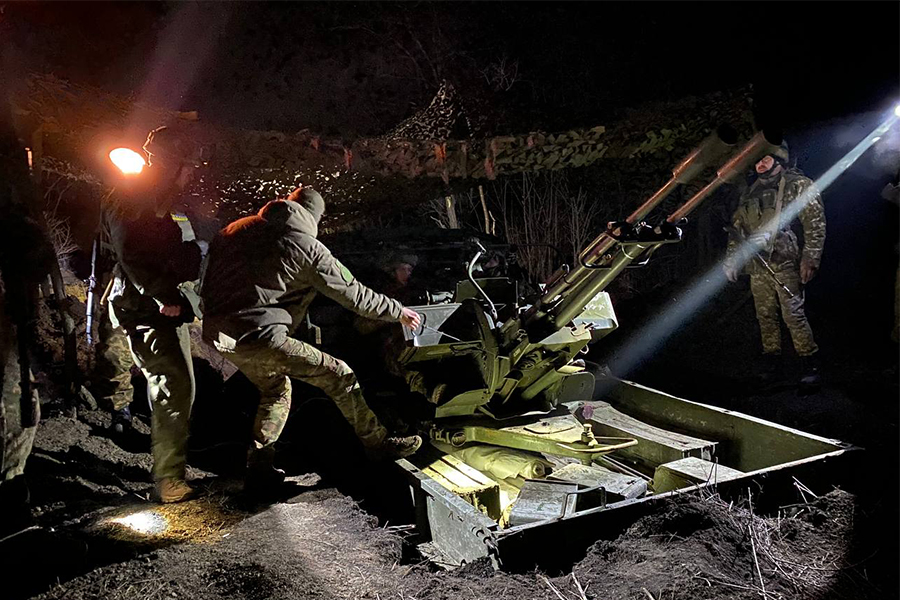
Whatever the diplomatic wording, the physical record of Thursday night is documented by both sides' officials. Ukraine's air force said Russia launched 580 drones overnight, of which 536 were shot down. The central Kirovohrad region — a relatively infrequent target until now — took what Governor Andriy Raikovych called the largest attack on its territory of the entire war: more than 360 drones, 26 locations hit, three people killed and six wounded, with strikes on critical infrastructure, transport enterprises, logistics facilities and homes. Power was knocked out to hundreds of thousands of people across the country. That is the backdrop against which Kyiv says a one-sided pause became indefensible: Ukraine was being asked to spare the refineries that fund Russia's war while Russia's drones worked through Ukraine's power grid unimpeded. Trump's counter-argument, made on Newsmax, is economic rather than military: refinery strikes raise diesel prices for everyone, including American drivers, in the run-up to midterm elections — and a president who promised cheaper energy reads every burning refinery as a price rise with his name near it. Both claims can be true at once, and that is precisely why the argument has no easy referee.
The satellite and intelligence pressure — and the denials
Behind the public row sits a quieter and more serious dispute. Reuters reported on Thursday that, as Washington pressed Kyiv to halt the refinery strikes, Ukraine faced reduced usage of the military satellite system it relies on for battlefield communications and drone operations — and that the order came from inside the White House, according to two US officials and a Western official briefed on the matter, who did not identify who gave it. CNN reported that the administration had warned Kyiv the United States could halt intelligence sharing and block European purchases of American weapons if the strikes continued, and Zelenskyy has said US counterparts told Ukraine directly that intelligence would be blocked if it did not stop. The balance, which any honest account has to carry: a senior US official has denied that the president personally made any such request regarding the satellite system — the dispute examined in our report on the White House Starshield order and Washington's denial. What is not denied by anyone is the sequence: pressure over refineries, a degraded satellite service at a moment of maximum Russian attack, and a Ukrainian president concluding in public that the partnership itself is slipping. Reuters noted it could not independently verify the battlefield claims in this exchange; the satellite and intelligence accounts rest on unnamed officials on both sides, and readers should hold them at exactly that weight — serious, sourced, and unconfirmed in their particulars.
Why this matters
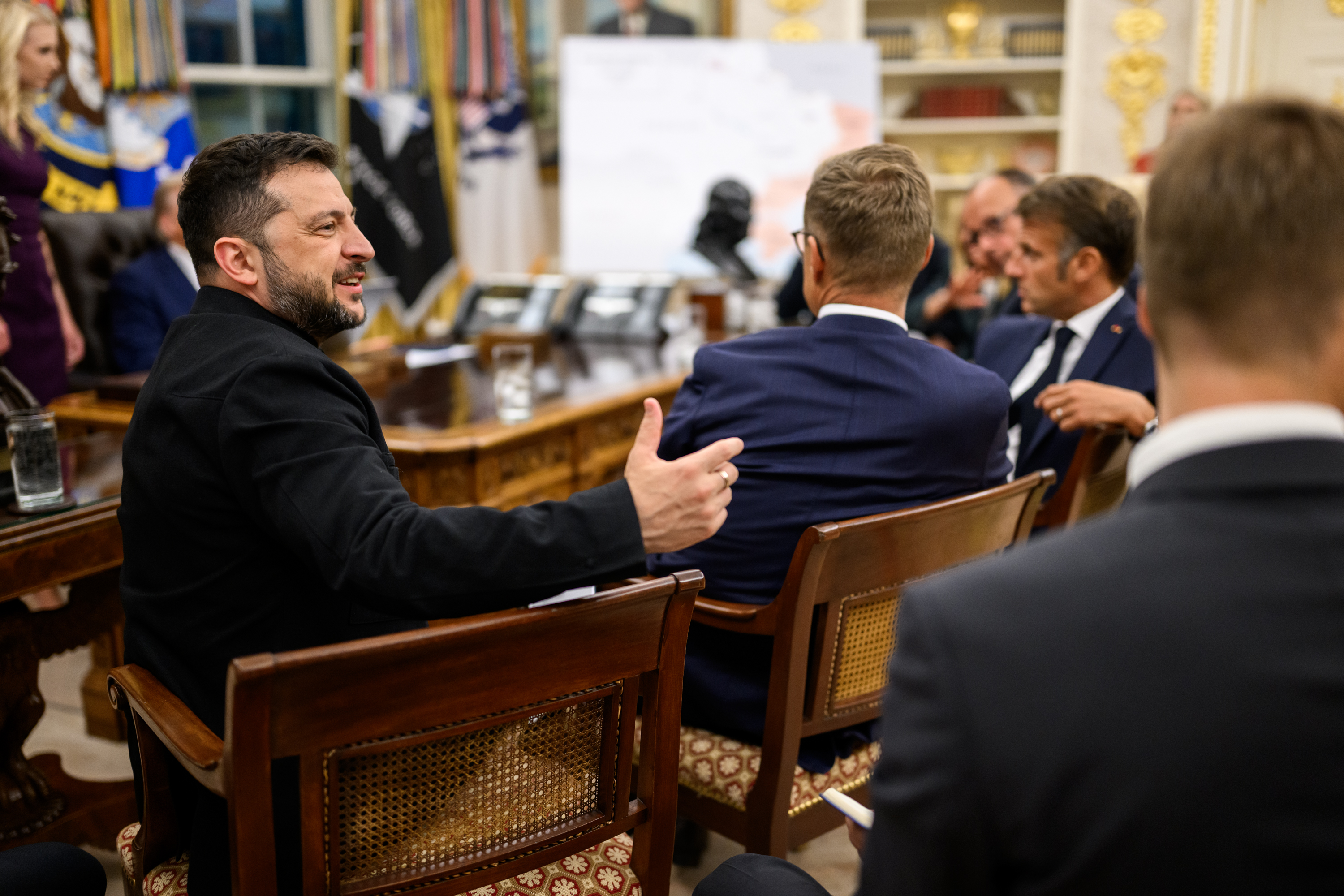
Three consequences follow from a president saying this on television rather than in a phone call. First, leverage: Ukraine's refinery campaign has been its most economically effective pressure on Moscow — a way to tax the war's funding and force Russia to spend air defences on its own rear. If Washington now treats that campaign as a problem to be stopped rather than a card to be traded, Kyiv loses both the weapon and the bargaining chip, and Moscow learns that Russian strikes on Ukrainian power plants carry no equivalent cost in Washington. Second, prices: Trump is not wrong that refinery attacks move diesel markets — that is, from Kyiv's perspective, rather the point of them — but he has now publicly attached his own credibility to stopping them, which raises the cost to him if they continue, and therefore raises the pressure he is likely to apply. Third, trust: wars between allies are usually lost in public before they are lost in private. When a Ukrainian president tells interviewers he feels betrayed, and an American president tells a friendly network he is not a fan of his counterpart and finds his enemy easier to deal with, the negotiation each is supposedly conducting with the other has already changed character. CNN's assessment — the worst crisis in the relationship since last year's Oval Office meltdown — is a judgement, not a fact, but the facts underneath it are the ones listed above, and they are not in dispute.
Who benefits, who loses
On the week's evidence: Moscow benefits most directly. Russia's energy infrastructure gets an American president arguing its case in public, its own strikes on Ukrainian power plants drew no comparable televised condemnation, and the diesel deal that preceded this row — Washington agreeing to buy Russian diesel, which Zelenskyy called a birthday present for Putin — stands unreversed; that deal's politics are traced in our report on the Trump-Putin diesel deal and the Zelenskyy backlash. Ukraine loses room to manoeuvre: it can defy Washington and risk intelligence, satellites and weapons pipelines, or comply and watch its one asymmetric campaign be bargained away. European governments lose certainty — Zelenskyy arrives at Friday's EU summit needing air defences and a united front, and instead brings proof that the transatlantic argument is now happening on cable television. American drivers, the constituency Trump named, gain only if the strikes actually stop; if Kyiv keeps flying — and on Thursday it flew — the prices stay and the president owns a promise he visibly cannot enforce.
What happens next
Watch four things. The EU summit on Friday, where Zelenskyy will press European leaders on air defence and, implicitly, on whether Europe will backfill anything Washington throttles. The next refinery night: one more Ukrainian strike on a Russian plant after this interview converts a policy dispute into a direct test of presidential authority, and Kyiv knows it — which is an argument both for restraint and, in Kyiv's deterrence logic, for going again quickly. The satellite question: whether the restrictions Reuters described are acknowledged, reversed or quietly normalised will tell us more about the real state of the partnership than any interview. And Moscow's reading: if Russia concludes Washington will police Ukraine's strikes for it, its own incentive to negotiate anything narrows to waiting. The war's front lines barely moved this week. Its politics moved a great deal — on television, in a single interview, in the word "disgrace."
Related coverage: Zelenskyy says Ukraine will resume strikes on Russian refineries · Ukraine strikes Ryazan refinery as energy ceasefire ends · White House ordered Starshield limit on Ukraine, sources say
Sources
- Reuters, October 16, 2026 — Ukraine's resumption of strikes on Russian refineries is a 'disgrace', Trump says (Newsmax interview; Ryazan Rosneft strike; Russian strikes knocking out power to hundreds of thousands; reduced satellite-system usage with the order coming from inside the White House, per two US officials and a Western official).
- Newsmax, October 15, 2026 — Trump to Newsmax: Not Fan of Zelenskyy as Kyiv Resumes Refinery Strikes (the Finnerty interview from the White House; Ryazan fire confirmed by Russian officials; senior Ukrainian official confirmed the strike; three-day pause account).
- CNN, October 15, 2026 — Zelensky says Ukraine will resume strikes on Russian refineries, and reporting on the Starlink/Starshield dispute (administration warnings over intelligence sharing and European weapons purchases; Zelenskyy's account of the threats).
- Washington Examiner, October 15, 2026 — Trump says he's 'not a big fan' of Zelensky after new strikes on Russian oil refineries (settlement remarks; Russia never agreed to the energy ceasefire; Moscow's strikes on Kyiv after the Sunday announcement).
- Reuters, October 15, 2026 — Central Ukrainian region hit by vast drone attack, killing three (Kirovohrad: over 360 drones, 26 locations, 3 killed, 6 wounded; Ukrainian Air Force: 580 drones launched, 536 shot down).
- Financial Times interview with President Volodymyr Zelenskyy, as reported by Reuters and CNN, October 15, 2026 — the end of the refinery pause ("The block is out. We're done").