Trump blames Ukraine for gas prices
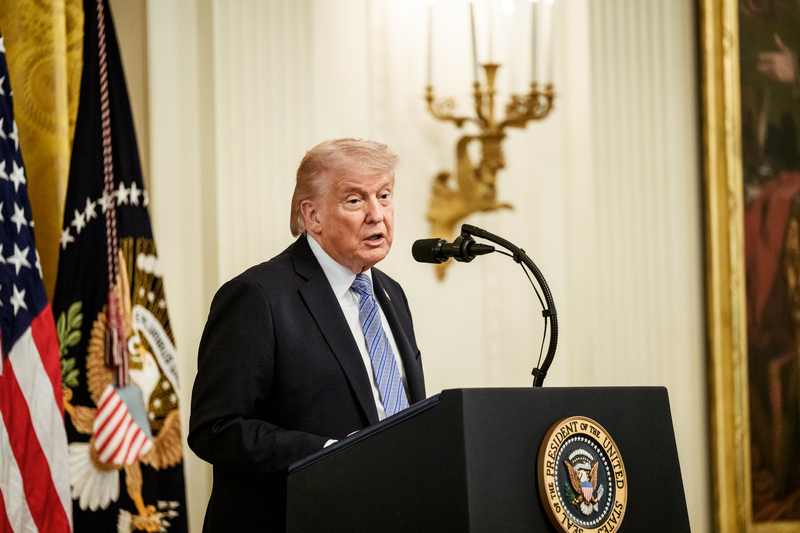
Trump blames Ukraine for gas prices in a new Truth Social post, arguing Monday that attacks on Russian refineries and refinery shutdowns in Democratic-led states have replaced the Strait of Hormuz as the central explanation for the cost at the pump. The intervention comes as AAA lists the national regular-gas average at $4.3653 a gallon on October 5 and as record diesel costs continue to work through freight, farming and retail prices.
The president wrote: “What's driving up Gasoline is no longer the Strait of Hormuz, because Record Numbers of Barrels are coming out now on an almost daily basis, but the word, ‘Refineries,’ where Russia's are being blown up by Ukraine, and where ours are being closed up, in Blue States, like California, by the Dumocrats.” Reuters reported the post and said both the Iran-war shock and Ukraine's attacks on Russian energy infrastructure have contributed to higher fuel costs.
That distinction matters. Trump's statement is a political diagnosis delivered less than a month before the November midterms. The market diagnosis is more complicated: crude supply, tanker risk, refinery outages, seasonal maintenance, inventories and the geography of regional fuel systems all shape what drivers pay. Assigning a single cause is therefore analytically weak, even when that cause is real.
Why This Matters
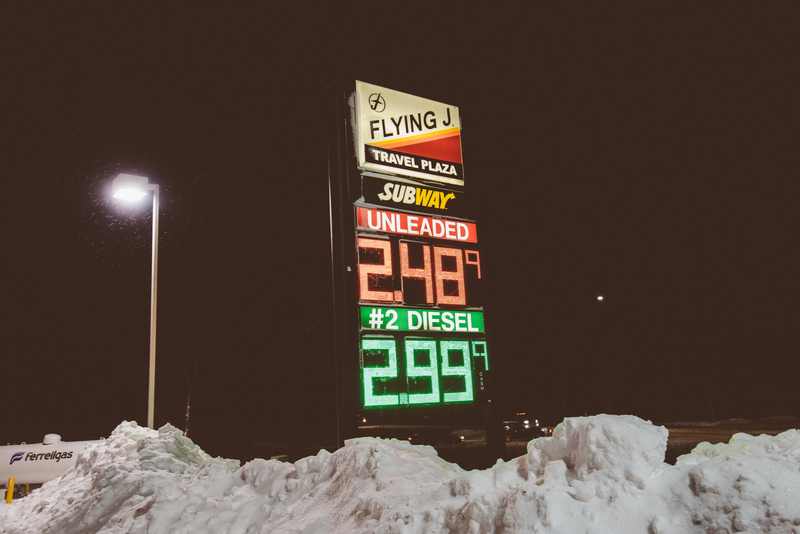
Gasoline is one of the few prices Americans see advertised in ten-foot numbers. It is a daily referendum on economic management, and it reaches voters whether or not they follow commodities markets. At the same time, diesel is embedded in the price of nearly everything moved by truck, rail, ship or farm equipment. A diesel shock can appear later in grocery, construction and delivery bills, making the political damage broader than the filling-station receipt.
The stakes are intensified by timing. Trump has previously acknowledged that fuel prices may not fall meaningfully until after the midterm elections. That admission set a hard public clock. Any decline before voting begins can be sold as proof that reserve releases and diplomatic pressure worked; continued pain hands Democrats a concise affordability argument.
There is also a foreign-policy tradeoff. Ukraine regards Russian refineries as strategic targets because energy revenue finances Moscow's war and refined products sustain military logistics. Washington, focused on consumer prices, is asking Kyiv to absorb more restraint. That means a domestic cost-of-living problem is now influencing which targets an invaded country is pressed not to hit.
How We Got Here
The Hormuz shock came first
The Strait of Hormuz normally carries roughly one-fifth of the world's oil supplies. When Iran cut off access, the disruption did not need to remove every barrel to raise prices: shipping delays, rerouting, security risks and insurance costs all added a premium. Vice President JD Vance recently framed the duration of the conflict around when Iran would stop firing on ships, while Trump now says Hormuz is “no longer” the main problem. Those statements can both describe different moments, but the change in emphasis is politically striking.
Trump's latest formulation should not be read as evidence that Hormuz no longer matters. Even if more barrels are moving, traders price the risk that flows could tighten again. Crude is also only one input. Refineries must turn it into gasoline and diesel in the right places, grades and seasons.
Ukraine widened the refined-fuel shortage
Ukraine's long-range strike campaign has damaged or disrupted Russian refining capacity. That can tighten global diesel supply even when the crude oil itself remains in the ground or can be rerouted. In September, U.S. diesel prices reached a nominal record; a widely reported AAA peak of $6.53 a gallon on September 22 was far above the roughly $3.76 level before the Iran war and above the prior 2022 nominal high.
Trump had already urged President Volodymyr Zelenskyy to stop striking Russian refineries. Yet combat did not stop: a September Reuters report described fresh Russian attacks on Ukrainian energy and port infrastructure and a Ukrainian strike on a Russian refinery after Trump said both sides had agreed to halt such attacks.
Kyiv's position is conditional rather than unilateral. Zelenskyy has said Ukraine is prepared to halt energy strikes if partners can guarantee that Russia also stops hitting Ukrainian energy infrastructure. That is not a semantic difference. A one-sided halt would remove Ukrainian leverage while leaving its grid, heating system and fuel network exposed.
U.S. refining capacity has less room for error
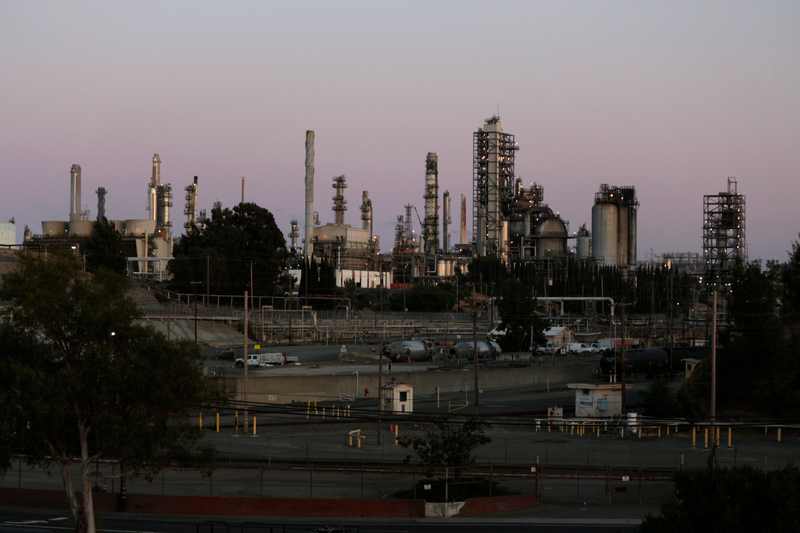
Trump's California argument contains a real capacity concern but compresses the history into a partisan slogan. In July 2025, the U.S. Energy Information Administration said two announced closures—the 139,000-barrel-a-day Phillips 66 Wilmington refinery and the 145,000-barrel-a-day Valero Benicia refinery—would represent 17% of California's refining capacity if fully realized. EIA warned that the loss could increase West Coast price volatility because the region has limited pipeline connections to Gulf Coast refineries.
The timetable matters. Phillips 66 announced a late-2025 end to crude processing in the Los Angeles area. Valero had notified California of plans to end refining at Benicia by the end of April 2026. Those are company decisions with economic, operational and regulatory context; the EIA record does not support the simple claim that a governor personally “closed” both plants. Because facility status can change, the firmest conclusion is about capacity risk and regional vulnerability, not a single official's direct action.
What the Numbers Actually Say
Fact: AAA's national regular-gas average was $4.3653 on October 5. On October 1, AAA said the weekly average had fallen nearly seven cents to $4.41 after a record-setting September; the September monthly average was $4.33, 50 cents above the previous September record. A modest weekly retreat is useful, but it does not erase the year-over-year affordability shock.
Fact: Diesel's September nominal record was much steeper than gasoline's move. Diesel affects commercial transport and production, so the economic pass-through is larger than its share of passenger vehicles suggests. The number also shows why refinery disruptions can matter more for diesel than a headline crude price alone would imply.
Analysis: The figures point to two overlapping problems. Hormuz constrains crude and product flows while adding a geopolitical premium. Russian refinery damage removes or delays finished fuel, particularly diesel. Domestic closures then narrow the buffer in regions already isolated from the country's main refining centers. The drivers are additive; they do not cancel one another out.
Historical context: The September diesel peak exceeded the previous nominal record of about $5.82 reached in 2022. Inflation adjustment narrows that difference, but household and business cash flow responds to the posted price, not an inflation-adjusted series. For regular gasoline, the October level remained below the June 2022 national record of roughly $5.02, but it was unusually high for autumn.
Who Benefits—and Who Pays
Refiners with operating capacity can benefit from wider margins when product supply is tight. Producers outside disrupted routes may gain market share, while governments that release reserves can claim visible action. Russia, however, loses export earnings and repair capacity when its refineries are hit; Ukraine gains a means of imposing economic cost beyond the battlefield.
The losers arrive in layers. Drivers pay first. Truckers, farmers, airlines and manufacturers then face higher operating costs. Retailers and consumers absorb part of the pass-through later. California drivers carry extra regional exposure because specialized fuel standards and limited pipeline connectivity make replacement barrels harder and costlier to source quickly.
Critics of Trump's account will argue that the Iran war remains foundational and that presidential policy cannot be separated from the original shock. Supporters will point to recovering flows through Hormuz and the clear impact of refinery outages on diesel. The strongest evidence supports neither a total exoneration nor a single-cause indictment: the balance among causes changes over time, but all remain relevant.
The Political Tension With Kyiv
Trump is asking Zelenskyy to protect Russian refining capacity from Ukrainian strikes while publicly blaming Ukraine for American fuel bills. That pressure creates a difficult incentive. Every additional refinery outage may raise Russia's war costs but also risks tightening a market that matters to Ukraine's principal backer.
Kyiv's reciprocal-halt position is designed to avoid giving up that leverage for nothing. Russia's strikes on Ukrainian power and heating infrastructure impose civilian and military costs, especially as winter approaches. Unless both sides stop—and unless monitors can establish what counts as an energy target—an announced truce may do little to reduce the risk premium embedded in diesel.
The politics are equally sharp at home. By shifting from Hormuz to refineries, Trump is trying to recast an affordability issue from a war-policy liability into a story about Ukraine and Democratic energy governance. Whether voters accept that frame will depend less on speeches than on the numbers glowing above their local gas station.
What Happens Before the Midterms
Scenario one: relief arrives
The G7 has agreed to release up to 100 million barrels of diesel, crude and other fuels through the International Energy Agency over four months, with an early emphasis on diesel. If those barrels reach the right markets quickly, Hormuz flows continue improving and refinery damage stabilizes, gasoline and diesel could ease. Read our analysis of the G7's 100-million-barrel fuel release.
Scenario two: prices plateau but stay painful
Reserve releases can bridge a shortage, not repair refineries or permanently reopen a shipping lane. A plateau near current levels would still leave motorists paying substantially more than a year ago and freight operators managing unusually high diesel costs. That is enough to keep affordability at the center of the campaign.
Scenario three: another supply shock
A renewed Hormuz interruption, a successful strike on a major Russian or Gulf refinery, an unplanned U.S. outage or a slow reserve rollout could reverse the recent gasoline dip. Thin spare capacity magnifies each event. The market is therefore vulnerable not only to lost barrels but to uncertainty about the next loss.
What to Watch
- G7 delivery: whether emergency diesel reaches the market in the promised early window, not merely whether barrels are announced.
- Hormuz traffic: sustained tanker flows, insurance costs and any renewed Iranian attacks on shipping.
- Ukraine and Russia: whether refinery and power-grid strikes continue, and whether a reciprocal, verifiable halt emerges.
- California capacity: operating status, imports and inventories as the state absorbs announced refinery exits.
- AAA prices: whether regular gasoline continues its early-October retreat and whether diesel moves decisively below September's record.
The central conclusion is less satisfying than a campaign slogan but more useful: no single actor controls the pump price. Trump's refinery argument captures a genuine supply constraint. His attempt to declare Hormuz no longer decisive goes beyond what the public evidence can establish. The next month will test not only whether prices fall, but which explanation voters believe when they do—or do not.
Related Signal Post News Coverage
Sources
Reporting note: Pump prices are a dated snapshot and can change daily. Claims about responsibility are attributed; analysis distinguishes correlation, capacity constraints and political argument.