g7 100 million barrel fuel release
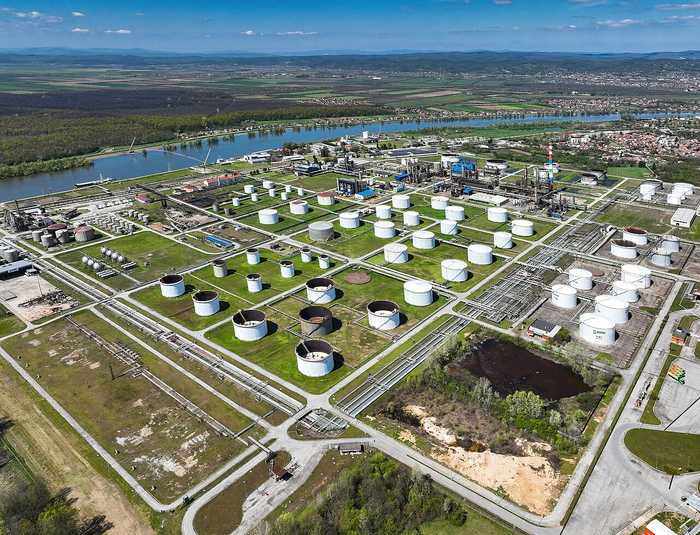
PARIS — The Group of Seven has agreed to put 100 million barrels of diesel and crude oil into the market through the International Energy Agency, beginning immediately and running over four months, as the Middle East war strains supply and pushes fuel costs higher.
The sequence is the point. In an official statement after an October 2 virtual meeting, leaders said the package would include “a frontloaded substantial diesel release within the first 20 days” by G7 members and partners. The G7 also promised to coordinate refinery maintenance, raise utilization where feasible, avoid export restrictions among members and ask the IEA for a market-impact report within 20 days.
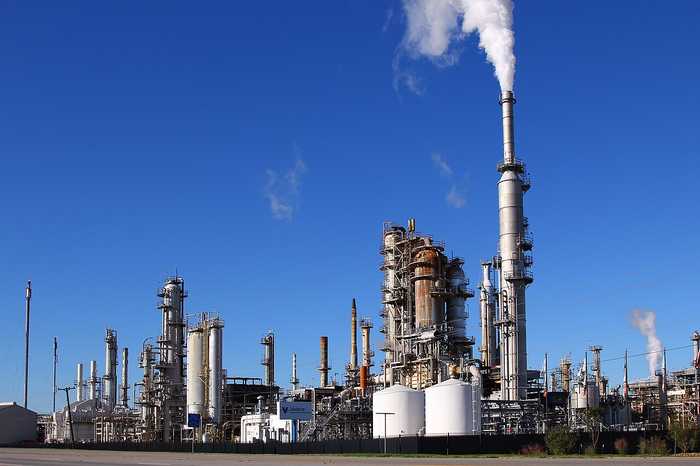
That design acknowledges where the shortage hurts most. Crude is only useful after a refinery turns it into diesel, gasoline, jet fuel or other products. With refinery margins at record levels in the Atlantic Basin and the IEA warning that the global refining system is reaching its limits, releasing diesel first can reach trucks, farms, factories and heating markets faster than releasing crude alone.
Reuters reported that Brent crude fell roughly $3 after the announcement and gasoil futures dropped more than 4%. Those immediate moves show that traders heard a credible near-term supply signal. They do not prove that retail prices will fall by the same amount—or stay lower.
What the G7 energy agreement actually says
The verified package has five operational parts. First, 100 million barrels of diesel and crude will be released through the IEA over four months. Second, diesel is front-loaded in the first 20 days. Third, governments will coordinate refinery maintenance and consider higher utilization where feasible. Fourth, the IEA will monitor the delivery of a separate 400-million-barrel action agreed in March 2026 and report on market effects. Fifth, members reaffirmed that they would not impose export restrictions on one another.
The last two promises matter because announced barrels and usable barrels are not the same thing. By October 2, about 325 million of the 400 million barrels pledged in March had reached the market, according to figures reported around the meeting. The remaining gap reflects the practical reality of emergency releases: tanks, pipelines, ports, refinery configurations and national rules determine when a pledged barrel becomes supply a buyer can use.
The no-restrictions pledge is equally practical. A reserve release can be neutralized if one country simultaneously blocks fuel exports to preserve domestic supply. President Donald Trump had threatened a possible U.S. diesel-export ban in late September, then said it was never really on the table. French President Emmanuel Macron said G7 members had agreed not to impose such restrictions on each other. For a diesel-short market, keeping trade lanes open can be as important as the headline volume.
How the oil market Middle East conflict created a diesel squeeze
The IEA's September Oil Market Report described a system absorbing both lost crude and lost refining capacity. It projected world oil demand at 102.4 million barrels a day in 2026, down 2.5 million barrels a day from the prior year, while supply was projected to fall by 5.7 million barrels a day. Inventories had been drawing by about 2.8 million barrels a day since the war began, a cumulative decline of roughly 507 million barrels since February.
Flows through the Strait of Hormuz were 7.6 million barrels a day in August—13.1 million below their prewar level, according to the IEA figures. That is why the crude oil prices Middle East war story cannot be reduced to one blocked route or one benchmark. The shock travels through refinery feedstock, shipping time, insurance, product inventories and the ability of individual plants to make the grades of fuel buyers need.
Diesel has been the tightest link. European diesel futures climbed above $200 a barrel, while the regional pump average reached a record €2.24 a liter. In the United States, the national diesel average hit a record $6.52 a gallon on September 22 and stood at $6.37 on October 2, according to AAA figures cited in coverage of the decision. A global diesel shortage in 2026 is therefore not simply a crude shortage: it is a shortage of the right finished product, in the right market, at the right moment.
The pressure also intersects with Russia's refining system. Ukrainian attacks and diplomacy around refinery strikes have become another variable in global fuel supply; our earlier analysis examined Trump's request that Kyiv ease strikes on Russian refineries as diesel prices rose. Separately, the reported fire and smoke at Aramco's Riyadh refinery illustrates why markets now attach a security premium to processing infrastructure as well as oilfields and shipping lanes.
Why this matters
The release buys time. It can fill part of the gap while refiners alter maintenance schedules, cargoes reroute and diplomacy tests whether normal Hormuz traffic can recover. It can also cool expectations: when traders believe governments have both barrels and the willingness to use them, some scarcity premium can come out of futures before every cargo arrives.
But emergency inventories are a bridge, not new production. Every barrel drawn today reduces the cushion available for a later outage unless it is replaced. That trade-off is acceptable when a disruption is severe and temporary. It becomes harder if the conflict is prolonged, refinery bottlenecks persist or producers deliberately offset the release.
The G7's wording recognizes that distinction. Leaders condemned Iran, called for full restoration of navigation through Hormuz, praised U.S. efforts and maintained sanctions on Russia. Those are political positions, but the market mechanism beneath them is simpler: reserves can smooth the path to restored supply; they cannot create a durable replacement for millions of barrels a day indefinitely.
The math: large enough to matter, too small to transform the market
100 million barrels is less than one day of global demand
Against the IEA's 102.4-million-barrel-a-day demand estimate, the entire package equals about 23 hours of world consumption. That comparison is useful for scale, but misleading if it implies the barrels arrive in one burst. Spread evenly across roughly 120 days, 100 million barrels adds about 833,000 barrels a day—less than 1% of global consumption.
An additional 833,000 barrels a day is not trivial in a tight market. Commodity prices are set at the margin, and a shortage of a few hundred thousand barrels can create an outsized price response when inventories are thin. Yet that daily rate is also far below the 13.1-million-barrel-a-day decline in Hormuz flows reported for August. The coordinated oil reserve release narrows the deficit; it does not close it.
The front-loaded diesel tranche is more forceful
The leaders did not publish a country-by-country diesel schedule in their statement. If, illustratively, half of the 100 million barrels were diesel delivered within 20 days, that would equal 2.5 million barrels a day during the opening window. That is not a confirmed allocation; it shows why sequencing can matter more than a four-month average. A smaller, faster product release can have a stronger effect on diesel cracks and wholesale prices than a larger, slower crude draw.
Readers should therefore watch the IEA's next report for the actual diesel volume, delivery calendar and locations. Without those details, forecasts about diesel prices easing are scenarios, not facts.
How this compares with past strategic petroleum reserves releases
In 2022, after Russia's invasion of Ukraine, the IEA coordinated a 120-million-barrel action in April, including 60 million barrels from the United States. The U.S. separately committed enough additional barrels to bring the combined release available over six months to 240 million barrels. That followed a 60-million-barrel coordinated IEA release in March. The current 100-million-barrel package is smaller than those combined 2022 interventions, but more explicitly targeted at diesel.
The IEA coordinated releases of 60 million barrels during the Libyan supply disruption in 2011 and after Hurricanes Katrina and Rita in 2005. During the 1991 Gulf War response, the United States accepted bids for 17.3 million barrels from its reserve. History shows that reserve releases can stabilize expectations and bridge outages. It also shows that their effect depends on timing, product mix and whether the underlying disruption is actually repaired.
This intervention is therefore neither merely symbolic nor a market reset. It is larger than the 60-million-barrel emergency actions of 2005 and 2011, smaller than the broad 2022 response and sharply tailored to a refined-product bottleneck.
Who benefits, who loses and what critics will watch
Motorists, freight operators and farmers
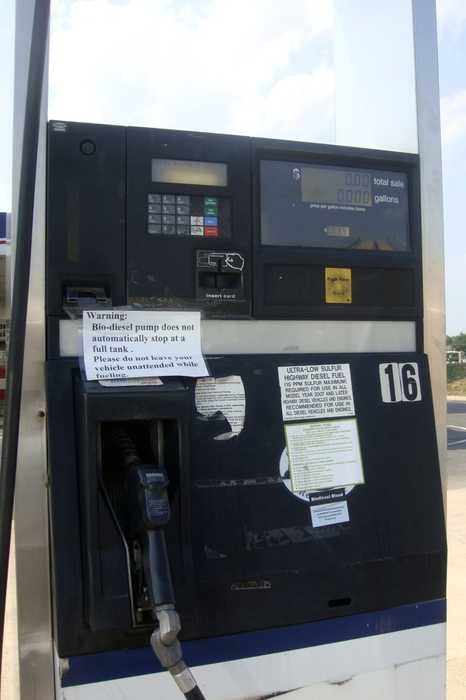
They are the intended beneficiaries. Lower wholesale diesel costs can eventually ease delivery, agricultural and industrial expenses. But the pass-through is neither immediate nor equal. Taxes, retail margins, exchange rates, local inventory and transport costs can keep pump prices elevated even after futures fall.
Refiners
Refiners face two opposing effects. More crude can improve access to feedstock, while a surge of government-supplied diesel can compress unusually high refining margins. Plants able to increase runs may gain volume; plants already operating near technical limits may see little benefit. The G7's maintenance coordination request is an attempt to avoid taking scarce capacity offline at the same time.
Oil producers and OPEC+
Producers lose some pricing power when consuming nations add emergency supply. OPEC+ could respond by delaying production increases or cutting output, partly offsetting the release. That is a risk, not a declared plan. A counter-cut would also carry costs: it could intensify political pressure, support rival production and make the group appear to defend wartime prices.
Governments holding reserves
They gain a chance to demonstrate coordination, but spend part of their insurance policy. Critics can fairly ask how quickly stocks will be replenished, at what price and whether repeated interventions weaken readiness for the next disruption. Supporters can answer that emergency reserves exist precisely for a severe supply shock. Both arguments hinge on the duration of the crisis.
Australia: welcome relief, limited direct exposure
Australian Energy Minister Chris Bowen said the G7 release would “probably not impact Australia” directly and cautioned that it was too early to determine the effect on domestic fuel prices, according to AAP. He welcomed the agreement, especially the commitment against U.S. diesel export restrictions; Australia gets about 2% of its diesel from the United States.
Australia had reduced minimum stock obligations by 20% until January. Bowen said the country held 41 days of petrol, 32 days of diesel and 28 days of jet fuel, with 50 ships en route and 3.6 billion liters contracted for the next four weeks. Capital-city averages were about A$2.38 a liter for unleaded 91 and A$2.85 for diesel. Those figures describe supply cover and prices at the time of his remarks; they do not guarantee the future retail path.
Australia's case captures the broader limit of a global announcement. The release can influence benchmarks, shipping flows and sentiment, but domestic prices still reflect where cargoes land, the fuel mix, exchange rates, taxes and local inventories.
What happens next: winter demand, OPEC+ and the 20-day test
First, the diesel schedule. The IEA's follow-up within 20 days should show how much diesel is front-loaded, which countries supply it and where it goes. That will determine whether the announcement translates into physical relief in Europe, North America and other import-dependent markets.
Second, refinery uptime. Watch for maintenance deferrals, outages and utilization rates. Running plants harder can add product quickly, but it also raises reliability risks. A forced shutdown at a heavily utilized refinery could erase part of the gain.
Third, winter demand. Diesel and heating oil compete for related refining capacity. An early cold spell would pull more distillate from storage and reduce the release's cushion. Mild weather would extend it. The winter outlook therefore depends on temperature and inventories as much as crude supply.
Fourth, OPEC+ behavior. A neutral response would allow the G7 barrels to add to supply. A production cut could blunt the effect; an increase could reinforce it. Any decision should be judged against actual exports, not just announced quotas.
Fifth, Hormuz. The decisive variable is whether safe navigation and large-scale flows recover. If Hormuz traffic rises materially, reserves can bridge the return to normal supply and fuel prices may ease further. If flows stay near August's depressed level, 100 million barrels will run down quickly relative to the missing volume.
The cleanest conclusion is also the least dramatic: the G7 has made a serious, targeted intervention in a market under stress. It may lower the peak, slow inventory losses and protect the early winter window. It cannot, by itself, resolve the war, reopen a chokepoint or manufacture spare refining capacity. The next 20 days will show whether the barrels are placed where the shortage is—and whether producers and conflict dynamics allow that relief to last.
Sources and reporting notes
- G7 leaders' statement on global energy security and market stability (October 2, 2026)
- Reuters: G7 to release 100 million barrels of diesel and crude through the IEA (October 2, 2026)
- AAP: Australia's energy minister on the G7 release and domestic fuel prices (October 3, 2026)
- The Wall Street Journal: IEA September Oil Market Report findings on demand, supply, inventories and refinery strain
- Reuters: IEA details the 2022 coordinated reserve release and 240-million-barrel combined total
- ABC News Australia, Top Stories podcast, October 3, 2026 — reporting on the G7 agreement and the Australian response.
Reporting note: Official and reported volumes, prices, inventories and policy statements are attributed to their sources. The even-flow calculation and the illustrative diesel tranche are Signal Post News arithmetic; the actual country and product allocations await the IEA's follow-up. OPEC+ responses and winter outcomes are scenarios, not predictions.