Trump awards medals Elon Musk
Trump awards medals Elon MuskNational Medal of Science 2026Trump science awards summitJensen Huang National Medal of ScienceElon Musk modern day EdisonSergey Brin National Medal of ScienceLisa Su AMD medal TrumpMichael Dell Satya Nadella technology medalScience New Golden Age summit
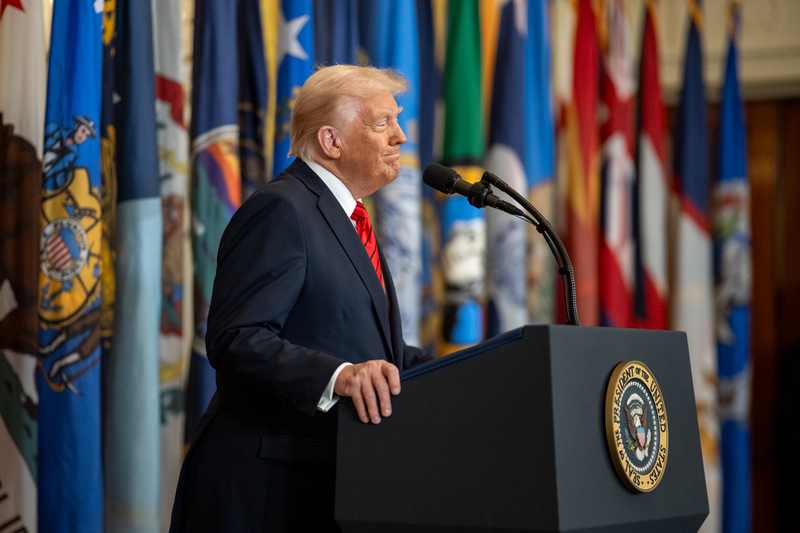
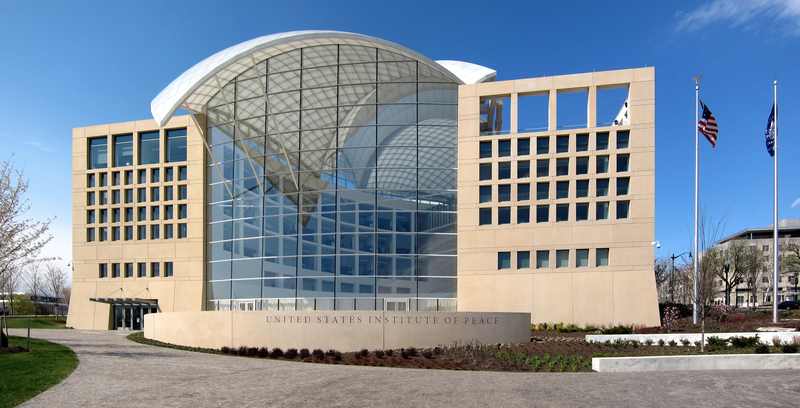
WASHINGTON — Trump awards medals Elon Musk and five other technology leaders in a ceremony that turns presidential honors into a map of American power in the AI age. At Thursday's “Science: A New Golden Age” summit at the United States Institute of Peace, President Donald Trump presented the National Medal of Science to Musk, Google co-founder Sergey Brin, Nvidia chief executive Jensen Huang and AMD chief executive Lisa Su. Michael Dell and Microsoft chief executive Satya Nadella received the National Medal of Technology and Innovation.
The roster is unusually current. These are not simply retired inventors whose breakthroughs have settled into history; they lead companies controlling many of the chips, cloud platforms, research laboratories, launch systems and data-center hardware behind today's technology race. That makes the ceremony both recognition and policy signal. It also makes the politics inseparable from the science.
Why this matters: medals as industrial strategy
The National Medal of Science and the National Medal of Technology and Innovation rank among the federal government's highest honors for scientific and technological achievement. Bestowing them on active corporate leaders tells agencies, investors and foreign competitors which capabilities the administration treats as strategic: advanced chips, hyperscale computing, frontier research, aerospace capacity and the infrastructure that binds those systems together.
Supporters see a coherent national strategy. The United States is competing with China for semiconductor production, model leadership, scientific talent and the power supply needed to run large computing systems. Honoring the people who built leading American platforms can reinforce ambition and keep industry aligned with national priorities. The administration's case is that recognition, procurement and partnership can move faster than regulation-first policy.
Critics see a different message: the presidency celebrating powerful executives whose political giving, corporate lobbying and federal contracts overlap with public policy. That concern is not a claim that the recipients lack accomplishment. It is a question about the criteria, timing and appearance of presidential favor. With the November 3 midterms 26 days away, even a science ceremony operates inside an electoral frame.
Who received which medal
National Medal of Science 2026 recipients
The four science medals went to Musk, Brin, Huang and Su. The assignments matter because the two presidential medals recognize different kinds of contribution. Musk's companies span electric vehicles, rockets, satellites and computing. Brin helped build Google and remains tied to one of the world's most consequential research ecosystems. Huang and Su lead the two companies most closely associated with the accelerator chips driving modern AI.
The ceremony created several instantly searchable shorthand labels — Jensen Huang National Medal of Science, Sergey Brin National Medal of Science and Lisa Su AMD medal Trump among them — but each compresses a longer record. The point of the award is not a single product cycle; it is cumulative influence on the country's scientific and technical capacity.
Technology and Innovation medals
Dell and Nadella received the National Medal of Technology and Innovation. The Michael Dell Satya Nadella technology medal pairing highlights the less glamorous but indispensable layers of the AI system: enterprise hardware, servers, cloud services and software distribution. Models attract attention; infrastructure determines who can actually use them at scale.
The “modern day Edison” moment
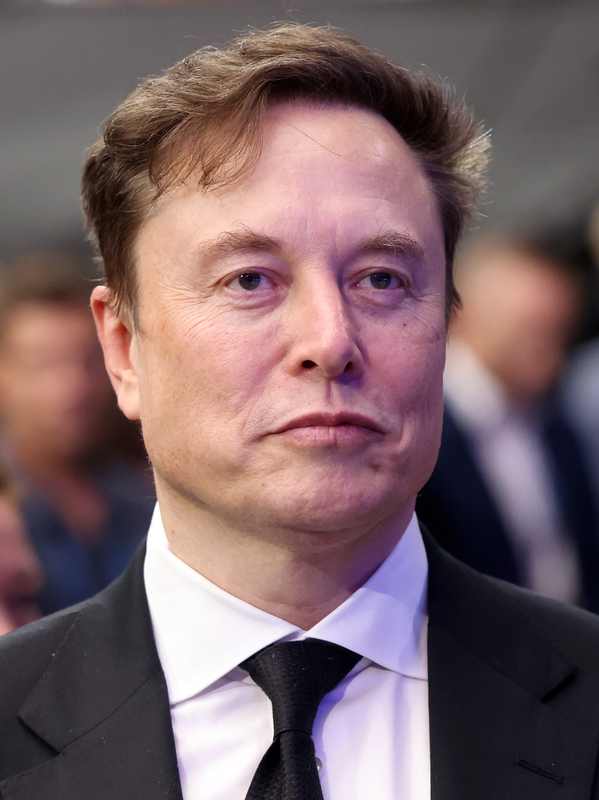
Trump made Musk the emotional center of the program, calling him the “modern day Thomas Edison.” The president introduced him as “an industrial titan, a brilliant engineer and one of the greatest technology founders to ever live,” then argued that few Americans had done more to advance the national interest.
The Elon Musk modern day Edison comparison is effective political theater because it places a living, polarizing executive inside a familiar American story of invention. Admirers will point to reusable rockets, mass-market electric vehicles and satellite networks. Skeptics will note that modern companies are collective enterprises built by vast teams, public contracts and decades of government-funded research. The medal celebrates individual leadership; the history underneath it is institutional.
The donor question — and the two ways to read it
USA Today reported that almost all of the recipients, or their companies, had donated to Trump's campaign, inauguration fund or White House ballroom project. Citing OpenSecrets, the report said Musk spent $291 million supporting Trump and other Republican candidates in the 2024 cycle, making him the cycle's largest individual political donor. Dell and his wife, Susan, pledged or donated $6.25 billion to Trump Accounts, while Microsoft gave $10 million to the ballroom project.
Critics view those numbers as evidence that the ceremony cannot be separated from access and patronage. In that reading, the medals risk looking like rewards within an ecosystem of donations, contracts and political visibility. Supporters reject the implied transaction: major technology companies routinely engage with presidents of both parties, and substantial political spending does not erase the recipients' records of building globally important businesses.
The responsible conclusion is narrower than either accusation or dismissal. The achievements are real, the financial relationships are relevant, and the public deserves transparent selection standards. A medal can be merited while its presentation still serves a political purpose.
Six companies, one AI supply chain
Taken together, the honorees' companies touch nearly every major layer of the American AI economy. Nvidia and AMD design the accelerators; Microsoft supplies cloud capacity and software distribution; Google combines research, models, advertising and cloud infrastructure; Tesla and SpaceX connect autonomy, robotics, launch and satellite systems; Dell packages the server and enterprise hardware that turns components into deployable systems. This is not a precise market-share calculation, but it is a concentration of influence difficult to match in one room.
That is why the Trump science awards summit functions as more than a ceremonial roll call. It places private-sector capacity inside a national-competition narrative. The upside is coordination: government can set goals while industry supplies tools at speed. The risk is dependence: when a small number of companies control key layers, public science can inherit their pricing, technical limits and commercial priorities.
The same tension runs through the roughly $2.4 billion in Genesis Mission technology pledges announced around the summit. Credits, models and compute can accelerate research, but their ultimate value depends on access rules, uptake and measurable results rather than headline totals.
Self-regulation meets the move-fast culture
A week earlier, Trump gathered technology executives including Musk and Huang at the White House to sign what the administration called a “morally binding” accord for safely developing artificial intelligence — or “super intelligence,” the president's preferred phrase. The document called for “robust internal processes and controls,” while Trump argued that technology companies should regulate themselves.
That formulation appeals to companies worried that premature rules will slow innovation and hand China an advantage. It also asks the public to trust firms whose competitive culture prizes rapid deployment. Internal controls can be technically sophisticated, but they are not the same as enforceable standards, independent audits or liability. The administration's broader super-intelligence framing therefore faces a practical test: whether voluntary commitments remain meaningful when safety and market speed collide.
The immigration contradiction
The honorees also embody a familiar American technology story. Brin was born in Russia, Nadella in India and Su in Taiwan. Their careers support the argument that immigrant talent has been central to U.S. innovation and corporate leadership. At the same time, the administration is intensifying scrutiny of employment-based visas and the institutions that use them.
The tension was especially visible Thursday as Vice President JD Vance and Labor Secretary Lori Chavez-DeRemer's deputy Keith Sonderling pressed a same-day inquiry into university and corporate hiring practices. Signal Post News's report on the H-1B scrutiny facing Microsoft examines that dispute separately. Supporters of tighter rules say employers should not use visas to undercut American workers. Industry leaders argue that excluding top global researchers would weaken the very innovation ecosystem the medals celebrate.
How the medals fit into history
Congress established the National Medal of Science in 1959. Presidential science and technology medals have often recognized work whose importance became unmistakable only after years or decades — foundational research, mature inventions and careers whose consequences could be judged with distance. Honoring a group of current executives at the height of their commercial influence is unusual because the historical verdict remains open.
That does not make the choices illegitimate. Presidential medals are inherently discretionary and inevitably reflect an administration's priorities. Ronald Reagan posthumously awarded a National Medal of Science in 1983 to Trump's uncle, John G. Trump, an electrical engineer whose work included high-voltage machinery and wartime research. Thursday's ceremony continues that tradition of using honors to define a national story, but updates the cast for an economy centered on chips, cloud systems and rockets.
According to WJBO/iHeart's report, this was Trump's first presentation of the medals in his current administration. That first-use status gives the slate added symbolic weight: it is the administration's opening answer to the question of which scientific contributions deserve presidential recognition now.
What happens next
A Nobel decision arrives Friday
The Nobel Peace Prize is scheduled to be announced Friday, October 9. Trump has campaigned publicly for the honor and says he has settled eight wars; that is his own characterization, not an independently agreed measure. Whether or not the Nobel committee rewards that case, the timing places Thursday's domestic medals beside a global prize the president has openly sought.
From pledges to laboratories
The harder test begins after the cameras leave. The Science New Golden Age summit produced medals, an AI accord and major Genesis Mission commitments. Researchers will judge the week by whether promised compute reaches laboratories, whether projects produce reproducible findings, and whether public agencies retain enough leverage to protect broad access.
The pre-midterm visibility campaign
Politically, the medals cap a burst of technology and pocketbook visibility before the midterms. The administration has paired corporate pledges and elite recognition with highly tangible promises, including $90 payments to qualifying seniors and $500 ACA refund checks. Supporters call that a governing record made visible; critics call it strategic timing. Voters will decide how much distinction they draw between policy, ceremony and campaign narrative.
The durable question is not whether the six honorees are influential. They plainly are. It is whether presidential recognition can convert private technological power into public scientific value without blurring the boundary between national strategy and political reward. Thursday's ceremony made that boundary more important, not less.
Sources
- USA Today — medal assignments, ceremony remarks and political-giving context, October 8, 2026
- WJBO/iHeart — award slate and summit preview, October 7, 2026
- White House Office of Science and Technology Policy — science initiatives and administration materials
- White House — “Science: A New Golden Age” report release, July 2026