Trump asked Xi to buy weapons
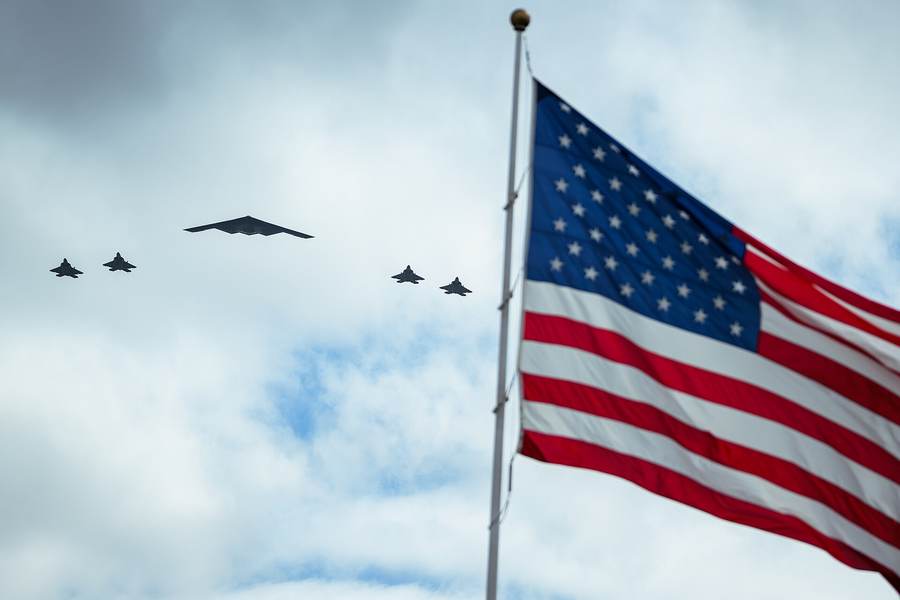
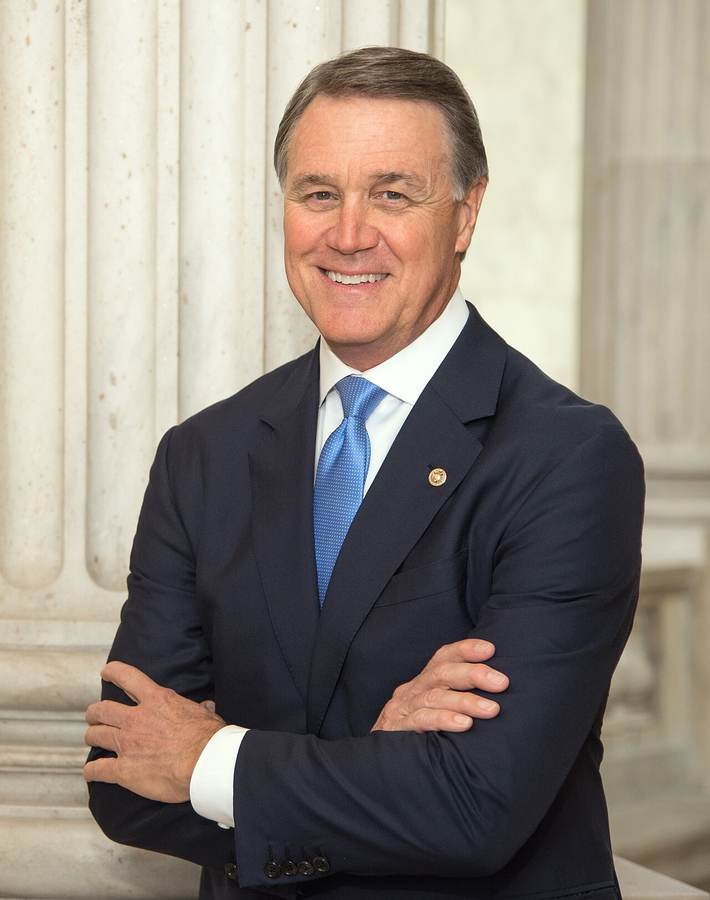
Trump asked Xi to buy weapons — that is the bluntest summary of what U.S. Ambassador to China David Perdue revealed on Sunday, telling Fox News that President Donald Trump put the question directly to Chinese President Xi Jinping during last week's state visit to Washington. “President Trump continues to say, ‘Hey, we sell arms to other people around the world,’” Perdue told “Fox News Sunday” host Shannon Bream. “He actually asked President Xi, would he like to buy some, at one point.” Within hours, the White House and the State Department were in full cleanup mode, insisting no arms offer to Beijing exists or is planned.
Perdue did not say when during the three-day visit the exchange occurred, which weapons systems if any were discussed, or how Xi responded. He framed the remark as vintage Trump deal-making — and as proof, paradoxically, of the president's strength on Taiwan. “Trump is as strong on Taiwan as I’ve ever seen anybody,” the ambassador insisted. But the disclosure landed like a small detonation in Washington's foreign-policy establishment, because selling American weapons to China is not merely unthinkable: it has been illegal under U.S. law for 36 years.
Why this matters
The question itself is the story, and its significance goes far beyond one awkward exchange. Since the 1989 Tiananmen Square crackdown, the United States has barred arms sales to China — a prohibition written into federal law that every administration since has upheld. A sitting president casually floating a weapons deal to Xi Jinping, even as a rhetorical feint, scrambles the logic of the entire American posture in Asia: the policy of strategic ambiguity over Taiwan, the technology-denial regimes that keep advanced U.S. systems out of Chinese hands, and the bipartisan consensus that China is America's pacing military threat.
It also hands Beijing a propaganda gift of the first order. In Chinese telling, the episode becomes evidence that Washington's supposedly principled arms policies are negotiable — that the “rules-based order” has a price tag. For Taipei, Tokyo, Manila and every U.S. partner that depends on American security guarantees, the optics are chilling: the supplier of their defenses asking their principal adversary whether it would like to place an order. As Cato Institute analyst Evan Sankey told the Associated Press, the remark “speaks to [Trump's] treatment of China in almost exclusively commercial terms, even at the potential expense of the U.S. military position in Asia.”
There is a domestic dimension too. Congress — including members of Trump's own party — has spent months pressing the administration over a delayed $14 billion arms package for Taiwan. Bream's questions to Perdue were about precisely that delay: is Washington slow-walking weapons to Taipei to keep Xi happy? Perdue's answer, intended as reassurance, may have achieved the opposite.
What Perdue said — and what Washington rushed to deny
The setting matters. Xi's visit — his first state visit to the United States in more than a decade — ran September 24–26 and was choreographed as a reset: a White House welcome ceremony, small-group exchanges in the Oval Office, a tea ceremony in the Red Room, and a tour of the National Archives with both first ladies. Trade, tariffs, Taiwan and artificial intelligence dominated the agenda, and both sides emerged claiming progress. Perdue's Sunday-morning disclosure punctured that tidy narrative within 48 hours of Xi's departure.
The administration's response was swift and unusually blunt. The White House told The New York Times there are no plans to sell arms to China. The State Department went further in a statement: “U.S. law prohibits arms sales to China and there is ‘no offer or plan’ to sell arms to Beijing.” Note what neither statement did: neither disputed that Trump asked the question. The denial is aimed at the existence of an offer, not at the ambassador's account of the conversation. That careful phrasing leaves open the interpretation Perdue himself offered — that Trump was riffing, deal-maker to deal-maker, rather than making policy.
The $14 billion Taiwan package hanging over the visit
The most uncomfortable context for Perdue's disclosure is the arms package that has not moved. Taiwan has waited months for White House approval of a proposed weapons sale worth roughly $14 billion — a package Trump himself previously described as a “very good negotiating chip” in dealings with Beijing. Reporting around the visit indicated the administration paused the sale amid trade negotiations with China and pressure on U.S. weapons stockpiles from the wars in Iran and Ukraine.
During the visit, Xi pressed Trump to oppose “Taiwan independence,” according to China's state-run Xinhua news agency — language Beijing uses to demand Washington distance itself from Taipei. Under the Taiwan Relations Act, the United States is required to make defense equipment available so Taiwan can maintain a sufficient self-defense capability, while maintaining “strategic ambiguity” about whether it would intervene militarily if China attacked. The juxtaposition is stark: Taipei waits on $14 billion in defensive weapons while its prospective supplier asks Beijing — the power threatening invasion — whether it wants to shop the same catalog.
Perdue insisted the two tracks are unrelated and that Trump and Xi “talk about” future U.S. weapons sales to Taiwan every time they meet. But the sequencing — delay for the democracy, sales pitch for the autocracy — is the kind of imagery that outlives any single news cycle, and Taiwan's supporters in Congress are unlikely to let it go.
The law that makes a sale nearly impossible
Begin with the statute. Section 902 of the Foreign Relations Authorization Act for Fiscal Years 1990 and 1991 — Public Law 101-246, enacted in the aftermath of the 1989 Tiananmen Square crackdown — suspended exports of items on the U.S. Munitions List to China. The Congressional Research Service has documented the restriction for decades; it remains in force 36 years later. Any actual sale of American weapons to China would require Congress to repeal or carve out that prohibition — a political impossibility in the current climate, where China hawks dominate both parties' foreign-policy thinking.
Beyond the statute sits the technology-transfer nightmare that justifies it. U.S. officials believe China has already acquired sensitive F-35 fighter jet components that were routed through Hong Kong under unclear circumstances — a case now under Pentagon investigation. The fear is not abstract: every advanced system sold to Beijing would be disassembled, studied and replicated. That is why the State Department's denial leaned so heavily on the law; it is the one argument in Washington that ends the conversation.
None of which means the question was meaningless. In Trump's transactional diplomacy, even an impossible offer can be a tactic — a way of reframing arms sales to Taiwan as routine commerce (“we sell to everyone”) rather than a provocation, and of keeping Xi slightly off balance. The risk is that tactics read as policy in Beijing, where every presidential utterance is parsed for strategic intent.
Who gains, who loses
For Trump, the upside is the image he cultivates: the deal-maker who treats even adversaries as potential customers, unbound by the pieties of the foreign-policy establishment. His supporters will read the question as dominance — America so strong it can joke about arming its rival. The downside is the credibility tax with allies and with Congress, where the Taiwan delay already rankles.
For Xi and Beijing, the episode is close to pure gain. Chinese state media can present it as Washington implicitly conceding that its arms policies are transactional — and use it to drive a wedge between the United States and Taiwan, whose leaders must now wonder, in public, what their security partner was offering their adversary. Xi's non-response, notably, has been silence: Beijing has no incentive to clarify a story that embarrasses Washington more with every retelling.
For Taiwan, the ledger is the bleakest. The island's $14 billion package remains unsigned, its leaders must now publicly digest the news that Washington's envoy mused about arming Beijing, and every future delay will be read through this lens. For Japan, the Philippines and other U.S. partners, the question plants a seed of doubt about the durability of American commitments — precisely the doubt Beijing cultivates.
And for Perdue himself, the disclosure is a case study in the hazards of the Sunday-show circuit: a loyal ambassador, trying to defend his president's Taiwan record, instead created the weekend's biggest diplomatic story and forced his own government into a 24-hour cleanup operation.
What happens next
Three paths branch from Perdue's interview. The first — and most likely — is containment: the walk-back holds, the remark is filed as a Trumpian aside, and the administration quiets Taipei by finally moving the $14 billion package. Watch for the package's approval as the tell; if it moves in the coming weeks, the White House will have paid the credibility price in the cheapest available currency.
The second is congressional backlash. Lawmakers from both parties have already questioned the Taiwan delay; a televised revelation that the president was soliciting Beijing as a customer while Taipei waits is the kind of thing that produces hearings, written-assurance demands, and legislative riders locking in Taiwan arms timelines. Congress, not the White House, writes the arms-export laws — and it can write new ones.
The third is Beijing pocketing the moment. China will weave the episode into its information operations and — more consequentially — into the hard bargaining ahead: the U.S.–China trade truce ticks toward a January deadline, with APEC in Shenzhen in November and the G20 in Miami in December already on the leaders' calendar. Every future negotiation now carries the subtext of that question on the West Colonnade's shadow: what, exactly, is for sale?
Sources
- Associated Press (Ben Finley, Washington, Sept 27): Trump asked China's president if he wanted to buy US arms, ambassador says — Perdue's “Fox News Sunday” disclosure and verbatim quote (“He actually asked President Xi, would he like to buy some, at one point”); Perdue's framing as Trump downplaying Taiwan arms sales as routine commerce; Cato Institute analyst Evan Sankey's assessment that the remark reflects Trump's “almost exclusively commercial” treatment of China.
- New York Post (Sept 27): Trump asked China's Xi Jinping if he'd like to buy American weapons, US ambassador reveals — the state-visit context; the paused $14 billion Taiwan package amid trade negotiations and stockpile pressure from the Iran and Ukraine wars; reports that China acquired sensitive F-35 parts via Hong Kong.
- TBS News / The Guardian (Sept 28): Trump asked Xi if China wanted to buy US weapons, US ambassador says — Perdue's interview in the context of U.S. Taiwan policy; Xi's urging that Trump oppose “Taiwan independence” during the visit, per Xinhua; the Taiwan Relations Act and strategic ambiguity background.
- Unbiased Headlines (Sept 28), citing NYT/WSJ: Ambassador says Trump offered to sell arms to Xi; White House says no such offer exists — the White House denial (“no plans to sell arms to China”) and the State Department statement that “U.S. law prohibits arms sales to China and there is ‘no offer or plan’ to sell arms to Beijing.”
This article is based on the Associated Press's September 27 wire report on Ambassador David Perdue's “Fox News Sunday” interview, with additional context from the New York Post, The Guardian (via TBS News), and White House and State Department statements reported by The New York Times and The Wall Street Journal. The exchange between President Trump and President Xi Jinping has not been independently verified by Signal Post News beyond the ambassador's account; the White House and State Department deny that any arms offer to China exists. The legal background on Section 902 of the Foreign Relations Authorization Act (P.L. 101-246) is drawn from Congressional Research Service documentation as summarized in public reporting.