China US coal deal 2026
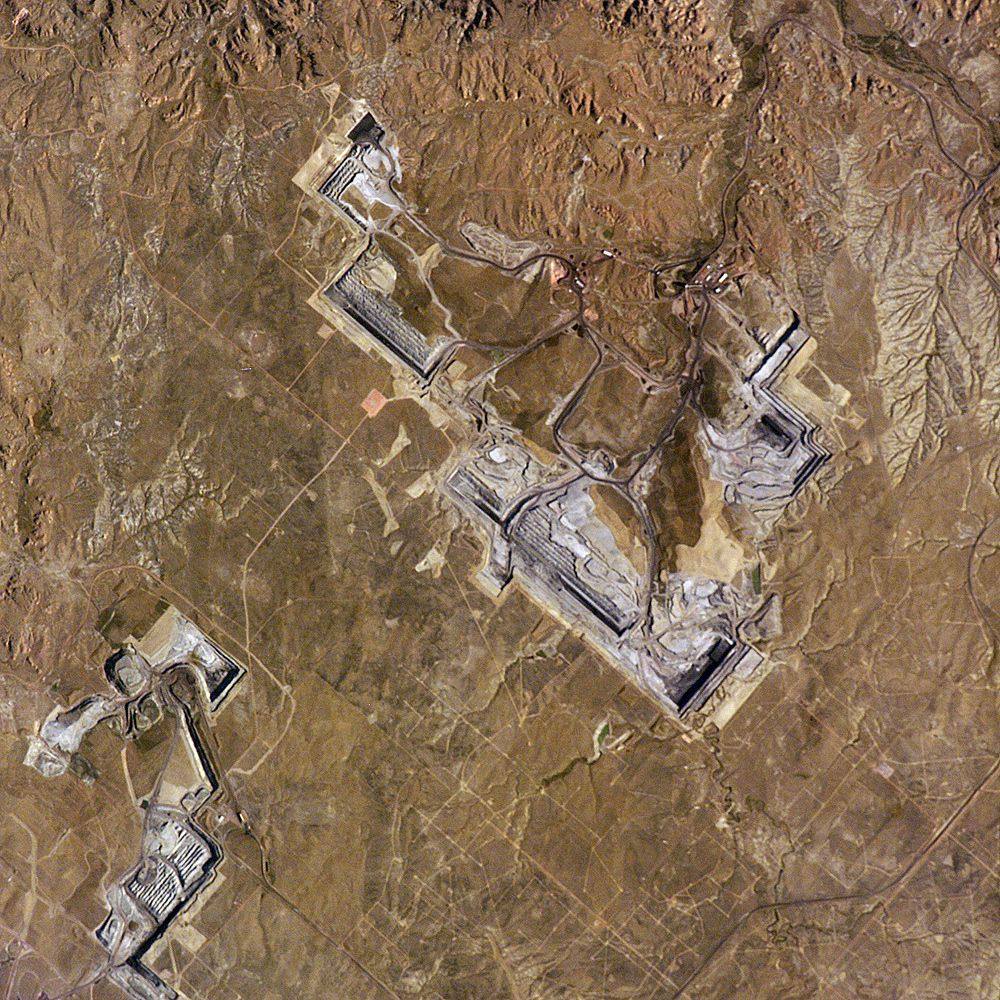
WASHINGTON — The White House says China committed to import at least 10 million metric tons of U.S. coal in 2027 and another 10 million metric tons in 2028, a two-year purchase pledge announced after President Donald Trump and Chinese President Xi Jinping concluded a closely watched Washington summit. The commitment appears in a White House fact sheet released Friday, September 25, after Xi's three-day state visit — the first by a Chinese president in more than a decade — according to reports from the New York Post, Washington Examiner and Business Today.
The summit wrapped Thursday night into Friday morning after a state dinner attended by technology executives including Elon Musk, Nvidia chief Jensen Huang and OpenAI chief Sam Altman. Yet the pageantry did not produce a comprehensive trade treaty. That is why coal matters: of the initiatives announced afterward, it is the easiest to count. Ten million metric tons is a physical quantity, tied to named years, that can eventually be checked against contracts, shipping records and customs data.
Why the coal pledge is the summit's most tangible test
The political value is immediate even though the deliveries are not. Trump can present the agreement as proof that personal diplomacy with Xi can create demand for an industry he has repeatedly promised to revive. Coal trains, mines and export terminals also produce the kind of visible economic imagery that works in coal-producing states ahead of the November midterm elections. The White House framing is straightforward: China has agreed to buy, and American producers stand to sell.
The commercial reality is less settled. A government commitment is not yet a purchase order, a mining contract or a ship leaving port. The 2027 and 2028 windows give producers time to plan capacity and logistics, but they also give both governments room to renegotiate, reinterpret or delay. The gap between an announced annual floor and delivered tonnage is therefore the story's central uncertainty, not a footnote.
The 2025 collapse that set the stage
China had previously ranked among the five largest importers of U.S. coal, then sharply reduced purchases in 2025 as the trade dispute intensified, Newslooks reported. The new commitment would restore a significant portion of the trade lost during that collapse. That sourced framing is more useful than pretending the 10-million-ton figure has one fixed meaning across every grade of coal, route and contract.
The longer context is an American coal industry that has been shrinking for years under pressure from cheaper natural gas, renewable power, aging plants and environmental rules. Export demand cannot reverse every structural force at home, but a large, predictable foreign buyer can improve mine utilization and keep rail and terminal infrastructure busy. That is why this is more than a symbolic shipment even if it is not, by itself, an industry rescue.
Who stands to gain — if the orders arrive
Large U.S. producers such as Peabody and Arch are the obvious potential winners. So are Wyoming's Powder River Basin and Appalachian mining communities, where additional export demand can support payrolls and supplier businesses. Railroads including BNSF and Union Pacific could carry more coal to ports, while export-terminal operators would gain throughput. These are directional beneficiaries, not guarantees of company-specific contracts; Beijing's state buyers have not yet disclosed which miners, rail routes or terminals they would use.
There is no direct loser created by the purchase commitment itself, but there are clear points of opposition and risk. Climate advocates oppose a policy designed to revive coal consumption because burning coal produces more carbon dioxide per unit of electricity than other major fossil fuels. Trade skeptics focus on enforceability: the most important downside is not a rival industry being displaced, but the possibility that promised purchases never fully materialize.
The soybean warning in the background
That skepticism has a recent precedent. China previously fell short of a pledge to buy U.S. soybeans and of a commitment to purchase $17 billion in American agricultural products, the New York Post reported, citing U.S. Department of Agriculture data. Farmers are also contending with high diesel costs affected by the U.S.–Iran conflict. A new coal promise may be welcome to producers, but the agriculture record is a reminder that presidential announcements and customs receipts are different measures.
The right benchmark is therefore cumulative delivery, not a ribbon-cutting announcement. Watch for contracts signed by Chinese state buyers, mine-level guidance from U.S. producers, booked rail capacity and export-terminal schedules. If those indicators do not appear well before 2027, the headline number will remain political inventory rather than commercial demand.
The $30 billion “30 for 30” corridor
The coal pledge sits beside a broader but less final trade mechanism. Through a new U.S.–China Board of Trade, the two governments agreed on recommendations for favorable tariff treatment covering $30 billion of “non-sensitive” goods in each direction — a “30 for 30” corridor described by the Washington Examiner and TradingView, carrying Seeking Alpha reporting.
On the American export side, the recommendations cover agricultural goods, seafood, timber, cosmetics and medical devices. On the Chinese export side, they cover small appliances, toys, holiday decorations and children's car seats. A working group is meant to tackle agricultural market-access barriers. U.S. Trade Representative Jamieson Greer told CNBC on Friday, “We've actually reached agreement with the Chinese on a number of these things.”
The distinction between recommendations and implemented tariff cuts is crucial. The Board of Trade has created a route toward preferential treatment, but the corridor is not yet a finalized schedule of tariff lines with an effective date. Businesses will need the legal details before they can price contracts around it. The coal promise is stronger because it names a quantity and delivery years; the $30 billion corridor is broader, but still procedural.
AI institutions multiply while rare earths remain unresolved
The two sides also established a U.S.–China Board of Investment and a U.S.–China “Super Intelligence,” or SI, Dialogue on artificial intelligence. Trump said Saturday that the United States would not “put the brakes” on AI development, a theme also reported by IntInsight. The institutional architecture is notable: boards and working groups create places where officials can convert summit language into policy. They do not guarantee that conversion will happen.
The most strategically important unresolved issue is rare earths and other critical minerals. Negotiations are continuing with the stated goal of restoring shipment levels, but no final settlement was announced. That leaves China's leverage over inputs used in defense systems, electronics and clean-energy supply chains intact. For trade skeptics, a coal purchase makes for a cleaner headline than the harder minerals problem, but it does not solve the dependency that carries the greater strategic risk.
Trump also urged Xi to increase refined-petroleum production to stabilize supply, yet no Chinese commitment was announced. The contrast is revealing: Washington secured a future Chinese promise to buy an American fuel, but not a public Chinese promise to produce more refined fuel now. For a broader view of the market setting, Signal Post News has tracked oil below $100 around the Trump–Xi summit.
Pandas, pageantry and the limits of symbolism
Xi pledged two more giant pandas for Zoo Atlanta, reviving the familiar language of panda diplomacy. Trump called the meeting one of “Friendship, Strength, and Success” on Truth Social and said the leaders would meet again in China in November, followed by the Group of 20 gathering in Miami, Florida, in December. Those gestures give the relationship a softer public face, but the economic tests will be less photogenic.
Taiwan and China's internal military politics also remain part of the wider strategic backdrop. Signal Post News has separately examined Taiwan's message to Washington ahead of the summit and Xi's purge of senior Chinese generals. A commodity deal can lower trade friction without dissolving those security tensions.
The November and December enforcement checkpoints
The next meeting in China in November is the first political checkpoint. By then, officials should be able to show whether the Board of Trade working group has translated its recommendations into specific tariff treatment and whether state buyers are negotiating coal contracts with American miners. The December G20 in Miami is the second checkpoint, late enough for both leaders to judge whether the summit's machinery is producing measurable movement.
The SI Dialogue will be tested by whether it addresses concrete questions — model access, export controls, safety standards and national-security boundaries — rather than serving as a permanent talking shop. The Board of Investment will face a parallel test: whether it identifies deals that can survive each country's screening rules. In every case, the institutions matter only if they generate decisions.
What to watch in the coal data
Three signals will distinguish delivery from diplomacy. First, Chinese buyers must sign contracts that identify volumes and timing. Second, U.S. producers and transport companies should disclose orders or capacity commitments consistent with those volumes. Third, customs data in 2027 and 2028 must show the coal physically moving. Any one signal can be revised; all three together would make compliance difficult to dispute.
The 10-million-ton annual floor is large enough to matter to the trade cut in 2025, but not precise enough to tell investors which coal basin, grade or port wins. Until contract terms emerge, company names and regional benefits remain informed possibilities rather than allocated revenue. That uncertainty is why the article's winners should be read as exposure to upside, not as confirmed recipients.
The bottom line
The China U.S. coal deal for 2026 is not a peace treaty, a comprehensive trade settlement or a resolution of the rare-earth dispute. It is a measurable promise embedded in a wider architecture of boards, dialogues and recommendations. That narrowness is exactly what makes it important: after a summit heavy on symbolism and light on major breakthroughs, coal is the item that can be counted.
Trump gets an immediate political win for his “revive American coal” brand, while miners, railroads and export terminals gain the possibility of substantial future business. Beijing gets time and flexibility. The next two meetings — China in November and Miami in December — will show whether the commitment is turning into contracts. The soybean and $17 billion agriculture shortfalls are the warning label: the agreement's credibility will be earned at the loading terminal, not at the state dinner.
Sources
- New York Post — China coal purchase pledge, prior agriculture shortfalls and summit details
- Washington Examiner — U.S.–China Board of Trade and $30 billion tariff recommendations
- Business Today — coal purchases, tariff proposal and AI dialogue
- Newslooks — prior Chinese coal-import position and 2025 trade decline
- IntInsight — summit institutions, AI dialogue and follow-up meetings
- TradingView / Seeking Alpha — $30 billion goods framework
Reporting basis: Fixed September 26, 2026 snapshot. The purchase volumes and policy initiatives are attributed to the White House and the linked reports. No miner, railroad or terminal had been publicly assigned a contract in the source material reviewed. Analysis is by Signal Post News.