World · Asia-Pacific · Diplomacy
President Donald Trump landed in Manila late Tuesday afternoon at the tail end of the ASEAN summit and went straight into the first meeting in two years of the Quad — the United States, India, Japan and Australia — announcing that the four countries will launch a new AI accelerator and framing the grouping, in his words, as “the four corners of a free, open, stable, and prosperous Indo-Pacific.” It was Trump’s first Quad meeting, and the opening move of a three-day Asia trip that runs through a bilateral day with Philippine President Ferdinand Marcos Jr on Wednesday and ends in Shenzhen, where Xi Jinping hosts APEC and Thursday’s first-ever trilateral between Trump, Xi and Vladimir Putin.
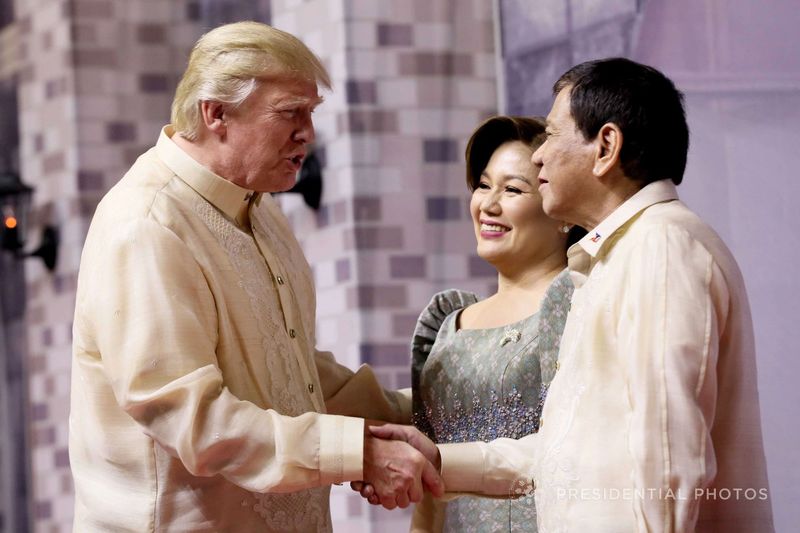
MANILA, November 17, 2026 — Trump arrives in Manila with the hardest part of his week still ahead of him and the choreography already running at full speed. The president flew into the Philippine capital late on Tuesday afternoon, at the tail end of the annual summit of the Association of Southeast Asian Nations, and met the leaders of India, Japan and Australia in the first meeting in two years of the Quad, the Indo-Pacific grouping his predecessor Joe Biden regarded as a signature foreign-policy initiative, Reuters reported. It was Trump’s first Quad meeting. Ahead of it, he set the terms himself: “Our countries are the four corners of a free, open, stable, and prosperous Indo-Pacific,” he said. “We have outstanding relationships and coordinate closely on matters of regional security, economic security and diplomacy.” The discussions were to cover security and the development of artificial intelligence — and on that second subject Trump came with an announcement: the Quad, he said, will launch a new AI accelerator. “We want to ensure that the future of this critical technology is dominated by nations that share our values and our common interests,” he said.
The Manila stop is the first of a three-day trip that later takes Trump to China for APEC in Shenzhen and for what the White House has billed as historic three-way talks with Chinese President Xi Jinping and Russian President Vladimir Putin on Thursday, November 19 — and, according to Trump, potentially a meeting with North Korea’s Kim Jong Un, a possibility the president has raised himself and that no side has scheduled. It is also Trump’s first travel abroad since his party’s deep midterm losses, and it begins, as the Associated Press put it, with a president seeking a break from a run of setbacks at home, among them spy allegations around Nvidia chief Jensen Huang that have shaken the global AI industry and new US curbs on China’s remote access to AI chips that complicate a fragile trade-war truce. Beijing has said it was not involved in the Huang matter, AP reported. Against that backdrop, Manila is not a warm-up act. It is where Trump assembles the coalition he intends to be photographed standing with before he sits down with Xi and Putin — and everyone in the region, starting with Beijing, is reading the seating plan.
“YMCA” on the tarmac: the arrival
The arrival itself was pure Trump, staged by the Philippines with an ally’s precision. As he descended the stairs from Air Force One, Trump pumped his fist, AP reported. A child handed him small American and Philippine flags, which he waved and then swooped in big circular motions as he smiled. A marching band played “YMCA” as the president walked to a waiting helicopter. The optics were the point, and they were mutual: Washington’s oldest treaty ally in Asia was giving the president the full reassurance treatment, and the president was giving the cameras the unbothered, rally-energy version of himself — this on the first foreign trip since the midterms, with a scandal over AI chips and a aviation-industry disruption dominating the home front he had just left. Tuesday night’s programme keeps the same register: a cocktail reception and dinner with other world leaders, with Trump feted at a gala as the “guest of honor” at the ASEAN annual summit, AP reported.
Beneath the pageantry sits the hardest security file in Southeast Asia. ASEAN has been working on a non-aggression pact with China in the South China Sea, where confrontations have escalated — above all between Chinese and Philippine coast guard and naval forces. Washington rejects China’s expansive claim to the waterway and says it is obligated to defend the Philippines if Filipino forces come under armed attack. That treaty commitment is the floor under everything Trump does in Manila this week: the Quad meeting, the gala, Wednesday’s honours at Malacañang. It is also why the Philippines, alone among ASEAN’s members, cannot treat this visit as a hedging exercise. Manila is not choosing between Washington and Beijing in the abstract; it is hosting the guarantor of its position in a live maritime confrontation, while the claimant in that confrontation spent Monday courting the rest of the bloc.
The Quad reconvenes — and adds an AI accelerator
The Quad meeting itself is the day’s substantive event, and its mere occurrence is the headline. The grouping — the United States, Japan, Australia and India — last met two years ago, under Biden, who elevated it to leaders’ level and treated it as a signature initiative. Under Trump it had, in the assessment of former deputy secretary of state Kurt Campbell, lost ambition. On Tuesday it reconvened, in Manila, with Trump in the chair for the first time. The agenda, as a Japanese foreign ministry official previewed it last week, was expected to show unity across maritime security, export restrictions, critical-minerals supply-chain diversification and artificial intelligence. White House spokesperson Olivia Wales had set the administration’s line on Friday: under Trump, the Quad is “a partnership of action” for a free and open Indo-Pacific. Japanese Prime Minister Sanae Takaichi, for her part, pledged to work with ASEAN on economic and energy resilience, export restrictions, AI vulnerabilities and critical-minerals supply chains: “Japan will play an ever more proactive role.”
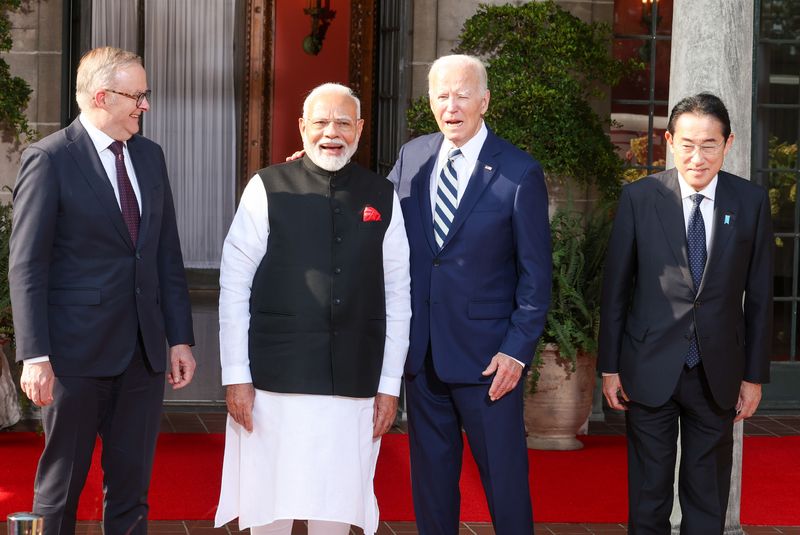
The announcement Trump attached to the meeting deserves exact statement, because its limits are part of the news. He announced that the Quad would launch a new AI accelerator, and he framed its purpose in values language: ensuring the future of the technology is dominated by nations that share the four countries’ values and common interests. No name for the accelerator was given. No funding figure was given. No timetable or structure was given. This article invents none of those, because the sources contain none of them. What can be said is what the announcement does rather than what it contains. It puts artificial intelligence — the technology at the centre of the US–China contest, of the new American curbs on China’s remote access to advanced chips, and of the Huang scandal shadowing this trip — formally inside the Quad’s remit, alongside the maritime-security and supply-chain work the four already share. A Quad that talks about AI accelerators is a Quad describing itself as a technology bloc, and a technology bloc is precisely the thing Beijing has spent the week arguing against in Manila, under a different name: the US-led Pax Silica supply-chain initiative, whose scrapping was among the demands on the street outside.
One sensitivity hangs over the whole format, and both wires noted it. The Manila meeting comes just ahead of the APEC gathering hosted by Xi, who has previously objected to the Quad as an effort to encircle China. Quad members insist the grouping is not directed against any one country. Both sentences are true, and the week is built to hold them simultaneously: Trump reconvenes the Quad on Tuesday, performs ASEAN solidarity on Tuesday night, honours the Philippine alliance on Wednesday, and then flies to Xi’s own summit table on Thursday. Whether that sequence reads in Beijing as reassurance or as leverage depends on what, exactly, the Quad leaves Manila having agreed — and on whether the AI accelerator acquires, in the communiqués and the days after, the name, money and timetable it did not have on announcement day.
“The best possible signal”: the Campbell read
The most quoted verdict on the Manila sequencing came from a man who helped build the architecture Trump is now using. Kurt Campbell, deputy secretary of state under Biden and one of the Quad’s architects, credited Secretary of State Marco Rubio with the timing and the reconvening of the Quad, while saying plainly that the grouping had lost ambition under Trump. His judgment on the order of events was unambiguous: reconvening the Quad first is the “best possible signal if you’re going to go into a trilateral meeting” — Thursday’s session with Xi and Putin. And he grounded the week in the alliance he called its foundation: “The linchpin of everything that we do in Asia is the US–Japan relationship.” The Campbell read is worth taking seriously precisely because it is not partisan praise. It concedes the Quad’s drift under this administration, credits the secretary of state rather than the president for the repair, and then identifies the strategic logic that the repair serves: a president about to negotiate with the leaders of China and Russia does so from visibly higher ground if he arrives from a room containing India, Japan and Australia.
That logic also explains the choice of Manila as the room. The Quad could have reconvened anywhere; it reconvened at the tail end of an ASEAN summit, in the capital of the ally whose coast guard is in near-daily confrontation with China’s, on the eve of a US–ASEAN Special Summit that Trump was due to join later on Tuesday. The signal is layered. To Beijing: the four are meeting, on your periphery, before your summit. To ASEAN: the Quad is not a substitute for the bloc but an addition to its week, arriving at its summit rather than summoning its members elsewhere. To Moscow, watching Thursday approach: the president who will sit across the trilateral table has spent the preceding forty-eight hours being feted by America’s Asian allies. Signals, of course, are cheap until they are cashed. The test of Campbell’s verdict comes on Thursday, in whether anything agreed in Manila survives contact with the Shenzhen table — and in whether Xi treats the Quad’s reconvening as a reason to deal or as a provocation to be answered.
Monday belonged to Li Qiang
Trump did not arrive in a vacuum; he arrived a day after China’s premier worked the same summit. At ASEAN on Monday, Premier Li Qiang hailed what he called the “truly extraordinary” economic achievements of China–ASEAN ties, committed Beijing to free trade, and urged the bloc to “stand united, ward off interference.” The numbers behind that pitch are the region’s balance sheet: China is ASEAN’s largest trading partner, and the bloc’s combined GDP runs to more than $3.9 trillion, Reuters noted. Signal Post News covered Li’s Monday performance in full: Li Qiang Courts ASEAN in Manila With an ‘Extraordinary’ Trade Pitch — a Day Before Trump Arrives. The two performances are mirror images. Li offered trade, continuity and a warning against outside interference that no one in the room needed help decoding. Trump offers security guarantees, alliance pageantry and a technology bloc. ASEAN’s members, who spent their summit week managing an energy crisis alongside the sea dispute — the subject of this newsroom’s earlier summit coverage, ASEAN Summit Opens in Manila With an Energy Crisis, a Sea Dispute and Trump Still to Come — are being asked, in effect, to hold both offers at once. That, and not any single meeting, is the condition the region calls hedging, and Manila this week is its fullest expression: the same summit that applauded Li on Monday seats Trump as guest of honour on Tuesday night.
The street outside: two accounts of the protests
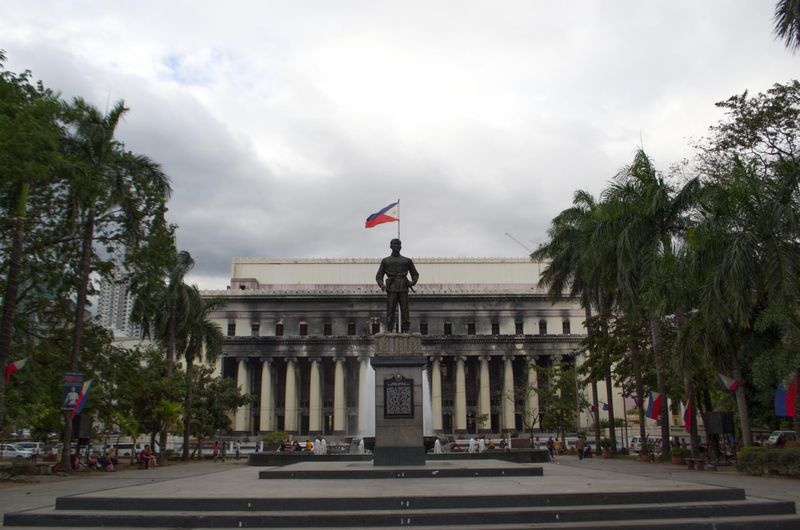
Not everyone in Manila was applauding. The two wire accounts of Tuesday’s protests differ in frame, and this article keeps them separate, because each is a distinct report. The Associated Press reported that about 1,500 left-wing protesters rallied in downtown Manila, at Liwasang Bonifacio square, ahead of the president’s arrival, waving red flags beneath a streamer reading “Resist U.S. war and plunder!” and planning to burn a Trump effigy, with riot police nearby. Protest leader Teddy Casino told AP that the Philippine government should not deal with “such a loser,” and called on President Marcos to stop being a puppet and to uphold an independent foreign policy. Reuters, in its account, placed Tuesday’s demonstrations in a longer arc: demonstrators gathered in Manila for a fifth day of protests, which have included the burning of Trump effigies, calls for an end to the Middle East war and demands to scrap the US-led Pax Silica supply-chain initiative. AP’s planned burning and Reuters’ five-day frame that includes burning are not the same sentence, and they are not merged here. What the two accounts establish together is narrower and sufficient: organised, left-wing opposition to the visit was on the street in the capital on arrival day, in numbers AP put at roughly fifteen hundred at the downtown rally, in a protest cycle Reuters counts at five days.
The protests matter beyond their size because of what they name. The Pax Silica demand connects the street to the summit’s subtext: the same supply-chain architecture that the Quad’s AI accelerator extends is the one protesters want scrapped, and the same Middle East war that shadows Washington’s diplomacy from Bahrain to Hormuz is on the Manila placards. Casino’s puppet charge, meanwhile, is the domestic version of the question ASEAN’s hedgers ask in politer language: how much independence does an ally keep when the alliance deepens? Marcos’s answer, this week, is Wednesday’s red carpet. The protesters’ answer is on the streamer. Manila is hosting both arguments at once, and Trump’s visit is the occasion for each.
Thailand, Marcos Wednesday, and a possible Imelda reunion
The rest of Tuesday’s Manila programme runs on trade and alliance rails. Trump was due to sign a joint statement with Thai Prime Minister Anutin Charnvirakul on Tuesday on progress toward a reciprocal trade agreement, Reuters reported — due to sign, and framed here exactly that way; this article does not assert the signing as completed. The stakes for Bangkok are concrete: the United States is Thailand’s largest export market, taking 24% of Thai shipments this year, and Thailand has been a major non-NATO ally since 2003. The background, as AP has reported it, is a framework reached in October under which Thailand would remove tariffs on most US goods, alongside more than $18 billion in Thai purchases of US aircraft and farm and liquefied-natural-gas products; the Supreme Court in February overturned the 19% tariff the administration had imposed on Thai goods, and the administration in July sought a replacement 12.5% levy tied to forced labour. That is attributed background to Tuesday’s joint statement, not Tuesday news — but it explains why a signature, when it comes, carries weight in Bangkok out of proportion to a statement’s length.
Wednesday belongs to the alliance itself. Trump gets a red-carpet welcome and full military honours from Marcos, a state banquet at Malacañang Palace, and a meeting expected to affirm the treaty alliance, AP reported; he is also expected to announce commercial deals and investments across aviation, defence, energy and technology before heading on to Shenzhen. Inside that formal programme sits the visit’s most human detail. There may be a brief reunion with Imelda Marcos, the president’s 97-year-old mother, who uses a wheelchair and would attend only if her doctors allow, Ambassador Jose Manuel Romualdez told AP. Trump, Romualdez said, often asks after her: “How’s Imelda?” Last year, Marcos carried to Washington a note from his mother thanking the president. If the reunion happens, it will be a photograph of unusual density: the widow of Ferdinand Marcos, whose rule ended in the 1986 uprising, greeting the American president her son has bound the Philippines to — a reminder that the US–Philippine alliance is not an abstraction in this family, but a thread running through its exile, its return and its restoration.
Why this matters
Analysis. Begin with the sequence, because the sequence is the strategy. A president weakened at home by midterm losses, travelling under the cloud of an AI-industry scandal, has arranged his week so that the hardest meeting comes last and every meeting before it adds a member to the coalition behind him. The Quad on Tuesday. ASEAN’s gala table on Tuesday night and its Special Summit, which Trump was due to join later Tuesday. The Philippine alliance, in full honours, on Wednesday. Only then Shenzhen: APEC, hosted by Xi, and Thursday’s trilateral with Xi and Putin — the meeting this newsroom previewed in White House Confirms First-Ever Trump–Xi–Putin Meeting in Shenzhen on November 19. Campbell’s “best possible signal” line is the polite version of this. The impolite version is that Manila is leverage assembly. Every handshake in the Philippine capital is an argument Trump can make in Shenzhen without speaking: that the Indo-Pacific’s democracies will still gather at his call, that the Quad Biden built did not die of his indifference, and that China’s Monday at ASEAN was answered on Tuesday.
The second strand is the subtext that never leaves the room: chips. The trip’s framing facts are an AI scandal and a new set of American curbs on China’s remote access to AI chips, pressing on a trade-war truce both wires describe as fragile. Into that context, Trump drops a Quad AI accelerator — unnamed, unfunded, unscheduled, and therefore easy to dismiss. Dismissing it would be a mistake, though not because the accelerator itself yet exists. The announcement relocates the chip contest from the bilateral US–China channel, where it is a matter of export licences and enforcement, into the Quad’s collective remit, where it becomes a matter of shared values and common interests among four countries that between them hold much of the world’s advanced semiconductor supply chain outside China. That is the Pax Silica logic with a Quad flag on it. It is also, read from Beijing, the encirclement logic Xi has objected to, extended from warships to wafers. How China prices that extension between now and Thursday — as rhetoric to be waited out, or as architecture to be answered — may matter more to the trilateral than anything said at the trilateral itself.
The third strand is ASEAN’s hedge, and the numbers that discipline it. A bloc of more than $3.9 trillion in combined GDP, whose largest trading partner is China, does not choose Washington over Beijing because an American president lands well. It hedges: it takes Li Qiang’s free-trade commitments on Monday, seats Trump as guest of honour on Tuesday, negotiates a non-aggression pact with China in the South China Sea while one of its members confronts Chinese vessels in that sea, and lets each great power believe the week went its way. The US–ASEAN Special Summit Trump was due to join later Tuesday is the institutional form of that hedge — and its limits are the hedge’s limits. ASEAN can host both powers; it cannot make either one’s security order its own, and it cannot make the South China Sea confrontation, which is the Philippines’ daily reality, into a collective position. What success in Manila means for Shenzhen is therefore specific. Success is not ASEAN converted. Success is the Quad visibly alive, the alliance honoured, the Thai statement progressing, and no ASEAN capital publicly distancing itself from the American week. Failure is equally specific: a Quad that meets and announces nothing but an unnamed accelerator, a summit the president is seen to endure rather than lead, and a region that concludes the midterm-weakened president’s coalition is a photograph, not a policy. Beijing will be grading on exactly that curve on Thursday.
What happens next
Wednesday is Marcos’s day: the red-carpet welcome, the full military honours, the Malacañang state banquet, the expected affirmation of the treaty alliance and the expected package of commercial deals across aviation, defence, energy and technology — and, if her doctors allow, the brief Imelda reunion that would give the alliance day its defining image. Watch, in the Wednesday readouts, for the South China Sea language: whether the two governments name China, describe the coast-guard confrontations, or rest on the treaty formula, will tell ASEAN’s other capitals how far the alliance’s public edge now extends. Watch, too, for the Thai joint statement’s status after Tuesday: a signature confirmed is momentum; a statement still pending as the president leaves Manila is a loose thread Beijing will notice.
Thursday is the week’s destination: Shenzhen, APEC under Xi’s hosting, and the first-ever trilateral among Trump, Xi and Putin, with a Kim Jong Un meeting existing, on present evidence, only as a possibility the president himself has floated. The scenarios branch from Manila’s residue. In the first, the Quad’s reconvening and the alliance week hold, Trump arrives in Shenzhen with his coalition photographed and his AI announcement on the record, and the trilateral is conducted between leaders each claiming a successful week — the conditions, such as they are, for whatever bargain the three intend. In the second, Manila’s deliverables thin out on inspection — an accelerator without a name, a summit without a statement — and Xi, who hosted Li Qiang’s Monday triumph and objected to the Quad long before this week, treats the reconvening as a provocation to be priced into the trilateral rather than a signal to be respected. In the third, the week’s domestic shadow lengthens: the Huang scandal and the chip curbs are the live wires of the US–China file, and a trilateral nominally about the great questions could be consumed by the technology fight that Manila’s accelerator announcement just multilateralised. Which scenario Thursday produces will be legible first in small things: the trilateral’s opening photographs, the order of the bilaterals around it, and whether the word “Quad” is spoken in Shenzhen at all. The four corners, as the president named them on Tuesday, have been assembled. The week now tests what a corner is worth at the centre of the table.
Related coverage: White House Confirms First-Ever Trump–Xi–Putin Meeting in Shenzhen on November 19 · Li Qiang Courts ASEAN in Manila With an ‘Extraordinary’ Trade Pitch — a Day Before Trump Arrives · ASEAN Summit Opens in Manila With an Energy Crisis, a Sea Dispute and Trump Still to Come
Sources
Reuters — “Trump to kick off Asia trip with Quad talks in Manila ahead of China visit”, reporting of November 17, 2026 (updated): Trump arrived in Manila late afternoon Tuesday at the tail end of the ASEAN summit and met the leaders of India, Japan and Australia in the first Quad meeting in two years — his first Quad meeting; his “four corners of a free, open, stable, and prosperous Indo-Pacific” remarks and the announcement that the Quad will launch a new AI accelerator (no name, funding or timetable was given); the US–ASEAN Special Summit due later Tuesday; the joint statement with Thai Prime Minister Anutin Charnvirakul due to be signed Tuesday on reciprocal trade progress, with the United States as Thailand’s largest export market at 24% of shipments; Wednesday’s meeting with President Ferdinand Marcos Jr before Shenzhen; the fifth day of Manila protests, including effigy burning and calls to end the Middle East war and scrap the Pax Silica initiative; Li Qiang’s Monday “truly extraordinary” remarks, China as ASEAN’s largest trading partner and the bloc’s combined GDP of more than $3.9 trillion; Kurt Campbell crediting Marco Rubio and calling the Quad’s reconvening the “best possible signal” before Thursday’s trilateral; Sanae Takaichi’s proactive-role pledge; and Olivia Wales’s “partnership of action” characterisation. Associated Press — “Trump arrives in Philippines to kick off Asia trip”, reporting of November 17, 2026: the arrival scene (fist pump, the child’s US and Philippine flags waved in big circular motions, the marching band playing “YMCA,” the walk to the waiting helicopter); Tuesday night’s gala as guest of honour; the South China Sea non-aggression pact context and the US defence obligation to the Philippines; about 1,500 protesters at Liwasang Bonifacio with the “Resist U.S. war and plunder!” streamer, a planned effigy burning, riot police nearby and Teddy Casino’s remarks; Wednesday’s red-carpet welcome, full military honours and Malacañang state banquet; the possible Imelda Marcos reunion and Ambassador Jose Manuel Romualdez’s account of it; the expected commercial deals; and the trip’s domestic backdrop of midterm losses, the Nvidia/Jensen Huang spy allegations and the new curbs on China’s remote access to AI chips, with Beijing saying it was not involved in the Huang matter. The October Thailand framework detail is AP-reported background, attributed as such in the text. Photographs: Presidential Communications Operations Office (Philippines), public domain; Prime Minister’s Office, Government of India, GODL-India; and PhiliptheNumber1, CC0 — all via Wikimedia Commons, each credited in its caption; all three are file photographs and do not depict Tuesday’s events.