Strip her citizenship, then deport her: inside the Omar investigation

WASHINGTON, October 15, 2026 — The federal investigation of Rep. Ilhan Omar (D-Minn.) is not a routine fraud inquiry, at least not in its stated purpose. According to The Wall Street Journal, which published its account on Wednesday citing U.S. officials and people familiar with the matter, the multipronged probe is an effort to build a case for stripping Omar of her U.S. citizenship and ultimately deporting her to Somalia, the country she fled as a child. The investigation focuses at least in part on how Omar obtained that citizenship a quarter-century ago, after arriving in the United States in 1995 with her father, Nur Omar Mohamed, from a refugee camp in Kenya.
Omar, 44, became a citizen in 2000 and was elected to Congress in 2018, becoming one of the first two Muslim women and the first Somali American to serve in the House. She has told the Journal she never committed immigration fraud, and her office dismissed the investigation in a statement on Wednesday: "President Trump would love to eliminate one of the most effective progressive voices in Congress. There is no basis for this." The Justice Department has confirmed only that a search took place, and has declined to describe the investigation's target or purpose. What follows is what is known, what each side says, and what the law would actually require the government to prove.
A search at dawn, a dozen subpoenas
The public phase of the investigation began early Monday, when Homeland Security Investigations agents executed a court-authorized search of Omar's Washington, D.C. home. The Justice Department said Homeland Security agents carried out the search and declined to elaborate. According to the Journal, agents seized her cellphone, her notebooks, her personal computers and her passport. The Associated Press independently reported the seizure of her phone and the breadth of the subpoena effort: authorities have issued more than a dozen subpoenas, including to some of Omar's relatives, seeking testimony before a federal grand jury in Minnesota. Prosecutors are examining her family's immigration paperwork — the file created when a refugee family from Somalia, by way of a Kenyan camp, became Americans.
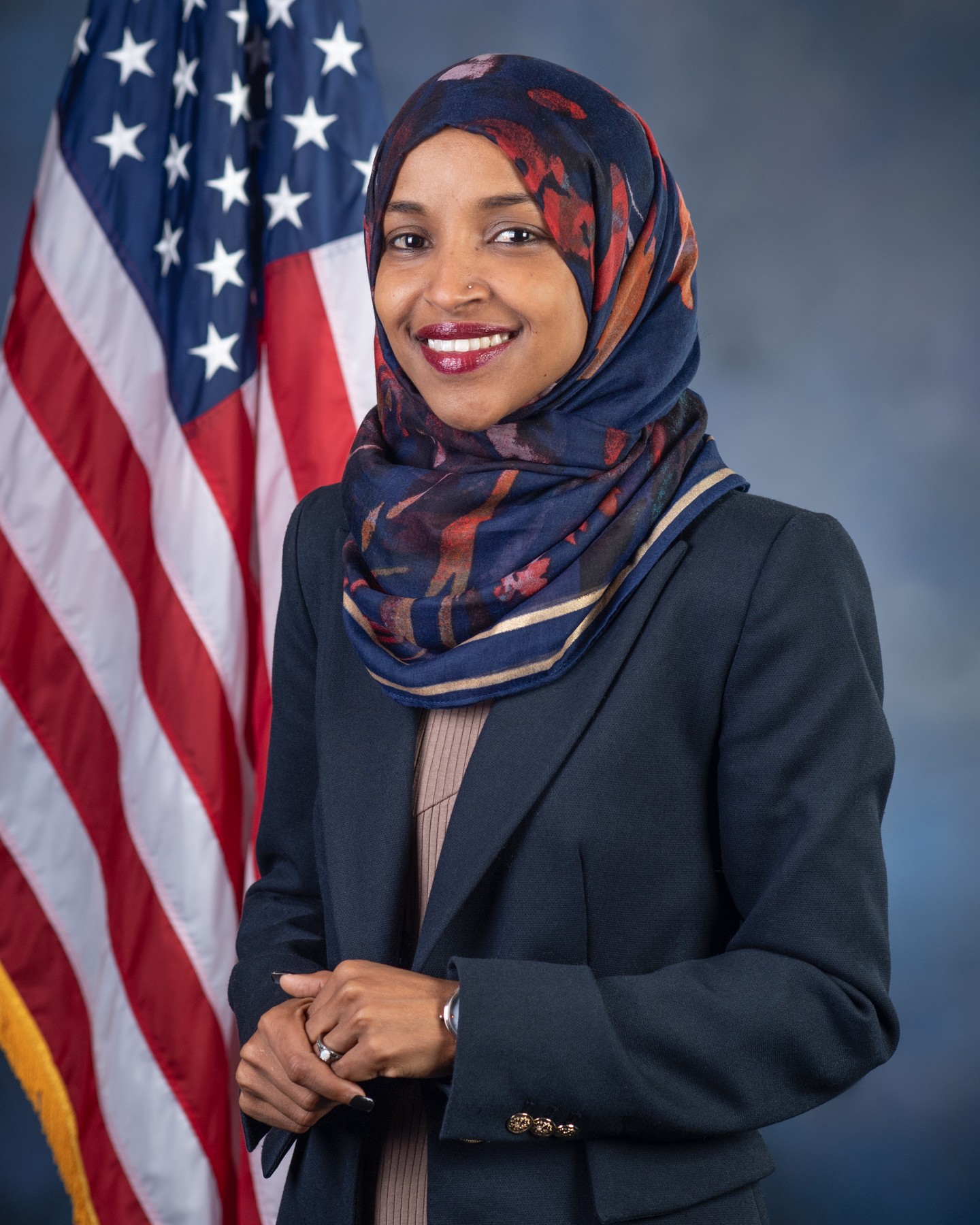
Omar responded to the search on Monday by calling it an abuse of power and an escalation of what she described as a decade of targeting by President Trump. Her congressional office called the operation an unprecedented use of federal power against a political opponent. No charges have been announced against Omar or anyone in her family, and a grand jury investigation, by itself, is an accusation of nothing — it is a mechanism for gathering evidence, conducted in secret, under the direction of prosecutors.
The question at the center: 17, or 18?
The factual dispute, as the Journal describes it, is narrow and specific — and it turns on a birthday. Investigators are examining whether Omar or her late father misstated her age on immigration paperwork connected to his naturalization in 2000: whether she was listed as 17 when she was in fact 18. The distinction is not clerical. Under the immigration law in force at the time, a minor child under 18 could derive citizenship automatically from a parent's naturalization; an 18-year-old could not, and would have had to qualify through a separate process of her own. If the government could prove the younger age was a deliberate misstatement — and that it was material to how her citizenship was granted — it would have the skeleton of a denaturalization case. If the age was recorded accurately, or any error was innocent, it would not.
Two facts frame that dispute, and both cut against easy conclusions. The first is that this ground has been walked before: according to the Journal's reporting, investigators examined similar allegations during the Biden administration and did not pursue them, concluding the evidence was insufficient. The second is that Omar's father, the man whose naturalization file sits at the center of the inquiry, died in 2020 — he cannot be subpoenaed, cannot testify, and cannot confirm or contest what was written on forms filed 26 years ago. The relatives now being called before the grand jury are, in significant part, being asked about paperwork from another century, signed by a man who is no longer alive.
What the law actually requires
Denaturalization is not something a president, a department, or an agency can do by decision. Under federal law (8 U.S.C. § 1451), the government must file a civil lawsuit in federal court and prove — by evidence the Supreme Court has described as clear, convincing and unequivocal — that a person's citizenship was illegally procured, or procured by concealment of a material fact or willful misrepresentation. In Maslenjak v. United States (2017), the Supreme Court added that a false statement is not enough on its own: the government must show the lie actually mattered — that it played a role in the decision to grant citizenship. The defendant in such a case has the full apparatus of federal litigation: counsel, discovery, cross-examination, and appeal. Only if the government won, and the judgment survived appeal, would Omar cease to be a citizen at all — and only then could deportation proceedings even begin, in a separate case, before an immigration judge, with its own appeals.
Historically, denaturalization has been rare and reserved for the gravest cases: Nazi war criminals who hid their pasts, war criminals from later conflicts, and people who obtained citizenship under entirely false identities. The Trump administration has made expanding denaturalization enforcement a stated priority and argues that citizenship obtained through fraud was never legitimately held, whoever the holder turns out to be. Critics, including Omar's office and civil-liberties advocates, answer that selecting a sitting member of the opposing party — one the president has attacked by name for years — for a citizenship investigation three weeks before an election in which she is a candidate is itself the story, whatever the paperwork shows. Both of those arguments will be tested in the same place if this proceeds: a courtroom, under rules of evidence written long before this Congress.
Why this matters
Strip away the personalities and the precedent is the point. The United States has impeached members of Congress, expelled them, indicted them and imprisoned them. It has never, in the modern era, attempted to unmake one — to argue that a person elected four times by the voters of Minnesota's 5th District was never an American at all. Even an unsuccessful case would consume the remainder of Omar's term in litigation and shadow the November 3 midterms, in which she is seeking re-election and in which control of the House she sits in will be decided. And the question the case would put to a federal judge is one with consequences far beyond one congresswoman: how far back, and on how thin a discrepancy, the government may reach to revisit a citizenship granted in good faith a generation ago.

What happens next
The grand jury in Minnesota will continue to hear testimony in secret, and the Justice Department is unlikely to say more unless it acts. Three paths are possible. Prosecutors could close the inquiry, as their predecessors did after reviewing similar allegations. They could seek criminal charges related to the paperwork itself. Or the Justice Department could file the civil denaturalization suit the Journal's sources describe — a filing that would instantly become one of the most consequential court cases in the country, argued through the midterms and, in all likelihood, for years beyond them. Omar has vowed not to be silenced, and her office says there is no basis for any of it. The administration, through its officials, has stated its aim with unusual plainness. Between those two positions now sits a single document trail from the year 2000 — and, eventually, a judge.
Sources: The Wall Street Journal, "Trump administration investigation of Rep. Ilhan Omar," Oct. 14, 2026; Associated Press reporting on the search and subpoenas, Oct. 12–14, 2026; Al Jazeera, Oct. 15, 2026; 8 U.S.C. § 1451; Maslenjak v. United States, 582 U.S. 335 (2017). Related on Signal Post News: Federal agents search Ilhan Omar's home in criminal probe and The claim about Ilhan Omar's father's citizenship, explained.