ICE shooting Bronx October 2026
The ICE shooting Bronx October 2026 story begins with three facts that are not in dispute: an Immigration and Customs Enforcement officer fired, a 28-year-old Dominican man was wounded, and a 5-year-old child in the back seat of the man's car was not physically injured. It also begins with a central gap. Federal authorities had not publicly explained what provoked the gunfire by Thursday evening, leaving the most consequential moment of the encounter unknown.
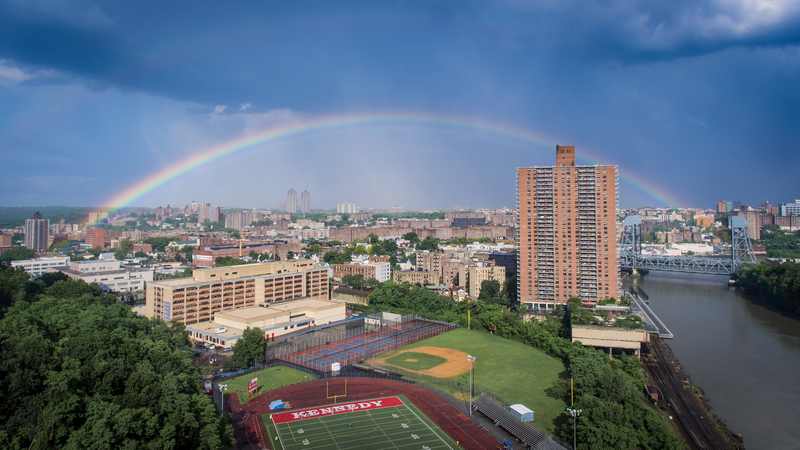
The shooting occurred at about 4 p.m. Eastern Time on Thursday, October 8, during what the Department of Homeland Security described as a targeted enforcement operation in Marble Hill, a Manhattan neighborhood geographically connected to the Bronx. DHS said the wounded man was alive, conscious and receiving medical care for what it characterized as a non-life-threatening graze wound to the neck.
Two ICE agents were also injured. One may have been hurt in a vehicle collision, according to early accounts, but the circumstances of both injuries remained unclear. The New York Police Department said it was not involved in the federal operation and was not at the scene when the shooting occurred.
Evening: 300 Protesters Mass at Hospital, Clash With NYPD
About 300 anti-ICE demonstrators gathered Thursday night outside NewYork-Presbyterian Allen Hospital, where the wounded man was being treated, according to the New York Post. The newspaper reported that the crowd chanted “ICE off our streets,” “No justice, no peace,” and “From Palestine to Mexico, all these walls have got to go.” Those slogans expressed the demonstrators' position; they do not establish what happened before the officer fired.
The Post reported that NYPD officers used barricades to hold the crowd back and that some demonstrators grabbed a barrier and pushed against it. A brief pushing struggle followed, according to the newspaper's account, and at least one demonstrator was arrested. The available reporting did not identify the person arrested or specify a charge.
In its statement, the NYPD said it was not involved in the shooting and was not at the scene when the gunfire occurred. The department mobilized afterward for crowd control and evidence work. The Post also reported that Public Advocate Jumaane Williams and Democratic congressional nominee Darializa Avila Chevalier held a nearby evening press conference criticizing ICE.
Mayor Zohran Mamdani called the shooting “unconscionable and incredibly serious” and said he had placed a call to President Donald Trump, according to the Associated Press, USA Today and The Wall Street Journal. Mamdani said he would demand an end to all ICE enforcement actions in New York City and posted, “Get ICE out of our neighborhoods.” As of Thursday evening, the mayor and president had not spoken, according to Mamdani's spokesperson. The White House had not publicly accepted or rejected the mayor's demand.
Gov. Kathy Hochul said she had been briefed and demanded that federal authorities release more information. “New Yorkers are outraged tonight,” Hochul said, according to The Wall Street Journal. Her statement reflected the governor's assessment; investigators had not yet released evidence addressing the disputed use-of-force sequence.
A government official told the Journal that the ICE officer was wearing a body camera. Homeland Security Investigations has taken over the shooting investigation, according to the Associated Press. Two agents were also injured during the encounter, but early accounts did not fully explain how; one agent may have been hurt in a vehicle collision, a possibility that remained unconfirmed Thursday night.
What to watch: the next evidence-driven turning points are whether body-camera footage is released, what Homeland Security Investigations concludes about the seconds before the shot, whether the White House responds to Mamdani's demand, and whether the Allen Hospital confrontation becomes a template for rapid-response protests at future enforcement scenes. Each could change the political stakes, but none predetermines the shooting investigation's findings.
What happened in Marble Hill
ICE agent shoots man Bronx: what is confirmed
The confirmed timeline is narrow. ICE Enforcement and Removal Operations personnel were carrying out a targeted action in Marble Hill shortly before or around 4 p.m. An ICE officer shot the 28-year-old man, whose name had not been publicly released in the initial reports. A child, age 5, was sitting in the rear of the car and emerged physically unharmed.
DHS said the man's wound was a graze to the neck and was not life-threatening. The department also said he was conscious. Those medical descriptions came from DHS; independent medical records were not available publicly.
The question that usually determines how a police shooting is judged—what the officer saw, what the other person did, whether a weapon was present, and whether there was an immediate threat—was unanswered. No public account from federal authorities had established that sequence. Early reporting therefore supports neither a conclusion that the shooting was justified nor a conclusion that it was unjustified.
Bronx ICE shooting 5-year-old child: the fact that changed the political temperature
The child's presence turned an already serious use-of-force incident into a sharper test of operational judgment. The child was not wounded, but a firearm discharged around an occupied car raises separate questions from the immigration status or criminal history of the adult target: how officers assessed the backdrop, whether they knew a child was inside, whether the car was moving, and what alternatives were available.
Those questions cannot be answered from the child's presence alone. The fact that a child was in the vehicle increases the stakes; it does not reveal the officer's view at the instant the shot was fired. That distinction matters because advocates on both sides are already using the case to make broader claims about immigration enforcement.
DHS Bronx targeted operation: the department's account
DHS said the man had a prior grand-larceny conviction, previous arrests on allegations that included assault, robbery, drug possession and weapons possession, and an association with the Trinitarios gang. The department also said the NYPD arrested him on December 7, 2023, and that he was later released. DHS blamed New York's sanctuary policies for what it presented as a preventable street enforcement encounter.
Every one of those biographical and criminal-history assertions is a DHS claim at this stage. An arrest is not a conviction, and the department's statement did not by itself establish the circumstances of the shooting. The claims may explain why federal officers say they were seeking the man; they do not answer why an officer fired.
The sanctuary-policy argument is straightforward: federal officials contend that closer cooperation and custody transfers allow ICE to arrest people in controlled settings, reducing risks to officers, targets and bystanders. New York officials and immigrant-rights advocates counter that broad local cooperation with federal immigration enforcement can deter residents from reporting crimes or cooperating with police, while placing civil immigration work inside local public-safety systems. The Marble Hill encounter does not resolve that policy dispute, but it gives both sides a vivid new example.

Why this matters
Marble Hill ICE shooting becomes the first New York test of the crackdown
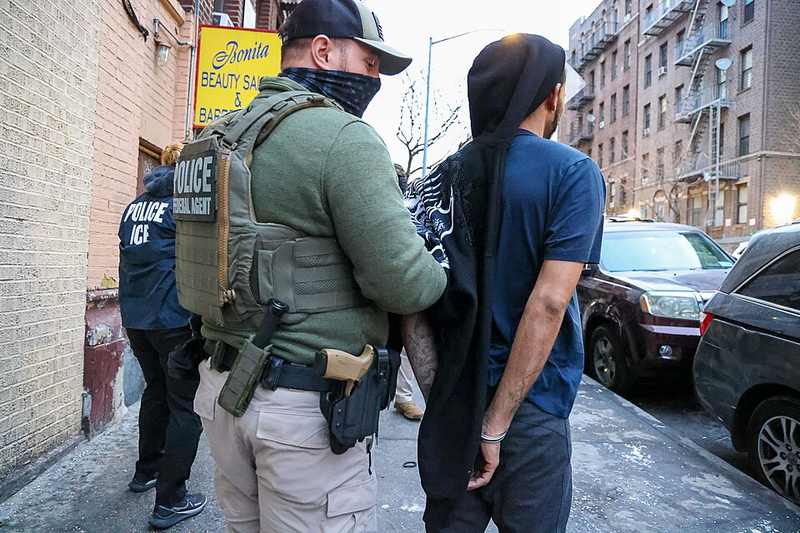
CNN reported that this was the first shooting involving ICE agents in New York City since President Donald Trump's renewed immigration crackdown began. That makes the incident more than a local investigation. It is a measure of how the federal strategy interacts with the country's largest sanctuary city when enforcement moves from policy announcements to close-range street encounters.
The shooting also lands 26 days before the November 3 midterm elections. Immigration, public safety and presidential power were already national campaign issues. A child in the car, an injured target with a disputed public narrative, and a Democratic mayor directly challenging the president create a story that can move voters before investigators establish the full record.
That timing rewards speed and punishes nuance. Supporters of the administration may see the operation as evidence that federal officers are pursuing people they consider dangerous despite local resistance. Critics may see the same operation as proof that an aggressive federal campaign creates avoidable danger in dense neighborhoods. The known facts are compatible with neither complete story yet.
ICE shooting New York City: a federal-local collision
Mayor Zohran Mamdani called the shooting “unconscionable and incredibly serious.” He said he called Trump and demanded a halt to ICE enforcement actions in the city. About 300 protesters gathered near Allen Hospital, according to reports, chanting “ICE off our streets now.” City Council members and Representative Adriano Espaillat called for body-camera footage to be released and for an independent investigation.
The NYPD's absence from the operation is politically important. City leaders cannot be held responsible for tactical decisions they did not make, but they still face public pressure because the shooting happened in a New York neighborhood and the wounded man was treated in the city. Federal officials, meanwhile, can argue that local non-cooperation forced ICE to operate without the custody transfers it prefers.
This is the collision at the heart of sanctuary-city politics. The federal government controls immigration enforcement. Cities control local policing priorities and much of the trust infrastructure between residents and law enforcement. Neither side can fully impose its preferred system without creating costs for the other.
Zohran Mamdani ICE shooting Trump: why one phone call matters
Mamdani's decision to call Trump transformed the response from a city statement into a direct intergovernmental confrontation. His demand for a pause was clear, but the president is under no obligation to accept it. A halt could reduce immediate tensions while facts are gathered; federal officials could also argue it would interrupt lawful operations unrelated to the shooting and reward political pressure before an investigation is complete.
The call benefits Mamdani with constituents who want forceful resistance to the crackdown. It benefits Trump with voters who see sanctuary cities as obstructing federal law. The people with the least control over the political contest are residents of Marble Hill, the wounded man's family, the child who was in the car, and the officers whose actions and injuries will now be scrutinized.
_(cropped).jpg)
Background: a broader enforcement surge
The Trump administration has made deportations and expanded interior enforcement central to its second-term agenda. The policy has increased the frequency of operations in workplaces, neighborhoods and other locations where officers and civilians interact outside controlled detention settings.
That expansion has been especially visible in Minnesota, where a deportation surge became a national model and a source of protest. Other ICE-involved shootings have sharpened scrutiny of force standards, officer identification and the release of video. Signal Post News has previously examined an ICE shooting in Austin and a federal judge's intervention in the case of a DoorDash driver shot by ICE.
The legal framework has also been moving. The Supreme Court's treatment of mandatory immigration detention under the Trump administration affects who can be held and for how long, but detention authority is separate from the constitutional rules governing use of force. The central question in Marble Hill will be whether the officer's actions were reasonable under the facts present at the moment, not whether the government had authority to seek the man.
Who benefits, who loses
The administration's case
DHS can use the man's alleged history and the claimed gang association to argue that targeted enforcement protects the public and that sanctuary rules shift arrests from jails to streets. That framing is likely to resonate with voters who prioritize removals of people with criminal records and view local limits on cooperation as political interference.
But relying heavily on the target's past creates a vulnerability. Even if every DHS claim is verified, history does not establish what happened immediately before the shot. If video later shows no imminent threat, the biography will not answer the use-of-force question. If video shows a clear threat, the administration will have stronger evidence than its early character claims.
City leaders' accountability case
Mamdani, Espaillat and Council members benefit politically from demanding transparency, particularly when the federal account omits the trigger for force. Their strongest argument is procedural rather than ideological: release the video, preserve evidence, identify the investigating authority and let the record determine responsibility.
Their risk is getting ahead of the evidence. Calling the shooting unconscionable expresses moral urgency, but a definitive judgment before body-camera and scene evidence emerge can look premature if later facts materially change the sequence. The same caution applies to federal officials presenting alleged criminal history before explaining the shot.
The people who absorb the costs
The wounded man faces medical treatment, potential immigration proceedings and intense public scrutiny. His prior record and alleged affiliations are now part of a national narrative before the shooting itself is fully explained. The child may be physically unharmed but was present during a violent encounter. The agents face injury, investigation and possible political targeting. Marble Hill residents face demonstrations, law-enforcement activity and a national debate imposed on their neighborhood.
Public confidence also bears a cost. When official statements answer who was targeted but not why force was used, people tend to fill the gap with their prior beliefs. That is why fast preservation and disclosure of objective evidence matter.
What happens next
1. The investigation must establish the missing seconds
Investigators will need body-camera video, vehicle data, dispatch records, weapons evidence, officer statements, witness accounts, medical records and any nearby surveillance footage. The central sequence should establish whether the car moved, whether officers were struck or threatened, whether the man had a weapon, what commands were given and how the two agents were injured.
2. The body-camera fight will shape trust
Immediate release can clarify events and reduce speculation, but investigators may seek time to interview witnesses before those accounts are influenced by public video. A defensible compromise is a published timeline for release, with any delay explained and reviewed by an authority outside the operational chain of command.
3. Federal and city officials will test each other's leverage
Mamdani can deny city resources and continue public pressure, but he cannot order federal agents out of New York. Trump and DHS can continue operations, but every visible encounter now carries higher political and operational risk. A temporary tactical adjustment is possible even without a formal pause.
4. Three plausible scenarios
If video shows a clear and immediate threat, federal officials will argue the shooting was a lawful response and that early criticism was premature. If video shows no immediate threat, demands for discipline, prosecution or civil action will intensify, and the case could become a national symbol against the crackdown. If the evidence remains incomplete or ambiguous, the event may harden existing political camps without producing a broadly accepted account.
For now, the responsible conclusion is limited: an ICE officer shot and wounded a man during a federal operation; a 5-year-old in the car was unhurt; two agents were injured under circumstances not fully explained; and the government has not publicly said what prompted the shot. Everything else depends on evidence that has yet to be released.
Sources and attribution
- Reuters, reporting on the shooting, injuries and official response.
- CNN, reporting on the shooting's place in the New York enforcement crackdown.
- New York Post, reporting on the Allen Hospital protest, barricade confrontation and arrest.
- The Wall Street Journal, reporting on the body camera, official responses and demand for more information.
- USA Today, reporting on the child in the car and the mayor's call to the president.
- Associated Press via LA Post, reporting on the initial law-enforcement response.
- DHS's official account on X, statement dated October 8, 2026. Criminal-history, gang-association, injury and sanctuary-policy assertions are attributed to DHS throughout this article.
Signal Post News will update this report when investigators release video, identify the review authority or explain what prompted the gunfire.