Ilhan Omar citizenship
A one-sentence post — “Omar received citizenship through her father, but there’s no proof he was a citizen” — became the day’s shorthand for the federal probe. The reality is a chain of separate questions, each with a different answer. Here is what investigators are reportedly examining, what Omar says, what her critics cite, and what the law would require.
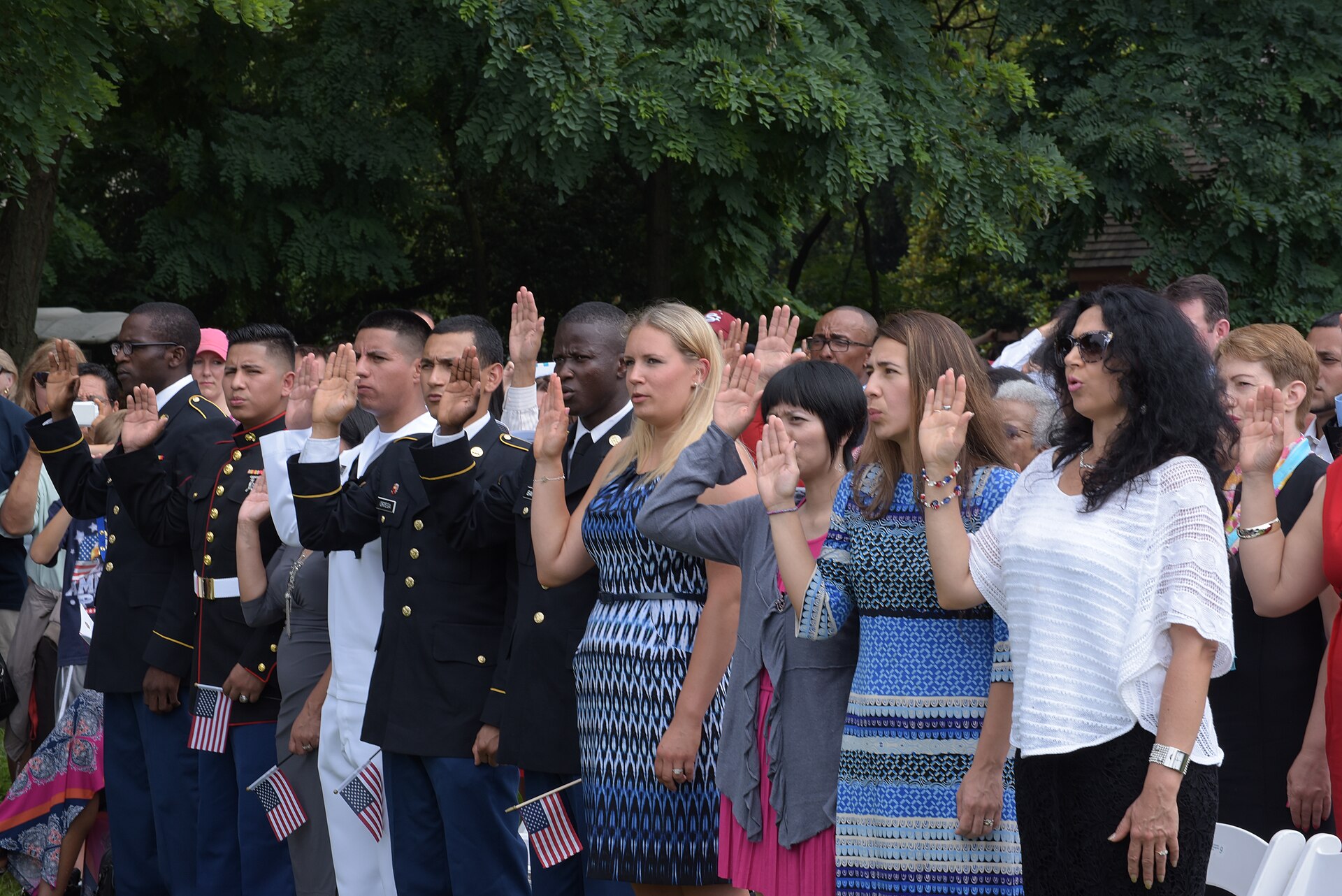
Hours after federal agents searched Rep. Ilhan Omar’s Washington-area home on Monday morning, a single claim was doing most of the work online: that Omar received her U.S. citizenship through her father, and that there is no proof her father was ever a citizen himself. The sentence is short. The questions packed inside it are not — and they do not all have the same answer. Reporting by The New York Times indicates the father’s eligibility is genuinely part of what federal investigators are examining. Omar says the account she has given for years is true and that she did “nothing wrong.” Her critics say the paper trail has a hole in it. No charges have been filed against her. This explainer separates the claim into its parts: what is reported, what is alleged, what is documented, and what the law would require the government to prove.
The claim, and why it spread on Monday
The post that raced across social media on Monday — shared widely, including in a trending Threads discussion of the search — put it this way: “BREAKING: Ilhan Omar received citizenship through her father, but there’s no proof he was a citizen.” Versions of the sentence ricocheted through the same feeds carrying news of the predawn search, which was itself a trending topic (“Agents search Ilhan Omar’s home”) with tens of thousands of posts by midday.
The claim spreads easily because it compresses a legal chain into one line. Unpacked, it contains at least four distinct propositions: that Omar’s citizenship came through her father (her own long-stated account); that her father naturalized (the premise of that account); that documentary proof of his naturalization is publicly available (the point her critics dispute); and that the absence of publicly located paperwork means he was not a citizen (a conclusion that does not follow automatically, as the sections below explain). Each link has a different evidence status, and treating the sentence as one fact — proven or disproven — is where most of Monday’s argument went wrong.
What investigators are reportedly examining
The strongest indication that the father’s status is more than an internet theory comes from The New York Times. As summarized by Reason on October 12, the Times reported that the search warrant lists a series of potential immigration crimes under investigation, including false statements and fraud in immigration paperwork, as well as a general conspiracy charge. The Times further reported that federal officials are investigating “whether Ms. Omar derived citizenship from a father who may have been ineligible to obtain naturalized status.”
Two limits on that reporting matter. First, it is reporting about a sealed process: the warrant’s supporting affidavit has not been made public, so the specific evidence investigators cited to a judge is not visible to anyone outside the case. Second, the Justice Department’s own public statement said considerably less — it confirmed that Homeland Security Investigations executed a judicially authorized warrant as “part of an ongoing federal criminal investigation,” without naming Omar or describing its subject. The search itself, the warrant and what agents seized are covered in our main report: Ilhan Omar’s Home Searched by Federal Agents in Predawn Raid Amid Criminal Probe. What the Times reporting adds is the direction of the inquiry — and it points at paperwork completed decades ago, when Omar was a child.
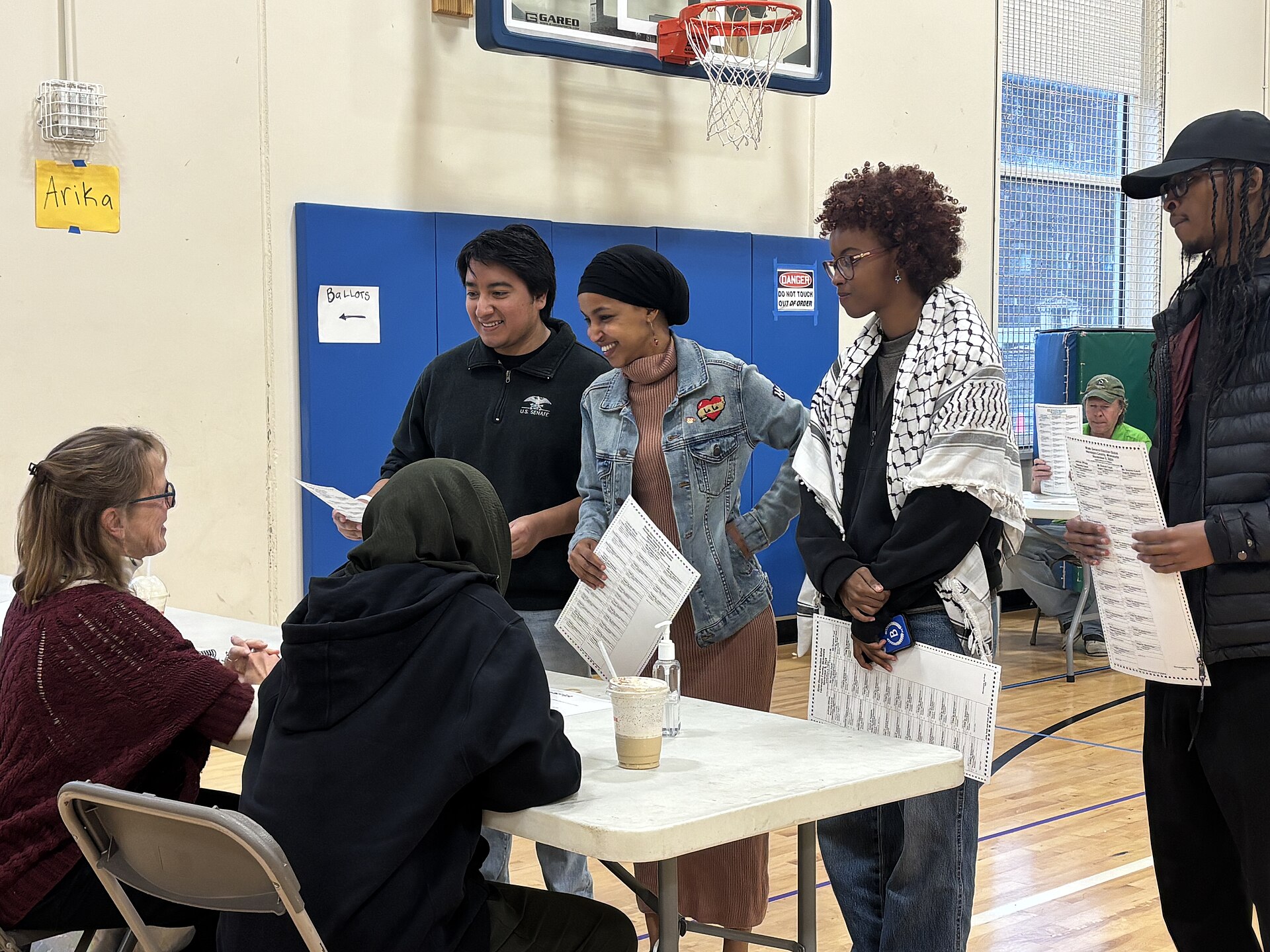
Omar’s account of how she became a citizen
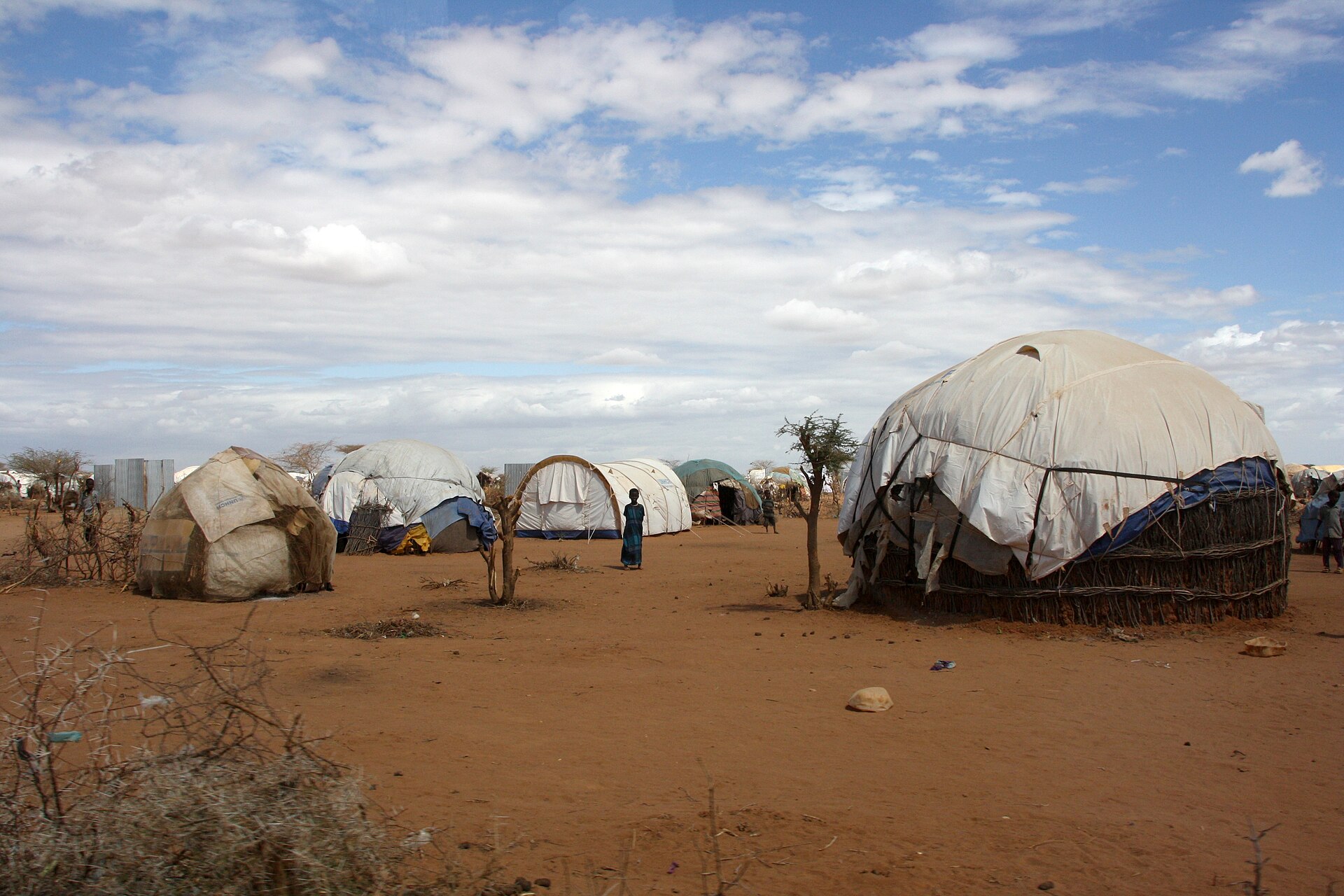
Omar’s account of her path to citizenship has been consistent since she entered public life, and was laid out by the Associated Press in 2018 and repeated since. Her family fled Somalia’s civil war when she was a child, spent years in a refugee camp in Kenya, and arrived in the United States as refugees in 1995. She has said she became a U.S. citizen in 2000, at age 17, through her father’s naturalization — a route known in immigration law as derivative citizenship, under which a minor child automatically acquires citizenship when a parent naturalizes, provided the legal conditions are met.
Her father, who is deceased, is identified in the critics’ filings and reporting as Nur Omar Mohamed, also rendered Nur Said Elmi Mohamed. Nothing in Omar’s account is new: it predates the current investigation by years, was part of her public biography when she first ran for office, and is the version reflected in the congressional record of her career — state legislator in 2017, then the first Somali American elected to Congress in 2018.
What her critics cite: the FOIA responses
The documentary challenge to that account comes principally from AJ Kern, a former primary challenger who has pursued Omar’s records for years. According to Kern — as reported by Fox News in May 2026, and also covered by Alpha News and The Post & Email — Freedom of Information Act responses she received from the Department of Homeland Security and U.S. Citizenship and Immigration Services, including a June 2023 USCIS letter, stated that no naturalization documentation for Omar’s father could be located. Kern filed a complaint with the Federal Election Commission in September 2023 built on that asserted absence. The FEC replied that the complaint “does not state any acts that appear to constitute a violation under our jurisdiction.”
How to weigh this precisely: it is an allegation advanced by a political challenger, based on her account of agency responses to her records requests. It is not a finding by any government body that Omar’s father was not a citizen. Neither DHS nor USCIS has publicly stated that he failed to naturalize, and an agency’s inability to locate a decades-old record in response to a FOIA request is not, by itself, proof the event never occurred — records from that era can be incomplete, misfiled, held under variant name spellings, or restricted. The names at issue here appear in multiple renderings, which is one reason researchers on both sides describe the paper trail as contested rather than settled. What the FOIA dispute establishes, at most, is that the public documentary record is thinner than either side’s rhetoric suggests.
The related dispute over her age in 2000
A second front in the critics’ case concerns Omar’s age when she says she naturalized. Derivative citizenship through a parent generally requires the child to be under 18 — which is why the difference between 17 and 18 is legally decisive rather than trivia. Critics note that Omar’s birth year has appeared in listings as both 1981 and 1982; if 1981 is correct, she would have turned 18 before or during 2000 depending on the naturalization date, while 1982 keeps her at 17 through most of that year. Alpha News reported that in 2019 her office asked the Minnesota Legislative Reference Library to change the listed year from 1981 to 1982. Omar’s defenders have treated the discrepancy as a clerical artifact of refugee documentation — birth dates for children who fled war are frequently approximate in official records — while her critics treat the 2019 change request as evidence the timeline was being managed. No official body has adjudicated the question, and the naturalization date that would resolve it is part of the same sealed, decades-old file at the center of the FOIA fight.
What is documented — and what is not
Established or undisputed
The family’s refugee arrival in 1995 and Omar’s citizenship dating to 2000 are her long-stated account, reflected in AP’s reporting since 2018 and never contradicted by a public official record. HSI executed a DOJ-secured search warrant at her Washington-area home early on October 12. The DOJ has confirmed an ongoing federal criminal investigation, without naming her or its subject. Border czar Tom Homan confirmed in September that an investigation into Omar exists. Vice President JD Vance raised “immigration fraud” scrutiny of Omar in March. The Times reports the warrant lists potential immigration crimes and that the father’s eligibility is among the subjects — that is reported sourcing, attributed as such.
Not established
There is no public finding — by a court, by USCIS, or by any agency statement — that Omar’s father was not a naturalized citizen or was ineligible to become one. There are no charges against Omar: no indictment, no criminal complaint, and no denaturalization suit has been filed or announced. The contents of the sealed warrant affidavit, and whatever agents seized on Monday, are not public. And the precise resolution of the 1981-versus-1982 birth-year listings has never been officially determined. In short: the investigation is documented; its target subject is reported; the underlying allegation about the father remains, as of Monday, unproven in any public forum.
What the law requires
Two bodies of law frame the dispute. The first is derivative citizenship itself: under U.S. immigration law, a child living in the United States could automatically derive citizenship when a parent naturalized, generally on conditions that included the child being under 18 and residing with that parent. That is why the case turns on two factual hinges — the father’s status, and the daughter’s age — rather than on anything Omar herself filed as a child. If the father naturalized while she was a minor living with him, her citizenship followed by operation of law; if either hinge fails, the derivative claim fails with it. Everything else is argument about those two hinges.

The second is denaturalization — the only legal mechanism for undoing a naturalization — and its standard is deliberately hard for the government to meet. Citizenship can be revoked only through a proceeding in federal court, where the government must prove by clear, convincing evidence that citizenship was illegally procured, or procured through concealment of a material fact or willful misrepresentation. Suspicion, political pressure and missing paperwork in a FOIA response do not meet that standard; evidence does, tested in court. It is also a separate track from a criminal case: Monday’s warrant belongs to a criminal investigation into potential immigration crimes, and no denaturalization action against Omar has been filed. The wider administration effort on denaturalization is covered separately: Trump DOJ Moves to Strip Citizenship of 40 Naturalized Americans.
Omar’s response
Omar has denied immigration fraud for as long as the allegation has existed. She told The Wall Street Journal this year that she never committed immigration fraud. Responding to Monday’s search, she called the investigation an “outrageous abuse of power” and political targeting, and said she did “nothing wrong.” Her position, maintained consistently, is that her family’s history is the one she has always told — flight from civil war, years in a refugee camp, resettlement in 1995, citizenship in 2000 — and that the probe is the latest chapter of a decade of attacks by political opponents. The administration’s public position runs the other way: Homan has framed the inquiry as ordinary law enforcement, applicable to a member of Congress as to anyone else, and officials who have discussed it say the questions about her file are legitimate ones for investigators to answer.
What happens next
The realistic paths are the ones criminal investigations usually take. Agents will analyze whatever Monday’s search produced; prosecutors will decide whether the evidence supports charges, further process, or a quiet close. Any criminal case would have to be built on documents — the naturalization file, the refugee-era paperwork — that sit in government archives and, for now, remain outside public view. A denaturalization case, if the government ever chose that route, would be a separate civil suit in federal court under the heavy standard described above, and would take years. And over all of it hangs the calendar: Omar is on the ballot on November 3, three weeks from the search, so the investigation will be argued about in the campaign long before it is resolved in any courtroom.
Bottom line: the trending sentence gets one thing right and one thing wrong. Right: Omar’s citizenship came through her father — that is her own account, and it is why his status is the legal hinge of the case. Wrong, so far: the leap from “no documentation has been publicly located” to “he was not a citizen.” The first is a challenger’s documented dispute with two agencies’ filing cabinets. The second is a finding no public body has made — and, under the law, one only a court could make, on evidence the government has not yet shown. Until the sealed file opens or charges land, that distinction is the whole story.
Related coverage
Sources
- Reason — DHS Searched Ilhan Omar’s Home as Part of Immigration Fraud Investigation (Oct 12, 2026; summarizing The New York Times’ reporting on the warrant and the father’s eligibility)
- The Post & Email — What Were Investigators Seeking in Omar Residence Search? (Oct 12, 2026)
- The Post & Email — US Government Affirms: No Naturalization Records for Ilhan Omar’s Father (Nov 1, 2023; Kern’s FOIA account and the FEC exchange)
- USA Today — Ilhan Omar’s Home Was Searched. What to Know About Her Immigration Story (Oct 12, 2026)
- Associated Press (2018 and since) and The Wall Street Journal (2026), as cited in the text, for Omar’s account of her family’s history and her denials.