Homeland Security agents served a federal search warrant at the Minnesota congresswoman's Washington-area home around 6 a.m. Monday. The Justice Department confirms an ongoing criminal investigation — but not what it covers. Omar, 44, has not been charged, and her office had not yet responded to the search.

Federal agents searched the Washington-area home of Rep. Ilhan Omar early Monday morning, marking a dramatic escalation of a long-running federal inquiry into the Minnesota Democrat's immigration history — an inquiry she has denied for more than a decade, now landing just three weeks before the midterm elections.
What happened at dawn Monday
Agents from Homeland Security Investigations (HSI), the investigative arm of the Department of Homeland Security, executed a search warrant at Omar's residence in the Washington area in the predawn hours, Fox News Digital and other outlets reported. Video released by Fox News showed officers wearing HSI jackets outside the home, and the street was temporarily blocked off as the search began around 6 a.m. Eastern time.
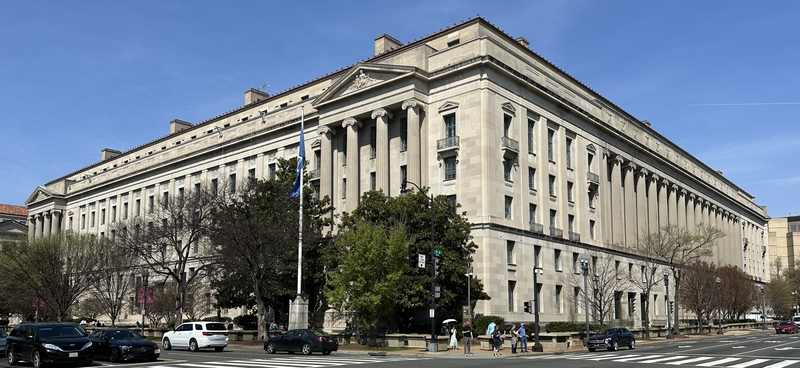
The Department of Justice confirmed the operation in a statement: “Today in the Washington, D.C. area, Homeland Security Investigations executed a judicially authorized search warrant secured by the Department of Justice. This enforcement action is part of an ongoing federal investigation.” The DOJ declined to provide further details, and the Associated Press reported that the scope of the search was not immediately clear — including whether investigators consider Omar herself a target or a witness.
What the investigation is reportedly about
The DOJ statement named no person and cited no statute. Reporting by Fox News Digital and the New York Post, citing sources familiar with the matter, said the criminal probe centers on alleged fraud in immigration paperwork completed by Omar's late father when she was a child — decades before she entered Congress.
Separate longstanding allegations have shadowed Omar for years: claims raised repeatedly by President Donald Trump and his allies that she entered a fraudulent marriage to help a family member immigrate to the United States. Omar has consistently denied that claim.
Omar's denials — and her silence on Monday's search
As of Monday morning, Omar's office had not publicly responded to the search, according to the AP and Reuters, both of which said they had requested comment. No public statement from Omar herself addressing the October 12 operation had surfaced by publication time.
Her earlier denials are on the record. In a Wall Street Journal interview earlier this year, Omar said she was never married to her brother and never committed immigration fraud. In September, after DHS officials publicly discussed a continuing investigation, she told Fox News Digital that no one from the department had notified her of any criminal probe, and she dismissed the allegations as politically motivated attacks. She has previously described the underlying claims as “disgusting lies.”
The administration's position
DHS Secretary Markwayne Mullin said on a conservative podcast in September that a continuing federal investigation into Omar was underway, including the claim that she “married her brother to try to bring him into the United States” — an allegation Omar has rejected for years. Trump's border-enforcement chief, Tom Homan, said in September that Omar was the subject of a continuing criminal investigation but declined to provide details, according to The Times.
Rep. Nancy Mace (R-S.C.) wrote on X that she had previously moved to subpoena Omar's immigration records in the House Oversight Committee, but that the effort was blocked. “If the fraud is proven, she should be denaturalised and deported home to Somalia,” Mace posted, per The Times.
Homan has framed the inquiry in nonpolitical terms. “If someone committed an immigration violation, if someone committed marriage fraud or anything like that, regardless if they're a congressman or not, no one's above the law,” he said in September, according to Conservative Brief's reporting. Vice President JD Vance said in May, in remarks describing the administration's posture: “If we think that there's a crime, we're going to prosecute that crime.”
Why the timing matters — three weeks before the midterms
The search landed 22 days before the November 3 midterm elections, in which Omar is seeking another term representing Minnesota's 5th District. A federal search of a sitting member of Congress in the final stretch of a campaign is extraordinarily rare — and it guarantees the investigation will be litigated in public, in Congress, and at the ballot box at the same time.
That does not, by itself, establish political motivation: the DOJ has not publicly explained what investigative development prompted the warrant's execution on October 12, and the supporting affidavit remains sealed. But the calendar invites scrutiny of the timing from both directions — critics of the administration will call it election-season pressure; supporters of the probe will call it long-delayed follow-through on allegations years old.
Background: from Mogadishu to Minneapolis to Congress
Omar was born in Mogadishu, Somalia, in 1982. She fled the country's civil war as a child, spent years in a refugee camp in Kenya, and arrived in the United States with her family in the 1990s. She became a naturalized U.S. citizen in 2000, settling in Minneapolis, where she built a career in community organizing before winning a state legislative seat and, in 2018, the U.S. House seat for Minnesota's 5th District.
In Congress she became one of the most prominent members of “the Squad,” a group of progressive lawmakers known for sharp opposition to Trump. She has long been a target of the president's anti-Somali rhetoric, and the search comes against the backdrop of a sprawling Minnesota welfare-fraud scandal that has kept the state's Somali community under intense federal scrutiny.
Both sides' case, stated plainly
The case the administration and its allies are making
Trump, Mullin, Homan, Mace and other Republicans argue the fraud allegations against Omar are credible enough to warrant a full criminal investigation — and that a judicially authorized warrant means a federal judge found probable cause that evidence of a crime would be found. From this view, the search is the system working as designed: no one, including a member of Congress, is above immigration law.
The case Omar and her defenders are making
Omar's position, stated over years of denials, is that the underlying allegations are false and discriminatory — recycled by political opponents. Her defenders point to the timing, the decade-old provenance of the claims, and the administration's open hostility toward her as signs of a politically driven investigation. From this view, the search is pressure, not proof: a warrant authorizes a search; it does not establish guilt, and investigations can close without charges.
Who wins and who loses
Republicans gain a vivid image — federal agents at the door of one of Trump's most prominent critics — to feed a base that has demanded accountability on the fraud claims for years. The administration gets to show enforcement without regard to office.
Democrats gain a rallying narrative of their own: a predawn search of a Muslim, Somali-born congresswoman three weeks before an election, with no charges filed, feeds arguments that federal law enforcement is being turned on the president's political opponents.
Omar herself faces the hardest position: she must campaign for re-election under the shadow of a criminal probe while her denials are tested against whatever investigators found Monday morning. And in every scenario, ordinary Minnesota voters — particularly the Somali-American community — are caught between two irreconcilable stories about what the search means.
What happens next: three paths
Charges follow
If investigators recovered evidence supporting the fraud allegations, prosecutors could seek charges — a step that would make Omar the rare sitting House member facing federal criminal prosecution in an election's final weeks. Watch for unsealed court filings and whether the affidavit's redactions lift.
The probe continues quietly
The most common outcome of a search is neither an immediate arrest nor exoneration: investigators analyze what they seized, and the inquiry grinds on for weeks or months. In that case the search's main effect is political — a cloud over the final stretch of Omar's campaign.
The investigation closes without charges
Searches do not always end in prosecution. If the evidence does not support the allegations, the DOJ could decline charges — an outcome Omar's camp would present as vindication and her critics would present as a cover-up. Either way, the sealed record means the public may never see the full basis for Monday's warrant.
The one certainty: the documents seized Monday morning will decide which story survives. Until the DOJ says more — or Omar does — the allegations remain allegations, and the search remains a search. What it proves, if anything, is still locked in an evidence room.
Sources
- The Times — Federal agents raid home of Trump critic Ilhan Omar (Oct 12, 2026)
- Legal United States — Ilhan Omar Raid: Latest Update on Reported DHS Search of Her Washington, D.C., Home (Oct 12, 2026)
- Conservative Brief — DHS Agents Search Ilhan Omar's DC Home In Pre-Dawn Raid (Oct 12, 2026)
- Federalist Press — Federal Agents Raid Ilhan Omar's Washington Home in Criminal Immigration Investigation (Oct 12, 2026)
- King Bygone — Ilhan Omar’s Washington Home Raided by Federal Agents Amid Criminal Probe (Oct 12, 2026)
- The Daily BS — Feds Raid Ilhan Omar’s Home Before Dawn as Immigration Probe Moves Beyond the Indignant Shouting (Oct 12, 2026)