Tigray Peace Forces Mekelle airport
Tigray Peace Forces Claim They Retook Mekelle's Airport — Unverified
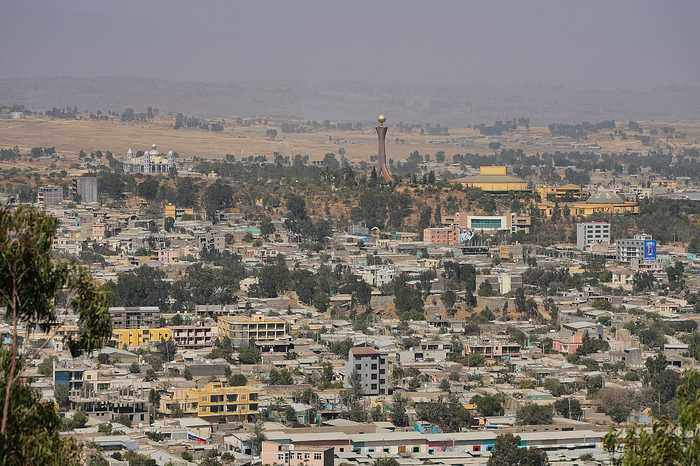
MEKELLE, Ethiopia — Late on Friday night, a militia fighting alongside Ethiopia's federal government posted a two-sentence claim on X that, if true, would mark the turning point of the country's renewed war: “We have taken full control of Mekelle Alula Aba Nega Airport. We are currently clearing the city of Mekelle.” The claim is exactly that — a claim. Reuters, which reported the post less than an hour ago, said it could not immediately verify the assertion. Prime Minister Abiy Ahmed's office did not respond to a request for comment. The TPLF — the Tigray People's Liberation Front, which seized the very same airport from federal police just ten days earlier — could not be reached for comment.
An AFP wire report carrying the same militia claim added the crucial context: media are prevented from traveling to the affected areas and communications are badly disrupted, making independent verification all but impossible right now. This article therefore treats the airport retake as what the evidence supports — a militia assertion, not an established fact — while examining what is confirmed, and why the claim matters even if it proves premature.
What is confirmed, what is claimed
CLAIMED: The Tigray Peace Forces, a pro-government Tigrayan militia, say they hold Alula Aba Nega Airport — about 10 kilometers outside Mekelle — and are clearing the regional capital. The sole source is the militia's own X post, reported by Reuters on October 3 and carried by AFP.
CONFIRMED: The federal counter-offensive is real and advancing. Conflict monitor ACLED says pro-government forces have retaken the Afar towns of Abala, Erebti and Megale; the Critical Threats Project at the American Enterprise Institute reports government forces pushing into Tigray along three axes toward Mekelle, and says the Ethiopian military has “largely repelled the rebel offensive.” A humanitarian source told AFP the TPLF has been pushed out of Afar, adding: “there is no access to food in the north.” The African Union says it is “following with concern the heightened tensions between Ethiopia, Eritrea and Egypt” and urged “maximum restraint.”
Airports are narrative weapons. When TPLF forces seized Alula Aba Nega from federal police on September 23, Ethiopian Airlines suspended flights to Mekelle, Axum and Shire within hours — the first great visible humiliation of the federal government in this round of fighting, and the signal to the world that the Pretoria peace was collapsing. A verified federal retake would reverse that symbolism exactly: the air bridge reopened, the capital denied to the rebels, the counter-offensive validated.
But even as an unverified claim, the post matters. In a war where journalists are barred and networks are cut, the information space is the battlefield: the X post is aimed at TPLF morale, at the African Union and Western capitals weighing sanctions, and at anyone watching for escalation signals along the Red Sea corridor.
Here is the discipline this story demands: the claim will be audited by reality within days. If Ethiopian Airlines does not resume flights to Mekelle, the claim fails. Watch the airline's announcements — they are the independent tripwire no militia press release can fake.
How we got here
The baseline is the 2020–2022 civil war between the TPLF and the federal government, which left hundreds of thousands dead, per Reuters, before the Pretoria agreement of November 2022 stopped the killing. The peace then decayed in slow motion: each side accused the other of violating Pretoria; in May 2026 the TPLF seized the regional government from the interim administration the peace deal had installed; federal drone strikes hit Tigrayan forces for months, documented in ACLED data; the military claimed nearly 300 Tigrayan fighters had surrendered.
Then September detonated the timeline. On September 21 the TPLF and six other armed groups announced the Coalition for the Survival of Ethiopian Popular Forces — also rendered as the Ethiopian Peoples' Forces Alliance for Survival — with the declared aim of ousting Abiy Ahmed; the UN voiced “deep concern.” On September 22–23 fighting spread into neighboring Afar, around Abala and Erebti, towns the TPLF claimed to hold. On September 23 Tigrayan forces took Mekelle's airport from federal police overnight — peacefully, by most accounts — and Ethiopian Airlines halted its Tigray network the same day.
Late September brought the federal response: adviser Getachew Reda — himself a former senior TPLF figure — accused the TPLF of a large-scale offensive in Afar and Amhara, the counter-offensive rolled, US Ambassador to Ethiopia Ervin J. Massinga threatened sanctions over the renewed fighting, and the US Bureau of African Affairs condemned a drone strike on a Catholic Relief humanitarian convoy in Tigray. By October 2, federal forces were closing on Mekelle and Addis Ababa had shut its embassy in Asmara and expelled Eritrean diplomats.
Who are the Tigray Peace Forces?
The name to parse carefully: this is a pro-federal Tigrayan militia — the civil war inside the civil war. Tigrayans who broke with the TPLF and fight alongside Addis Ababa. That origin explains both the claim's plausibility — they operate inside Tigrayan territory — and its limits — their interest lies in projecting federal momentum. Treat their X post the way you would any combatant's communiqué: possibly true, structurally self-serving, and unverifiable until the airline schedules say otherwise.
Who wins, who loses
If the claim verifies, the winners are straightforward: Abiy's government, which converts a week of bad headlines into a narrative of control and gains leverage for any future negotiation; and the Peace Forces themselves, whose relevance and patronage grow with every verified success.
The losers are the TPLF-led alliance, whose big offensive of late September would be reversed within a fortnight — and, far more consequentially, civilians. “There is no access to food in the north,” the humanitarian source told AFP, describing towns the TPLF “raided and destroyed as they left.” Ethiopian Airlines' suspended network strands an entire region. And the analysts' verdict is the one to sit with: this is the worst escalation since the 2020–2022 war, and every confirmed federal advance raises the odds that the fighting spills across borders the AU has now named explicitly — Eritrea and Egypt.

The numbers in context
Start with the toll that frames everything: hundreds of thousands dead in 2020–2022, per Reuters. Against that baseline, the current figures are fragments — but fragments with direction. Three axes of advance toward a capital whose airport sits roughly 10 kilometers outside the city.
The same Afar towns — Abala, Erebti, Megale — that TPLF sources claimed on September 23 are the ones ACLED says pro-government forces have now retaken: a full reversal in ten days, if confirmed, and a measure of how fluid this front is. Nearly 300 fighters surrendered, the military claimed last week — unverified, like so much else. Three airports — Mekelle, Axum, Shire — dark since September 23.
Put the numbers together and the pattern is a federal counter-offensive moving faster than the TPLF's late-September offensive did — which is precisely why the unverified airport claim is believable enough to report and dangerous enough to hedge.
What happens next — three scenarios
1. The battle for Mekelle itself
If federal troops and allied militia enter the regional capital, urban fighting in a city of hundreds of thousands means a humanitarian catastrophe layered onto a region where, per the humanitarian source, there is already no access to food in the north. The militia's phrase “clearing the city” should chill anyone who remembers 2020.
2. De-escalation under pressure
The AU's “maximum restraint” plea, Ambassador Massinga's sanctions threat, and the sheer cost of a capital battle all push toward talks — but Abiy's office would not even comment on the airport claim, which is not the posture of a government seeking an off-ramp.
3. Regional spillover
This is the scenario the AU named out loud. Eritrea — with the Asmara embassy closed and diplomats expelled this week — and Egypt, with its Nile and Red Sea stakes, are now formally part of the AU's worry. A wider Horn of Africa war would put one of the world's busiest shipping corridors at risk.
The base case: the next 72 hours are about verification, not victory parades. Watch flight schedules, satellite imagery, and whether any independent reporter reaches Mekelle. If the airport claim is real, the evidence will be boring and bureaucratic — departure boards, not press releases.
The bottom line
Report the claim, hedge the claim, and respect what the confirmed facts already tell us: the federal counter-offensive is advancing on three axes, the TPLF has been pushed out of Afar, civilians are going hungry, and the African Union is worried about three countries, not one.
Whether or not the Tigray Peace Forces hold that runway tonight, the war for Tigray's capital is underway — and the distance between a militia's X post and a verified fact is exactly the distance this war's fog has to travel. We will update this article as independent verification arrives.
Sources
- Reuters, October 3, 2026: “Pro-government forces say they retake airport in Ethiopia's Tigray region.”
- AFP via Deutsche Tageszeitung: “Ethiopian pro-government militia claims Tigray airport as regional tensions spike.”
- Ethiopian Airlines' September 23 suspension of Mekelle, Axum and Shire flights, reported by Addis Standard with the carrier's statement.
- African Union statement urging “maximum restraint” over Ethiopia–Eritrea–Egypt tensions, reported by Reuters.
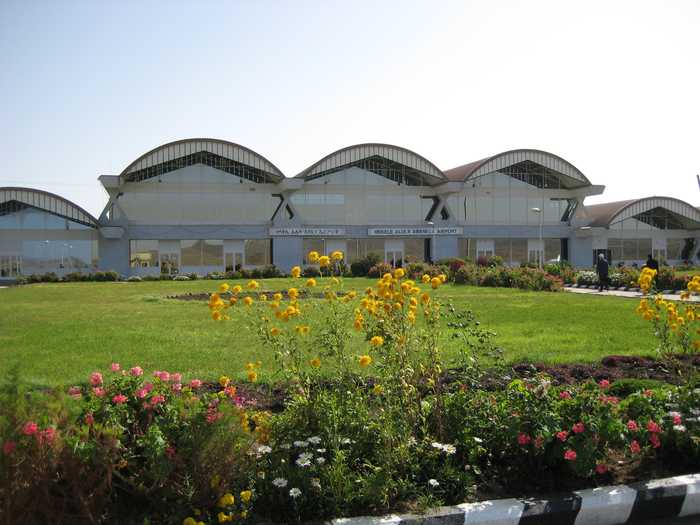
Reporting cutoff: October 3, 2026 at 12:45 a.m. PDT. The Tigray Peace Forces' airport claim was not independently verified by Reuters or AFP at publication. File photographs provide geographic context and do not show current operations.