
MEKELLE, Ethiopia — Ethiopian forces close in Mekelle on Friday, October 2, 2026, after a fast advance that has brought the federal military and allied militiamen within striking distance of the northern city, according to two residents and a diplomat who spoke to Reuters on condition of anonymity for security reasons. Banks and shops were closed, a civilian signal that fear had moved ahead of the front line even as the precise disposition of forces remained difficult to verify independently.
The Ethiopian National Defence Force and aligned fighters have gained ground since combat with a Tigray People's Liberation Front-led rebel alliance erupted last week. The renewed fighting is the gravest escalation since the 2020–2022 civil war. It arrives with a new strategic warning: suspected drone attacks on Addis Ababa earlier this week suggest the TPLF and its allies may possess a longer reach than federal planners previously assumed.
Neither Ethiopian government nor military spokespeople responded to Reuters requests for comment. That silence leaves crucial battlefield questions unresolved: how close the forces are, whether the capital is encircled, whether evacuation routes remain open and what rules of engagement would govern combat around a dense urban center.
The immediate contest is for Mekelle. The larger contest is over whether Ethiopia can keep another Tigray war inside its own borders. With Eritrea to the north, Sudan's civil war to the west and Egypt drawn into Addis Ababa's allegations of outside support, every military gain now carries a diplomatic cost.
Why this matters: Mekelle is a political center, not just a military objective
Mekelle is the seat of Tigray's administration, a communications hub and the symbolic center of Tigrayan political power. Threatening it can force an opponent to redirect fighters, expose its command structure and decide whether to defend a city at enormous civilian risk. Capturing it, however, would not by itself end an insurgency rooted across mountainous terrain and hardened by the last war.
The city's closure signals are therefore more than local inconvenience. Banks shutting restricts cash at the point families may need transport, fuel or food. Shops closing interrupts supply before any official siege is declared. Each lost day narrows civilian choices. If roads become unsafe, people who can afford to leave may depart first while poorer households, older residents and patients become trapped.
The timing also collapses three crises into one. The fighting around Alamata and reported civilian deaths showed how quickly the front could move. Thursday's closure of Ethiopia's embassy in Asmara and expulsion of 10 Eritrean diplomats removed an important channel just as forces accelerated toward Mekelle. Suspected drone strikes in Addis Ababa then demonstrated that distance may offer less protection than it once did.
What is reported, what is claimed and what remains unverified
Reuters grounded the report of the advance in two residents and a diplomat, all unnamed because of security risks. Their accounts support the central finding that federal and allied forces were close enough to create immediate alarm in Mekelle. The citywide business closures are also consistent with preparations for violence or disruption.
But wartime reporting from Tigray carries unusual constraints. Communications have repeatedly been disrupted, access is limited and the belligerents have incentives to exaggerate gains or suppress losses. “Within striking distance” is a meaningful warning, not a verified map coordinate. It does not establish that federal forces have encircled Mekelle, entered its neighborhoods or cut every route.
The suspected attacks on Addis Ababa carry the same distinction. They indicate a possible leap in opposition striking power, but public information has not settled who launched every device, from where, with what system or at what target. The strategic inference is still important: if a TPLF-aligned coalition can threaten the capital, the federal government must divide attention between protecting Addis Ababa and sustaining the northern offensive.
Addis Ababa has accused Eritrea, Sudan and Egypt of backing the opposition alliance. All three governments have denied the allegations. No public evidence cited in the Reuters report independently proves those claims. They should be read as official accusations with serious diplomatic consequences, not as established fact.
Background: the peace that stopped a war without resolving its fault lines
The 2020–2022 Tigray war began after a long confrontation between Prime Minister Abiy Ahmed's federal government and the TPLF, the party that dominated Ethiopia's ruling coalition for nearly three decades before Abiy took power in 2018. Fighting drew in Eritrean forces and Amhara regional units alongside the federal army, while Tigrayan forces at one stage advanced far beyond their home region.
The human cost was vast. At points in the earlier conflict, United Nations reporting put displacement above two million people. Death estimates remain disputed and run into the hundreds of thousands when battlefield deaths, civilian killings, hunger and the collapse of health services are considered. Those figures are not a forecast for 2026; they are the clearest warning against treating another offensive as a contained operation.
The November 2022 Pretoria cessation-of-hostilities agreement halted the main federal–Tigray war. It required disarmament, restoration of services, humanitarian access and a political process. Yet the bargain left several explosive questions unfinished. Eritrea was not a signatory. Amhara and Tigrayan claims over western and southern Tigray were not finally settled. The status and withdrawal of external or allied forces remained contested.
That architecture depended on incremental trust among actors who believed they had existential reasons not to trust one another. The return of open Ethiopia–Tigray conflict shows what happens when military hedging replaces political implementation: each side interprets the other's preparations as proof that its own preparations were necessary.
Eritrea is the most dangerous fault line because it fought the TPLF in the last war and regards it as a security threat. Amhara actors have territorial and security interests in disputed areas. Sudan is already at war, with a porous eastern frontier and rival armed networks. Egypt's long dispute with Ethiopia over Nile waters and the Grand Ethiopian Renaissance Dam adds another layer of strategic distrust, even though Cairo denies backing the alliance.
Who benefits — and who loses — from the Mekelle offensive
The federal government gains leverage if it can threaten Mekelle without destroying it. A rapid advance can fracture an alliance, pressure local leaders into talks and reassure supporters that Addis Ababa controls the strategic initiative. But the advantage is fragile. Urban warfare, abuses or a prolonged occupation could convert a battlefield victory into renewed insurgency and international isolation.
The TPLF-led alliance gains a mobilizing narrative if the capital is attacked. An external threat can suppress internal disputes and restore the language of collective defense. Suspected long-range drone capability, if confirmed and sustainable, gives the alliance a way to impose costs beyond Tigray. Yet striking Addis Ababa also risks hardening federal public opinion, widening retaliation and weakening diplomatic sympathy.
Regional hardliners benefit from collapsing diplomacy. Every accusation of foreign backing strengthens officials who argue that compromise is naïve. Ethiopia's October 1 decision to close its embassy in Eritrea and order 10 Eritrean diplomats out within 48 hours was answered by Eritrea severing all diplomatic ties. When direct channels disappear, security agencies and military intermediaries gain influence over what each side believes.
Civilians lose first and most. Families in Mekelle face closed commerce, uncertain transport and the fear of siege. Communities near changing front lines risk shelling, detention, displacement and disrupted aid. Across Ethiopia, a renewed national war diverts public money and administrative attention from food security, reconstruction and services. Eritrean and Sudanese border communities would be exposed if the conflict crosses frontiers.
What the numbers mean: 48 hours, three neighbors and a two-year war
The numbers attached to this crisis are not interchangeable. The 48-hour expulsion deadline is a diplomatic clock. The 10 diplomats are a measure of how extensively bilateral relations have been dismantled. The 1998–2000 Ethiopia–Eritrea border war and the 2018 restoration of relations show that reconciliation can take decades to build and days to undo.
The 2020–2022 Tigray war is the more sobering comparison. More than two million displaced people at stages of that conflict meant pressure not only on Tigray but on host communities, aid corridors and neighboring states. A return to that scale would land in a Horn of Africa already carrying Sudan's enormous displacement crisis. The region has less humanitarian slack than it did in 2020.
The three neighboring states named by Ethiopia—Eritrea, Sudan and Egypt—also represent three different escalation pathways. Eritrea can shape events directly across a shared border. Sudan's fragmented war creates space for arms flows, opportunistic alliances and accidental clashes. Egypt's role is primarily strategic and diplomatic, tied to its dispute with Ethiopia over the Nile. Treating them as one bloc would obscure the risks; ignoring the overlap would be equally dangerous.
And Mekelle's importance cannot be reduced to population alone. It is a command, administrative and logistical center in a region where roads and communications determine who can move food, fuel, medicine and information. A siege that lasts days can create scarcity. A battle that lasts weeks can re-create the machinery of a humanitarian emergency.

Critics' views: force may take a city without solving the conflict
Critics of the federal advance argue that the core lesson of the last war is precisely that military control of Mekelle does not settle Tigray's political status, public grievances or armed capacity. Federal forces entered the city in 2020, only for Tigrayan forces to retake it in 2021. Geography, local networks and popular anger can make holding territory harder than seizing it.
Critics of the TPLF-led alliance counter that returning to armed confrontation risks sacrificing civilians for an uncertain bargaining advantage. If opposition forces were behind the suspected Addis Ababa drone attacks, bringing war to the capital could invite a much broader air and ground campaign. It could also allow the federal government to recast unfinished political disputes as a national counterterrorism or sovereignty fight.
Regional governments face their own skepticism. Ethiopia's allegations against Eritrea, Sudan and Egypt are consequential, but accusations without public evidence can become self-fulfilling if they are used to justify military posture. The three accused states' denials likewise do not answer every question about informal actors, intelligence contacts or weapons routes. Independent evidence—not the volume of official rhetoric—should decide those claims.
Humanitarian organizations and diplomats are likely to judge all parties by narrower tests: whether civilians can leave safely, whether hospitals and utilities are protected, whether aid can move, whether detainees are treated lawfully and whether communications remain open. Those are not secondary concerns. They determine whether a military crisis becomes a mass-casualty event.
What happens next: three scenarios around Mekelle
1. A coercive encirclement stops short of an assault
Federal forces could use proximity to Mekelle to demand withdrawals, disarmament steps or a political concession without entering the city. This is the least destructive military scenario, but it still resembles a siege if roads, banking, fuel and food are cut. Any talks would need verifiable civilian-access guarantees, not merely a pause in firing.
2. Urban battle and renewed insurgency
If forces enter Mekelle and meet organized resistance, combat could spread through civilian neighborhoods and critical infrastructure. Even a rapid federal victory would not guarantee control across Tigray. Fighters could disperse, supply lines could be attacked and abuses could fuel recruitment. The memory of 2020–2022 means that each report of harm will carry immediate political weight.
3. Regional spillover outruns the Ethiopian front
The widest-risk scenario begins with linked but ambiguous incidents: movement near the Eritrean border, alleged weapons transfers through Sudan, another drone near Addis Ababa or a strike misattributed in real time. With Ethiopia and Eritrea no longer maintaining normal diplomatic ties, clarification becomes slower. Leaders may act on worst-case assumptions before facts are established.
Diplomatic exits still exist, but the window is narrowing
A viable exit requires parallel tracks rather than one grand bargain. The first is an immediate civilian-protection arrangement around Mekelle: open roads, functioning hospitals, protected utilities and monitored humanitarian access. The second is a military deconfliction channel among federal and Tigrayan commanders. The third is a political mechanism to revive and update the Pretoria commitments, including unresolved territorial and security questions.
A separate regional channel is needed for Ethiopia and Eritrea, potentially through the African Union, IGAD or another mutually accepted intermediary. The goal need not be immediate restoration of embassies. It should be a reliable way to transmit warnings, investigate incidents and prevent forces from reading every movement as an attack.
Sudan and Egypt should be engaged as distinct actors, not simply named in a common accusation. Ethiopia can present evidence through diplomatic or multilateral channels; the accused governments can accept monitoring that tests their denials. Verification is more stabilizing than rhetorical certainty on either side.
The choice is not between ignoring the TPLF-led alliance and accepting its demands, nor between abandoning federal sovereignty and storming a regional capital. It is between a political process that contains armed power and a military process that keeps producing new reasons to use it. Mekelle has already lived through the latter. The closing banks and shops show that civilians understand the stakes before diplomacy has caught up.
What to watch now
- Road access: whether routes into and out of Mekelle remain open to civilians, commercial supplies and humanitarian agencies.
- Force posture: independently verifiable evidence of encirclement, entry into the city, artillery placement or air operations.
- Communications: internet and telephone disruptions that would make civilian protection and independent reporting more difficult.
- Drone evidence: recovered systems, launch attribution or official investigation findings from the suspected Addis Ababa attacks.
- Regional diplomacy: an AU or IGAD contact group, a third-country backchannel between Ethiopia and Eritrea, or any reversal of the embassy rupture.
- Humanitarian indicators: hospital functionality, fuel and food prices, displacement from Mekelle and access to cash after the bank closures.
Sources and reporting notes
- Reuters, October 2, 2026: federal and allied forces nearing Mekelle, residents' accounts, business closures, suspected Addis Ababa drone attacks and regional-spillover concerns.
- Signal Post News background: Ethiopia's October 1 embassy closure and 48-hour expulsion order, with links to the official statements and Reuters reporting.
- Signal Post News background: the Alamata front, reported civilian deaths and the federal advance toward Mekelle.
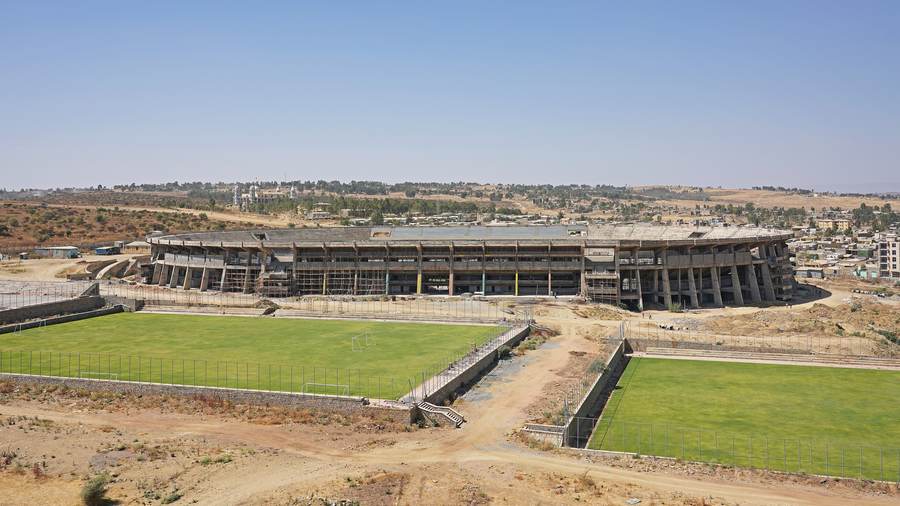
Reporting cutoff: October 2, 2026 at 6:35 a.m. PDT. Battlefield positions and responsibility for the suspected Addis Ababa drone attacks remain unverified beyond the cited reporting. Claims of foreign support are attributed to Ethiopia's government; Eritrea, Sudan and Egypt deny them. File photographs show Mekelle in 2018 and do not depict current operations.