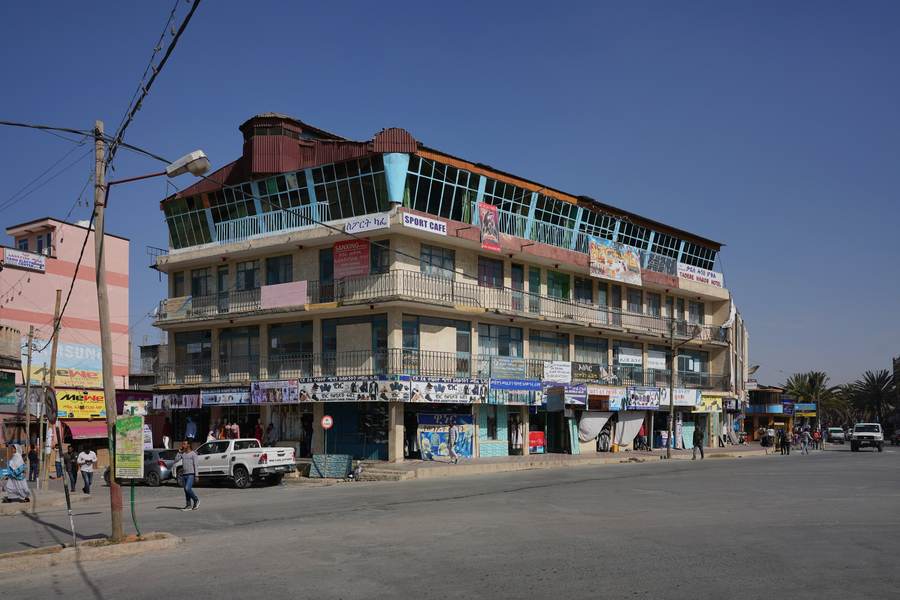
MEKELLE, Ethiopia — Ethiopian forces seize Mekelle after an 11-day reversal that has carried the federal military and allied fighters from a defensive emergency to control of Tigray's regional capital, according to three sources who spoke to Reuters. The Tigray People's Liberation Front confirmed in a Facebook statement that it had retreated and said the regional government would be “temporarily moved out of Mekelle and operate from somewhere else.”
A source close to the pro-government Tigray Peace Forces told Reuters that its fighters entered central Mekelle on Saturday afternoon, October 3, followed by the Ethiopian National Defence Force. A humanitarian source and a resident, speaking anonymously because of security fears, separately told Reuters that government forces were in control. Prime Minister Abiy Ahmed's office did not respond to the news agency's request for comment.
The sequence matters. On September 23, a seven-party opposition coalition led by the TPLF opened a major offensive against the Ethiopian military. Its initial gains included three airfields, according to Reuters. Federal forces then recovered positions in Afar, took Milazat, recaptured Alula Aba Nega Airport and entered Mekelle. In a campaign measured in days, control of the war's political center changed hands.
The danger now is to confuse momentum with settlement. Federal forces also captured Mekelle in November 2020. The government then presented the fall of the city as the end of the main campaign; the war instead evolved, Tigrayan forces later retook Mekelle, and Ethiopia entered a longer catastrophe. This week's outcome is a major operational and political defeat for the TPLF-led alliance. It is not proof that the armed conflict is over.
Why this matters: the capital fell faster than the political crisis can be resolved
Mekelle is not simply another point on a military map. It is the seat of Tigray's regional administration, the center of the TPLF's public authority, a logistics hub and the place from which an opposition coalition could claim to govern rather than merely fight. Losing it therefore strikes at three assets at once: command, legitimacy and supply.
The speed of the reversal intensifies that blow. A coalition that launched a broad offensive on September 23 must now explain why its regional government is leaving its capital before the second week is over. The TPLF's “temporarily moved” language tries to preserve continuity—government as an institution rather than an address—but it also concedes that the movement cannot currently protect its seat of power. Rivals inside Tigray will use that fact to argue that the Debretsion Gebremichael faction misread both federal capacity and local support.
For Abiy's government, Mekelle offers a clear narrative of regained initiative. The federal state can say it absorbed the opening shock, organized a counterattack and restored control over a regional capital. For the Tigray Peace Forces, a breakaway pro-government faction, entry into central Mekelle creates a claim to local relevance that federal troops alone could not provide. Yet political authority built under military cover remains vulnerable if residents experience insecurity, reprisals or shortages.
The airport magnifies every other consequence. Alula Aba Nega Airport sits roughly 10 kilometers from the city center and is the main air gateway to Mekelle. It can move personnel and supplies, but it is also essential for international access, humanitarian logistics and the practical reach of African Union or foreign mediators. The force that controls the airport influences not only the next phase of the battle but also who can enter, observe and negotiate.
The airport recapture: strategically important, still reported through wartime constraints
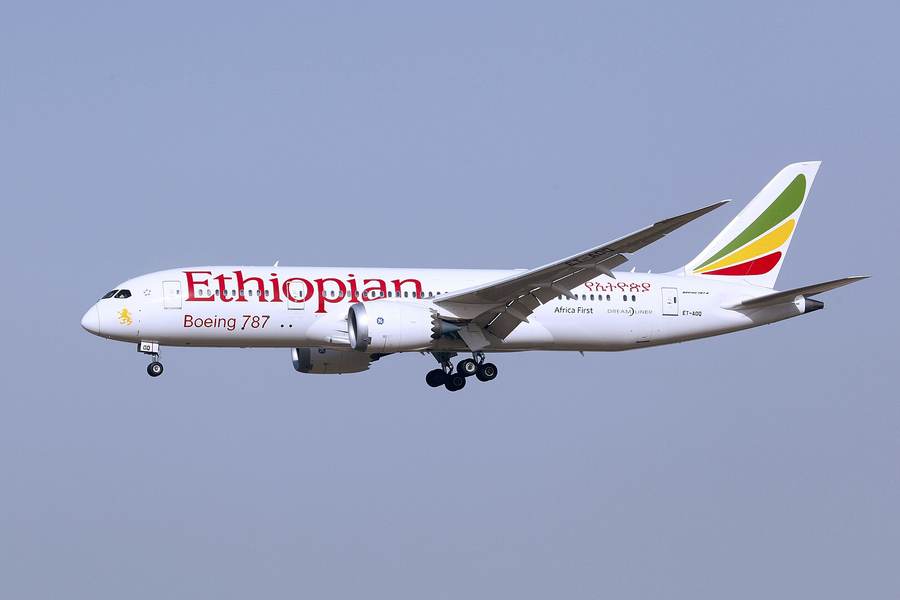
Residents told the Associated Press that federal troops retook Alula Aba Nega Airport on Saturday. Reuters reported the recapture through three to four sources, while AFP cited a local journalist. The airport was one of three airfields rebel forces seized at the outset of the renewed fighting; Ethiopian Airlines suspended flights to Mekelle, Axum and Shire after combat began.
The confirmations are significant, but their limits should remain visible. Reuters said it could not independently verify the battlefield accounts when it reported the airport's fall. The AP said neither the federal government nor the TPLF had commented at the time of its report. Multiple local accounts can establish a strong picture without becoming the same thing as unrestricted independent access.
Operationally, the airport narrows the TPLF-led alliance's options. Without reliable air access, leaders and wounded fighters must depend more heavily on roads already exposed to surveillance and interdiction. Federal control also makes it easier to reinforce Mekelle or reopen a controlled humanitarian corridor. The crucial word is controlled: a runway in government hands does not automatically mean safe civilian access, resumed commercial travel or neutral monitoring.
Background: Pretoria stopped the last war but did not settle its causes
The African Union-brokered Pretoria agreement, signed on November 2, 2022, halted the main federal-Tigray war. It promised disarmament, restored services, humanitarian access and a route back to constitutional politics. It ended mass combat, but it left critical disputes unresolved: territorial control, the presence and interests of Eritrea, the status of armed actors, reconstruction and accountability.
Over the next three years, that bargain was systematically hollowed out. Implementation lagged, distrust returned and military organization substituted for political confidence. CNN reported in September 2026 that a deep TPLF split—between factions associated with Debretsion Gebremichael and Getachew Reda—preceded the renewed fighting. What looked from outside like one Tigrayan political force had become competing projects with different relationships to Addis Ababa and different claims to legitimacy.
The September 23 offensive exposed how far the post-Pretoria order had deteriorated. The TPLF-led coalition's early seizure of airfields suggested planning and reach. The federal counterattack demonstrated something else: Addis Ababa retained the ability to concentrate force, exploit divisions and recover strategic infrastructure quickly. Eleven days later, the coalition's central political premise—that it could turn battlefield gains into leverage over the federal state—has been badly damaged.
The historical parallel with November 2020 should discipline triumphalism. Then, federal capture of Mekelle looked like a conclusive victory because the capital had fallen and senior opponents had dispersed. It was followed by guerrilla warfare, wider mobilization and a reversal. Tigray's terrain rewards networks that can leave cities, survive pressure and return. A government can seize the capital faster than it can reconstruct consent.
For a fuller chronology, see the Tigray war background and our earlier: federal forces closed in report.
Who benefits, who loses and who remains exposed
Abiy Ahmed's federal government benefits first. The campaign reverses the psychological impact of the opening offensive and allows Addis Ababa to present itself as the only authority capable of controlling national infrastructure. It may also improve the government's bargaining position with regional elites: talks held after a capital falls are different from talks held while it is defended.
The Tigray Peace Forces gain political space. By entering central Mekelle ahead of the federal military, according to the source cited by Reuters, the pro-government militia can claim that Tigrayans—not only outside federal troops—helped remove the TPLF's control. That claim may appeal to opponents of the Debretsion faction. It may also invite suspicion that the group is dependent on Addis Ababa. Its conduct toward residents will matter more than its arrival sequence.
Eritrea watchers receive a mixed signal. A weaker TPLF may reduce one threat perceived in Asmara, but a federal victory does not resolve the regional confrontation. Ethiopia severed diplomatic ties with Eritrea last week and accused Eritrea, Sudan and Egypt of supporting the rebel alliance; all three governments deny the accusation. The Eritrea rupture has removed channels precisely when battlefield movements can be misread.
The Debretsion-aligned TPLF loses both ground and narrative. Retreat can preserve fighters, but abandoning Mekelle weakens claims to regional stewardship and complicates recruitment, logistics and coalition cohesion. The phrase “temporarily moved” is intentionally open-ended. It signals that leaders want to retain a government-in-exile posture inside Tigray while keeping alive the possibility of return.
Civilians bear the largest uncertainty. AFP reported that TPLF fighters and leaders were seen leaving as federal and allied forces approached, while government offices and police stations were left without security personnel. Residents feared looting and lawlessness. The transition between withdrawing and entering forces is precisely when weapons remain plentiful but accountability can disappear.

Data in context: 11 days cannot erase the scale of the last war
Widely cited estimates put the number of people killed during the 2020–2022 Tigray war at roughly 600,000 when deaths from fighting, hunger and health-system collapse are counted together. The exact toll remains contested, but its order of magnitude is a warning: military and indirect deaths can accumulate far beyond the people killed at the front. Millions were displaced during that conflict, according to international humanitarian reporting.
The current campaign's 11-day clock is therefore not evidence of a small war. It measures the speed of territorial change, not the human cost. Reuters and humanitarian reporting from the renewed fighting described cash and fuel shortages, closed banks and shops, and wounded people reaching medical facilities. Each shortage compounds the next: a closed bank prevents families from buying transport; scarce fuel restricts ambulances and aid deliveries; shuttered commerce shifts pressure onto households with the least stored food or cash.
The three-airfield figure also needs context. Rebel seizure of three airfields at the offensive's start showed an attempt to disrupt federal reach across northern Ethiopia. Recapture of the airport serving Mekelle deprives the alliance of the most politically consequential of those assets. But airfield control does not guarantee control of rural roads, mountain routes or dispersed forces. The federal campaign has won the infrastructure contest faster than it can prove dominance over the region.
Reported wounded in medical facilities are not a final casualty count, and this article does not treat them as one. Wartime numbers often arrive unevenly, with hospitals recording those who reach care while deaths outside institutions and people cut off by communications appear later. The responsible comparison is not between an incomplete present total and the widely cited 600,000 estimate from the last war. It is between the mechanisms of harm—combat, displacement, hunger, interrupted medicine—and how quickly they are being reassembled.
What critics say: a battlefield win may widen the regional risk
Analysts cited by Reuters describe this as the worst escalation since the 2020–2022 civil war and warn that it could grow into a wider regional conflict. Their concern is not only a formal intervention by another state. Arms transfers, border incidents, proxy forces, drone launches and accusations made without transparent evidence can pull governments toward conflict before leaders declare one.
U.S. State Department spokesman Tommy Pigott urged Ethiopia and Eritrea to “exercise maximum restraint and return to dialogue and cooperation as agreed in their 2018 peace framework.” He added: “The Horn of Africa cannot sustain another military conflict and humanitarian crisis.” The statement places the Ethiopia-Eritrea relationship alongside the internal Tigray battle because the two risks are now inseparable.
Critics of the federal campaign will argue that the first duty after entering Mekelle is civilian protection, not a victory ceremony: secure police stations and government offices, prevent reprisals, reopen hospitals and commerce, and permit neutral aid access. Critics of the TPLF will argue that the September 23 offensive gambled with civilian safety and a fragile peace while overestimating the coalition's ability to hold its gains. Both judgments can be true at once.
What happens next: five paths from the fall of Mekelle
1. The TPLF regroups for an insurgency
The retreat may be designed to preserve commanders and fighters rather than defend fixed positions. If the TPLF can maintain rural supply routes, it could harass federal forces, challenge local administrations and wait for occupation costs to grow. The 2020–2021 precedent makes this the scenario Addis Ababa cannot afford to dismiss.
2. A negotiated pause follows the federal advantage
Mekelle's fall could create an opening if the government chooses bargaining over pursuit and the TPLF accepts that the September offensive failed. An immediate framework would need civilian access, monitored force separation, political representation for Tigray's competing factions and a credible timetable for restoring—not merely restating—the Pretoria commitments.
3. The “temporary” regional government becomes a mobile rival authority
The TPLF's wording implies continuity outside Mekelle. If it identifies another headquarters and continues issuing directives, Ethiopia could face competing administrations: one protected by federal and Tigray Peace Forces units in the capital, another claiming legitimacy from elsewhere. That arrangement can prolong conflict even if front lines stabilize.
4. Eritrea, Sudan and Egypt become entangled
Ethiopia's accusations and the three countries' denials leave a combustible gap. A verified arms route, cross-border strike or misidentified drone could turn allegation into escalation. Sudan's own war makes its frontier especially difficult to police, while the Nile dispute gives Egypt and Ethiopia reasons to interpret unrelated moves strategically. Eritrea's proximity and history with the TPLF make it the most immediate risk.
5. African Union mediation returns to the center
The AU brokered Pretoria and retains the institutional memory needed to revise it. Control of Alula Aba Nega Airport could make access easier if Addis Ababa permits mediators and monitors to use it. The AU's challenge is credibility: a return to the same promises without enforcement, sequencing and representation for the TPLF's rival factions would reproduce the architecture that failed.
The judgment after the capture
Mekelle's fall is a genuine strategic victory for the federal government and a severe setback for the TPLF-led alliance. It reveals that the alliance's opening offensive had more reach than staying power, that the federal military could reverse early losses quickly, and that the Tigray Peace Forces are now an actor in the contest over who speaks for the region.
But the phrase “capital captured” carries dangerous historical comfort. Cities can be occupied while insurgencies expand; airports can be held while villages become inaccessible; governments can be relocated while their political claims survive. The next test is not whether federal forces can remain in central Mekelle for another day. It is whether security returns without collective punishment, whether humanitarian access expands, and whether the victors use leverage to rebuild a settlement rather than to postpone one.
Eleven days changed the map. The consequences will be measured over years.
Sources and reporting notes
- Reuters, October 4, 2026: government and allied forces regain Mekelle; TPLF confirms retreat; regional context and U.S. response.
- Associated Press via KCAU, October 3, 2026: residents report federal forces retook Alula Aba Nega Airport.
- CNN, September 25, 2026: the breakdown after Pretoria and the TPLF split preceding renewed war.
Reporting note: Battlefield control and airport access are based on the attributed accounts above. Reuters said it could not independently verify the initial airport reports; the federal government and TPLF had not commented on that claim when AP published. The roughly 600,000 death estimate for the 2020–2022 war is widely cited and remains an estimate. File photographs do not show the October 2026 operation.