Syria Homs bus attack
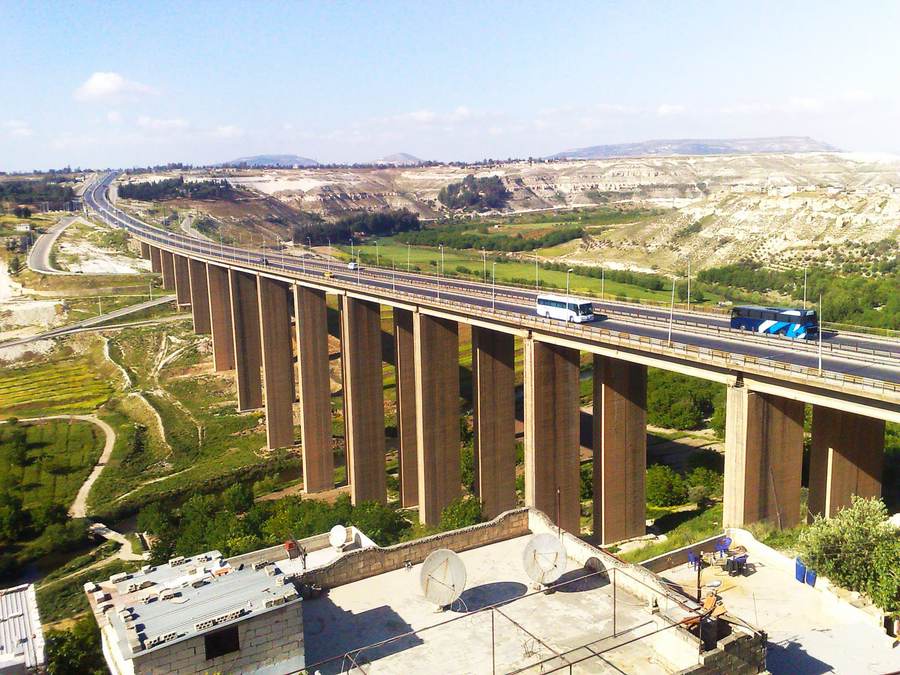
HOMS, Syria — The Syria Homs bus attack killed at least seven people and wounded four after gunmen opened fire on a small passenger bus at Masyaf Bridge in western Homs province late on September 30. A source in the Homs health directorate gave the toll to the Syrian state news agency SANA, and said the casualties were taken to hospitals, according to Reuters.
The available reporting establishes the place, method and toll, but not the identity of the attackers. SANA said the perpetrators remained unidentified. No group had publicly claimed responsibility at publication, and authorities had not announced a motive. That uncertainty is not a footnote: in a country where political, criminal, insurgent and sectarian explanations can all carry consequences, assigning blame without evidence could deepen the harm.
What happened in the Masyaf Bridge shooting
The attack struck a civilian vehicle on the bridge, a western approach linking communities in Homs province. The Associated Press described the target as a small passenger bus and placed the shooting late on September 30. Video distributed by Associated Press Television showed shattered windows and bloodstains after the area had been secured; investigators were reported to have opened an inquiry.
An initial account put the death toll at five. It was later revised to seven, with four wounded. A security source told AFP that passengers included engineers and workers from a private company. The same source said an employee of the Syrian Electricity Company was among the victims.
Those details make the attack more than a statistic. The victims appear to have been people moving through an ordinary workday, not combatants traveling to a front. A road shooting against workers imposes a second cost beyond the casualties: it changes how other civilians judge commutes, shift work and travel through exposed corridors.
Syria sectarian violence 2026: what is known and what is not
The Syrian Observatory for Human Rights said the victims belonged to the Alawite minority, according to a report carried by Sweden Herald. Syrian authorities and SANA had not publicly confirmed a sectarian motive at publication. The claim should therefore remain attributed rather than presented as an established explanation for the shooting.
That discipline matters because coastal and western Syria endured mass violence in 2025 in areas with large Alawite populations. More than 1,400 people were reported killed in those episodes. The history raises the stakes of the Observatory's claim, but history alone cannot identify the gunmen or prove why this bus was selected.
There are several plausible investigative lines: whether the passengers were followed from work, whether the bridge was chosen for tactical access, whether the attackers knew who was aboard, and whether ballistic or communications evidence ties the shooting to an organized group. Until officials publish evidence, none should be converted into a conclusion.
Why the Syria Homs bus attack matters
The central challenge for President Ahmed al-Sharaa's transition is not only defeating armed cells. It is showing that the post-Assad state can deliver neutral protection and lawful investigation across communities that endured years of war and reprisals. A successful response requires both speed and restraint: secure roads and pursue suspects quickly, while avoiding collective punishment or sectarian labeling.
The attack also tests public trust. If people believe a bridge or commuter route can be targeted without an evidence-based explanation, rumor fills the vacuum. Armed groups benefit from that uncertainty because they can claim reach without claiming responsibility. Political rivals benefit when every unresolved crime becomes proof that the transition cannot govern.
For a closer chronology of the scene and the initial government response, see Signal Post News' earlier Masyaf Bridge attack report. The unresolved security picture also sits beside al-Sharaa's external diplomacy, including his remarks on talks with Washington and the Golan Heights.
Syria gas pipeline sabotage and a broader vulnerability
The bus attack came on a day when state media also reported an explosion at a gas pipeline near the Tishrin thermal power plant in Eastern Ghouta, close to Damascus. That blast knocked three power stations offline, according to Press TV's account of the state reporting. Another pipeline had been described as sabotaged in eastern Syria two days earlier.
There is no public evidence linking the pipeline incidents to the Homs shooting, and they should not be folded into a single plot. Their coincidence instead highlights a shared vulnerability: attackers or saboteurs can impose national costs by striking lightly protected transport and energy nodes. A damaged line can darken neighborhoods; gunfire at a bridge can deter workers and complicate movement.
The government's problem is therefore wider than guarding one route. It must decide how to protect critical infrastructure, improve local intelligence and communicate verified facts without encouraging panic. That is expensive work for a state rebuilding institutions while managing regional tensions discussed in Signal Post News' analysis of King Abdullah's UN warning on Syria and the region.
What the numbers mean
Seven deaths among eleven reported casualties produce a fatality share of roughly 64 percent. That figure does not prove intent by itself, and the total remains small enough that percentages can mislead. It does, however, distinguish this attack from incidents that caused many injuries but fewer deaths: direct gunfire into a confined vehicle can be especially lethal.
Recent bus-related attacks offer context without proving a common network. A bomb targeting internal-security personnel near Damascus injured several people on August 22. An explosion on a bus in Jaramana wounded 14 in early August. In July, blasts near a hotel linked to an official visit killed one person and wounded 36; authorities later said suspects belonged to Islamic State. The sequence shows persistent attack capacity, but different targets and methods caution against treating every event as one campaign.
The one confirmed employment detail also matters. If engineers, private-company workers and an electricity employee were aboard, the loss includes technical labor that Syria needs for basic reconstruction. The national impact of seven deaths cannot be reduced to occupational scarcity, but the country bears both human grief and the loss of skilled capacity.
Who gains, who loses
The immediate losers are the dead, the wounded, their families and colleagues. Communities along the route lose confidence in ordinary movement. Employers may face pressure to alter shifts or transport, while security forces must divert scarce personnel to checkpoints and escorts.
The transition government loses credibility for every day the case remains unexplained. Yet it would lose more by announcing a convenient culprit without demonstrable evidence. A credible investigation can strengthen state authority; a politicized one can produce arrests without public trust and push frightened communities further apart.
The attackers, whoever they are, gain if uncertainty becomes the dominant story. An unclaimed attack can still spread fear, invite retaliation and force officials to spend resources. That asymmetric effect is why disciplined public information is part of the security response, not an afterthought.
What happens next
First, investigators need a chain of evidence. The bus, cartridges, camera footage, passenger movements and witness accounts can establish whether the assault was opportunistic or planned. Public updates should separate verified findings from working theories.
Second, authorities will likely reinforce exposed routes. More patrols and checkpoints may reassure travelers, but indiscriminate searches or community-wide suspicion could create new grievances. The standard should be targeted protection tied to evidence.
Third, watch whether any group claims the attack. A late claim must still be authenticated; militant organizations sometimes take credit opportunistically. If no claim emerges, local criminal or revenge motives remain possible alongside organized political violence.
Finally, watch the wounded and the official toll. Early casualty numbers changed once already. Hospital updates, identified victims and a transparent account of the investigation will determine whether the public receives an answer or only another unresolved entry in Syria's postwar violence.
Sources and reporting notes
- Reuters — official casualty toll, location and hospital transfers.
- Associated Press via Plain Dealer — description of the passenger bus and timing.
- AFP report — passenger occupations, revised toll and unidentified perpetrators.
- Associated Press Television — aftermath video and investigation context.
- Sweden Herald citing SOHR — attributed claim about the victims' community.
- Press TV — pipeline and power-station context drawn from Syrian state reporting.
Reporting note: The attackers, motive and any sectarian dimension remained unconfirmed at publication. Signal Post News treats the Syrian Observatory's community identification as an attributed claim and does not connect the bus attack to pipeline incidents without evidence.
Signal Post News will update this report if investigators identify the attackers, authorities release the victims' names or the casualty toll changes.
Back to all stories