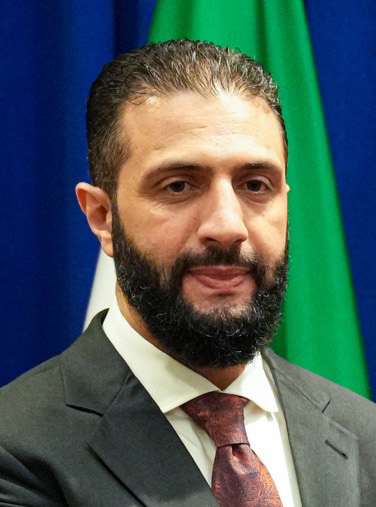
Al-Sharaa Trump New Jersey Golan was the unexpected sequence at the center of a serious foreign-policy argument Tuesday night. Syrian President Ahmed al-Sharaa told an Atlantic Council audience in New York that he had challenged President Donald Trump over Washington’s recognition of Israeli sovereignty on the Golan Heights by asking: “Why don’t you give New Jersey to the Israelis?”
Al-Sharaa said he told Trump: “You don’t own the Golan Heights to give it to them, but you own New Jersey,” adding that the state was full of Democrats who were not voting for Trump. The audience laughed. Al-Sharaa then stripped away the joke: “The Golan has its people,” he said, arguing that neither a Syrian nor an American president had the right to surrender it.
The exchange, recounted at a panel moderated by former senior U.S. national-security official Brett McGurk, captured the contradiction defining the new Syria’s diplomacy. Al-Sharaa praised his relationship with Trump and credited the U.S. president’s support and sanctions relief, yet publicly rejected one of Trump’s signature Middle East decisions. At the same time, he said Syria and Israel were still engaged in direct security talks.
That combination matters more than the punch line. A former al-Qaeda-linked commander, once known by the nom de guerre Abu Mohammad al-Jolani, is now leading Syria, negotiating with Israel and rebuking a U.S. president who helped end his country’s economic isolation. The Golan Heights is the hinge: it is the place where tactical security cooperation collides with territory, identity and international law.
What al-Sharaa said at the Atlantic Council
Al-Sharaa described a good working relationship with Trump and said the two men could speak candidly. His New Jersey remark was presented as evidence of that candor, not as a threat or proposal. The laughter in the room came from the political jab; the policy claim that followed was uncompromising.
He said Syria and Israel had held several rounds of direct negotiations, some with U.S. involvement. In his account, the parties had reached “almost 90% of agreements” before Israel pulled back or introduced additional conditions. That figure is al-Sharaa’s characterization. No joint draft, itemized negotiating text or Israeli confirmation was available in the reporting reviewed for this article, so it cannot be treated as an independently established measure of completion.
Al-Sharaa outlined a sequence rather than an immediate peace treaty. Israel, he said, should first withdraw from areas it occupied after Bashar al-Assad’s government fell in December 2024, returning to the lines associated with the 1974 disengagement arrangements. Security discussions could then proceed, and successful arrangements might eventually make a permanent peace possible.
He also argued that the Hamas-led October 7, 2023 attack should not dictate Israeli policy toward Syria. He accused Israel of bombing Syrian presidential palaces twice, attacking airports and occupying new territory since the regime change. Those statements are his accusations; the reviewed material did not independently verify every strike, target or sequence he described. Israel’s security policy is rooted in its stated concern that hostile forces or weapons could exploit instability along its northern frontier.
No Israeli response to the New Jersey remark or to al-Sharaa’s “almost 90%” description was included in the sources reviewed for this report. That absence is important: the public record establishes his account of the talks, not a shared account of what was agreed.
Why this matters: the insurgent-turned-president tests two relationships at once
Al-Sharaa’s trajectory gives the statement unusual weight. His Hayat Tahrir al-Sham-led offensive helped topple Assad in December 2024, ending a long family dictatorship and moving a former insurgent leader into the presidential office. His earlier nom de guerre, al-Jolani, reflected his family’s origins in the Golan. For him, the territory is not only a diplomatic file; it is embedded in the political identity through which many Syrians first knew him.
That history creates both leverage and vulnerability. Al-Sharaa can argue to Syrians that engagement with Washington and Israel does not mean surrendering a national claim. But his militant past gives Israel and other governments grounds for caution, and his transitional government must show that institutional rule, a constitution and future elections are more than promises attached to one leader.
Trump is the other relationship being tested. Al-Sharaa praised him for supporting Syria and lifting sanctions, making clear that Damascus values the economic opening. Yet he rejected the territorial premise of Trump’s 2019 recognition of Israeli sovereignty over the Golan. The rebuke therefore was not anti-American positioning in general; it was a carefully bounded disagreement with a partner whose support Syria still needs.
This is also part of a wider regional argument. In our report on King Abdullah’s UN address, Jordan’s monarch warned that Israeli operations in Syria could become a regional security problem. Al-Sharaa’s remarks move the same dispute from neighboring concern to direct negotiation.

How the Golan became the non-negotiable point
Israel captured most of the Syrian Golan Heights in the 1967 war and applied its laws and administration there in 1981. The United Nations Security Council declared that move “null and void and without international legal effect,” and the United Nations continues to refer to the area as occupied Syrian territory. Trump broke with the prevailing international position in March 2019 by recognizing Israeli sovereignty over the plateau.
The territory is roughly 1,200 square kilometers. Its importance is not captured by area alone. The elevated ground overlooks northern Israel and parts of southern Syria, sits above the Sea of Galilee watershed and gives whoever controls it military observation and defensive depth. Those characteristics help explain why Israeli governments treat the plateau as central to security and why Syrian governments treat permanent loss as unacceptable.
Assad’s fall added a second territorial layer. Israel moved into a security zone beyond the existing line while the Syrian state was in upheaval. Israeli officials have framed post-Assad deployments as defensive measures against instability and armed threats. Damascus sees them as a new occupation that must be reversed before the parties can discuss durable security arrangements.
That is why the Golan cannot be reduced to one bilateral negotiation. Syria’s claim is reinforced by the U.N. position; Israel’s control is a long-standing military and administrative reality; and U.S. recognition under Trump gives Israel political backing that most governments have not followed. Al-Sharaa can negotiate patrols, weapons limits, monitoring and deconfliction without accepting Israel’s sovereignty claim. Israel can negotiate those mechanisms without agreeing that a future withdrawal from the Golan is on the table.
The “almost 90%” claim: progress without a public denominator
A percentage sounds precise, but it is useful only when the underlying list is known. Al-Sharaa did not publish the negotiating text or explain whether “almost 90%” referred to paragraphs, operational procedures, political questions or an informal judgment by his team. A package can be 90% complete by page count and still remain blocked by the one issue that decides whether it exists.
The likely areas of practical overlap are narrower than full normalization: separation of forces, limits on deployments, monitoring, communications and guarantees against cross-border attack. That is analysis based on the stated security framework, not a claim that the parties have accepted those exact terms. The unresolved territorial question could outweigh agreement on every technical provision.
Al-Sharaa’s claim that Israel retreated or added conditions is also one side’s account. Negotiators commonly disagree over whether a new demand is a change, a clarification or an issue that was never settled. Without a joint statement or text, the safest conclusion is that direct talks have occurred and Damascus says substantial progress was made, while the actual distance to an enforceable deal remains unknown.
The distinction is especially important because the phrase “Syria Israel security talks 90 percent” can create a false sense of inevitability. A security arrangement requires accepted lines, verification, command discipline and a political decision to implement. None follows automatically from a public percentage.
Who gains—and who loses—from the public challenge
Al-Sharaa gains domestic room to negotiate. By confronting Trump on sovereignty, he can argue that diplomacy is not capitulation. The joke humanized the dispute while the follow-up drew a red line. That may help him pursue security talks without appearing to trade away land for sanctions relief.
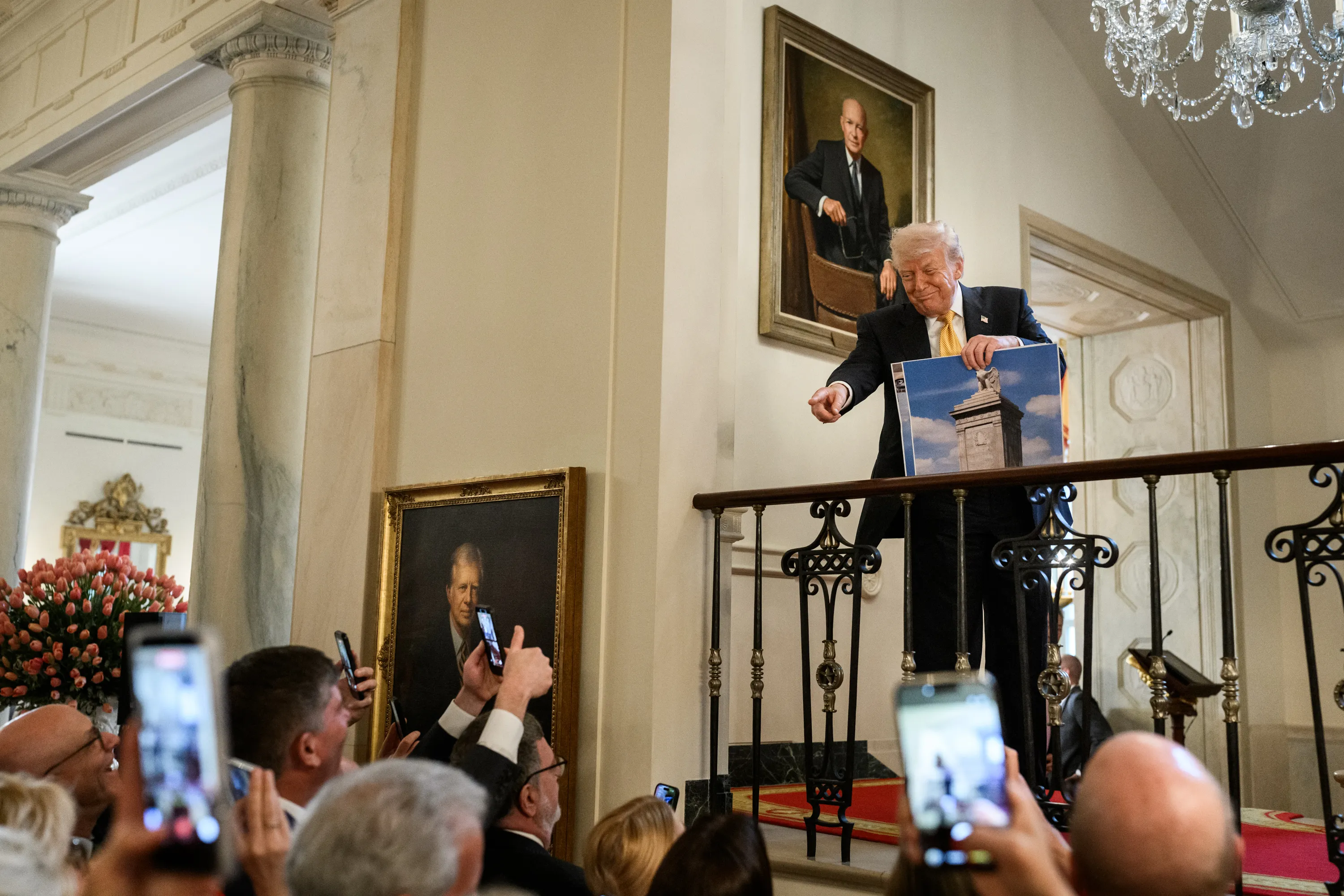
Trump gains a partner but loses message control. The Syrian leader praised the relationship and U.S. support, validating Trump’s preference for personal diplomacy. Yet the anecdote turns Trump’s 2019 recognition into the object of ridicule before an international audience. Any White House response must balance personal rapport, the U.S.–Israel alliance and the desire to prevent a new Syrian conflict.
Israel could gain a quieter border if direct talks produce monitored security arrangements. It could also lose freedom of action if an agreement requires withdrawal from the post-Assad zone or tighter rules on strikes. Israeli skepticism is likely to focus on whether a government led by a former jihadist commander can reliably prevent armed groups from operating near the frontier.
Syrian civilians stand to gain most from de-escalation and lose most from failure. Reduced strikes and fewer military incursions would lower immediate risk and improve conditions for recovery. Conversely, collapsed talks could lock southern Syria into recurring escalation while sanctions relief alone fails to deliver security.
The U.N.-based territorial position gains visibility because al-Sharaa placed it beside the bilateral talks rather than beneath them. But legal recognition does not itself change control on the ground. Diplomacy must bridge the gap between the international position and the security realities each government says it faces.
Three paths from security talks to either peace or collapse
A limited security arrangement comes first. The parties could separate the practical border file from sovereignty, agree on withdrawals or monitored positions and establish channels to prevent miscalculation. That would not resolve the Golan dispute, but it could reduce violence and create evidence that commitments are being kept. Al-Sharaa’s own formulation leaves a broader peace discussion for later.
Talks collapse over the post-Assad zone. If Israel treats continued control of the security zone as indispensable and Syria treats full withdrawal as a prerequisite, the sequence breaks at the first step. Each side would then say the other rejected security. The “90%” headline would matter less than the unresolved remainder.
Trump applies personal pressure. He could push both leaders toward an interim formula, defend his 2019 recognition while distinguishing it from newer Israeli deployments, or react negatively to the public rebuke. The record reviewed here does not establish which response he will choose. His approach at the U.N. has mixed coercive threats with deal-making, as our UNGA diplomacy briefing documents.
A longer path to peace would require more than border mechanics. It would require a durable Syrian state, institutions able to enforce agreements, Israeli confidence that southern Syria will not become a launchpad for attacks and a way to address sovereignty without pretending the dispute has disappeared. Sanctions relief can support recovery, but it cannot substitute for legitimacy or verification.
Constitution, elections and Lebanon widen the test
Al-Sharaa said his transitional goal is a new constitution and rule through institutions rather than an individual. Asked about a future election, he said he was focused on serving people and had not settled the question. Those statements are commitments to be measured, not proof that a constitutional transition is complete.
His answer matters to the Israel file because security agreements survive only when institutions outlast the people who sign them. A constitution, accountable chains of command and credible elections would make Syrian commitments more durable. Failure on those fronts would strengthen the argument that any deal rests too heavily on one leader’s authority.
Al-Sharaa also said Syria could help strengthen Lebanese state institutions. He did not present that as a promise that Damascus would disarm Hezbollah or dictate Lebanon’s choices. The distinction matters in a region where Syrian involvement in Lebanon carries a long and contested history. Any constructive role would need Lebanese consent and clear limits.
The wider diplomatic context includes regional plans that move from ceasefire arrangements toward political structures. Our report on the eight-nation Gaza road map shows the same implementation problem: a framework gains credibility only when withdrawals, monitoring and governance commitments become observable.
What happens next
Al-Sharaa was scheduled to address the United Nations General Assembly on Wednesday morning in New York. At the reporting cutoff, that speech was still scheduled; this article does not attribute remarks or policy announcements to an address that had not yet occurred. The speech could clarify his broader diplomatic position, but the Atlantic Council comments stand on their own.
The first concrete indicator will be whether Syria and Israel confirm another negotiating round. The second will be whether either side publishes even a limited statement on points of agreement. The third will be movement around the post-Assad security zone: a withdrawal, redeployment or monitoring proposal would be more meaningful than another percentage.
Trump’s reaction will matter because Washington has leverage with both parties. The United States can offer diplomacy, economic relief and guarantees, but it also carries the weight of the 2019 recognition that Syria rejects. An effective mediator would need to acknowledge that contradiction rather than pretend personal rapport has erased it.
The New Jersey line will travel because it is sharp and memorable. Its lasting importance depends on whether the serious proposition behind it survives: Syria says it can negotiate security with Israel without negotiating away the Golan. If that separation holds, a limited arrangement is possible. If either side insists that temporary security control and permanent sovereignty are the same question, the unresolved tenth of the deal may be larger than the other nine-tenths combined.
Sources
- The Media Line: al-Sharaa’s Atlantic Council remarks, the New Jersey exchange and the Golan position
- Hatha Alyoum: audience reaction, withdrawal condition and comments on Lebanon
- All Israel News: direct-talks claim, October 7 argument and constitutional transition remarks
- JFeed: the Trump anecdote and Syria’s territorial claim
- Times of Israel report syndicated by QOSHE: security-zone precondition and phased peace path
- Euronews report mirrored by Ekkow: panel quotations and claims about strikes
- The Times: Wednesday’s scheduled UN General Assembly speakers
This is a fixed September 23, 2026 reporting snapshot. “Almost 90%” is al-Sharaa’s account, not an independently verified measure. Statements that Israel bombed presidential palaces and airports are his accusations. No content from his scheduled September 23 General Assembly address has been invented or added.