Nasdaq futures slide again — and Thursday's data decides if it stops
Track it live: Live stock market and index tracker

NEW YORK, October 15, 2026 — For the stock market today, October 15, 2026, the question hanging over the opening bell was whether Wednesday was a spasm or a turn. The early evidence was split down the middle. Nasdaq futures were down 1.2%, S&P 500 futures down 0.3%, but Dow futures were up 0.2%, according to Investopedia's morning rundown — the same rotation, growth stocks punished and industrials spared, that defined Wednesday's session. That session was the worst since July: the S&P 500 fell 1.1% and the Nasdaq dropped 1.9% after September's consumer price index came in hot at 3.7% year-on-year, driven mainly by energy and gasoline costs, as we reported in Wednesday's coverage of the CPI shock and the suddenly live question of a Fed rate hike. One decimal point of inflation was still repricing the world two days later.
The yield that spiked past 5.3% — then backed down
The bond market told the more nuanced story. The 10-year Treasury yield, which spiked above 5.3% in the immediate aftermath of the CPI release, had retreated to 5.09% by Thursday morning — a three-week low — as investors moved back into Treasuries, according to CaixaBank Research's daily markets report. Both numbers deserve context. A 10-year yield above 5% is historically demanding territory: it competes directly with equities for investor money and raises mortgage and corporate borrowing costs within days. The spike to 5.3% was the panic print; the retreat to 5.09% suggests something different from capitulation — investors buying the safety of government bonds even as they sell growth stocks, a classic risk-off posture rather than a rout.
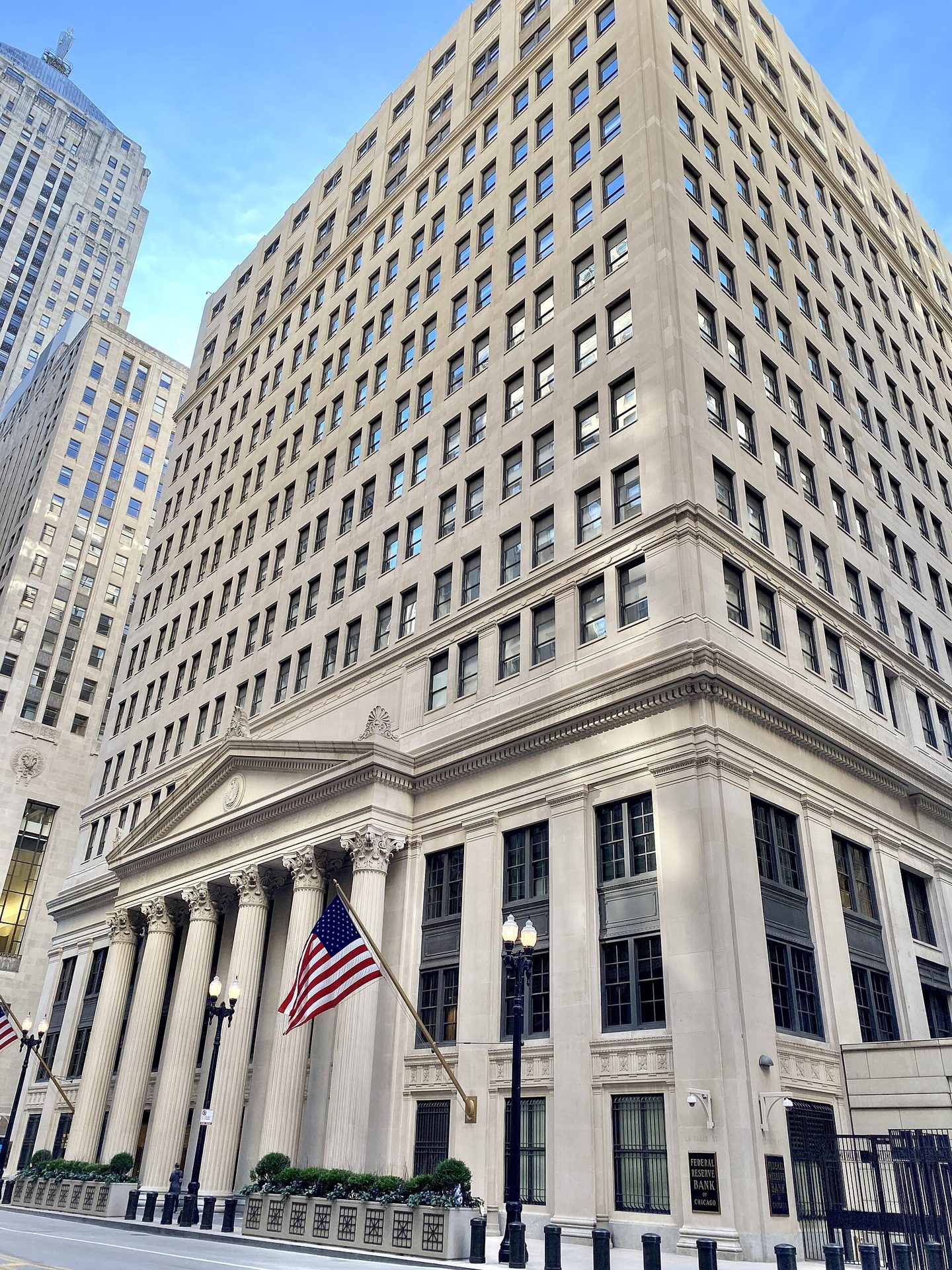
Underneath the yield sits the Federal Reserve question, and here the market's verdict has hardened without settling. CaixaBank put the probability of a Fed rate hike at the October meeting at roughly 32% — a scenario that would have been close to unthinkable a month ago, when the debate was still about the timing of cuts. Not everyone thinks a hike, or even two, would break the market. A Vanguard economist argued this week that the market could absorb a further 25 to 50 basis points of tightening, pointing to an arithmetic anchor: the effective federal funds rate stands at 3.88%, still below its 50-year average of 4.64%. By historical standards, policy is not yet tight — it is merely no longer loose. The counterweight came from Chicago Fed President Austan Goolsbee, who warned that the torrent of artificial-intelligence infrastructure spending may be crowding out other sectors — a central banker pointing, unusually, at the boom itself as a distortion.
Asia cratered. India did the opposite.
If Wall Street's mood was anxious, Asia's was brutal. South Korea's market fell 7.6%, Japan's dropped 4.9% and Taiwan's slid 3.4% in a regional rout extending the chip-stock selloff — the story we traced in our coverage of the Asian sell-off as the Kospi and Nikkei buckled under the hot U.S. inflation print. A 7.6% single-day fall is not a correction; it is among the worst sessions a major market can have outside a financial crisis, reflecting Asia's double exposure — to U.S. interest rates and to the AI hardware trade that had carried Korean and Taiwanese indexes to their highs.
Then there was India, moving in the opposite direction with equal force. The Sensex jumped about 2.1% — up more than 1,500 points in Mumbai trading — with the Nifty pushing toward 23,000 and the rupee extending its gains. The divergence is the day's most instructive data point. Markets are not selling "risk" indiscriminately; they are discriminating, sharply, between economies hostage to the U.S. rate cycle and chip valuations, and a large, domestically driven market whose central bank and currency are, for now, moving the other way. Our full Wednesday wrap of the Dow, S&P 500 and Nasdaq shows the same selectivity inside the U.S. market itself — index-level falls concealing a violent rotation underneath.
Gold at $4,165, bitcoin near $80,800 — the hedges disagree
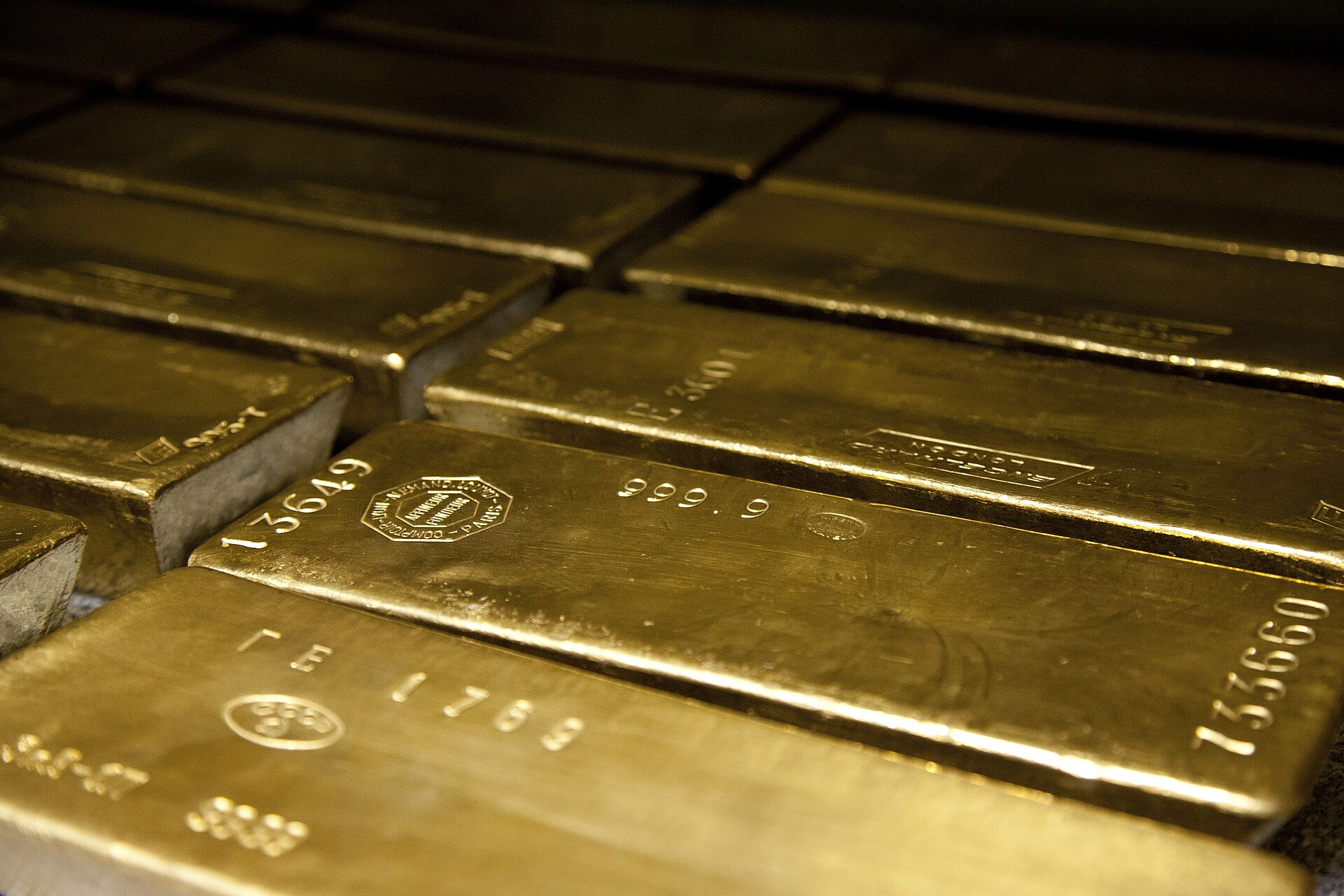
The cross-asset picture completed the risk-off pattern, with one loud exception. Gold futures rose 1.4% to $4,165 an ounce: when investors fear both rising prices and rising rates, gold is where the fear pools. Bitcoin, so often marketed as digital gold, did the opposite — trading near $80,800, down from a high above $84,000 earlier in the week, falling with technology stocks rather than sheltering from them. In a genuine inflation-and-rates shock, the market is choosing the hedge with five thousand years of history over the one with fifteen.
Energy and currencies offered a measure of relief. WTI crude traded around $95.40 a barrel and Brent was about 1.5% lower on the day in overnight reporting — notable because oil was the fuel, literally, of September's hot CPI print; every dollar crude retreats is downward pressure on the next inflation report. The dollar fell about 0.5% against both the euro and sterling. Neither move erases the week's story, but both lean against it — which is why Thursday's data mattered so much: the market had spent the morning rebuilding a case for calm, and needed the numbers not to destroy it.
Why this matters
Strip away the tickers and the last two days have repriced the cost of money across the planet. Inflation at 3.7% against a 2% target is not a catastrophe — it is roughly half the 2022 peak pace — but its direction, arriving on energy prices the Fed cannot control, confronts the central bank with its least favourite choice: hike into an energy shock and squeeze households for a problem interest rates cannot fix, or hold and risk the inflation psychology of the 1970s, when a central bank that declared victory early had to tighten far harder later. A 32% hike probability means the market genuinely does not know what the Fed will do — and genuine uncertainty about the world's most important interest rate is itself a tax on every borrower, builder and buyer. Against that, the Vanguard arithmetic — an effective funds rate of 3.88% against a 50-year average of 4.64% — is a reminder that "higher" is not the same as "high," and that this economy has functioned perfectly well at rates above today's. Who loses is legible: rate-sensitive growth stocks, chip names, and households whose mortgage relief keeps receding. Who gains is equally clear: savers earning real yields, energy producers, gold holders — and investors in markets like India's, whose 2.1% surge on the world's worst morning is what genuine diversification looks like when it finally pays.
What happens next
Thursday's calendar was built to resolve the argument, or inflame it. The Producer Price Index would show whether September's consumer inflation was echoed at the wholesale level, or whether the shock fades as a gasoline story. Retail sales would test whether the American consumer is still spending through 3.7% inflation and 5% Treasury yields. Weekly jobless claims would give the first read on whether higher-for-longer rates are finally cracking the labour market. Three scenarios follow. If PPI comes in soft and spending holds, the 32% hike odds melt and the two days become a scare. If producer prices confirm the consumer print, the hike debate will dominate into the October meeting, and the Nasdaq's slide has further to run. And if oil — $95.40 and falling on Thursday morning — reverses on events in the Middle East, every one of these calculations is torn up at once. The stock market today was trading the answer to a single question — is inflation coming back? — and by the closing bell, it expected to know more than it did at dawn.
Sources: Investopedia, "5 Things to Know" market briefing, Oct. 15, 2026; CaixaBank Research, Financial Markets Daily Report, Oct. 15, 2026; Hindu BusinessLine market coverage, Oct. 15, 2026; Motley Fool / Vanguard commentary, Oct. 14–15, 2026. Related on Signal Post News: Hot CPI puts a Fed rate hike back in play, Asian stocks sell off as Kospi and Nikkei buckle and Stock market today: the full Wednesday wrap.